Spark Your Preschooler's Imagination With Creative Storytelling (Singapore Guide)
Help your K1-K2 child develop creativity & language skills through storytelling. Practical tips for Singapore parents aligned with MOE learning outcomes.
Mervin Tan · Founder, QuizKin
Published 26 May 2026
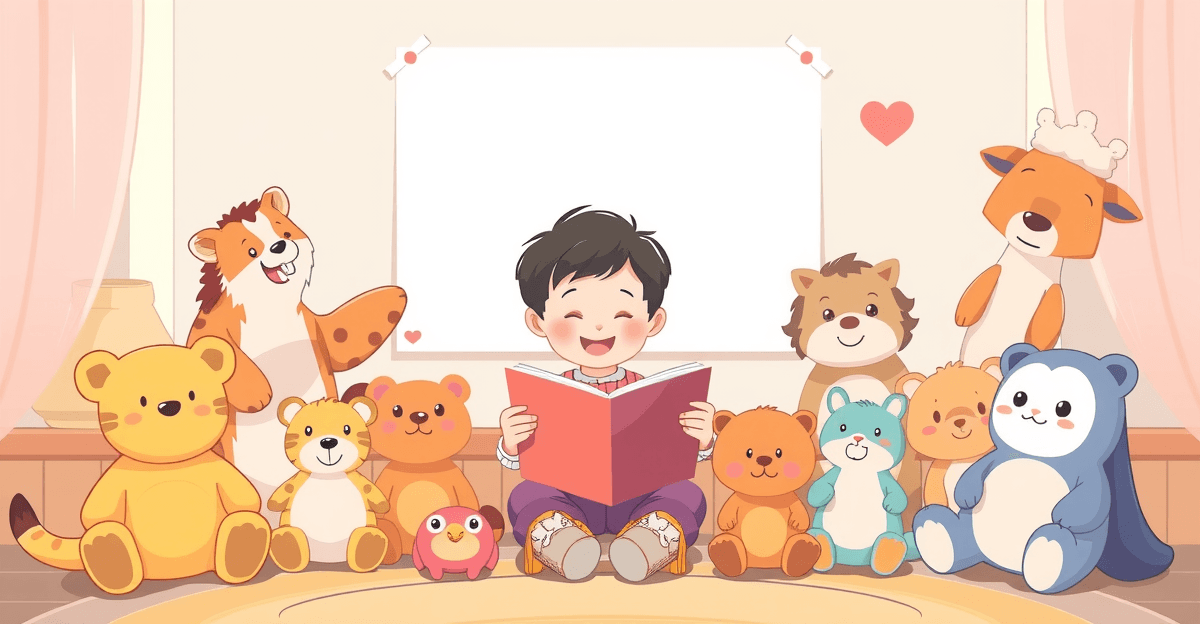
My 5-year-old picked up a picture book, pointed at a cat, and declared: "That cat is a superhero flying to Marina Bay Sands to eat chicken rice!" I almost corrected her. Then I caught myself — that moment of wild imagination is exactly what she needs right now.
TL;DR: Help your K1-K2 child develop creativity & language skills through storytelling. Practical tips for Singapore parents aligned with MOE learning outcomes.
In Singapore, where academic achievement sometimes overshadows everything else, storytelling can feel like "just play." Yet it's one of the most powerful tools for building language, creativity, and emotional resilience in K1-K2 children. Whether your child attends a PCF cluster, My First Skool, PAP Community Foundation preschool, or learns at home, storytelling creates a foundation for literacy, confidence, and joy in learning.
This guide will show you how to spark and nurture your preschooler's imagination through storytelling—with practical, Singapore-friendly strategies.
Why Storytelling Matters for Your K1-K2 Child
The Ministry of Education (MOE) emphasizes creative expression and language development as core pillars of early childhood education. Storytelling directly supports these outcomes while building several critical skills:
Language & Vocabulary Growth
Stories expose children to new words in context. A tale about a busy hawker centre naturally introduces vocabulary like "char kway teow," "crowded," "delicious," and "sizzle"—words your child hears in real life but might not actively use.
K1-K2 children are in a language explosion phase (ages 4-6). They absorb 5-10 new words daily when engaged. Stories make this effortless because children learn words through narrative and emotion, not repetition.
Emotional Intelligence & Social Understanding
Stories teach children about feelings, relationships, and problem-solving. A story about two friends sharing a toy helps your child understand cooperation and fairness—concepts they encounter daily at preschool.
Singapore's diverse, multicultural environment makes this especially valuable. Stories from Chinese, Malay, Indian, and Western traditions help children understand different perspectives and celebrate our shared society.
Confidence & Self-Expression
When children create their own stories, they practice expressing ideas, making decisions, and taking creative risks in a safe space. This builds the confidence they'll need for classroom participation and later academic success.
Memory & Cognitive Development
Following a narrative requires children to remember details, predict outcomes, and make connections. These are early thinking skills that support later reading comprehension and problem-solving.
Creating a Storytelling-Rich Home Environment
Before you dive into specific activities, set the stage for storytelling to thrive in your home.
1. Make Stories a Daily Ritual
Consistency matters more than duration. A 10-minute story during breakfast, bath time, or before bed becomes something your child anticipates and enjoys.
Singapore-friendly timing:
- Morning routine: A short story while eating breakfast helps settle your child before preschool.
- Car journeys: Stories are perfect for SG's traffic—no screens required.
- Bedtime: A calming story is ideal for helping your child wind down.
Start with just 5-10 minutes. As your child gets older (moving toward K2), you can extend to 15-20 minutes.
2. Gather Story Resources
You don't need an expensive library. Singapore has fantastic free resources:
- National Library Board (NLB): Free library membership for all residents. Borrow picture books suited to K1-K2 levels.
- Community centres: Many PCF and neighbourhood centres have small lending libraries.
- Bookstores: Popular Singapore chains like Popular and Times often have affordable picture books ($5-15 SGD).
- Online platforms: The NLB's digital collection and apps like Libby offer free e-books.
Story types to include:
- Multicultural folktales (Cinderella, Monkey King, Malin Kundang, Aladdin)
- Stories about Singapore (e.g., Little Thumbs Up series)
- Books featuring diverse characters and families
- Seasonal stories tied to Chinese New Year, Hari Raya, Deepavali
3. Create a Comfortable Story Space
A cosy corner with cushions, soft lighting, and minimal distractions signals to your child that storytelling time is special. This doesn't need to be elaborate—even a corner of the sofa with a blanket works perfectly.
Techniques to Bring Stories to Life
Reading a story is one thing; making it come alive is another. Here's how K1-K2 children engage deepest:
Use Different Voices & Sound Effects
Children this age love auditory play. Use silly voices for different characters, whisper during tense moments, and make sound effects ("Splooosh!" for water, "Vrooom!" for cars).
Why it works: It keeps them engaged, helps them follow which character is speaking, and makes storytelling memorable and fun.
Ask Questions Throughout
Pause during the story to invite participation:
- "What do you think will happen next?"
- "How is the character feeling?"
- "Have you ever felt like that?"
This shifts storytelling from passive listening to active thinking. Your child becomes a storyteller too.
Use Props & Visuals
Point to pictures, use toys to act out scenes, or even use finger puppets. Visual and tactile elements help younger K1 children stay focused while adding another dimension of play.
Connect to Your Child's Life
The most engaging stories are ones your child recognizes. After reading a library book about going to the doctor, talk about your child's own doctor visit. Or tell a story about their preschool, their pet, or their friend.
Singapore examples:
- A story about a family eating breakfast at a kopitiam
- A tale about getting lost at NTUC Fair Price Shop (relatable!)
- A story about taking the MRT to visit Grandpa
Encouraging Your Child to Tell Stories
The real magic happens when your child becomes the storyteller. This is where creativity truly flourishes—and where language skills deepen.
Strategy 1: Start With Story Starters
Give your child the opening, and let them continue:
- "One sunny day at the park, something magical happened..."
- "Timmy found a mysterious box in his room..."
- "The bunny didn't want to go to preschool because..."
For K1 children, keep starters simple and concrete. For K2, you can introduce slightly more abstract scenarios.
Strategy 2: Use Picture Prompts
Show your child a picture from a book, a magazine, or a photo, and ask:
- "What do you think is happening here?"
- "What happened before this picture?"
- "What will happen next?"
Picture-based storytelling is less intimidating than blank-page creativity.
Strategy 3: Turn Everyday Moments Into Stories
After school, instead of asking "How was your day?" (which often gets a "fine" response), try:
- "Tell me the story of your day. What was the first thing that happened?"
- "What was the funniest thing that happened?"
- "Who did you play with? What did you do together?"
Framing the day as a narrative helps your child recall details and practise sequential thinking.
Strategy 4: Role-Play & Act Out Stories
Act out stories together or let your child act out scenes from books. This combines storytelling with physical play, which K1-K2 children love.
Ideas:
- Act out a fairytale with simple props (blankets for forests, chairs for houses)
- Create a "puppet show" using stuffed animals or drawings
- Let your child direct you: "You be the tiger, and I'll be the mouse"
Building Storytelling Into Your Child's Learning Routine
Storytelling doesn't exist in isolation. It complements other learning activities beautifully.
Pair Stories With Learning Skills
After a story about animals, ask your child to draw their favourite character or sort toy animals by colour or size. This reinforces story comprehension while practising other skills.
Similarly, pairing storytelling with interactive quiz practice on apps like QuizKin helps reinforce concepts and vocabulary in an engaging way.
Use Stories to Support MOE Learning Outcomes
The MOE's preschool curriculum focuses on:
- Language & Literacy
- Numeracy (counting characters, sequences in stories)
- Science & Environment (stories about animals, seasons, plants)
- Social-Emotional Learning (emotions, relationships, values)
Choose stories that naturally align with these areas.
Create a Story Journal
For K2 children, create a simple scrapbook where your child draws pictures and dictates stories. You write down their words. This validates their creativity and shows them that ideas can be recorded and revisited—a foundational literacy concept.
Multicultural Storytelling: Celebrating Singapore's Diversity
Singapore is beautifully diverse, and storytelling is a wonderful way to celebrate this.
Include Stories From Multiple Traditions
- Chinese: Monkey King tales, Moon Festival stories
- Malay: Hikayat Hang Tuah, Sang Kancil tales
- Indian: Panchatantra fables, stories of Ganesha
- Western: Classic fairytales and modern picture books
When your child hears stories from multiple cultures, they develop cultural awareness and learn that "different" is enriching, not "other."
Tell Stories About Your Family
Your child's own family story—where grandparents come from, how parents met, special family traditions—is deeply meaningful. These stories build identity and connection.
Troubleshooting Common Challenges
My Child Won't Sit Still for Stories
K1 children have short attention spans. Keep stories to 5-8 minutes, use lots of voices and movements, and let them wiggle. Some children need to move while listening—that's normal.
Try stories during calmer times (not when your child is hungry or overtired), and gradually extend duration as your child gets older.
My Child Keeps Asking "Why?" and Interrupting
This is brilliant! Your child is engaged and thinking. Answer briefly and let them continue asking. These questions are learning in action.
My Child Doesn't Create Stories Spontaneously
Some children are more reserved. Instead of pressure, offer gentle invitations:
- Read stories together, then ask small questions.
- Let them draw first, then ask about their picture.
- Tell stories about them and ask if they want to add parts.
Creativity develops at different paces. Your role is to invite, not to push.
My Child Loses Interest in Familiar Stories
This is also normal and actually positive—it means they're ready for new material. Refresh your library regularly. However, don't entirely abandon favourite books; rereading builds comprehension and confidence.
Storytelling as a Bridge to Literacy
Here's an important truth: children who love stories become readers.
When K1-K2 children grow up with daily storytelling, they develop a love of narrative and language. They understand story structure (beginning, middle, end), recognize repeated patterns, and see reading as a source of joy—not a task.
This foundation is invaluable as they progress to Primary 1, where reading becomes a formal subject. Children who've heard thousands of stories have a significant advantage: they understand how language works, they know what a story feels like, and they're motivated to decode words because they want to know what happens next.
Your Storytelling Adventure Starts Today
Storytelling is one of humanity's oldest tools for teaching, connecting, and inspiring. In your Singapore home, it's also one of the simplest and most powerful things you can do for your preschooler.
You don't need special training, expensive resources, or hours of time. You just need a willingness to slow down, use your imagination, and invite your child to do the same.
Start tonight: pick a book from your shelf, settle into a cosy corner, and begin. Listen to your child's questions. Laugh at their creative additions. Watch their eyes light up as the story unfolds.
That's where imagination is born—and where the best learning happens.
Key Takeaways
- Storytelling builds language, creativity, emotional intelligence, and confidence in K1-K2 children
- Use voices, questions, props, and personal connections to bring stories to life
- Encourage your child to tell their own stories through prompts, pictures, and role-play
- Make storytelling a daily ritual, even if just for 10 minutes
- Use Singapore's diverse cultural heritage to make storytelling inclusive and meaningful
- Remember: children who love stories become lifelong learners and readers
Happy storytelling!
Sources
Looking for more? Check out find a tutor for free on TuitionLah.
Exploring parenthood in Singapore? Visit ParentLah for practical tips on raising kids in Singapore.
Practise what you’ve read with QuizKin
Adaptive quizzes covering phonics, sight words, numbers, and more — aligned with the Singapore MOE curriculum. Start your free Premium trial today.
Frequently Asked Questions
Storytelling builds vocabulary, listening skills, and emotional intelligence—all key MOE learning outcomes for preschool. It also strengthens memory and helps children understand cause-and-effect, which forms the foundation for reading and comprehension. In Singapore's structured preschool environment, these narrative skills give children confidence during show-and-tell and group activities.
K1-K2 children have short attention spans (typically 5-10 minutes), so keep stories short and interactive. Use voices, props, and let your child interrupt with questions. You can also make stories about familiar characters—like their favourite Malay, Chinese, or Tamil folk characters—or everyday situations like visiting Toa Payoh market. Engagement matters more than perfection.
Start with simple prompts: 'What happened at preschool today?' or 'What do you think happened after the character left?' Use picture books and ask questions rather than narrating. Praise effort, not just accuracy. Many Singapore preschools like PCF and PAP Community Foundation use circle time for storytelling—practising at home builds your child's confidence for these moments.
About the author
Mervin Tan
Founder, QuizKin
Mervin Tan is the founder of QuizKin and a software engineer and dad of two young children in Singapore. He builds QuizKin's adaptive quiz engine and writes practical K1-K2 learning guides grounded in MOE's Nurturing Early Learners framework and his own experience preparing his kids for Primary 1. QuizKin is built by Adaptels Pte. Ltd., Singapore.
Ready to make learning fun?
QuizKin turns screen time into learning time with adaptive quizzes built for K1-K2 kids in Singapore. Free to start.
Related Articles
Chinese Language Learning Tips for Singapore Preschoolers: Making Mandarin Fun
Help your K1-K2 child master Mandarin with playful, proven strategies. Singapore parents' guide to building confidence in Chinese before primary school.
Phonics Learning for Singapore Preschoolers: Best Methods and Resources (2026)
Master phonics for K1-K2 kids in Singapore with proven methods, MOE-aligned activities, and practical resources. Help your child build strong reading foundations.
P1 Chinese Preparation: What Singapore Parents Need to Know (2026)
Primary 1 Chinese starts fast — ting xie from Week 1. Practical guide for Singapore parents on preparing your K2 child for P1 Chinese, with character lists and daily routines.