K2 Maths Assessment: What to Expect in Singapore
A warm, practical guide to the K2 maths assessment in Singapore — what skills are tested, how to prepare your 5-6 year old gently, and what really matters before P1.
QuizKin Team
Published 21 June 2026
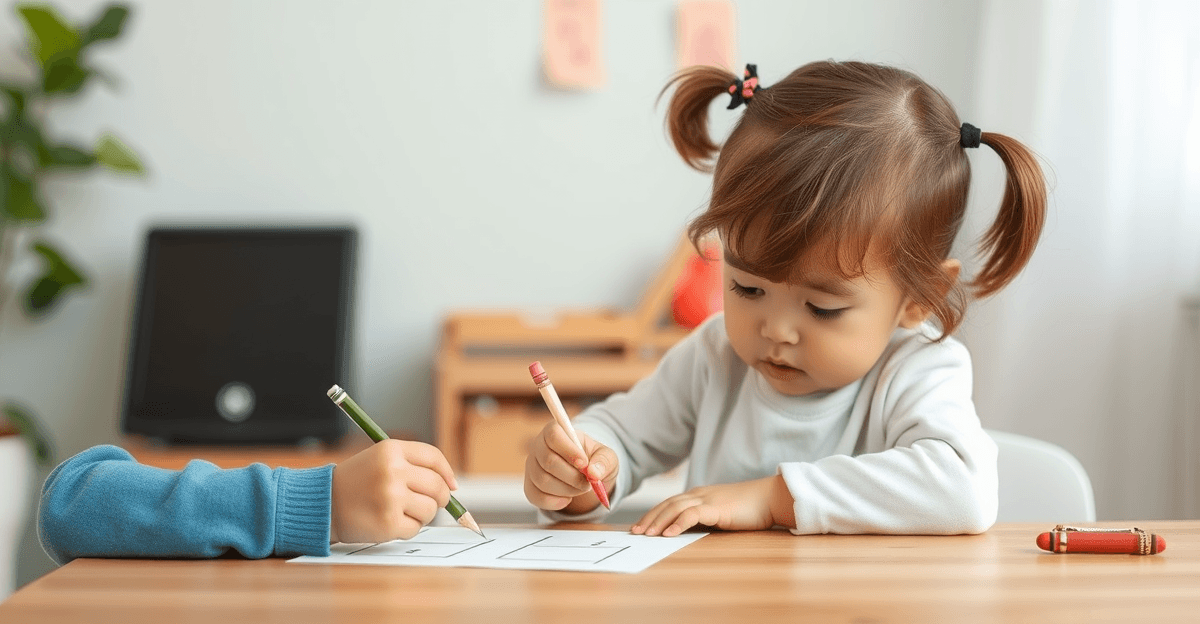
It's a Tuesday evening and your little one comes home from kindergarten with a worksheet covered in numbers, smiley-face stickers, and a note about an "end-of-year progress check." Your heart does a little flip. Is this a test? Should you be drilling sums at the dinner table? If you've been wondering what the K2 maths assessment in Singapore actually involves, take a deep breath — you're in exactly the right place, and it's far gentler than you might fear.
The truth is that for K2 children (typically aged 5 to 6), maths "assessment" looks nothing like the exams you might remember. It's mostly play, observation, and short friendly activities designed to see how your child thinks — not to catch them out. In this guide, we'll walk through what to expect, what skills are being looked at, and how to support your child at home without turning your living room into a tuition centre.
🎯 TL;DR — Key Takeaways
- There is no national, standardised K2 maths exam in Singapore — assessments are play-based and observational.
- K2 maths covers counting to 20-30, numbers to 10-20, simple addition/subtraction within 10, shapes, sorting, and patterns (per MOE's NEL framework).
- Assessments at preschools like PCF Sparkletots and My First Skool are formative — they track progress, not rank children.
- The best preparation is everyday play: counting, cooking, sorting, and short bursts of fun practice.
- Around 5-10 minutes of daily maths play is more effective than long drilling sessions.
What Is the K2 Maths Assessment in Singapore?
The K2 maths assessment in Singapore is a formative, observation-based check of your child's early numeracy — not a high-stakes exam. Preschools use it to understand where each child is in their learning journey and to gently prepare them for Primary 1. There is no centralised MOE test that every K2 child must sit.
In Singapore, kindergarten falls under the Ministry of Education's Nurturing Early Learners (NEL) Framework, which guides what and how preschoolers learn across six domains — one of which is Numeracy. Whether your child attends an MOE Kindergarten, a PAP Community Foundation (PCF) Sparkletots centre, My First Skool, or a private preschool, their maths learning is anchored in this same national framework.
Definitive statement: Unlike Primary school, where children sit formal written assessments, the K2 maths assessment is designed to be low-pressure and developmentally appropriate — most children won't even realise they're being "assessed." Teachers observe how your child counts during snack time, sorts toys during play, or completes a simple worksheet, and they record these observations to build a picture of progress over time.
If your child has been working on the small muscles needed to hold a pencil and form numbers, you may find our guide on fine-motor-skills activities for K1 kids in Singapore a helpful companion — neat number formation often starts with strong little hands.
What Maths Skills Are Tested in K2?
By the end of K2, most Singapore children are expected to demonstrate a core set of numeracy skills aligned with the MOE NEL framework. These fall into roughly five areas: numbers, operations, shapes, measurement, and patterns. Below is a realistic breakdown of what your child should be comfortable with.
Numbers and Counting
This is the heart of K2 maths. By around age 6, most children can:
- Count fluently to at least 20, with many reaching 30, 50, or even 100 by rote.
- Recognise and write numbers to 10, and often up to 20.
- Match a number to a quantity (knowing that "5" means five objects) — a skill called one-to-one correspondence.
- Understand more, less, and equal, and order numbers from smallest to largest.
Simple Addition and Subtraction
K2 introduces basic operations, usually within 10. Your child learns to combine groups ("3 apples and 2 apples make 5") and take away ("5 sweets, eat 2, how many left?"). At this age, they often use fingers, counters, or drawings — which is completely normal and developmentally healthy.
Shapes, Space, and Measurement
Children learn to recognise and name basic 2D shapes (circle, square, triangle, rectangle), describe position (above, below, beside), and compare sizes and lengths (longer/shorter, heavier/lighter). They start to grasp simple measurement through everyday comparison rather than rulers.
Patterns and Sorting
K2 maths also nurtures logical thinking. Your child sorts objects by colour, shape, or size, and continues simple patterns (red-blue-red-blue-?). Definitive statement: Pattern recognition is one of the strongest early predictors of later maths success, which is why preschools weave it into so many activities.
For a fuller picture of where maths sits among everything your child should be ready for, the Primary 1 readiness skills checklist maps out 30 key skills across literacy, numeracy, and independence.
How Is the K2 Maths Assessment Conducted?
K2 maths assessments in Singapore are conducted mainly through teacher observation, short one-on-one tasks, and simple worksheets — almost always embedded in play rather than sit-down testing. The format varies by preschool, but the philosophy is consistent: assess gently, frequently, and authentically.
At PCF Sparkletots, My First Skool, and MOE Kindergartens, you'll typically see a mix of:
- Observational checklists — teachers note skills as children naturally demonstrate them during activities.
- Portfolio work — collected worksheets and craft that show progress over the term.
- Short individual activities — a teacher might ask your child to count blocks or identify shapes for a few minutes.
- End-of-term progress reports — a written summary shared with parents, often with photos and examples.
Definitive statement: Because these assessments are formative (designed to support learning) rather than summative (designed to grade), there are no "pass" or "fail" outcomes in K2 — only a snapshot of where your child is and where they're growing. If a report flags an area to work on, treat it as helpful information, not a verdict.
Does K2 Maths Matter for PSLE and Primary 1?
K2 maths matters for Primary 1 readiness, but it has no direct link to the PSLE, which your child won't sit until Primary 6 — around six years away. What K2 builds is the foundation of number sense and confidence that makes the P1 transition smoother. A child who enters P1 comfortable with counting and simple sums tends to settle in faster.
Here's the reassuring part: Singapore's Primary 1 maths curriculum is designed to start from the basics, assuming children arrive with a range of abilities. Your child does not need to master addition beyond 10 or do worksheets for an hour a day to be "ready." Steady, joyful exposure to numbers matters far more than early acceleration.
That said, the jump from preschool to P1 is real, and confidence is key. Many parents pair home practice with light tools — and if you ever feel your child would benefit from more structured support, TuitionLah lets you find a tutor for free with no agency fees, including for early P1 readiness.
To understand the bigger transition picture, our guide on how to prepare your child for a kindergarten interview in Singapore covers the readiness mindset that applies just as much to the P1 leap.
How to Prepare Your Child for the K2 Maths Assessment
The best preparation for the K2 maths assessment is short, playful, everyday maths — not formal drilling. Children at this age learn through their hands and their world, so the most effective practice rarely looks like "studying" at all. Aim for around 5-10 minutes of focused maths play a day, woven into normal routines.
Turn Daily Life Into Maths
- Count everything: stairs, buttons, fish balls in the bowl, MRT stops.
- Sort the laundry by colour or size — instant pattern and classification practice.
- Bake or cook together: measuring cups and counting eggs teach quantity and measurement naturally.
- Play shop: use coins to practise simple adding and the idea of "how many more."
- Spot shapes on the walk to school — circles on signboards, rectangles in HDB windows.
Make Practice Feel Like Play
Children build confidence when maths feels like a game, not a test. This is where adaptive quiz practice that makes learning fun and measurable for K1-K2 kids can gently fill the gap between hands-on play and the worksheet format your child will meet in K2 and P1. Tools like QuizKin adjust the difficulty to your child's level — keeping them in that sweet spot where they're challenged but not frustrated — and quietly show you which skills are solid and which need a little more love.
If you're weighing up which digital tools are worth your child's time, our roundup of the best educational apps for 4-year-olds in Singapore and our practical screen time rules for preschoolers can help you keep digital learning balanced and healthy.
Keep the Emotional Tone Light
Definitive statement: Research in early childhood education consistently shows that a child's attitude toward maths — their confidence and willingness to try — predicts later achievement more reliably than early speed or accuracy. So when your little one gets a sum "wrong," celebrate the thinking, not just the answer. Phrases like "I love how you worked that out!" build the resilience that carries them through harder maths years later. (Our guide on building resilience in preschoolers goes deeper on this.)
If you're keeping an eye on costs for enrichment, apps, or learning materials, WhyNotDeals collects the latest education and family deals in Singapore.
What If My Child Is Behind?
If your child seems behind in K2 maths, don't panic — variation is normal and most gaps close quickly with gentle, consistent support. Children develop numeracy at very different rates, and a child who isn't writing numbers neatly at 5 may be perfectly on track by P1.
Start by talking to your child's teacher, who sees them in a learning context every day and can tell you whether a concern is developmental or simply a matter of more practice. Focus on one small skill at a time — say, counting confidently to 20 — rather than everything at once. Short daily wins build momentum and protect your child's confidence.
Definitive statement: A struggle with K2 maths is almost never a sign of low ability — far more often it reflects a child who simply needs more time, a different explanation, or more hands-on play. Patience and warmth do more good than worry. Remember too that maths sits alongside reading, social, and emotional growth; our pieces on reading milestones for children ages 4-6 and developing social skills in preschoolers can help you see your child's progress in the round.
Key Takeaways for Singapore Parents
- The K2 maths assessment in Singapore is gentle, play-based, and observational — there's no national exam and no pass/fail.
- Core skills include counting to 20-30, numbers to 10-20, addition and subtraction within 10, shapes, sorting, and patterns, all aligned with MOE's NEL Numeracy framework.
- It matters for Primary 1 readiness, but has no direct bearing on the PSLE years down the line.
- The best preparation is 5-10 minutes of everyday maths play plus light, adaptive practice — and a warm, low-pressure attitude that keeps your child loving numbers.
Your little one is learning maths every time you count fish balls together or sort socks on a Sunday. Keep it joyful, keep it short, and trust the process — you're already doing more than you think.
Sources
Practise what you’ve read with QuizKin
Adaptive quizzes covering phonics, sight words, numbers, and more — aligned with the Singapore MOE curriculum. Start your free Premium trial today.
Frequently Asked Questions
No. There is no national, standardised K2 maths exam in Singapore. Most assessments at PCF Sparkletots, My First Skool and other preschools are gentle, play-based check-ins done through observation, worksheets, or short one-on-one activities. Their purpose is to track your child's progress and flag any gaps before Primary 1, not to rank or stress your little one.
By the end of K2 (around age 6), most children can count to at least 20-30, recognise and write numbers to 10 or 20, understand simple addition and subtraction within 10, sort and compare objects, recognise basic shapes, and grasp concepts like more/less, big/small and patterns. These align with MOE's Nurturing Early Learners (NEL) Numeracy framework.
Keep it everyday and playful: count stairs, sort laundry by colour, measure ingredients while baking, and talk about shapes you see on the bus. Short, regular practice beats long drilling sessions. Adaptive apps like QuizKin can help by turning practice into a game, but hands-on real-world maths is the most powerful — and least stressful — tool you have.
Ready to make learning fun?
QuizKin turns screen time into learning time with adaptive quizzes built for K1-K2 kids in Singapore. Free to start.
Related Articles
K2 English Assessment: What to Expect in Singapore
A warm, practical guide to the K2 English assessment in Singapore — what's tested, realistic expectations, and gentle ways to prepare your K1-K2 child at home.

Preparing Your Child for Quizzes: Low-Stress Approach
Help your K1-K2 child feel confident preparing for quiz assessments in Singapore. Low-stress strategies that build real skills without the pressure.
Building Good Study Habits in Kindergarten: A Singapore Parent's Guide
How to build lasting study habits in K1 and K2 children — without pressure or tears. Evidence-based strategies tailored for Singapore families.