Malay & Tamil Mother Tongue at Home: K1-K2 Tips for Singapore Parents
Practical, expert-backed strategies for Singapore parents to nurture Malay or Tamil mother tongue at home during K1 and K2, long before formal school begins.
Mervin Tan · Founder, QuizKin
Published 21 May 2026
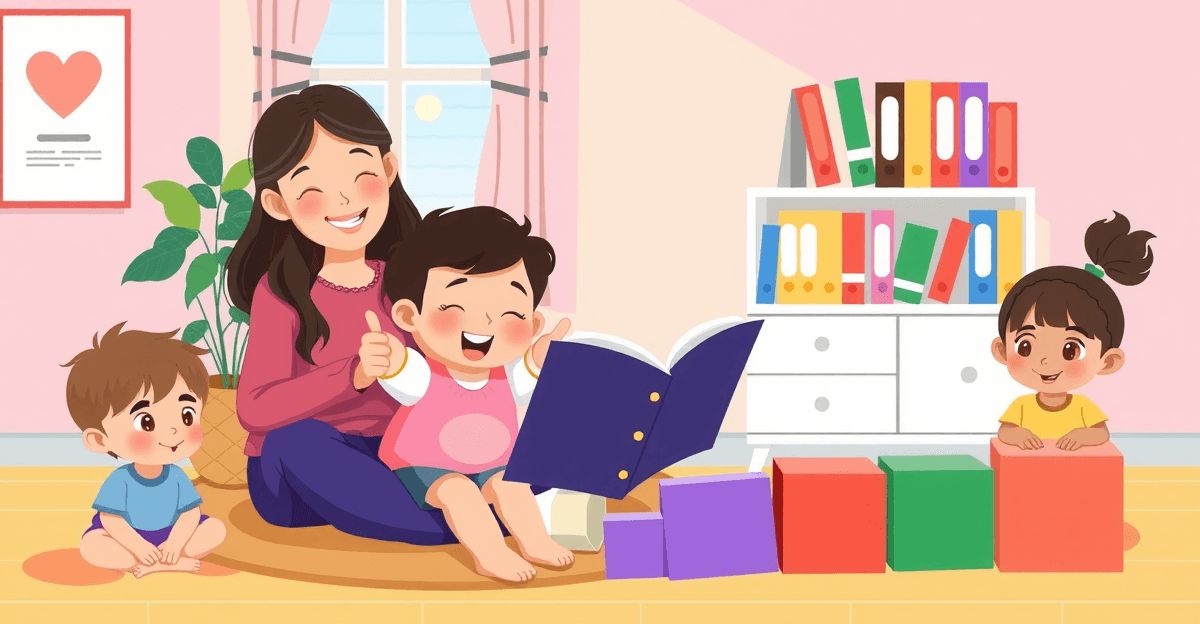
For a lot of Singapore families, English runs the household. It's the language at work, the language you socialise in, and probably the language you use with your kids most of the time. But for Malay and Indian families — and really, any family whose children will study Malay or Tamil as a Mother Tongue in school — the K1 and K2 years are a golden window you don't want to let slip by.
TL;DR: Practical, expert-backed strategies for Singapore parents to nurture Malay or Tamil mother tongue at home during K1 and K2, long before formal school begins.
Mother tongue isn't just another school subject. It carries culture, identity, and a kind of richness that only comes from having two languages in your world. And the research is pretty clear: children who build strong spoken foundations in their mother tongue before school starts find reading and writing way smoother when formal lessons begin.
This guide is for parents of K1 and K2 children who want to build Malay or Tamil at home — practically, sustainably, and without it feeling like a chore.
Why the K1-K2 Years Matter So Much
The human brain is wired for language learning from birth. According to ECDA, the years from birth to age 6 are the most sensitive period, when the pathways for sounds, vocabulary, and sentence patterns are being laid down at incredible speed.
By the time formal mother tongue lessons begin in Primary 1, children who've already been hearing, speaking, and engaging with the language regularly are working from a foundation of thousands of hours of exposure. Those encountering it mostly for the first time are starting from scratch.
The gap between these two groups tends to widen, not narrow, as the curriculum gets harder. Building exposure during K1 and K2 is one of the highest-impact things a parent can do.
Building Malay at Home — Practical Strategies
Start With Oral Language, Not Writing
Children learn to speak before they read. Same principle applies here — don't jump to worksheets. Instead, fill your child's environment with spoken Malay.
Daily conversational anchors — pick specific moments and do them entirely in Malay:
- Morning greetings: "Selamat pagi! Dah makan?" (Good morning! Have you eaten?)
- Bath time narration: describe what you're doing in Malay
- Bedtime: say goodnight and express love in Malay
Even if your own Malay is a bit rusty, showing effort and signalling that the language matters builds your child's motivation.
Malay Songs and Rhymes
Music is one of the most powerful memory tools for young kids. Classic Malay nursery rhymes like "Tepuk Amai-Amai", "Bangau Oh Bangau", and "Rasa Sayang" bring in rhythm, rhyme, and vocabulary in a fun, low-pressure way.
YouTube channels and Spotify playlists for Malay children's songs are easy to find. Play them during car rides, mealtimes, or as a morning ritual.
Malay Picture Books From NLB
NLB maintains a wonderful collection of Malay picture books across all branch libraries. Titles like Anak-Anak Haiwan and the Siri Buku Cerita series introduce simple vocabulary through colourful illustrations.
Make library visits a regular thing. Let your child choose books. Read aloud with expression. Pause to discuss the pictures. Ask simple questions: "Siapa itu?" (Who is that?) "Apa warna ini?" (What colour is this?)
The NLB Mobile app also has Malay eBooks for children — free with a library card.
Label Your Home in Malay
Stick simple labels on everyday items: pintu (door), meja (table), kerusi (chair), tingkap (window), buku (book). Refer to the labels naturally during daily life. This builds passive vocabulary without feeling like a "lesson" at all.
Engage the Extended Family
Grandparents, aunts, uncles, and cousins who speak Malay fluently are such a valuable resource. Even a weekly video call where your child hears and responds to a fluent speaker makes a real difference. Research on bilingual development consistently shows that hearing multiple speakers — not just parents — speeds things up.
Building Tamil at Home — Practical Strategies
Prioritise Listening and Speaking First
Tamil has a beautiful literary tradition, but for a K1-K2 child, the goal isn't classical Tamil. It's conversational comfort. Focus on the spoken language they'll need for oral assessments and everyday chatting.
Simple daily routines in Tamil:
- "Saapittaayaa?" (Have you eaten?)
- "Enna venum?" (What do you want?)
- "Padikkalam" (Let's study/read together)
Consistency trumps perfection. If your Tamil is rusty too, commit to learning a few words and phrases each week alongside your child.
Tamil Songs, Lullabies, and Rhymes
Tamil has a rich tradition of children's songs. Classics like "Kanne Kalaimane" and traditional lullabies (thaalaattu) are culturally meaningful and phonologically rich — exposing young ears to the distinctive sounds of Tamil.
Look for Tamil children's rhyme playlists on YouTube. The Tamil Language Learning and Promotion Committee (TLLPC) periodically releases children's content and resources — check their platforms for the latest materials.
Tamil Books and the NLB Collection
NLB stocks Tamil picture books across its network. Bilingual Tamil-English picture books are great for early readers — they let your child connect Tamil words with English concepts they already know.
The Read@School and Read@Home programmes run by MOE and NLB also include Tamil titles from time to time. Ask at your nearest library branch for current recommendations.
Tamil Alphabet — A Gentle Introduction
Tamil script has 12 vowels (uyir), 18 consonants (mei), and 216 compound characters. Sounds intimidating, but at K1-K2, the goal is just exposure — not mastery.
Introduce the vowels playfully. Point them out in Tamil-language books. Use Tamil alphabet charts with pictures. Apps for Tamil script learning can help too — 5-10 minutes daily is plenty.
Community Programmes and Tamil Classes
Several community organisations run Tamil language programmes for young children. The TLLPC and organisations connected to Hindu temples often run weekend classes. Even attending cultural events — Deepavali programmes, Pongal celebrations — where Tamil is spoken creates positive associations with the language.
Strategies That Work for Both Malay and Tamil
The One Parent, One Language (OPOL) Approach
If both parents speak the mother tongue, consider having one parent as the consistent mother tongue speaker. Research suggests that hearing the language reliably from one person helps children organise their languages more effectively.
This doesn't need to be rigid. If the other parent doesn't speak the language, just making the mother tongue visible and valued in whatever way is real for your family goes a long way.
Make It Cultural, Not Just Academic
Language lives inside culture. Cook a traditional dish and name the ingredients in Malay or Tamil. Watch age-appropriate Malay or Tamil cartoons together. Celebrate festivals with their traditional songs and stories. When language is wrapped up in meaning and belonging, children absorb it much more deeply than any worksheet can achieve.
Use Digital Learning Thoughtfully
Apps and digital tools can add to — not replace — real human language interaction. Look for apps targeting vocabulary, phonological awareness, and listening comprehension in Malay or Tamil. QuizKin supports vocabulary and comprehension practice that reinforces what children are learning at home, building cognitive habits that support any language.
Screen time should be bounded and intentional. HPB recommends keeping recreational screen time under 1 hour per day for ages 2-6. Keep digital learning focused and interactive — passive videos count as exposure but shouldn't crowd out conversation and reading.
Normalise Switching Between Languages
Code-switching — moving between languages mid-conversation — is totally natural and is NOT a sign of confusion. Research shows it's actually a sophisticated cognitive skill. Don't worry if your child mixes languages lor. With consistent exposure, they'll learn to separate them appropriately over time.
Realistic Goals for K1 and K2
By the end of K2, a child with consistent home exposure should be able to:
Malay:
- Understand and respond to simple questions and instructions in Malay
- Know 100-200 common words (body parts, colours, animals, food, family members)
- Sing 3-5 familiar Malay songs from memory
- Recognise their name written in Jawi (optional but culturally meaningful for Malay-Muslim families)
Tamil:
- Understand and respond to simple questions and instructions in Tamil
- Know 100-200 common vocabulary words
- Recognise the 12 Tamil vowels and begin to identify basic consonants
- Connect Tamil with positive, warm experiences
These are very achievable with 20-30 minutes of intentional daily exposure — not intensive drilling, just consistent, enjoyable engagement.
A Note on Pressure and Enjoyment
The single biggest predictor of your child's long-term success with their mother tongue is how they feel about it. Children who connect the language with warmth, stories, songs, and family will keep going through the harder academic stages. Children who connect it with frustration, failure, or pressure often switch off.
Your role at K1-K2 isn't to drill vocabulary lists. It's to make Malay or Tamil feel like a living, loving part of your family's world.
That foundation, built quietly and joyfully during the preschool years, is worth more than any tuition class later on.
References
- Early Childhood Development Agency (ECDA). Guidelines on Developmental Milestones for Language. Singapore: ECDA, 2023. https://www.ecda.gov.sg
- Ministry of Education Singapore. Mother Tongue Languages in Singapore Schools. https://www.moe.gov.sg/primary/curriculum/mother-tongue-languages
- National Library Board Singapore. Read! Singapore and NLB Mobile App. https://www.nlb.gov.sg
- Tamil Language Learning and Promotion Committee (TLLPC). Tamil Learning Resources. https://www.nel.moe.edu.sg/
- Majlis Bahasa Melayu Singapura (MBMS). Malay Language Resources and Programmes. https://www.ecda.gov.sg/parents
- Health Promotion Board Singapore. Screen Time Recommendations for Young Children. https://www.hpb.gov.sg
- Cummins, J. (2000). Language, Power and Pedagogy: Bilingual Children in the Crossfire. Multilingual Matters.
- Bialystok, E. (2011). "Reshaping the mind: The benefits of bilingualism." Canadian Journal of Experimental Psychology, 65(4), 229-235.
Looking for more? Check out find a tutor for free on TuitionLah.
Exploring parenthood in Singapore? Visit ParentLah for practical tips on raising kids in Singapore.
Practise what you’ve read with QuizKin
Adaptive quizzes covering phonics, sight words, numbers, and more — aligned with the Singapore MOE curriculum. Start your free Premium trial today.
Frequently Asked Questions
The earlier the better. Research consistently shows that children's brains are most receptive to language acquisition from birth to age 6. Even if formal mother tongue instruction only begins in Primary 1, building oral fluency and vocabulary during K1 and K2 gives your child a significant head start. Aim for at least 20-30 minutes of meaningful Malay or Tamil exposure daily.
Not at all. K1 (around age 4-5) is still well within the critical window for language learning. The key is consistency and making it enjoyable. Start with songs, simple picture books, and labelling objects around the home. Children who have strong oral foundations pick up reading and writing far more easily when formal instruction begins.
In Singapore primary schools, mother tongue language (MTL) is assessed through listening comprehension, oral communication, reading, and writing components. The PSLE MTL paper tests all four skills. Building early oral fluency and vocabulary at the K1-K2 stage directly supports all these components later on.
Yes. The National Library Board (NLB) has an extensive collection of Malay and Tamil picture books available for loan at all branch libraries, and through the NLB Mobile app (with eBooks). The Malay Language Council (Majlis Bahasa Melayu Singapura, MBMS) and Tamil Language Learning and Promotion Committee (TLLPC) also publish resources and run community programmes.
About the author
Mervin Tan
Founder, QuizKin
Mervin Tan is the founder of QuizKin and a software engineer and dad of two young children in Singapore. He builds QuizKin's adaptive quiz engine and writes practical K1-K2 learning guides grounded in MOE's Nurturing Early Learners framework and his own experience preparing his kids for Primary 1. QuizKin is built by Adaptels Pte. Ltd., Singapore.
Ready to make learning fun?
QuizKin turns screen time into learning time with adaptive quizzes built for K1-K2 kids in Singapore. Free to start.
Related Articles
Building Good Study Habits in Kindergarten: A Singapore Parent's Guide
How to build lasting study habits in K1 and K2 children — without pressure or tears. Evidence-based strategies tailored for Singapore families.

Weekend Revision Ideas for K1-K2 Without Burnout
Practical weekend revision ideas for K1-K2 children in Singapore that keep learning joyful and burnout-free. Short, play-based routines parents can start today.

Signs of a Gifted Child in Preschool: Singapore Parent Guide
Spot the signs of a gifted child in preschool with this Singapore parent guide. Learn K1-K2 giftedness traits, local assessment options and how to nurture your little one.