How Music Helps Preschoolers Learn: Benefits for K1-K2 Kids in Singapore
Discover how music boosts learning for K1-K2 children in Singapore. Research-backed benefits for literacy, numeracy, focus, and emotional development in preschoolers.
QuizKin Team
Published 10 May 2026
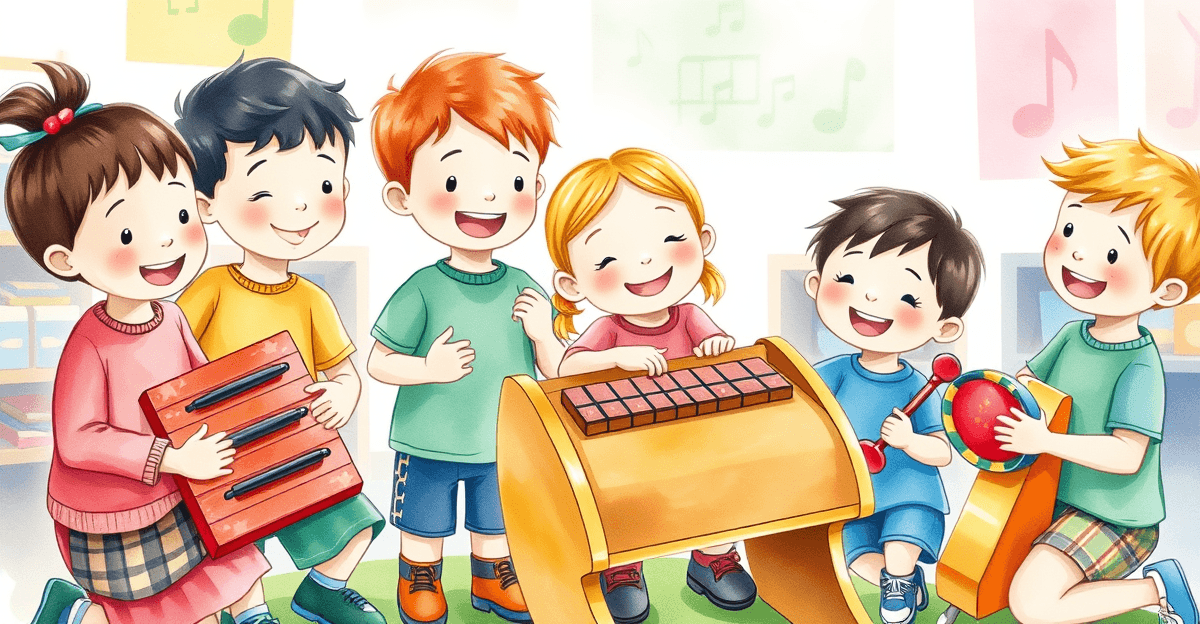
Your child probably already loves music. They bob along to catchy tunes, memorise song lyrics faster than you can keep up, and break into spontaneous dance at the slightest beat. But what you may not realise is that this natural musical instinct is doing far more than entertaining them. It is actively building their brain.
TL;DR: Discover how music boosts learning for K1-K2 children in Singapore. Research-backed benefits for literacy, numeracy, focus, and emotional development in preschoolers.
The connection between music and learning is one of the most well-established findings in developmental psychology. And for K1-K2 children in Singapore — a critical window for foundational literacy and numeracy skills — music is not just a nice extra. It is a powerful learning accelerator.
The Science: Why Music and Learning Are Connected
The human brain does not process music in isolation. When a child sings a song, their brain simultaneously activates regions responsible for language, memory, motor coordination, and emotional regulation. This cross-activation is what makes music uniquely powerful for learning.
Neural Pathway Development
Research from the University of Southern California's Brain and Creativity Institute found that musical experiences in early childhood accelerate brain development, particularly in the areas responsible for language acquisition and reading skills. The auditory cortex — the part of the brain that processes sound — develops faster in children with regular musical exposure.
For Singapore children learning to navigate English and a mother tongue language simultaneously, this accelerated auditory processing is especially valuable. It helps them distinguish between similar sounds across different languages, a skill linguists call phonemic discrimination.
Pattern Recognition
Music is fundamentally built on patterns — repeating rhythms, melodic sequences, and structural forms like verse-chorus-verse. When children engage with music, they practise pattern recognition in an intuitive, enjoyable way.
This same pattern recognition ability transfers directly to mathematics. Counting beats, recognising rhythmic patterns, and understanding musical structure build the same cognitive muscles needed for number sequences, basic addition, and geometric pattern recognition in K1-K2 maths.
How Music Boosts Literacy in K1-K2 Children
The strongest evidence for music's learning benefits centres on literacy development. Here is how musical activities directly support your child's reading journey.
Phonological Awareness
Phonological awareness — the ability to hear and manipulate individual sounds in words — is the single strongest predictor of reading success. Children who struggle with phonological awareness in K1 are significantly more likely to have reading difficulties in Primary 1 and beyond.
Music training strengthens phonological awareness because songs break language into its component sounds. When children sing "Twinkle, Twinkle, Little Star," they hear and reproduce the individual sounds and syllables that make up each word. Rhyming songs are particularly powerful because they draw attention to word endings, training the ear to notice sound patterns within language.
Vocabulary Building
Songs introduce children to new words in a memorable context. The combination of melody, rhythm, and repetition makes song lyrics far stickier than spoken words alone. Children who learn vocabulary through songs retain those words longer and recall them more easily.
In the Singapore context, bilingual songs and nursery rhymes in both English and Mandarin (or Malay or Tamil) create natural bridges between languages. Many kindergartens use songs strategically to introduce mother tongue vocabulary in an engaging way.
Memory and Sequencing
Learning a song requires remembering words in a specific order — a sequencing skill that directly supports reading comprehension and narrative understanding. Children who can remember and reproduce song lyrics demonstrate the working memory capacity needed for following multi-step instructions and understanding story sequences.
Music and Numeracy: The Rhythm-Maths Connection
The connection between music and maths is not just theoretical. Practical musical activities directly reinforce K1-K2 numeracy concepts.
Counting and Number Sense
Counting songs like "Five Little Ducks" and "Ten Green Bottles" embed number sequences and basic subtraction into memorable musical experiences. Children learn to count forwards and backwards, understand concepts of more and less, and grasp one-to-one correspondence — all foundational numeracy skills — through song.
Rhythm and Fractions
Clapping along to different rhythms introduces the concept of division and fractions intuitively. A whole note, half note, and quarter note in music are literally musical fractions. While K1-K2 children do not need to understand fractions formally, the intuitive experience of dividing beats prepares neural pathways for later mathematical reasoning.
Spatial-Temporal Reasoning
Playing music or moving to music develops spatial-temporal reasoning — the ability to think in sequences and visualise spatial patterns. This cognitive skill is directly linked to performance in geometry and problem-solving tasks in later primary school years.
Beyond Academics: Music and Emotional Development
The learning benefits of music extend well beyond reading and maths scores. For K1-K2 children developing their social and emotional skills, music provides critical support.
Self-Regulation
Following the structure of a song — waiting for your turn to sing, matching the tempo, starting and stopping with the group — practises self-regulation skills. These are the same skills children need to sit through a lesson, follow classroom routines, and manage their emotions during challenging tasks.
Confidence Building
Singing and performing in a group builds confidence in a low-stakes environment. Unlike academic tasks where there are clear right and wrong answers, musical expression is open-ended. Children who feel hesitant about reading or maths often find confidence through music first, and that confidence carries over into academic activities.
Emotional Expression
Music gives children a vocabulary for emotions before they have the words to express them. Recognising that a song sounds happy, sad, or exciting builds emotional literacy. This emotional awareness is a core component of the MOE NEL framework's emphasis on social-emotional development.
Practical Music Activities for Singapore Parents
You do not need musical training or expensive instruments to incorporate music into your child's learning routine. Here are practical activities any parent can do.
Daily Song Routines
Build songs into daily routines. A good morning song, a clean-up song, a bath-time song — these create structure while embedding language patterns. Choose songs with repetitive lyrics and clear rhythms for maximum learning benefit.
Rhythm Games at Home
- Body percussion — clap, stomp, pat knees in patterns for your child to copy
- Kitchen band — use pots, wooden spoons, and containers as instruments
- Rhythm echo — tap a rhythm and have your child repeat it, gradually increasing complexity
- Freeze dance — play music and freeze when it stops, building listening skills and self-regulation
Singing with Learning Apps
Educational apps that incorporate musical elements can reinforce learning through sound. QuizKin uses audio cues and sound patterns to make phonics and numeracy practice more engaging. The combination of visual learning with auditory reinforcement strengthens memory retention compared to visual-only learning.
Community Music Programmes
Singapore offers numerous affordable music programmes for preschoolers:
- Community centres (CCs) — group music classes from S$60-120 per term
- National Library Board — free music and movement storytelling sessions
- Esplanade — PIP's PLAYbox and other free children's music programmes
- Kindergarten programmes — most K1-K2 programmes include daily music activities
How to Maximise Music's Learning Benefits
Not all musical experiences are equally beneficial for learning. Here is what the research says about maximising the impact.
Active Over Passive
Singing, playing instruments, and moving to music are far more effective than passive listening. The learning benefit comes from the child's active engagement with sound, not from background music playing while they do something else.
Consistency Over Intensity
Short daily musical activities (10-15 minutes) are more beneficial than occasional long sessions. The neural pathways strengthened by music require regular activation to develop.
Social Musical Experiences
Making music with others — singing with parents, playing rhythm games with siblings, joining a music group — adds social learning benefits that solo music listening cannot provide.
Connect Music to Other Learning
Deliberately link musical activities to academic learning. Sing counting songs before a maths activity. Use phonics songs before reading practice. This explicit connection helps children transfer skills between musical and academic contexts.
Supporting Your Child's Learning Journey
Music is one of many tools that support preschool learning. Combined with structured educational activities, daily reading, and active play, musical experiences create a rich environment for your K1-K2 child's development.
QuizKin's adaptive quiz platform incorporates audio and sound elements into literacy and numeracy practice, creating multi-sensory learning experiences aligned with the Singapore MOE curriculum. Try QuizKin free today and see how engaging, multi-sensory learning can make a difference for your child.
Sources
Looking for more? Check out find a tutor for free on TuitionLah.
Exploring parenthood in Singapore? Visit ParentLah for practical tips on raising kids in Singapore.
Practise what you’ve read with QuizKin
Adaptive quizzes covering phonics, sight words, numbers, and more — aligned with the Singapore MOE curriculum. Start your free Premium trial today.
Frequently Asked Questions
Yes. Research consistently shows that musical activities strengthen neural pathways used for language processing, pattern recognition, and memory. A 2023 study published in Developmental Science found that children aged 4-6 who engaged in regular musical activities showed measurably stronger phonological awareness — a key predictor of reading success — compared to peers without musical exposure.
For learning benefits, interactive musical activities like singing, clapping rhythms, and playing simple instruments are more effective than passive listening. Songs with repetitive lyrics and clear rhythm patterns work best for literacy development. For background music during learning activities, instrumental music at moderate volume — particularly classical or acoustic — can help maintain focus without distraction.
Aim for 15-30 minutes of structured musical activity daily. This can include singing songs, rhythm games, or movement to music. Many Singapore kindergartens already include 15-20 minutes of music in their daily programme. At home, you can supplement with singing during routines like bath time or car rides — these informal moments count too.
Formal music classes are beneficial but not essential for learning gains. Research shows that parent-led musical activities at home can be just as effective for preschool-age children. If you choose classes, look for programmes that emphasise participation and exploration over performance. In Singapore, options include Kindermusik, Yamaha Junior Music Course, and community centre programmes starting from around S$120-200 per term.
Music apps can complement but should not fully replace interactive musical experiences. The key benefit of music for learning comes from active participation — singing, moving, and creating sounds — rather than passive listening. Apps that encourage singing along, rhythm tapping, and sound exploration are more beneficial than those that simply play music. For broader learning, apps like QuizKin use sound and rhythm elements to reinforce literacy and numeracy skills.
Ready to make learning fun?
QuizKin turns screen time into learning time with adaptive quizzes built for K1-K2 kids in Singapore. Free to start.
Related Articles
Bilingual Learning for Preschoolers: English & Mother Tongue (Singapore)
Raise a bilingual child in Singapore. Strategies for balancing English and Mother Tongue at home, common myths debunked, and daily routines for K1-K2 kids.
Teach Your Child to Read at Home (Singapore Guide)
Help your K1-K2 child read independently at home. From phonics and sight words to building fluency, aligned with the Singapore MOE kindergarten curriculum.
Best Books for K1 & K2 Kids in Singapore: A Parent's Reading List (2026)
20 best books for K1 and K2 children in Singapore — phonics readers, picture books, Chinese storybooks, and decodable texts to build reading confidence at home.