Best Board Games for Learning: Singapore Preschooler Picks
Discover the best board games for learning in Singapore for K1-K2 kids (ages 4-6). Parent-tested picks that build maths, literacy & social skills through play.
QuizKin Team
Published 21 September 2026
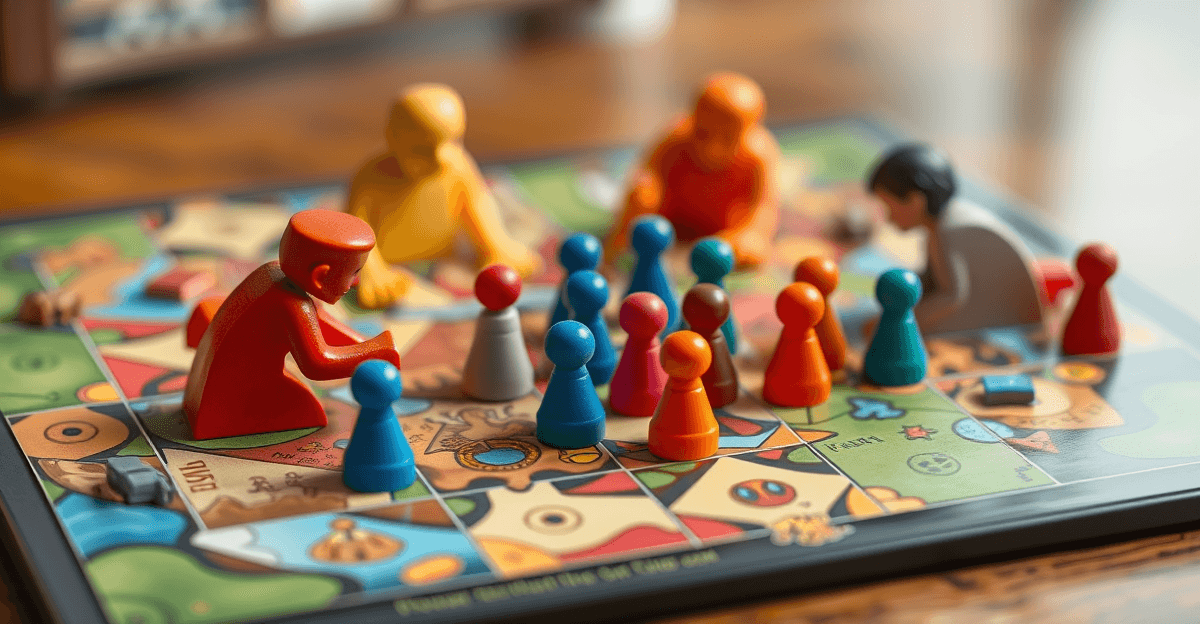
This article contains affiliate links — if you buy through them, QuizKin may earn a small commission at no extra cost to you. We only link products relevant to the activity.
It's the end of a long weekday in your HDB flat, the tablet is out of reach, and your K1 child is bouncing off the walls. For Singapore parents, this is a familiar moment — and a well-chosen board game can become a small miracle — quiet focus, giggles, and (without your child even noticing) real learning happening at the dining table. The best board games for learning turn ordinary family time into counting practice, vocabulary building, and lessons in patience that no worksheet can match.
This guide rounds up parent-tested, Singapore-available picks for children aged 4 to 6, aligned with the play-based philosophy that MOE kindergartens, PCF Sparkletots, and My First Skool already use every day. Let's help your little one learn through play.
## 🎯 TL;DR — Key Takeaways
- Board games for learning build early maths, literacy, and social-emotional skills through hands-on play — no screen required.
- For K1 (age 4-5): choose colour-matching and simple counting games (10-15 min play time).
- For K2 (age 5-6): move to games with early reading, strategy, and memory elements.
- Aim for 15-20 minutes, once or twice a day — short and positive beats long and frustrating.
- Most quality picks are available locally at Popular, Kiddy Palace, and major toy and book retailers at accessible price points.
- Pair physical games with adaptive digital practice to make learning both fun and measurable.
Why Are Board Games for Learning So Good for Preschoolers?
Board games for learning are powerful for preschoolers because they bundle multiple developmental skills — counting, colour recognition, turn-taking, and self-regulation — into a single joyful activity. Research consistently shows that hands-on, playful learning is how young children absorb concepts best. In fact, Singapore's Nurturing Early Learners framework, which guides kindergarten curricula, is built explicitly around learning through purposeful play.
Here's the definitive point: when a child plays a board game, they are practising executive function skills — attention, working memory, and impulse control — that predict school success more reliably than early academic drilling. A 2008 study published in the journal Child Development found that just five 15-20 minute sessions of a simple numerical board game measurably improved low-income preschoolers' number knowledge, and the gains lasted for months.
For Singapore families, the benefits stack up nicely:
- Maths readiness — counting spaces, comparing quantities, and recognising numerals map directly onto the K2 numeracy expectations.
- Language and vocabulary — naming pieces, following rules, and describing moves grow expressive language.
- Social-emotional growth — winning, losing, and waiting for a turn build the resilience your child will lean on in Primary 1.
- Fine motor control — picking up cards, moving tokens, and spinning dials strengthen little hands.
If building hand strength is a focus for your family, pair game night with these fine motor skills activities for K1 kids.
Best Board Games for Learning for K1 Children (Ages 4-5)
For K1 children, the best board games for learning are cooperative or luck-based games with short play times, simple rules, and no reading requirement. At this age, your child is still developing patience and attention, so aim for games that finish in 10-15 minutes and celebrate participation over competition. Here are five parent-approved picks widely available in Singapore.
Snail's Pace Race (Ravensburger)
A cooperative colour-dice game where players cheer six snails to the finish line. There are no winners or losers, which makes it perfect for a first board game. It teaches colour recognition and gentle turn-taking, and typically retails for around S$30-S$40 in Singapore. Play time is a manageable 10 minutes.
Hi Ho! Cherry-O (Hasbro)
A classic counting game where children fill their baskets with cherries. Your little one practises counting to 10, addition, and subtraction (when the bird or dog "steals" fruit) without realising it's maths. Ideal for early number sense that supports the K2 maths assessment later on.
Orchard Toys Shopping List
A memory and matching game (proudly made by a UK educational specialist and stocked at most Singapore toy stores) where children "shop" for items on their list. Great for vocabulary, categorisation, and visual memory.
Sequence for Kids
A no-reading strategy game using animal cards. Children match cards to a board and try to get four in a row — an accessible first taste of planning ahead.
The Sneaky, Snacky Squirrel Game
A colour-sorting game with a squirrel-shaped squeezer that doubles as fantastic fine motor practice. The pincer grip your child uses is the same one they'll need for holding a pencil correctly in Primary 1.
Best Board Games for Learning for K2 Children (Ages 5-6)
For K2 children, the best board games for learning introduce early reading, memory, and light strategy while stretching attention spans to 20-30 minutes. At ages 5-6, your child can follow multi-step rules and handle the ups and downs of competition — a valuable rehearsal for the more structured environment of primary school.
Zingo! (ThinkFun)
Bingo with a word-and-picture twist. Children match tiles to their cards, building sight-word recognition and early reading fluency. Zingo is one of the most recommended literacy games globally and pairs beautifully with your child's emerging reading milestones. See where your child stands with our guide to reading milestones for children ages 4-6.
Outfoxed! (Gamewright)
A cooperative "whodunit" deduction game. Players work together to find the fox who stole the pie, practising logical reasoning and — crucially — collaboration rather than competition. Wonderful for building the teamwork skills covered in our guide to developing social skills in preschoolers.
Rat-a-Tat Cat (Gamewright)
A memory and simple-addition card game that keeps K2 minds working. Children track low-number cards and make quick decisions — light mental maths wrapped in a fun theme.
Sum Swamp
A dedicated addition-and-subtraction adventure board game. As your child crosses the swamp, they solve simple sums with dice, reinforcing the arithmetic foundations that matter for early primary maths.
Ticket to Ride: First Journey
A simplified version of the beloved train game, designed for ages 6+. It introduces route planning, colour matching, and a gentle dose of strategy — a great "graduation" game as your child heads towards Primary 1.
How Do You Play Board Games With a Preschooler Without Meltdowns?
The secret to smooth game nights is keeping sessions short, celebrating effort over winning, and being willing to bend the rules. Preschoolers are still learning to lose gracefully, so the goal is a positive experience — not a perfect one. Here are practical tips Singapore parents swear by:
- Cap it at 15-20 minutes. End while your child still wants more. This keeps board games a treat, not a chore.
- Model losing well. When you lose, say "Aw, good game! I'll try again." Your reaction becomes their script. This is gentle preparation that can also help with reducing test anxiety in preschoolers down the road.
- Use "house rules." For K1, playing cooperatively or ignoring a rule that causes tears is completely fine. Rules can grow with your child.
- Play at the right time. Right after school, when your child is hungry and tired, is a recipe for frustration. Post-snack or weekend mornings work better.
- Praise the process. "You waited so patiently for your turn!" reinforces the exact skills you want to grow.
Where to Buy Learning Board Games in Singapore
You can find quality educational board games at Popular, Kiddy Palace, Toys"R"Us, and online via Shopee, Lazada, and Amazon SG. Most preschool-appropriate games cost between S$20 and S$50, with cooperative and imported educational brands (like Orchard Toys and ThinkFun) sitting at the higher end.
A few money-saving tips: check for bundle deals during the Great Singapore Sale and year-end sales, browse the pre-loved sections of parenting groups on Carousell, and keep an eye on family and education promotions at WhyNotDeals for the latest Singapore offers. Your neighbourhood library (via the NLB) also lends board games at some branches — a brilliant way to test a game before buying.
Balancing Board Games With Digital Learning
Board games and digital learning tools work best as partners, not rivals. Physical games shine at building face-to-face social skills and fine motor control, while quality digital tools offer adaptive practice that adjusts to exactly what your child needs next. The most effective home routine blends both.
This is where a tool like QuizKin fits naturally alongside your board game shelf. QuizKin offers adaptive quiz practice that makes learning fun and measurable for K1-K2 kids — so after your child counts cherries on Sunday, a few short weekday quizzes can reinforce those same number concepts and show you exactly where they're thriving or need a little extra help. Think of board games as the joyful, tactile foundation and adaptive practice as the way to track and target progress.
Whatever mix you choose, keep screens in check. Our guide to screen time rules for preschoolers offers practical daily limits, and if you're weighing digital options, see our roundup of the best educational apps for 4-year-olds in Singapore. To understand why game-based approaches work so well, our deep-dive on gamification and game-based learning for preschoolers is worth a read.
Board Games and Primary 1 Readiness
Beyond the fun, regular board game play quietly builds the school-readiness skills MOE and local educators prioritise: following instructions, sustained attention, number sense, and emotional regulation. A child who can wait their turn, cope with losing, and count confidently is far better prepared for the classroom than one who has simply memorised worksheets. These are precisely the "soft" competencies that make the transition to primary school smoother.
If Primary 1 is on the horizon, our Primary 1 readiness checklist of 30 skills shows exactly how these playful moments add up. And if you're navigating kindergarten placements first, the guide on how to prepare your child for a kindergarten interview pairs well. For families who feel their child would benefit from extra one-to-one support, TuitionLah helps you find a tutor for free, with no agency fees.
The Bottom Line
The best board games for learning aren't the flashiest or most expensive — they're the ones your family actually pulls off the shelf and enjoys together. Start with one simple, age-appropriate game, keep sessions short and warm, and let the counting, reading, and turn-taking sneak in through play. Your little one won't remember it as "study time." They'll remember it as time with you — and that's exactly why it works.
Sources & References
- MOE — Nurturing Early Learners (Kindergarten Curriculum Framework)
- MOE — Transition from Preschool to Primary School
- ECDA (Early Childhood Development Agency) — Singapore
- Ramani & Siegler (2008), "Promoting Broad and Stable Improvements in Low-Income Children's Numerical Knowledge Through Playing Number Board Games," Child Development
- National Library Board (NLB) Singapore
Practise what you’ve read with QuizKin
Adaptive quizzes covering phonics, sight words, numbers, and more — aligned with the Singapore MOE curriculum. Start your free Premium trial today.
Frequently Asked Questions
For 4-year-olds (K1), start with simple cooperative and colour-matching games like Snail's Pace Race, Hi Ho! Cherry-O, and Orchard Toys' Shopping List. These build counting, colour recognition, and turn-taking without requiring reading. Most are available at Popular, Kiddy Palace, and major bookstores in Singapore for S$20-S$45. Look for games with short play times of 10-15 minutes to match your little one's attention span.
One or two short sessions of 15-20 minutes a day is ideal for K1-K2 children. Preschoolers have developing attention spans, so ending a game while your child is still enjoying it keeps the experience positive. Board games are a screen-free way to hit the daily active learning that complements the play-based approach used in MOE kindergartens and most local preschools.
Both have a place. Board games build face-to-face social skills, turn-taking, and fine motor control that screens cannot replicate, while quality educational apps offer adaptive, measurable practice for specific skills like early maths and phonics. Many Singapore parents use board games for family bonding on weekends and short app sessions on weekdays. The key is balance and following healthy screen time limits for this age group.
Ready to make learning fun?
QuizKin turns screen time into learning time with adaptive quizzes built for K1-K2 kids in Singapore. Free to start.
Related Articles

Positive Reinforcement for Learning: How Singapore Parents Can Motivate Without Pressure
Learn how positive reinforcement for learning helps Singapore K1-K2 kids stay motivated. Practical tips for parents to encourage without pressure.
Building Healthy Study Habits in Preschoolers: Singapore Parent Tips
Learn how to build healthy study habits in preschoolers with practical Singapore parent tips. Age-appropriate strategies for K1-K2 children ages 4-6.
Outdoor Learning Ideas for Singapore Preschoolers: Gardens, Parks and Playgrounds
Discover outdoor learning ideas for Singapore preschoolers at gardens, parks and playgrounds. Fun, educational activities for K1-K2 kids aged 4-6.