How to Build Your Preschooler's Attention Span — Practical Tips for Singapore Parents
Struggling with a distracted K1 or K2 child? Practical, Singapore-tested strategies to build your preschooler's attention span before primary school.
Mervin Tan · Founder, QuizKin
Published 13 May 2026
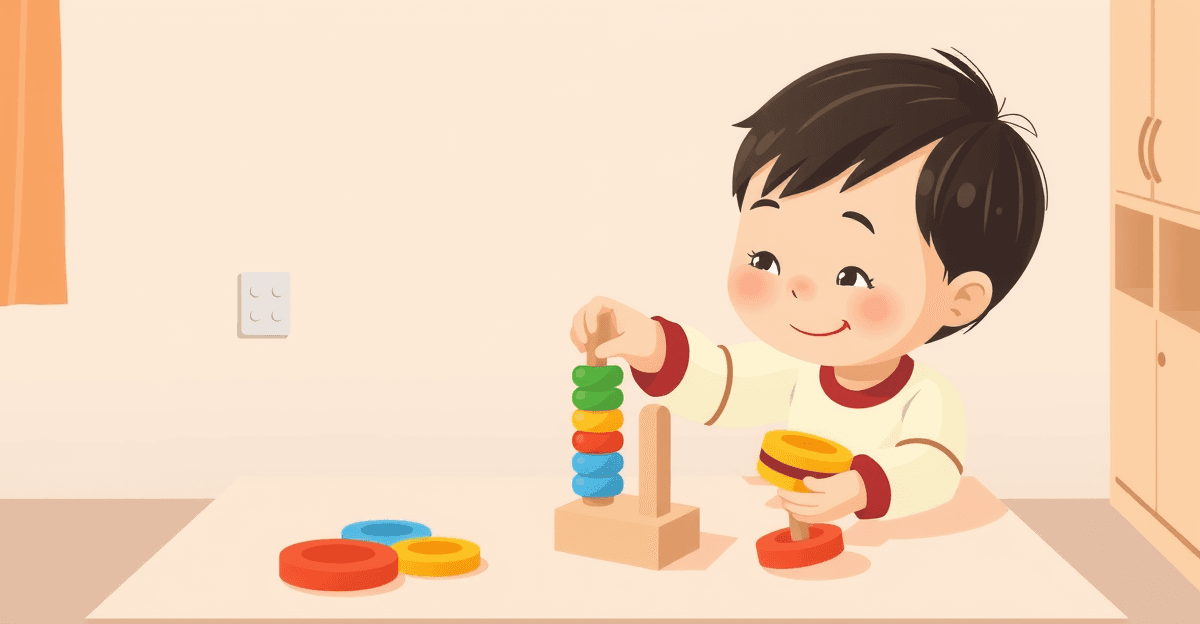
The gecko-on-the-ceiling scenario? That was last Tuesday for us. 7:30 pm, dining table in our Sengkang HDB flat, K2 child, one maths worksheet. Twenty-five minutes in, the pencil had been sharpened three times (the pencil was fine), there had been two urgent water requests, and my son was now craning his neck upward with genuine scientific curiosity at a gecko that had, I'll admit, also caught my attention. The worksheet sat there, pristine, mocking us both.
TL;DR: Struggling with a distracted K1 or K2 child? Practical, Singapore-tested strategies to build your preschooler's attention span before primary school.
If you felt seen just now, welcome to the club. It has a very large membership across Singapore — HDB flats, condos, landed terraces, doesn't matter. Parents of K1 and K2 kids everywhere are trying to crack the same puzzle: how do you get a 4, 5, or 6 year old to actually sit still long enough to learn something without it turning into a full negotiation?
Here's the thing that helped me stop stressing about it: attention is not a fixed personality trait your child either has or doesn't. It's a skill. And like any skill — swimming, reading, tolerating Mandarin tuition — it can be built with the right environment, the right habits, and a reasonable amount of patience (which, yes, also has to be built).
Why Attention Span Matters More Than You Think at This Age
Singapore's MOE primary school curriculum hits the ground running on Day 1. Primary 1 children are expected to sit through 30–40 minute lessons, follow multi-step instructions, and hold it together during tests. For a child who's spent K1 and K2 in a more relaxed environment, that transition can feel like going from Sunday morning to Monday morning very, very suddenly.
This isn't a call to drill your four-year-old with worksheets until they cry. Please don't do that. But it does mean the years between 4 and 6 are a genuinely important window to build the neural foundations for sustained attention — in ways that are age-appropriate and, ideally, not miserable for anyone involved.
There's also a compounding effect that doesn't get talked about enough. A child who can focus for 15 minutes absorbs more in those 15 minutes than a distracted child absorbs in 45. By the time PSLE looms on the horizon (I know, I know — it feels a million years away, but the habits start now), the child who learned to focus early has quietly accumulated thousands of extra hours of effective learning. That gap adds up. Silently, relentlessly, it adds up.
What Is a "Normal" Attention Span for K1–K2 Children?
Developmental psychologists use a rough rule of thumb: 2–5 minutes of focused attention per year of age. So ballpark figures:
- 4-year-olds (K1 entry): 8–20 minutes on a structured, engaging task
- 5-year-olds (K1/K2): 10–25 minutes
- 6-year-olds (K2 exit): 12–30 minutes
Notice how wide those ranges are. That's intentional, and it's normal. Children vary enormously based on temperament, how much they slept, what they ate, and — critically — what the activity actually is. The child who "can't focus" on phonics flashcards but will sit for 40 minutes building a LEGO set isn't broken. That's not a focus problem. That's a motivation and engagement problem, which is a much easier thing to work with.
Singapore preschools like PCF Sparkletots, My First Skool, and MindChamps design their learning blocks around this reality — most use 15–20 minute activity rotations specifically because that's where the developmental window sits.
The Attention Killers You Might Not Have Considered
Before you add any new strategies, it's worth checking what might be actively working against you. In our household, we spent months trying focus techniques before realising we'd completely overlooked one of the obvious culprits.
Sleep Deprivation
Singapore children are among the most sleep-deprived in Asia — a 2019 study found fewer than half of Singapore preschoolers get the recommended 10–13 hours per night. The prefrontal cortex, which handles attention and impulse control, is extraordinarily sensitive to sleep loss. Even 30–60 minutes of missed sleep makes a measurable difference to how a young child focuses the next day.
Fix: Consistent bedtime between 7:30–8:30 pm for K1–K2 children. Yes, this is genuinely hard in Singapore where family schedules are packed and dads often only get home at 7 pm. But if you're going to make one change, this is the one with the highest return. Everything else is noise if your child is running on 9 hours when they need 11.
Passive Screen Time Before Learning
Screens aren't evil, but fast-paced, high-stimulation content — your YouTube Kids rabbit holes, TikTok-style clips — recalibrates your child's dopamine system. After 30 minutes of that, a worksheet feels painfully boring by comparison. Not because your child is difficult. Because their nervous system has been trained to expect rapid-fire reward, and a pencil and paper simply cannot compete on those terms.
Fix: 30-minute screen-free buffer before any learning activity. Use the transition for outdoor play, drawing, or a puzzle. The decompression period actually works — it's annoying to enforce but it works.
Overscheduling
Here's the irony that took me embarrassingly long to accept: children in Singapore who are the most heavily scheduled — Mandarin tuition, phonics class, piano, swimming, art — often struggle more with focus, not less. A chronically tired, overscheduled child has a regulatory system that's under constant stress. And stress is the enemy of sustained attention.
Fix: Protect at least one completely free afternoon per week. No agenda, no enrichment, no structured play. Your child picks the activity. This is harder than it sounds when you're surrounded by parents who've signed their K2 kids up for seven classes, but it matters.
Practical Strategies That Work for Singapore Families
1. Use the "One Thing at a Time" Rule
Young children have limited working memory — this isn't a character flaw, it's developmental biology. When you say "go to your room, change out of your uniform, put your bag away, and wash your hands," you're asking a 5-year-old to hold four instructions simultaneously in their head while also resisting the temptation of every toy they pass on the way. Most will complete one or two steps and then… evaporate.
Practice deliberate single-instruction sequences at home. Give one instruction, wait for completion, give the next. Over time this trains working memory directly — and working memory is closely linked to sustained attention. Preschools using the Reggio Emilia or Montessori approach (several in Singapore, including some PAP Community Foundation centres) are particularly intentional about this.
2. Build a Visual Routine With a Timer
Children focus better when they know what's coming and can see how much time is left. A sand timer — 10 or 15 minutes — does this better than a clock face for young children because, well, they can't read a clock yet, but they can absolutely watch sand fall.
A simple picture-based routine card for homework time works beautifully:
- Sit down (🪑)
- Complete one task (📝)
- Timer rings → short break (🏃)
- Repeat
The predictability reduces resistance. The visible timer gives your child a sense of control. Both of those things improve on-task behaviour more than any amount of cajoling.
3. Move Before You Sit
This one felt almost too simple when I first read about it. Ten minutes of active play before a focused learning session genuinely improves attention in young children — it's documented, it's consistent, and it's free. Even a few minutes of jumping jacks in the living room, a quick run around the void deck, or chasing each other down the corridor makes a measurable difference.
In Singapore's context you don't need much: playground at the bottom of the block before homework starts, a bicycle lap around the estate, or just cutting loose in the living room for a bit. The point is active, not passive. More jumping, less YouTube.
4. Match Difficulty to the Edge of Competence
Too easy = bored. Too hard = frustrated. Both kill attention, just in different ways. The sweet spot — what developmental psychologists call the "zone of proximal development" — is the task that's just slightly beyond comfortable but still achievable with effort. That's where engagement lives.
This is one reason adaptive learning tools are worth taking seriously for K1–K2 children. When the practice adjusts to where your child actually is — not where a fixed syllabus says they should be — they stay engaged longer and build confidence alongside focus. QuizKin's adaptive quiz practice is built around exactly this principle: adjusting question difficulty in real time so K1–K2 kids stay in that productive challenge zone, which makes learning feel engaging rather than demoralising.
5. Narrate Focus and Praise the Process
Children learn what we notice. If every piece of feedback they receive is about whether they got the right answer, they learn that results are what matter. But if you occasionally stop and name the act of focusing — "Hey, I noticed you kept working on that puzzle even when you were stuck. That was five whole minutes of not giving up. That's actually impressive." — you're building something deeper.
This is Carol Dweck's growth mindset research applied at the K1 level, and it has particular relevance in Singapore where academic results are often the dominant feedback children receive from a very young age. Shifting some praise toward effort and process builds more durable habits. It also, weirdly, produces better academic results in the long run. The irony is not lost on me.
6. Create a Dedicated Learning Corner
Environment shapes behaviour for everyone — kids don't have a monopoly on being distracted by their surroundings. In a cluttered space with toys in peripheral vision and the TV murmuring in the background, focus is an uphill battle for a 5-year-old.
You don't need a study room. Most Singapore HDB flats don't have one, ours certainly doesn't. A consistent corner of the dining table with a simple tray for learning materials, decent lighting, and a household agreement that screens are off during that time is genuinely enough. Consistency matters more than the setup. After a week or two, sitting in that specific spot starts to prime your child's brain for focus — the physical cue does some of the work for you.
How Singapore's Preschool Curriculum Approaches Attention
MOE's Nurturing Early Learners (NEL) framework — the curriculum guide used by most local preschools — explicitly treats learning dispositions like persistence and focus as outcomes on par with academic content. Schools following the NEL framework are meant to build these dispositions through project work, inquiry-based learning, and structured play.
In practice, the best preschools are already working on this. Morning circle time, the transition between activities, classroom routines — all of it is building attention and self-regulation. Your job as a parent isn't to replicate school at home. It's to reinforce and extend what they're already doing.
One practical tip: ask your child's teacher which classroom routines help your child focus best. Then mirror them at home. Consistency between school and home is one of the fastest ways to accelerate habit formation — the child's nervous system stops having to recalibrate every time they walk through the front door.
When to Seek Professional Help
The vast majority of attention challenges in 4–6 year olds respond well to the strategies above. But there are signals worth taking seriously. If your child:
- Can't follow a single two-step instruction despite consistent, repeated practice
- Has extreme difficulty transitioning between activities — not just occasional resistance, but meltdowns most of the time
- Shows significant regression compared to same-age peers over several months
- Appears to have hearing or vision issues that might be affecting engagement
...a conversation with your child's paediatrician is the right move. Singapore's KKH Child Development Programme and NUH's Department of Psychological Medicine both offer developmental assessments. And if there is an underlying concern — ADHD, sensory processing differences, hearing issues — earlier identification always leads to better outcomes. Always.
Start Small, Stay Consistent
The mistake most of us make — and I include myself here — is trying to implement everything at once, burning out in week two, and going back to exactly how things were before. Attention is built over months, not days.
Pick one thing from this list. The sand timer. The movement break before homework. The screen-free buffer. Commit to it for two weeks before adding anything else. That's it. That's the whole strategy.
The children who arrive at Primary 1 ready to learn aren't necessarily the ones who went to the fanciest preschool or did the most enrichment classes. They're the ones who've been quietly, consistently trained to tolerate a bit of discomfort, push through when something gets hard, and feel genuine satisfaction when they finish what they started.
That habit — more than any phonics programme or maths drills — is what you're actually building in the K1–K2 years. And it starts at home, one sand timer, one void deck run, one gecko-on-the-ceiling Tuesday at a time.
Sources
Looking for more? Check out find a tutor for free on TuitionLah.
Exploring parenthood in Singapore? Visit ParentLah for practical tips on raising kids in Singapore.
Practise what you’ve read with QuizKin
Adaptive quizzes covering phonics, sight words, numbers, and more — aligned with the Singapore MOE curriculum. Start your free Premium trial today.
Frequently Asked Questions
Developmental guidelines suggest children can focus for roughly 2–5 minutes per year of age — so a K1 child (around 5 years old) may sustain attention for 10–15 minutes on a structured task before needing a break. Singapore preschools like PCF Sparkletots and My First Skool typically design learning blocks of 15–20 minutes to match this window. If your child struggles to stay on task for even 5 minutes, it is worth speaking to their class teacher or a developmental paediatrician, but most of the time simple routine changes at home make a significant difference.
Most 4–6 year olds are naturally impulsive and easily distracted — this is developmentally appropriate. Red flags that warrant a professional check include: inability to follow two-step instructions, extreme difficulty transitioning between activities, or significant regression compared to peers. Singapore's Child Development Programme (under KKH and NUH) offers developmental assessments if parents are concerned. For the majority of K1–K2 children, consistent routines, reduced screen time, and play-based practice will noticeably improve focus within weeks.
Start by creating a dedicated, clutter-free learning corner — even a small table with good lighting works well in most HDB flats. Keep sessions short (10–15 minutes) and match the activity to your child's interest. Physical movement before sitting down — a 10-minute run at the void deck or some jumping jacks — has been shown to improve sustained attention in young children. Introduce a simple 'focus signal' like a sand timer so your child can see exactly how long they need to stay on task. Gradually increase the session length as their stamina builds.
About the author
Mervin Tan
Founder, QuizKin
Mervin Tan is the founder of QuizKin and a software engineer and dad of two young children in Singapore. He builds QuizKin's adaptive quiz engine and writes practical K1-K2 learning guides grounded in MOE's Nurturing Early Learners framework and his own experience preparing his kids for Primary 1. QuizKin is built by Adaptels Pte. Ltd., Singapore.
Ready to make learning fun?
QuizKin turns screen time into learning time with adaptive quizzes built for K1-K2 kids in Singapore. Free to start.
Related Articles

Effective Parent-Teacher Communication in Singapore
A warm, practical guide to effective parent-teacher communication in Singapore for parents of K1-K2 kids. Build strong home-school partnerships that help your child thrive.

Speech and Language Milestones for Ages 4-6: Singapore Parent Guide
Discover speech and language milestones for ages 4-6 with Singapore-specific guidance for K1-K2 parents. Know the signs and when to seek help.
Teaching Independence Skills to Your Preschooler: Singapore Parent Guide
Practical ways to teach your K1-K2 child independence skills before Primary 1 — dressing, packing bags, eating alone, and more. Singapore-focused guide.