Teaching Independence Skills to Your Preschooler: Singapore Parent Guide
Practical ways to teach your K1-K2 child independence skills before Primary 1 — dressing, packing bags, eating alone, and more. Singapore-focused guide.
Mervin Tan · Founder, QuizKin
Published 6 June 2026
This article contains affiliate links — if you buy through them, QuizKin may earn a small commission at no extra cost to you. We only link products relevant to the activity.
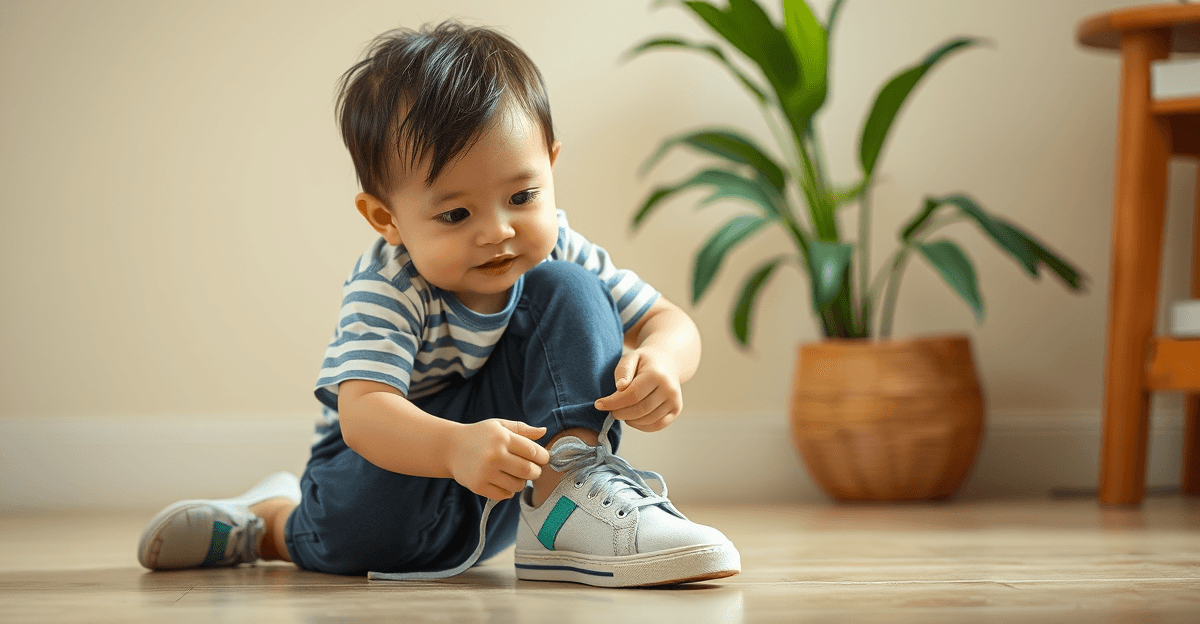
It's 7:15am. Your K2 kid is sitting on the bed in their underwear, staring at the ceiling like they're contemplating the meaning of life, while their school uniform sits neatly folded beside them. You've asked them to get dressed three times. The school bus arrives in 20 minutes. Your helper is hovering, ready to swoop in. You know you should let your child try, but the clock is ticking and you need to get to work.
TL;DR: Independence skills — dressing, eating, packing bags, toileting, tidying up — are not just nice-to-haves. They are essential for Primary 1 readiness and long-term confidence. Singapore's helper culture and fast-paced lifestyle often mean children get fewer opportunities to practise. Start with one skill at a time, be patient with the mess and slowness, and resist the urge to take over. Most K1-K2 children can master basic self-help skills within weeks if given consistent practice.
Sound familiar? You're far from alone. In Singapore, where many families have domestic helpers and grandparents eager to help, preschoolers often reach K2 without basic self-help skills that kids in other countries develop much earlier. This isn't a criticism — it's just the reality of our support systems and our packed schedules.
But Primary 1 is coming. And in a Singapore primary school, nobody is going to button your child's uniform, pack their bag, or cut up their food. Building independence skills now, during K1 and K2, is one of the most practical things you can do to get them ready for school — and honestly, for life.
Why Independence Skills Matter More Than Academic Skills
Here's something that surprised me when I first heard it: primary school teachers consistently say the children who struggle most in P1 aren't the ones who can't read or do sums. They're the ones who can't manage themselves.
A child who can read at a Grade 2 level but cannot pack their own bag, open their lunchbox, or find their way to the toilet without an adult is going to have a harder time than a child with average academic ability who can handle daily routines independently.
What MOE Expects
Singapore's Ministry of Education does not publish a formal "independence checklist" for Primary 1, but teachers and school counsellors generally expect incoming students to be able to:
- Dress and undress in their school uniform independently, including shoes and socks
- Eat a meal without help, using utensils, within a reasonable time (about 20-30 minutes for recess)
- Use the toilet and wash hands without reminders or assistance
- Pack and unpack their school bag, organising books and worksheets
- Follow a routine without constant adult prompts — knowing what to do when the bell rings, where to put their things, how to transition between activities
- Communicate needs to teachers and peers — asking to use the toilet, saying they feel unwell, asking for help with a task
The Helper Factor
Singapore has one of the highest rates of domestic helper employment in the world. About 1 in 5 households has a live-in helper, and the proportion is even higher among families with young children. Helpers are invaluable — they free up parents to work, manage household logistics, and provide care for children and elderly family members.
But there is a well-documented side effect. When a helper dresses the child, packs their bag, feeds them, and clears their plate every single day, the child simply does not develop the muscle memory, routine awareness, and confidence that come from doing these things independently.
This isn't the helper's fault — and I want to be really clear about that. Most helpers are doing exactly what they've been asked or implicitly expected to do. The responsibility sits with us as parents to set boundaries about which tasks our kids should handle themselves.
The Core Independence Skills by Age
By Age 4 (Nursery 2 / K1)
Self-care basics:
- Wash and dry hands independently
- Brush teeth with supervision (they may need help with technique)
- Put on and remove shoes (velcro straps)
- Pull on simple clothing — elastic-waist pants, t-shirts
- Use the toilet independently (may need help with wiping)
Daily habits:
- Put toys back after playing (with reminders)
- Carry their own bag for short distances
- Drink from an open cup without spilling
- Feed themselves with a spoon and fork
By Age 5 (K1 / K2)
Self-care progression:
- Dress in school uniform including buttons
- Manage zip-up bags and pencil cases
- Use the toilet fully independently, including flushing and hand-washing
- Brush teeth with minimal supervision
- Comb or brush their own hair
Responsibility:
- Pack their school bag using a checklist
- Clear their plate after meals and put it in the sink
- Carry their own items — water bottle, snack box, umbrella
- Follow a morning routine with visual cues rather than verbal reminders
By Age 6 (K2 / Entering P1)
Full self-management:
- Complete morning routine independently — wake up, toilet, brush teeth, dress, eat breakfast, pack bag
- Manage lunchtime independently — open containers, eat neatly, clean up, return tray
- Manage school belongings — know where things go, keep track of items
- Handle minor problems — spilled water, dropped pencil, needing to use the toilet during class
- Tell time on an analogue clock (at least to the hour and half-hour) — see our guide on teaching time-telling to preschoolers
Social independence:
- Ask adults for help when needed (not just waiting or crying)
- Cooperate with peers during group activities
- Follow multi-step instructions without needing each step repeated
Practical Strategies That Work in Singapore Homes
Strategy 1: The "Helper Steps Back" Conversation
If you have a domestic helper, this is the single most important step. Sit down with your helper and explain which specific tasks your child needs to do themselves. Be explicit:
- "Please let [child] dress themselves in the morning. You can lay out the uniform, but do not put it on for them."
- "At mealtimes, [child] should serve their own rice and clear their own plate. Please remind them but do not do it for them."
- "When packing the school bag, please stand nearby and check, but let [child] do the packing."
Write it down if needed. Review weekly. Thank your helper for supporting this — it is harder for them too, because it takes longer and creates more mess.
Strategy 2: Visual Routine Charts
Children at this age respond much better to visual cues than verbal instructions. Create a simple routine chart with pictures (you can draw them, print photos, or use clip art — or browse ready-made routine chart boards on Shopee) showing each step of the morning and evening routine:
Morning chart:
- Wake up
- Go to toilet
- Brush teeth
- Get dressed
- Eat breakfast
- Put on shoes
- Pick up school bag
Stick it at your child's eye level in their room. Let them tick off or move a magnet for each completed step. This shifts the dynamic from "Mummy nagging" to "I am following my chart."
Strategy 3: Weekend Practice Runs
If weekday mornings are too hectic, use weekends for dedicated practice. Saturday morning: your child does the full morning routine independently while you time them (gently — this is not a race). Sunday: try packing a bag for a real outing — book a family day activity on KKday to give the independence practice some real-world stakes. The lower pressure of a weekend makes it easier to tolerate the extra time it takes.
Strategy 4: Embrace the Mess (Temporarily)
When a 5-year-old pours their own water, some of it will end up on the table. When they butter their own bread, it will look like a crime scene. When they pack their bag, the worksheets will be crumpled.
This is normal. This is learning. If you take over every time there is a mess, the message your child receives is: "You cannot do this. Let the adults handle it." Invest in a few weeks of mess now to build a lifetime of capability.
Strategy 5: Connect Independence to Learning
Independence is not just about physical tasks. It extends to learning activities too. Can your child:
- Choose a book from the shelf and look through it on their own?
- Set up their own learning materials — take out pencils, open a workbook?
- Attempt a quiz or activity without needing someone to sit next to them the entire time?
Apps like QuizKin are designed with this in mind — adaptive quizzes that K1-K2 children can attempt independently, building both academic skills and the confidence that comes from managing their own learning. The ability to sit down, open an app, complete a set of questions, and review their own progress is itself an independence skill.
Strategy 6: Praise the Process, Not the Result
Instead of "Good job getting dressed!", try "I noticed you figured out the buttons all by yourself today — that took real patience." Instead of "Your bag is packed, well done!", try "You remembered every single item on the checklist without me reminding you."
Process praise builds what psychologists call a growth mindset — the belief that effort leads to improvement. This matters because independence is not a one-time achievement. It is a daily practice that gets smoother over time.
Common Concerns Singapore Parents Have
"But it takes SO much longer"
Oh, I know. Believe me, I know. A child dressing themselves takes 10-15 minutes when you could do it in 2. Packing a bag takes 5 minutes instead of 30 seconds. But this is the investment period. After 2-3 weeks of consistent practice, the time gap shrinks dramatically. Budget an extra 15-20 minutes into your morning routine for the first month. It's worth it lah.
"My child gets frustrated and gives up"
This is normal and expected. Break the task into smaller steps. If buttons are the problem, start with the bottom button (it is easier to see and reach) and work upward. If bag packing is overwhelming, reduce the checklist to 3 items and add more as they gain confidence.
"My in-laws keep doing everything for my child"
Ah, this one. The most sensitive issue in any Singaporean family. Grandparents who provide daytime childcare often have very different views on what a child should do for themselves. A direct but respectful conversation is important: explain that you appreciate their help, and frame it as preparing the child for primary school. That framing usually works — most grandparents in Singapore care deeply about school readiness.
"My child can do it at school but refuses at home"
Very common. Preschool teachers at centres like PCF Sparkletots and My First Skool report that children who are entirely helpless at home manage just fine in class. This is because children rise to expectations. At school, they are expected to be independent. At home, they know someone will do it for them if they wait long enough. The solution: set the same expectations at home.
A Realistic Timeline for Building Independence
Do not try to change everything at once. Pick one skill per week:
Week 1-2: Dressing independently (morning routine only)
Week 3-4: Packing school bag using a visual checklist
Week 5-6: Meal independence — serving, eating, clearing
Week 7-8: Full morning routine without verbal reminders (chart only)
By the end of two months, most K1-K2 children will have made significant progress. Some will be fully independent in these areas. Others will need ongoing practice — and that is perfectly fine.
The Long Game: Independence Beyond Self-Help
Teaching your preschooler to dress themselves and pack their bag is the beginning, not the end. Independence skills scale up as children grow:
- A P1 child who can manage their morning routine will later manage homework schedules
- A child who learns to solve problems independently will become a teenager who can navigate social challenges
- A child who practises making small decisions now will make better big decisions later
The academic side of P1 readiness matters, of course. But the parents and teachers who have been through the transition will tell you the same thing: the child who can manage themselves is the child who thrives.
If you are looking for deals on enrichment classes and family activities as part of your P1 preparation, keep an eye out for school readiness workshops on Klook that specifically focus on independence and social skills — they are increasingly popular and often more practical than another academic enrichment class.
Sources
- Ministry of Education Singapore — Primary 1 Orientation Resources
- ECDA — Early Childhood Development Agency: Developmental Milestones for Children
- PCF Sparkletots — K2 Transition to Primary 1
- National Institute of Education (NIE) Singapore — Research on School Readiness
- "Ready for School: What Really Matters" — NIE research brief on P1 transition
Practise what you’ve read with QuizKin
Adaptive quizzes covering phonics, sight words, numbers, and more — aligned with the Singapore MOE curriculum. Start your free Premium trial today.
Frequently Asked Questions
By Primary 1, children should be able to: dress and undress independently (including school uniform), pack and unpack their own school bag, eat a meal independently using utensils, use the toilet and wash hands without help, follow a simple routine without constant reminders, and manage basic social interactions like asking a teacher for help. MOE primary schools expect a level of self-sufficiency that some preschoolers, especially those with helpers at home, may not have developed yet.
This is very common in Singapore. The key is to have an open conversation with your helper about stepping back on specific tasks. Create a list of things your child must do themselves — dressing, packing bag, eating, clearing plates — and ask the helper to supervise but not do it for them. Start with one skill at a time and be consistent. Many parents find weekends (when helpers have days off) are a good time to practise independence skills without the temptation to delegate.
Most children can put on simple clothing (t-shirts, elastic-waist pants) by age 3-4. By K1 (age 5), they should be able to manage buttons, zips, and velcro shoes. By K2 (age 6), they should be able to dress in their school uniform independently, including socks and shoes. Each child develops differently, but if your child shows no interest or ability in dressing by age 5, it may be worth checking whether the opportunity to practise has been limited — often, well-meaning adults simply dress them because it is faster.
About the author
Mervin Tan
Founder, QuizKin
Mervin Tan is the founder of QuizKin and a software engineer and dad of two young children in Singapore. He builds QuizKin's adaptive quiz engine and writes practical K1-K2 learning guides grounded in MOE's Nurturing Early Learners framework and his own experience preparing his kids for Primary 1. QuizKin is built by Adaptels Pte. Ltd., Singapore.
Ready to make learning fun?
QuizKin turns screen time into learning time with adaptive quizzes built for K1-K2 kids in Singapore. Free to start.
Related Articles
Speech and Language Milestones for Ages 4-6: Singapore Parent Guide
Discover speech and language milestones for ages 4-6 with Singapore-specific guidance for K1-K2 parents. Know the signs and when to seek help.
Developing Social Skills in Preschoolers: Tips for Singapore Parents
Practical guide to helping your K1-K2 child build social skills — sharing, turn-taking, conflict resolution, and making friends. Singapore-focused advice.
Signs of a Gifted Child in Preschool: Singapore Parent Guide
Spot the signs of a gifted child in preschool with this Singapore parent guide. Learn K1-K2 giftedness traits, local assessment options and how to nurture your little one.