Building a Growth Mindset in Your K1-K2 Child: Tips for Singapore Parents
Help your K1-K2 child develop a growth mindset at home with practical Singapore-parent strategies — praise effort, embrace mistakes, and build resilience for school.
Mervin Tan · Founder, QuizKin
Published 22 May 2026

My K1 girl sat at the dining table, pencil in hand, staring at a worksheet from school. After two tries at writing the letter B, she pushed the paper away and said: "I cannot do it. I not good at writing." I've heard versions of this before — "I'm not smart enough," "It's too hard," "I'll never get it." If this sounds familiar, you're seeing what psychologist Carol Dweck calls a fixed mindset in action. And you're definitely not alone.
TL;DR: Help your K1-K2 child develop a growth mindset at home with practical Singapore-parent strategies — praise effort, embrace mistakes, and build resilience for school.
In Singapore, where PSLE scores determine secondary school placement and enrichment classes start before kids can tie their own shoes, it's easy for young children to pick up the message that being smart is something you either are or you aren't. But decades of research tell us something different: the children who thrive academically and emotionally are not necessarily the ones who start out "smartest." They are the ones who believe they can improve through effort, who see mistakes as learning opportunities rather than proof of failure, and who keep going when things get difficult.
That belief — that abilities can be developed — is what we call a growth mindset, and the good news is that you can start building it in your preschooler right now, at home, without any special materials or enrichment classes.
What Is a Growth Mindset (and Why Should Singapore Parents Care)?
Stanford psychologist Carol Dweck's research, published across multiple studies since the 1990s, identifies two core beliefs children develop about their own abilities:
Fixed mindset: "I am either smart or I am not. If I have to try hard, it means I am not good at this."
Growth mindset: "My brain can grow stronger with practice. When something is hard, it means I am learning."
These beliefs are not abstract — they directly shape how your child behaves when faced with a challenge. A child with a fixed mindset avoids difficult tasks, gives up quickly, and feels threatened by other children's success. A child with a growth mindset embraces challenges, persists through frustration, and sees peers' achievements as inspiration rather than competition.
Why This Matters in Singapore's Education System
Singapore's education landscape, despite ongoing reforms to reduce academic pressure, remains highly structured and assessment-driven. By Primary 1, children are expected to sit still for longer periods, follow multi-step instructions, and demonstrate competency in literacy and numeracy. The MOE Nurturing Early Learners (NEL) framework for preschools explicitly identifies "confidence" and "willingness to try" as key learning dispositions — essentially describing a growth mindset without using the term.
Children who enter Primary 1 believing that struggle means failure are at a significant disadvantage — not because they lack ability, but because they lack the emotional resilience to navigate a more demanding learning environment. Building a growth mindset during the K1-K2 years gives your child an internal toolkit that pays dividends well beyond preschool.
The Language of Growth: How What You Say Shapes How Your Child Thinks
The single most powerful tool you have as a parent is your language. The words you use when your child succeeds, fails, or struggles literally shape the neural pathways that govern how they approach learning.
Praise the Process, Not the Person
This is the foundation of growth mindset parenting, and it requires a genuine shift in habit for most Singapore parents. Here is what it looks like in practice:
Instead of: "You are so clever! You got all the answers right!"
Try: "You worked really hard on those questions. I noticed you went back and checked your answers — that is a great strategy."
Instead of: "You are a natural artist!"
Try: "You spent a long time on that drawing, and I can see you tried different colours for the sky. All that practice is making your drawings more detailed."
Instead of: "See, you are just not a maths person."
Try: "Maths can feel tricky sometimes. Let us try a different way and see if that helps."
The difference is subtle but profound. Person praise ("you are smart") teaches children that their worth is tied to outcomes. Process praise ("you worked hard," "you tried a new strategy") teaches them that effort and approach are what matter.
Introduce the Word "Yet"
One of the simplest and most effective growth mindset strategies for preschoolers is adding the word "yet" to their negative self-talk:
- "I cannot read this." becomes "You cannot read this yet."
- "I do not know how to count to 100." becomes "You do not know how to count to 100 yet — but you already know how to count to 20, and that is where everyone starts."
This tiny word reframes inability as temporary — a stage on a journey rather than a permanent state. Over time, many children start adding "yet" on their own, which is a strong indicator that a growth mindset is taking root.
Normalise Mistakes With Your Own Examples
Children learn more from what you model than from what you tell them. Share your own mistakes openly:
- "I burnt the rice today because I forgot to set the timer. Next time I will use my phone alarm."
- "I took the wrong MRT exit and we had to walk all the way around. Now I know which exit to use."
- "I could not figure out this work problem today, so I asked Uncle James for help. Asking for help is a smart strategy."
When your child sees that adults — even their parents, who they view as all-knowing — make mistakes and learn from them, it dismantles the belief that competent people never fail.
Practical Activities to Build a Growth Mindset at Home
Growth mindset is not just about language — it is about creating experiences where your child practises persisting, problem-solving, and recovering from setbacks.
1. The "Hard Thing" Challenge
Choose one activity each week that is slightly beyond your child's current ability. It could be:
- Building a taller block tower than they have ever attempted
- Attempting to write their name in Chinese characters (even just one new character)
- Completing a jigsaw puzzle with more pieces than usual
- Learning to pour water from a jug into a cup without spilling
The goal is not perfection — it is the experience of struggling, adjusting, and making progress. After each attempt, ask: "What did you learn?" and "What will you try differently next time?"
2. Mistake Celebrations
When your child makes a mistake — spills paint, gets an answer wrong, builds something that falls over — respond with genuine curiosity rather than correction:
- "Oh interesting! What happened there? What do you think you could try instead?"
- "Your tower fell down after the sixth block. That tells us something useful — what do you think it is?"
Some families even have a "Mistake of the Day" sharing ritual at dinner, where each family member shares one mistake they made and what they learned from it. This normalises errors and makes learning from them a family value.
3. The Effort Jar
Get a clear jar and a bag of marbles or pom-poms. Each time your child demonstrates effort — tries something difficult, keeps going when frustrated, asks for help instead of giving up — they add one to the jar. When the jar is full, the family does something fun together (a trip to East Coast Park, an ice cream outing, a movie night).
The key is that rewards are tied to effort, not outcomes. Your child does not earn a marble for getting a perfect score — they earn it for trying hard, for not giving up, for attempting something new.
4. Growth Mindset Story Time
Many popular children's books reinforce growth mindset themes. Look for these at your local library (all National Library Board branches carry them):
- "The Most Magnificent Thing" by Ashley Spires — a girl gets frustrated building an invention but keeps trying
- "After the Fall" by Dan Santat — Humpty Dumpty learns to be brave again after his famous fall
- "Beautiful Oops!" by Barney Saltzberg — shows how mistakes can become creative opportunities
- "Giraffes Can't Dance" by Giles Andreae — Gerald the giraffe finds his own rhythm
After reading, ask your child: "What did [character] do when things got hard? How did they feel? What would you do?"
5. Puzzle and Problem-Solving Play
Jigsaw puzzles, tangrams, and building challenges (LEGO, magnetic tiles) are natural growth mindset builders because they involve trial and error by design. Resist the urge to help too quickly — let your child sit with the frustration for a bit before offering a hint. You can say: "I can see you are thinking hard. Take your time."
For digital learning, apps like QuizKin are designed around this principle — adaptive quizzes that adjust difficulty based on your child's responses, so they are always working in what educational psychologists call the "zone of proximal development." The child is challenged enough to grow but not so overwhelmed that they shut down. This balance between challenge and achievability is exactly what builds a growth mindset through practice.
Common Growth Mindset Mistakes Singapore Parents Make
Even well-intentioned parents can accidentally undermine growth mindset development. Here are the most common pitfalls:
Mistake 1: Praising Effort When There Was No Effort
Saying "great effort!" when your child breezed through something easy does not build a growth mindset — it teaches them that any output, regardless of quality, deserves praise. Reserve process praise for genuine moments of struggle, persistence, or strategic thinking. If a task was easy, acknowledge that: "That was easy for you! Let us find something that challenges you more."
Mistake 2: Making Every Failure a "Learning Moment"
Sometimes your child just needs to feel frustrated or sad. Not every spilled drink or toppled tower needs to be immediately reframed as a "learning opportunity." Let your child feel the emotion first — "I can see you are upset that your drawing did not turn out the way you wanted" — before moving to problem-solving. Emotional validation must come before cognitive reframing.
Mistake 3: Comparing Your Child to Siblings or Classmates
This is especially common in Singapore, where comparison is deeply embedded in the culture. "Your Jie Jie could read by K1 — why can't you?" or "Marcus in your class can already write his name" are fixed-mindset statements that teach your child their abilities are measured against others rather than against their own growth. Compare your child only to their past self: "Last month you could write three letters. Now you can write seven. That is real progress."
Mistake 4: Protecting Your Child From All Difficulty
Hovering and rescuing your child from every challenge — doing the puzzle piece for them, completing their colouring because they were frustrated, answering for them when they are asked a question — robs them of the chance to experience productive struggle. Struggling is not suffering. It is the mechanism through which growth happens.
Growth Mindset and the Singapore Curriculum
The MOE NEL framework identifies six key learning dispositions for preschool children. At least three of them map directly to growth mindset:
- Perseverance — "Children are able to persist in a task despite facing difficulties." This is the definition of growth mindset in action.
- Reflectiveness — "Children are able to think about their own thinking and learning." Metacognition — thinking about how you learn — is a core growth mindset skill.
- Inventiveness — "Children are able to generate novel ideas." This requires the willingness to try new approaches and risk being wrong — both growth mindset behaviours.
When you build a growth mindset at home, you are directly supporting what your child's K1 or K2 teachers at PCF Sparkletots, My First Skool, E-Bridge, or any MOE-licensed kindergarten are working on in the classroom. You are not adding extra academic pressure — you are building the emotional and cognitive foundation that makes all learning more effective.
Preparing for Primary 1 and Beyond
The transition from kindergarten to Primary 1 is one of the biggest shifts in a Singapore child's life. Children who enter P1 with a growth mindset are better equipped to handle:
- Spelling tests and dictation — they see mistakes as information about what to study next, not as proof of failure
- Timed assessments — they stay calmer under pressure because they trust their effort will pay off
- New subjects like Science in P3 — they approach unfamiliar content with curiosity rather than anxiety
- Social challenges — they are more resilient when friendships shift or conflicts arise
The PSLE may feel far away when your child is 4 or 5, but the mindset habits formed now will compound over years. A child who learns at age 5 that struggle leads to growth will approach their PSLE preparation at age 11 with fundamentally different beliefs about their own capacity than a child who learned that intelligence is fixed.
A Weekly Growth Mindset Routine for K1-K2 Families
Here is a simple routine you can start this week:
Monday to Friday:
- Use process praise at least twice a day (praise effort, strategy, or persistence, not results)
- Add "yet" to one instance of negative self-talk
- Let your child struggle with one task for at least two minutes before offering help
Saturday or Sunday:
- Do the "Hard Thing" challenge together
- Read a growth mindset book from the library
- Share "Mistake of the Day" at dinner
Monthly:
- Review your child's Effort Jar (or whatever tracking system you use)
- Notice and name specific areas of growth: "You used to get frustrated with puzzles after two minutes. Now you keep trying for five or six minutes. That is real brain growth."
When to Be Concerned
A growth mindset approach works for the vast majority of children, but there are situations where persistent avoidance, extreme frustration, or refusal to engage may signal something beyond mindset:
- If your child consistently avoids tasks across all domains (not just one subject), it may be worth discussing with their preschool teacher or a child psychologist
- If your child's frustration is so intense that they have meltdowns lasting more than 20 minutes, there may be underlying sensory or emotional regulation challenges
- If your child shows signs of anxiety (stomachaches before school, sleep disruption, excessive worry), a growth mindset approach alone may not be sufficient
KK Women's and Children's Hospital, the National University Hospital child development unit, and private practices like the ones at Thomson Medical and Mount Elizabeth all offer assessments for early childhood developmental concerns. Early intervention in Singapore is well-supported, and seeking professional guidance is itself a growth mindset behaviour — it means you believe the situation can improve.
The Long Game
Building a growth mindset in your K1-K2 child is not a one-week project. It is a gradual, daily practice that becomes part of your family's culture. Some days your child will embrace challenges with enthusiasm. Other days they will cry because their block tower fell over. Both days are part of the process.
What matters is consistency — that your child hears, over and over, through your words and your actions, that effort matters more than talent, that mistakes are stepping stones rather than dead ends, and that their brain is a muscle that gets stronger with use.
In a Singapore education system that is slowly but meaningfully shifting toward valuing curiosity, resilience, and intrinsic motivation alongside academic achievement, a growth mindset is not just a nice-to-have. It is one of the most valuable gifts you can give your child — and it costs nothing but your attention, your patience, and your willingness to model it yourself.
Sources
Looking for more? Check out find a tutor for free on TuitionLah.
Exploring parenthood in Singapore? Visit ParentLah for practical tips on raising kids in Singapore.
Practise what you’ve read with QuizKin
Adaptive quizzes covering phonics, sight words, numbers, and more — aligned with the Singapore MOE curriculum. Start your free Premium trial today.
Frequently Asked Questions
A growth mindset is the belief that abilities like reading, maths, and problem-solving can improve through effort and practice — as opposed to a fixed mindset where children think they are either 'smart' or 'not smart' and nothing can change that. For K1-K2 children in Singapore, developing a growth mindset early builds resilience for the increasingly structured learning environment they will enter in Primary 1. Research by psychologist Carol Dweck shows that children who believe effort leads to improvement are more willing to try challenging tasks, persist through difficulty, and recover from setbacks — all critical skills for the Singapore education system.
Instead of saying 'You are so smart!' when your child completes a task, focus on the process: 'You kept trying even when it was hard — that is what helped you get it!' or 'I noticed you tried a different way when the first way did not work.' In Singapore's achievement-oriented culture, it is tempting to praise results and grades, but process praise teaches children that effort and strategy matter more than innate talent. This does not mean you never acknowledge results — just make sure the majority of your praise highlights effort, strategy, and persistence.
Start by normalising struggle. Say things like 'This is supposed to be tricky — that means your brain is growing right now.' Break the task into smaller steps so your child experiences small wins along the way. If your child is frustrated with writing Chinese characters, for example, start with just the first two strokes rather than the full character. Avoid jumping in to do it for them — instead, offer encouragement and wait. Over time, your child will internalise that difficulty is a normal part of learning, not a sign that they should stop.
About the author
Mervin Tan
Founder, QuizKin
Mervin Tan is the founder of QuizKin and a software engineer and dad of two young children in Singapore. He builds QuizKin's adaptive quiz engine and writes practical K1-K2 learning guides grounded in MOE's Nurturing Early Learners framework and his own experience preparing his kids for Primary 1. QuizKin is built by Adaptels Pte. Ltd., Singapore.
Ready to make learning fun?
QuizKin turns screen time into learning time with adaptive quizzes built for K1-K2 kids in Singapore. Free to start.
Related Articles
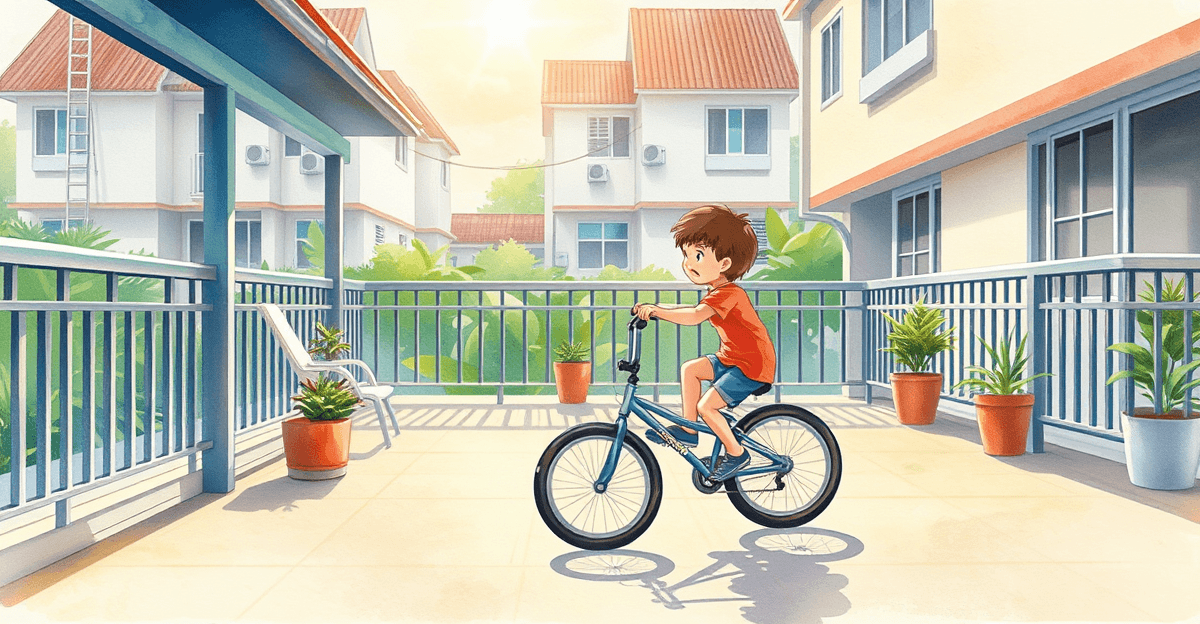
Building Resilience in Preschoolers: Practical Tips for Singapore Parents (K1-K2)
Help your K1-K2 child build resilience with practical, Singapore-specific tips on growth mindset, emotional skills, and confident learning at home.

My Child Is Not Reading Yet: A Singapore Parent's Guide (K1-K2)
Your K1 or K2 child is not reading while classmates are. When to worry, when to wait, and practical steps to support a late or reluctant reader in Singapore.
Enrichment Classes vs Home Learning: What Works for K1-K2 Kids
Should you send your K1-K2 child for enrichment classes? Compare costs, effectiveness, and alternatives. A practical guide for Singapore parents on a budget.