Creating the Perfect Home Learning Environment
Learn how to create the perfect home learning environment for your K1-K2 child in Singapore. Practical, space-saving tips to boost focus and school readiness.
Mervin Tan · Founder, QuizKin
Published 7 July 2026
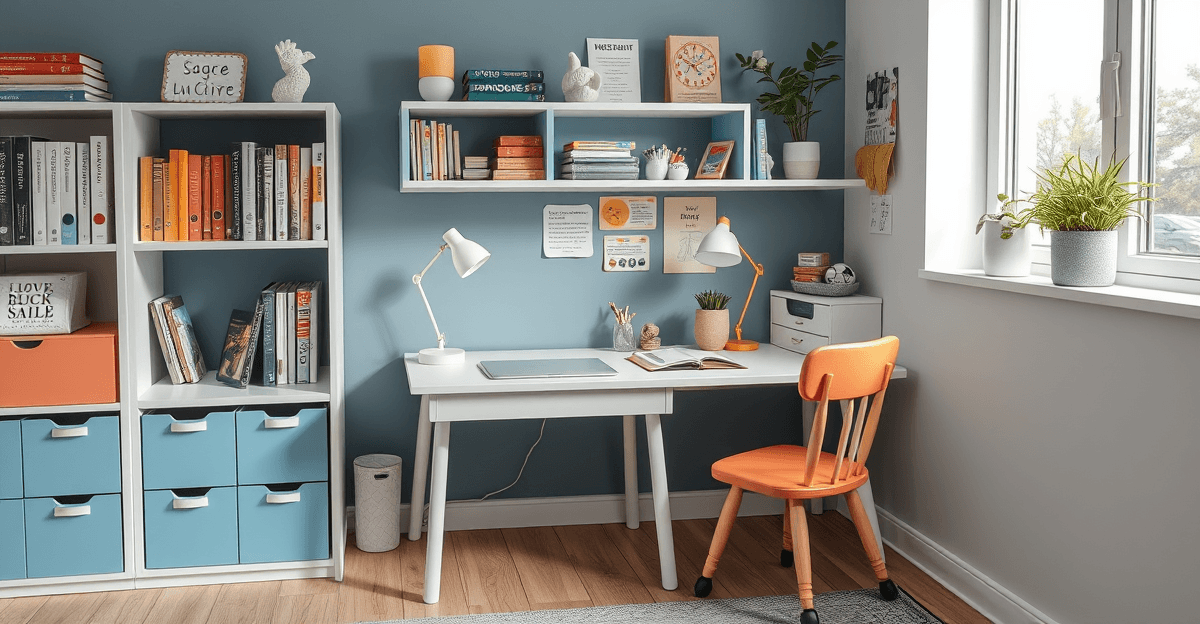
It's 7pm on a weeknight in your HDB flat. Dinner plates are still on the table, the TV is on in the background, and you've set your K1 child a simple counting worksheet — only to watch them wriggle off the chair for the third time in five minutes. If this sounds familiar, you're not alone, and it's rarely about your child's ability. More often, it's about the space. Creating the perfect home learning environment is one of the most powerful, low-cost things Singapore parents can do to support their little one's early development — and the good news is that it has far more to do with thoughtful setup than square footage or expensive gadgets.
In this guide, we'll walk through exactly how to build a home learning environment that helps your K1-K2 child (ages 4-6) focus, feel calm, and actually enjoy learning — all within the realities of a Singapore home.
📌 Key Takeaway (TL;DR)
A great home learning environment for a 4-6 year old needs just three things: a consistent, clutter-free space, the right materials within reach, and a predictable routine. You don't need a spare room or costly equipment. Keep learning sessions short (15-20 minutes), balance screens with hands-on play, and let your child help design the space so they feel ownership. Consistency of place and routine matters more than size or budget.
What Makes a Good Home Learning Environment for a K1-K2 Child?
A good home learning environment is a consistent, low-distraction space where your child can comfortably reach their own materials and knows that "this is where we learn." For children aged 4-6, the physical and emotional qualities of the space directly shape attention, independence, and attitude toward learning. The single most important factor is not size or cost — it's consistency: a child who sits in the same calm spot each day builds a mental association that makes it easier to focus.
This idea isn't new. It draws on principles from the Montessori and Reggio Emilia approaches — both influential in Singapore's preschool sector, including centres run by PCF Sparkletots and My First Skool — which treat the environment as a "third teacher." The layout, the materials, and the mood of a room quietly teach children how to behave and what to value.
For Singapore families, this is encouraging news. You don't need a landed home or a dedicated study to get it right. A well-planned corner of a 3-room flat can outperform a cluttered spare room every time.
The core ingredients of an effective learning space
- A defined zone. Even a small rug, a specific chair, or a fold-out table signals "learning happens here."
- Low, reachable storage. When your child can independently take out and put away materials, they build responsibility and ownership.
- Good lighting and comfort. Natural light where possible, a chair where their feet touch the floor, and a table at elbow height.
- Minimal distractions. Position the space away from the TV and high-traffic areas.
- Child-sized and child-owned. Let your little one help choose where it goes and how it's decorated.
How to Set Up a Home Learning Environment in a Singapore HDB Flat
You can create an effective home learning environment in any HDB flat by claiming just one square metre of consistent, quiet space. The goal is a "yes space" — a spot where almost everything is safe, reachable, and purposeful for your child. A dedicated corner of roughly 1m², used consistently, is more effective for a preschooler than a large but cluttered or shared area.
Here's a practical, step-by-step approach that works in real Singapore homes:
Step 1: Choose the right corner
Look for a spot with these qualities:
- Away from the television and main walkways to reduce distractions.
- Near natural light — a corner by the window or balcony door is ideal, and helps regulate your child's alertness and mood.
- Within your sightline so you can supervise from the kitchen or sofa without hovering.
In many flats, the best options are a corner of the child's bedroom, one end of the dining table, or a nook in the living room.
Step 2: Get the furniture right
Your child's feet should rest flat on the floor and their elbows should sit comfortably on the table. Poor posture tires young children quickly and makes writing and fine-motor tasks harder. If you're helping your little one build pencil control and hand strength, pair the right seating with targeted fine motor skills activities for K1 kids — the two work hand in hand.
Step 3: Organise materials at child height
Use a low shelf, drawer organiser, or a few labelled baskets. Rotate materials rather than displaying everything at once — too many choices overwhelm a 4-6 year old. Keep only a small selection of activities available at any one time and swap them periodically to keep things fresh.
Step 4: Keep it tidy and calm
Cluttered walls and surfaces raise cognitive load and reduce focus. Display just a few of your child's own artworks and perhaps a simple visual routine chart. Calm, uncluttered walls help young children concentrate.
Why the Learning Environment Shapes School Readiness
The home learning environment plays a direct role in preparing your child for formal schooling and, eventually, Primary 1. Children who develop focus, independence, and positive learning habits at home transition more smoothly into structured classroom settings. A calm, consistent home learning space builds the self-regulation and attention skills that MOE-aligned preschools — and later, Primary 1 — expect.
Singapore's MOE Nurturing Early Learners (NEL) framework, which underpins kindergarten curricula nationwide, emphasises learning through purposeful play, exploration, and hands-on discovery — not rote drilling. Your home environment should mirror this. A space that invites your child to build, sort, draw, read, and question is doing exactly what the national curriculum intends.
This matters more than ever as the Primary 1 transition approaches. Habits like sitting for a short focused task, tidying up independently, and following a simple routine are precisely the "learning-to-learn" skills that ease the jump to formal school. If you want a concrete roadmap, our Primary 1 readiness skills checklist breaks down the 30 skills that matter most.
It's worth stating plainly: the goal at ages 4-6 is not academic acceleration — it's building a positive, curious relationship with learning that will carry your child through PSLE and beyond. A child who learns that "learning is stressful" at five carries that far longer than any early head start on spelling.
Balancing structure with play
- Table time for focused activities: puzzles, drawing, matching, early counting.
- Floor and movement time for building, role-play, and gross-motor games.
- Reading nook time — even a cushion and a basket of library books counts.
- Quiet-down time so your child learns the space can be calm, not just busy.
Making Learning Fun and Measurable at Home
The best home learning environments make progress visible and enjoyable, so children stay motivated and parents can see what's clicking. For 4-6 year olds, "fun" isn't a nice-to-have — it's how their brains are wired to learn. Play-based, game-like activities produce stronger engagement and retention in preschoolers than worksheet drilling.
This is where thoughtful digital tools can complement your physical space. Used in moderation, they add variety and give you gentle insight into how your child is progressing. QuizKin offers adaptive quiz practice that makes learning fun and measurable for K1-K2 kids — the questions adjust to your child's level, so your little one stays challenged but never overwhelmed, and you get a clear picture of strengths and gaps without turning learning into a test. It's a natural fit for a short, focused session at the learning corner you've built.
The evidence behind game-based learning is strong, and we've explored why it works so well for this age group in our guide to gamification and game-based learning for preschoolers. If you're weighing up digital options more broadly, our roundup of the best educational apps for 4-year-olds in Singapore is a helpful starting point.
A word of balance, though: screens should support — never replace — hands-on play and real conversation. Health authorities recommend keeping recreational screen time under one hour a day for this age group. For a practical framework, see our screen time rules for preschoolers.
Keeping motivation high
- Celebrate effort, not just correct answers ("You worked really hard on that!").
- Keep sessions short — 15-20 minutes maximum, stopping before frustration.
- Make it a shared moment — sit alongside your little one when you can.
- Watch for signs of stress. A resistant, tearful child needs a break, not a push. Our guide on reducing test anxiety in preschoolers can help.
Routines: The Invisible Structure of a Home Learning Environment
A predictable routine is the invisible half of a great home learning environment — it tells your child what to expect and reduces the emotional friction around learning. Children thrive on predictability, and a consistent rhythm makes learning feel safe rather than surprising. A simple, repeated daily routine reduces resistance and helps children transition into "learning mode" more easily.
You don't need a rigid timetable. Instead, anchor learning to existing daily events: a short activity after breakfast, or reading together before bed. This "habit stacking" makes learning automatic rather than a battle.
A few gentle guidelines:
- Same time, same place where possible.
- Signal transitions with a simple cue — a song, a timer, or "let's do our learning corner now."
- End on a high note so your child looks forward to next time.
- Protect rest and free play. Downtime is when young brains consolidate what they've learned.
For families juggling the added pressure of kindergarten placements, a calm home routine also builds the confidence that helps at moments like a kindergarten interview.
Common Mistakes Singapore Parents Make (and How to Avoid Them)
The most common home learning mistakes stem from good intentions: too much too soon, too many materials, and too much pressure. Recognising these early keeps learning joyful. Over-scheduling and academic pressure at ages 4-6 can backfire, dampening the very motivation you're trying to build.
| Common Mistake | What to Do Instead |
|---|---|
| Long, formal "study" sessions | Keep to 15-20 minute play-based bursts |
| Cluttered, over-decorated space | Minimal, calm, rotate materials weekly |
| Comparing your child to others | Focus on your child's own progress |
| Screens as the main activity | Screens as one small part of a varied mix |
| Pushing when your child resists | Pause, play, and return later |
Remember that development is uneven and personal. Some children read early; others shine at numbers, art, or social play. Our overviews of reading milestones for ages 4-6 and what to expect in a K2 maths assessment can help you set realistic expectations without anxiety. Social confidence matters just as much — see our tips on developing social skills in preschoolers.
Bringing It All Together
Creating the perfect home learning environment isn't about building a mini-classroom or spending a fortune — it's about carving out one consistent, calm, child-friendly space and pairing it with a gentle routine and plenty of encouragement. In a Singapore HDB flat, that might be a sunny corner, a low shelf your little one can reach, and 20 focused, playful minutes a day.
Get those foundations right, and you're doing far more than teaching letters and numbers. You're showing your child that learning is warm, safe, and even fun — a gift that will serve them long past K2, through Primary 1, and well beyond.
If you'd like extra support along the way — whether it's a tutor to guide P1 readiness or the latest family deals to stretch your budget — TuitionLah helps you find a tutor for free with no agency fees, and WhyNotDeals rounds up the latest education and family deals in Singapore.
Sources
- MOE Nurturing Early Learners (NEL) Framework — the national curriculum framework guiding Singapore kindergartens.
- MOE Preschool Overview — official information on kindergarten and early childhood education in Singapore.
- HealthHub Singapore — Ministry of Health-backed guidance on healthy screen habits and child development.
- PCF Sparkletots Preschool — Singapore's largest preschool operator and its play-based early learning approach.
- National Library Board (NLB) — free reading resources and programmes for young children in Singapore.
Practise what you’ve read with QuizKin
Adaptive quizzes covering phonics, sight words, numbers, and more — aligned with the Singapore MOE curriculum. Start your free Premium trial today.
Frequently Asked Questions
You don't need a dedicated room — a corner of your child's bedroom, a section of the living room, or even a fold-away table works well. Research shows consistency of place matters more than size, so aim for a small, clutter-free zone of about 1 square metre that your child associates with focused activities. Many Singapore families successfully use a quiet corner near natural light with a low table and a small shelf.
For ages 4-6, keep structured learning short: about 15-20 minutes per session, once or twice a day, is developmentally appropriate. Young children have limited attention spans (roughly 2-5 minutes per year of age), so frequent short bursts beat one long sitting. Follow your little one's cues — stop before frustration sets in, and always balance table work with play, movement, and reading together.
No. The most effective home learning environments rely on everyday items — books, blocks, crayons, and conversation — rather than costly equipment. If you do use digital tools, choose one or two high-quality, curriculum-aligned options and keep total screen time within the recommended limit of under one hour a day for this age group. Free resources from the library and MOE-aligned activity ideas go a long way.
About the author
Mervin Tan
Founder, QuizKin
Mervin Tan is the founder of QuizKin and a software engineer and dad of two young children in Singapore. He builds QuizKin's adaptive quiz engine and writes practical K1-K2 learning guides grounded in MOE's Nurturing Early Learners framework and his own experience preparing his kids for Primary 1. QuizKin is built by Adaptels Pte. Ltd., Singapore.
Ready to make learning fun?
QuizKin turns screen time into learning time with adaptive quizzes built for K1-K2 kids in Singapore. Free to start.
Related Articles

Building Vocabulary: Everyday Strategies for Preschoolers
Practical everyday strategies for building vocabulary in preschoolers. Singapore parents' guide to helping K1-K2 kids learn new words before Primary 1.
How to Track Your Child Learning Progress at Home
Learn how to track your child learning progress at home with simple, evidence-based tools for K1-K2 kids in Singapore. A warm, practical guide for parents.
Reducing Test Anxiety in Preschoolers
A warm, evidence-based guide to reducing test anxiety in preschoolers for Singapore parents of K1-K2 kids, with practical calm-down strategies that actually work.