MOE Kindergarten Curriculum: What Singapore Parents Should Expect
Learn what MOE's K1-K2 kindergarten curriculum covers in Singapore. Expert guide to child development milestones, learning outcomes, and how to support your child at home.
Mervin Tan · Founder, QuizKin
Published 7 June 2026
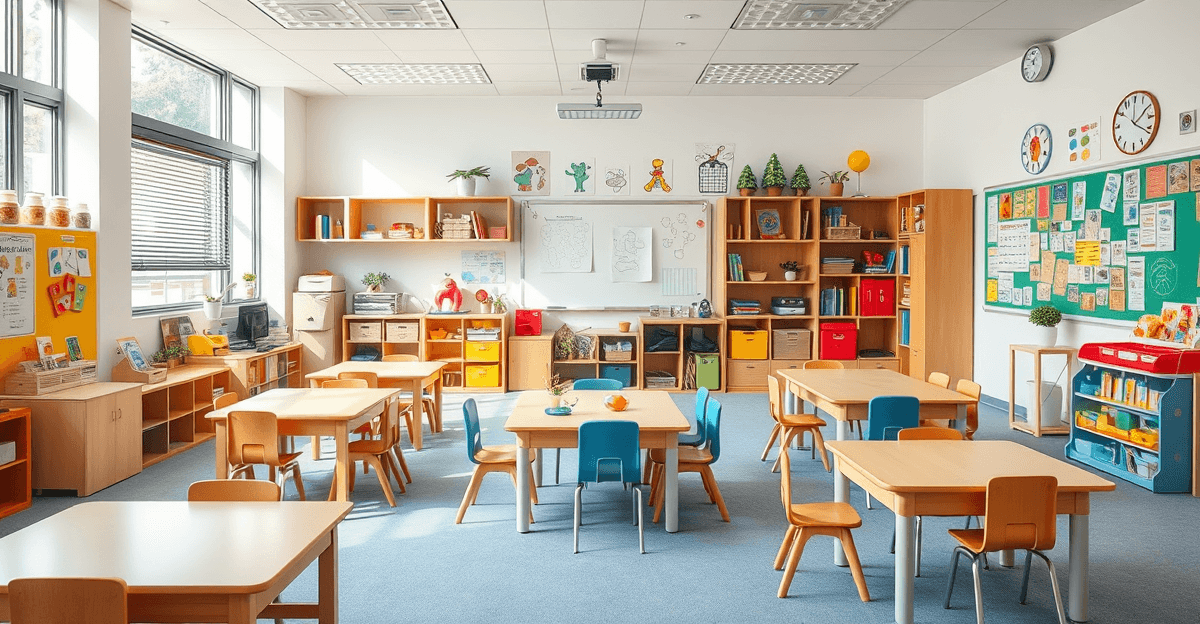
When my daughter started at our neighbourhood MOE Kindergarten, I genuinely had no idea what to expect. I'd heard the words "learning outcomes" and "K1 milestones" thrown around at the school gate and nodded along like I knew what they meant. I did not. What would she actually be doing all day? Should I be drilling her on the alphabet beforehand? Was she already behind?
I wish someone had explained this to me earlier—so here's the guide I wish I'd had. We'll walk through what Singapore's MOE kindergarten curriculum actually covers in K1 and K2, what milestones are typical (and what "typical" even means at this age), and practical ways to support your child at home without turning your living room into a tuition centre.
TL;DR: Key Takeaways for Singapore Parents
- MOE K1-K2 focuses on holistic development, not academics alone. Your child learns through play, building confidence, social skills, and foundational literacy and numeracy.
- Five learning areas form the framework: Language & Literacy, Mathematics, Science, Aesthetics & Physical Education, and Social-Emotional Learning.
- Children develop at different paces. Kindergarten is designed to help your child find their footing—not to achieve specific grades.
- Play-based learning is the method. Your child learns best through exploration, games, and meaningful experiences, not worksheets.
- Home support matters. Reading together, talking with your child, and modelling curiosity are the most powerful things you can do.
What Is MOE Kindergarten?
Singapore's Ministry of Education oversees the kindergarten framework, though K1-K2 is not compulsory. The MOE kindergarten curriculum is designed for children aged 4–6 and serves as the bridge between early childhood (birth–3) and formal primary school.
The core philosophy—and this surprised me when I first read it—is that kindergarten is about holistic child development, not exam preparation. Your child's social, emotional, creative, and physical growth is just as important as early literacy and numeracy. The curriculum explicitly rejects "teaching to the test" or pushing academics too early. Instead, it's built on the idea that children learn best through play, exploration, and meaningful social interaction. (And honestly, watching four-year-olds learn through pretend play, you start to see why.)
Most kindergartens in Singapore—whether PCF Kindergarten, PAP Community Foundation, My First Skool, or independent preschools—follow the MOE framework if they're registered with the Early Childhood Development Agency (ECDA). This gives parents a consistent quality benchmark across the island, which is reassuring when you're trying to compare options.
The Five Learning Areas: What Your Child Will Explore
The MOE kindergarten curriculum is organised into five interconnected learning areas. Think of these not as rigid subjects on a timetable, but as different lenses through which your child explores the world—often weaving together in a single activity.
1. Language & Literacy
Children develop listening, speaking, and early reading skills through conversation, storytelling, and play. By the end of K2, your child should be comfortable speaking in simple sentences, recognising some letters and sounds, and genuinely enjoying books (rather than just tolerating storytime before bed).
In the classroom, your child might:
- Listen to stories and answer simple questions about them
- Learn phonics and letter sounds through songs and games
- Begin to "write" by drawing, scribbling, and copying simple shapes and letters
- Engage in dramatic play—pretend cooking, playing doctor—that builds vocabulary organically
At home: Read to your child daily, even just 10–15 minutes. Let them choose the book, even if it's the same one for the 47th time (you'll know the words by heart soon enough). Talk about the pictures, ask what they think will happen next, let them interrupt with questions. Sing songs and nursery rhymes together. You are not "teaching" reading—your conversations and shared love of stories are doing the real work, even when it doesn't feel like it.
If you'd like to strengthen your child's phonics foundation with interactive, adaptive practice, resources like sight words K1-K2 lists or phonics learning methods can help. You might also explore adaptive quiz practice that makes learning fun and measurable for K1-K2 kids—many parents find this a low-pressure way to reinforce foundational concepts.
2. Mathematics
Young children develop number sense, spatial awareness, and problem-solving skills through hands-on exploration and games. Your child will work with small numbers (1–10 initially), patterns, shapes, and measurement concepts. Not algebra. Not long division. Just counting the apples in a bowl and noticing that the blue block is bigger than the red one.
In the classroom, your child might:
- Count objects during snack time or games
- Explore patterns with blocks, beads, or coloured objects
- Sort by size, colour, or type
- Play board games that involve number recognition
- Build with blocks and explore 3D shapes
At home: Count together during everyday activities—steps on a staircase, toys in a box, how many prawns are in the noodles. Talk about shapes you notice around you (circles on a clock, rectangles on doors, triangles on the roof). Play simple matching or sorting games. Let your child help with cooking—measuring, mixing, observing how things change when heat is applied. These casual, playful moments build mathematical thinking far more effectively than flash cards on a Sunday afternoon.
3. Science
Young children develop curiosity about the natural world and learn to observe, question, and explore. Science in K1-K2 is not "lessons" in any formal sense—it's wonder and discovery, and honestly, four-year-olds are naturally quite good at it.
In the classroom, your child might:
- Observe living things (plants, insects, fish) and ask questions
- Explore water, sand, and how objects sink or float
- Investigate light, shadows, and colours
- Learn about body awareness and healthy habits (washing hands, good nutrition, sleep)
- Explore the seasons and weather
At home: Go for walks and slow down enough to notice things—birds, leaves, clouds, puddles, ants carrying crumbs. Let your child get messy with water play, sand, mud (I know, I know—but it matters). Plant a seed together and watch it grow, even on a HDB windowsill. Ask open-ended questions: "What do you notice? Why do you think that happened?" You are not teaching facts. You are nurturing the habit of curiosity, which will serve your child far longer than memorised information.
4. Aesthetics & Physical Education
Your child develops creativity, fine and gross motor skills, and confidence in their body through art, music, and movement. This is one of those areas where parents sometimes underestimate how much real developmental work is happening—but watch a child who has had rich creative play, and you'll see the difference in their fine motor control, their confidence, and their willingness to try things.
In the classroom, your child might:
- Paint, draw, and create with clay, collage, or recycled materials
- Sing, play simple instruments, and move to music
- Run, jump, climb, and play games that build strength and coordination
- Participate in group dances or movement activities
- Develop hand-eye coordination through fine motor tasks (threading, drawing, building)
At home: Provide art materials—paint, crayons, playdough, recycled boxes—and let your child create freely without any expectation of a "finished product." Dance together to music. Go to the playground and give your child space to climb, slide, and test their abilities without too much intervention. If you'd like to focus on fine motor development, activities like threading, drawing, and scissor skills are both fun and genuinely foundational for writing readiness later.
5. Social-Emotional Learning (SEL)
Your child develops self-awareness, emotional regulation, empathy, and the ability to work with others. I'd argue this is the most important area—not because language and maths don't matter, but because children who can manage their emotions, relate to peers, and approach challenges with resilience are the ones who thrive not just in kindergarten but across their entire school journey.
In the classroom, your child might:
- Talk about their feelings and learn emotion vocabulary
- Solve simple conflicts with peers ("How can we both play with the toy?")
- Help others and experience the satisfaction of genuine kindness
- Try new things and learn—slowly, messily—that mistakes are part of learning
- Celebrate achievements and build real confidence (not just praise-dependent confidence)
At home: Name emotions as you notice them—"You look frustrated. That's okay, it's a hard puzzle." Help your child work through conflicts rather than fixing everything for them. Model emotional honesty: let your child see you manage disappointment or frustration calmly, or at least recover from it calmly. Read books about feelings together. And praise effort, not just results: "You kept trying even when it was hard" matters more than "You're so clever." For deeper insights, you might explore building resilience in preschoolers and developing social skills.
Developmental Milestones: What to Expect at K1 vs. K2
Here's the thing about developmental milestones that I had to learn the hard way: they are guides, not scorecards. Children develop at very different rates, and the range of "normal" at this age is genuinely wide. The following are typical patterns, not strict checklists. If you have concerns, speak with your child's kindergarten teacher or paediatrician—not a parenting forum at 11pm.
K1 (Age 4–5): Early Exploration
By the end of K1, many children can:
- Language: Speak in simple 4–5 word sentences; name colours and common objects; enjoy being read to; begin to recognize some letters
- Mathematics: Count to 10; understand "more" and "less"; recognise basic shapes
- Physical: Run, jump, and climb with confidence; hold a pencil with a developing grip; draw simple shapes (circles, lines)
- Social-Emotional: Play alongside other children; express basic emotions; begin to follow simple rules; show interest in helping
K2 (Age 5–6): Building Confidence & Foundation Skills
By the end of K2, many children can:
- Language: Speak in longer sentences with more complex ideas; attempt to read simple words and sight words; write their own name; ask "why" questions constantly (so many why questions)
- Mathematics: Count to 20+; understand simple addition concepts; sort and classify objects; recognise patterns
- Physical: Skip and hop; draw recognisable pictures; hold scissors and cut along lines; show increasing interest in writing
- Social-Emotional: Play cooperatively with peers; manage simple frustrations; understand turn-taking; show confidence in trying new things; express preferences and opinions (sometimes at great length)
Every child is unique. Some K1 children read fluently; others won't be ready until K2 or even Primary 1, and that is completely fine. The goal of kindergarten is not to rush development but to create a safe, joyful environment where your child's natural curiosity and confidence can take root.
How MOE Kindergarten Prepares Children for Primary 1
One question I hear from Singapore parents a lot: "Doesn't kindergarten just delay 'real' learning?" It's a fair concern given how academically competitive the primary school years can feel. But the answer is a clear no—and the research backs this up.
Children who attend quality kindergarten with a play-based, developmentally appropriate curriculum are better prepared for Primary 1 success. Not because they've memorised more facts, but because they arrive with stronger social skills, better self-regulation, and genuine confidence in their ability to figure things out. That last part matters enormously when Primary 1 throws new challenges at them daily.
MOE's kindergarten framework deliberately builds specific readiness skills:
- Listening and following instructions in a group setting
- Sitting still and focusing for short, age-appropriate periods
- Communicating needs and ideas to teachers and peers
- Independence in self-care (using the toilet, washing hands, eating without help)
- Resilience and problem-solving when things don't go as planned
- Curiosity and a growth mindset—the idea that "I can't do this yet, but I can try"
These are the real foundations of being school-ready—far more important, honestly, than knowing your ABCs at age four.
For a comprehensive overview of Primary 1 readiness, you might find it helpful to review a Primary 1 readiness skills checklist closer to P1 entry.
Supporting Your Child's Learning at Home
Kindergarten is just one part of your child's learning ecosystem. What happens at home—your conversations, your presence, your willingness to slow down and notice a beetle crossing the pavement—shapes your child's relationship with learning in ways that no curriculum can replicate.
Daily Habits That Matter
1. Read Together
Aim for 10–20 minutes daily. Let your child choose the books. Ask questions, point at pictures, and enjoy it together rather than treating it as a task to tick off before bedtime. This is the single most powerful thing you can do for literacy development—and it doesn't require any special materials.
2. Talk and Listen
Narrate your day. Ask open-ended questions: "What was fun today? Tell me more about that part." Let your child interrupt and ramble and go on tangents. These conversations build vocabulary, thinking, and connection—all at once.
3. Play Freely
Unstructured play—with toys, blocks, water, sand, cardboard boxes, or just imagination—is where your child practises problem-solving, creativity, and resilience. Resist the urge to direct or teach during free play. Let them figure things out.
4. Explore Together
Go for walks. Visit the park. Observe nature. Ask questions and show genuine curiosity yourself. You are modelling what learners look like, and children are extraordinary mimics.
5. Limit Screen Time
Educational apps and videos have their place, but screen time guidelines for preschoolers suggest no more than 1 hour per day of quality content. Play, conversation, and real-world exploration do far more for development than even the best-designed app.
When Your Child Struggles
It's common—completely normal, in fact—for kindergarten-age children to have difficult patches. Trouble separating from you in the morning. Shyness with new peers. Frustration with skills that won't come easily. Anxiety about transitions. Most children move through these phases within a few weeks, especially once routines become familiar.
What helps: validating their feelings ("Starting school is big and a bit scary—it's okay to feel that way") rather than dismissing them, maintaining consistent routines, and not over-reacting to setbacks. If concerns persist or seem more severe, speak with the kindergarten teacher and your paediatrician—they've seen it all before and won't judge you for asking.
Choosing the Right Kindergarten for Your Child
While this article focuses on the MOE kindergarten curriculum, you may be weighing up different options: MOE kindergartens, PCF centres, PAP Community Foundation preschools, or private preschools with different pedagogical approaches.
All registered kindergartens in Singapore follow ECDA's quality standards and are guided by the MOE framework—but they vary in:
- Setting (government, community-based, private)
- Schedule (full-day vs. half-day)
- Pedagogy (traditional play-based vs. Montessori, Reggio, or other approaches)
- Language (English-medium vs. bilingual or mother-tongue focus)
- Fees (free or heavily subsidised for some; considerably higher for private centres)
The most important factor, honestly? Does your child feel safe and happy there? Do the teachers know your child as an individual—not just as a student in their class? Does the school's approach feel aligned with your family's values? Those questions matter more than the brochure.
For specific guidance on the selection process, preparing your child for a kindergarten interview offers practical tips for what to expect.
Common Parental Concerns (And What the Research Says)
"My child isn't reading yet. Should I be worried?"
No. Reading typically begins to emerge between ages 5–7, and pushing formal reading instruction too early can actually create anxiety and reluctance around books—which is the opposite of what you want. Exposure to books, letters, and phonics through play is exactly the right approach for K1-K2. Many children seem to learn to read almost overnight at age 6 or 7 after months of seemingly nothing happening. That's normal, and it's healthy.
"Is kindergarten really necessary?"
It's not compulsory, but children who attend quality kindergarten generally benefit from peer interaction, exposure to a wider range of experiences, and a gentler transition into structured learning. That said, children who don't attend kindergarten absolutely can thrive in Primary 1—provided they've had rich early experiences at home. The key ingredient is consistent, responsive adult attention and lots of play. There's no single path.
"Will my child fall behind if they're not 'ahead' in kindergarten?"
Highly unlikely. The primary school curriculum is designed for children entering at age 6–7 with a genuinely wide range of skills. Teachers expect this diversity and differentiate instruction accordingly. Kindergarten is not a race—it's about building foundations and, perhaps more importantly, a genuine enjoyment of learning.
"Is it okay to use educational apps for practice?"
Yes, in moderation. Quality apps can reinforce concepts and add variety, especially for children who enjoy that format. If you're looking for structured, adaptive quiz practice that makes learning fun and measurable for K1-K2 kids, solutions like QuizKin are designed with kindergarten-age development in mind—short, playful, and responsive to your child's pace. Just balance screen time with the rest of life.
Key Takeaway: Trust the Process
Singapore's MOE kindergarten curriculum is built on decades of research about how young children learn and develop. It's not perfect—no system is—but it's thoughtfully designed to nurture whole children, not just future test-takers.
Your role as a parent is not to turn your home into a second classroom. It's not to engineer your child's readiness or to benchmark them against the neighbour's kid. Your role is simpler, and harder, and more important than any of that:
- Love and attune to your child. Notice what delights them. Follow their interests rather than your anxiety about their future.
- Provide a safe, stable, language-rich home. Talk, read, play, and explore together. These things cost almost nothing.
- Model a curious, resilient approach to learning. Let your child see that you try new things, make mistakes, and don't fall apart when things go wrong.
- Trust their development. Children have an innate drive to learn. Your job is to nurture that drive—not to force it on your timeline.
By the time your child reaches Primary 1, they won't remember specific activities or lessons from kindergarten. What they'll carry with them is the feeling of having been loved, supported, and genuinely confident in their ability to learn. That, more than any curriculum framework, is what matters.
FAQ
Q: What does MOE's kindergarten curriculum focus on?
A: The MOE kindergarten curriculum emphasises holistic child development across language, mathematics, science, the arts, and social-emotional learning. Rather than academics alone, K1-K2 focuses on building confidence, curiosity, and foundational skills through play-based learning. Your child should be developing fine and gross motor skills, early literacy concepts, and positive peer relationships during these years.
Q: How is MOE kindergarten different from private preschools in Singapore?
A: MOE kindergarten (K1-K2) is part of the national framework and aligns with primary school transition. It's more structured and standardised across schools than private preschools, though still play-based. PCF, My First Skool, and PAP Community Foundation preschools follow MOE guidelines if they're registered. Private preschools may have alternative philosophies (Montessori, Reggio) but MOE kindergarten prioritises readiness for Primary 1.
Q: What age does my child start kindergarten in Singapore?
A: K1 typically begins when your child turns 4 years old (born Jan–Dec that year), and K2 when they turn 5. Kindergarten is not compulsory in Singapore, but most children attend to prepare for Primary 1 entry at age 6+. Registration for MOE kindergarten opens around August–September for the following year.
Related Reading
Want to dig deeper? Check out these related articles for Singapore parents:
- Fine Motor Skills Activities for K1 Kids in Singapore: Strengthen Little Hands
- Primary 1 Readiness: 30 Skills Your Child Needs (2027 Checklist)
- Developing Social Skills in Preschoolers: Tips for Singapore Parents
- Building Resilience in Preschoolers: Practical Tips for Singapore Parents (K1-K2)
You might also find it helpful to explore WhyNotDeals for current promotions on educational activities and resources in Singapore.
Have questions about kindergarten readiness or your child's development? Every child is unique, and if you have concerns, your kindergarten teacher and paediatrician are always the best first point of contact. You've got this, parent.
Sources
- MOE Kindergarten Curriculum Framework — Official MOE guidance on kindergarten learning areas and developmental outcomes.
- ECDA (Early Childhood Development Agency) – Quality Standards — Standards for registered kindergartens and preschools in Singapore.
- National Institute for Early Education Research (NIEER) – Benefits of Preschool — Research on the long-term benefits of quality early childhood education.
- Straits Times – Singapore Kindergarten Guide — Recent articles on kindergarten enrollment and education updates in Singapore.
- Ministry of Health Singapore – Developmental Milestones — Official guidance on child health and developmental milestones for ages 4–6.
Practise what you’ve read with QuizKin
Adaptive quizzes covering phonics, sight words, numbers, and more — aligned with the Singapore MOE curriculum. Start your free Premium trial today.
Frequently Asked Questions
The MOE kindergarten curriculum emphasises holistic child development across language, mathematics, science, the arts, and social-emotional learning. Rather than academics alone, K1-K2 focuses on building confidence, curiosity, and foundational skills through play-based learning. Your child should be developing fine and gross motor skills, early literacy concepts, and positive peer relationships during these years.
MOE kindergarten (K1-K2) is part of the national framework and aligns with primary school transition. It's more structured and standardised across schools than private preschools, though still play-based. PCF, My First Skool, and PAP Community Foundation preschools follow MOE guidelines if they're registered. Private preschools may have alternative philosophies (Montessori, Reggio) but MOE kindergarten prioritises readiness for Primary 1.
K1 typically begins when your child turns 4 years old (born Jan–Dec that year), and K2 when they turn 5. Kindergarten is not compulsory in Singapore, but most children attend to prepare for Primary 1 entry at age 6+. Registration for MOE kindergarten opens around August–September for the following year.
About the author
Mervin Tan
Founder, QuizKin
Mervin Tan is the founder of QuizKin and a software engineer and dad of two young children in Singapore. He builds QuizKin's adaptive quiz engine and writes practical K1-K2 learning guides grounded in MOE's Nurturing Early Learners framework and his own experience preparing his kids for Primary 1. QuizKin is built by Adaptels Pte. Ltd., Singapore.
Ready to make learning fun?
QuizKin turns screen time into learning time with adaptive quizzes built for K1-K2 kids in Singapore. Free to start.
Related Articles
Building Good Study Habits in Kindergarten: A Singapore Parent's Guide
How to build lasting study habits in K1 and K2 children — without pressure or tears. Evidence-based strategies tailored for Singapore families.
School Bus Safety for Singapore Preschoolers
A practical school bus safety guide for Singapore parents of K1-K2 kids. Learn seatbelt rules, drop-off routines, and skills to keep your preschooler safe.
MOE Kindergarten vs Private Preschool: Honest Comparison
MOE Kindergarten vs private preschool in Singapore? An honest 2026 comparison of cost, curriculum, waitlists and school readiness for your K1-K2 child.