K2 in Singapore: Age, Curriculum & What Kids Learn
What age is K2 and what do children learn? The MOE-aligned K2 curriculum, key milestones, and how to get your child ready for Primary 1 — a parent's guide.
Mervin Tan · Founder, QuizKin
Published 28 June 2026
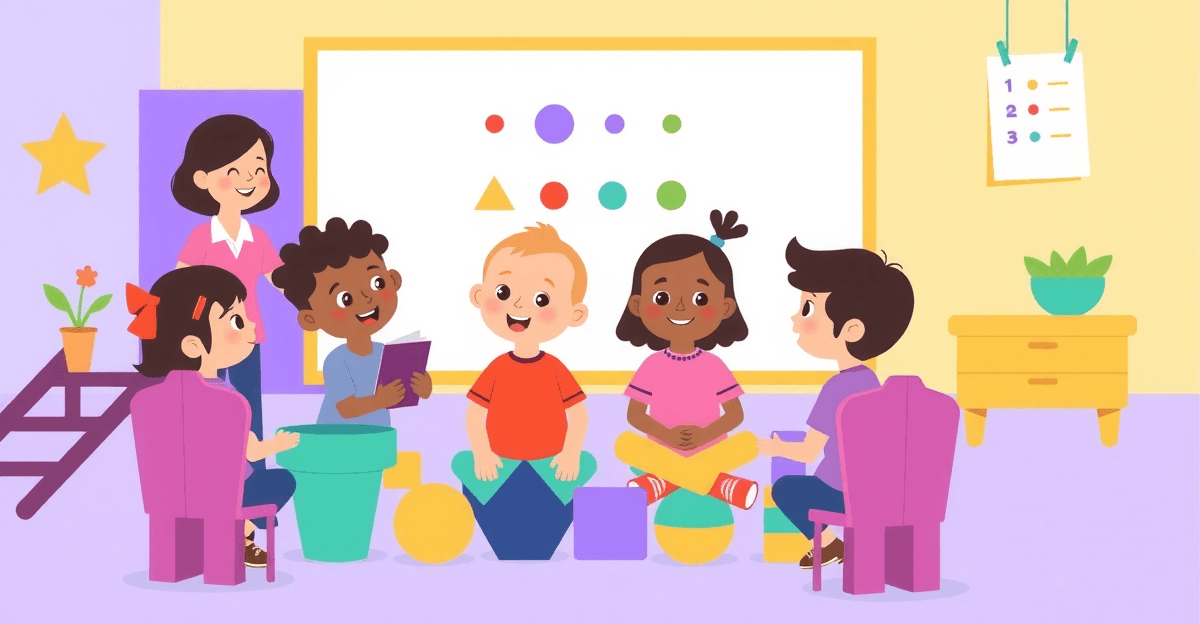
If your little one is heading into K2 this year, you've probably found yourself wondering exactly what they'll be learning — and whether they're "on track" for Primary 1. Understanding what K2 children learn in Singapore helps you support your child at home without overwhelming them (or you). The good news? The MOE-aligned kindergarten curriculum is designed around play, discovery, and holistic growth, not rote memorisation. This guide walks you through the K2 curriculum, realistic milestones, and gentle ways to reinforce learning at home.
Key takeaway: K2 in Singapore prepares children aged 5–6 for Primary 1 through six learning areas — language, numeracy, discovery of the world, aesthetics, motor skills, and social-emotional development. The focus is on building confidence and foundational skills, not academic pressure. By year's end, most K2 children can read simple sentences, count and add within 10, write letters and numbers, and manage classroom routines on their own.
What Is the K2 Curriculum in Singapore Based On?
The K2 curriculum in Singapore is guided by the Ministry of Education's Nurturing Early Learners (NEL) Framework, which shapes how preschools — from PCF Sparkletots and My First Skool to private kindergartens and MOE Kindergartens — design their programmes. The framework emphasises learning through purposeful play and quality interactions rather than worksheets and drilling.
The NEL framework organises learning into six areas:
- Language and Literacy — listening, speaking, early reading and writing
- Numeracy — numbers, counting, patterns, shapes
- Discovery of the World — curiosity about people, places and nature
- Aesthetics and Creative Expression — art, music, movement
- Motor Skills Development — fine and gross motor coordination
- Social and Emotional Development — confidence, self-management, relationships
Definitive statement: MOE explicitly states that the NEL framework prioritises holistic development over early academic acceleration, so a quality K2 programme balances literacy and numeracy with play, creativity, and social growth.
In Singapore, most children attend K2 at age 6 (turning 6 within the calendar year), the final year before Primary 1. So a child born in 2020 attends K2 in 2026 and starts Primary 1 in 2027.
What Do K2 Children Learn in Language and Literacy?
By K2, your child moves from recognising letters to reading simple sentences and writing short words. Most K2 children can identify all 26 letters and their sounds, read common sight words, and begin spelling phonetically. English is the main medium of instruction, with a Mother Tongue Language (Chinese, Malay or Tamil) introduced alongside.
Here's what language learning typically looks like in K2:
- Phonics and blending — sounding out words like c-a-t and s-u-n
- Sight words — recognising high-frequency words such as the, and, you, said on sight
- Reading — moving from single words to short, predictable sentences
- Writing — forming letters correctly and writing their own name and simple words
- Speaking and listening — sharing news, retelling stories, following multi-step instructions
If you'd like a concrete starting point, the Sight Words Every K1-K2 Child Should Know guide lists the words aligned with the MOE wordlist. And because every child progresses differently, our reading milestones for children ages 4–6 article helps you gauge what's typical without comparing your child to the class.
Definitive statement: By the end of K2, most Singapore children can read simple sentences independently and write recognisable letters and short words — the literacy foundation Primary 1 builds directly upon.
What Do K2 Children Learn in Numeracy and Maths?
K2 numeracy focuses on number sense, simple operations, and patterns — the building blocks of Primary 1 maths. Most K2 children can count to 100, recognise and write numbers to at least 20, and add and subtract within 10 using objects or fingers.
Typical K2 maths skills include:
- Counting — reliably counting to 100 and counting backwards from 10–20
- Number recognition and writing — reading and forming numerals
- Basic addition and subtraction — within 10, often using physical objects
- Comparing quantities — more than, less than, equal to
- Patterns and shapes — recognising, extending and creating patterns; naming 2D and 3D shapes
- Measurement concepts — comparing length, weight and capacity informally
These skills map directly onto the Primary 1 maths syllabus, so a confident K2 foundation makes that transition smoother. To understand how schools and centres gauge these abilities, see our guide on the K2 maths assessment in Singapore.
This is also where regular, low-pressure practice helps. Tools like QuizKin offer adaptive quiz practice that makes learning fun and measurable for K1–K2 kids — the questions adjust to your child's level, so they stay challenged but never discouraged, and you get a clear picture of where they're confident and where they need a little more support.
Beyond Academics: Discovery, Creativity and Motor Skills
A common misconception among Singapore parents is that K2 is all about reading and maths. In reality, MOE's framework dedicates significant time to discovery of the world, creative expression, and physical development — and these areas matter just as much for Primary 1 readiness.
In Discovery of the World, children explore nature, the human body, weather, and their community through hands-on projects and questions. In Aesthetics and Creative Expression, they paint, sing, move to music, and engage in dramatic play. Motor Skills Development covers both gross motor skills (running, hopping, balancing) and fine motor skills (cutting, threading, holding a pencil correctly).
Fine motor strength is especially important because it underpins handwriting — a skill Primary 1 demands daily. If your child finds pencil control tricky, our fine motor skills activities for K1 kids offer simple home exercises that strengthen little hands.
Definitive statement: Research in early childhood education consistently shows that strong fine motor and social-emotional skills predict smoother school transitions just as reliably as early literacy — which is why MOE weights them equally in the K2 curriculum.
Social and Emotional Learning in K2
By K2, children are expected to manage themselves more independently — packing their own bags, taking turns, expressing feelings appropriately, and working in groups. Social and emotional development is a core NEL learning area, not an afterthought, because emotional readiness strongly influences how well a child adjusts to the bigger, busier environment of Primary school.
Key social-emotional milestones for K2 include:
- Following classroom routines without constant reminders
- Resolving small conflicts with peers using words
- Showing empathy and sharing
- Managing transitions and minor disappointments
- Speaking up to ask for help
If your child is shy or anxious in group settings, our guide on developing social skills in preschoolers shares practical, gentle strategies. And because the jump to Primary 1 can feel big, reducing test anxiety in preschoolers is worth a read before assessment seasons.
How K2 Connects to Primary 1 (and the PSLE Down the Line)
K2 is the bridge year to Primary 1, which is compulsory under Singapore law. While the PSLE is six years away, the literacy, numeracy, and learning-to-learn habits built in K2 set the trajectory — children who enter Primary 1 confident and curious tend to stay engaged. The goal of K2 is readiness, not a head start.
Practically, this means by the time your child finishes K2 they should ideally be able to:
- Read simple sentences and write their name and basic words
- Count to 100 and add/subtract within 10
- Sit and focus on a task for 15–20 minutes
- Follow multi-step instructions
- Separate from you calmly and manage school routines
For a complete, year-ahead view, our Primary 1 readiness checklist of 30 skills is the most thorough resource — and if your preschool requires an interview, how to prepare your child for a kindergarten interview walks you through it calmly.
If you're considering extra learning support during this transition, you can find a tutor for free with no agency fees on TuitionLah — useful if your child needs a little reinforcement in a specific area.
How to Support K2 Learning at Home (Without the Pressure)
The most effective home support is short, consistent, and playful — 15–20 minutes a day beats hour-long cramming sessions. The aim is to build positive associations with learning, not to replicate school.
A few parent-tested approaches:
- Read together daily. Shared reading builds vocabulary and a love of books more than any worksheet.
- Count in real life. Count stairs, sort laundry by colour, measure ingredients while cooking.
- Keep practice bite-sized and adaptive. Short, levelled quizzes keep your child in the "just right" zone — challenged but not frustrated.
- Mind screen time. Quality matters more than quantity; our screen time rules for preschoolers guide explains healthy limits, and our roundup of the best educational apps for 4-year-olds in Singapore helps you choose wisely.
- Follow their interests. A dinosaur-obsessed child will happily count, read and draw dinosaurs.
Enrichment doesn't have to be expensive, either — you can find the latest education and family deals in Singapore on WhyNotDeals to keep costs manageable.
Above all, remember that your warmth and encouragement matter more than any curriculum. Children learn best when they feel safe, supported, and free to make mistakes. Celebrate effort over perfection, and your K2 child will walk into Primary 1 not just ready — but excited.
Sources
- MOE Nurturing Early Learners (NEL) Framework — official MOE curriculum framework for kindergarten education in Singapore.
- MOE Kindergartens – Curriculum — overview of the MOE Kindergarten curriculum and learning areas.
- MOE Compulsory Education — official information on compulsory education from Primary 1.
- Early Childhood Development Agency (ECDA) — Singapore's regulatory body for preschools and early childhood standards.
- MOE Primary 1 Registration — official guidance on registering your child for Primary 1.
Practise what you’ve read with QuizKin
Adaptive quizzes covering phonics, sight words, numbers, and more — aligned with the Singapore MOE curriculum. Start your free Premium trial today.
Frequently Asked Questions
K2 (Kindergarten Two) is for children aged 5 turning 6 within the calendar year. In Singapore, children typically enter K1 at age 5 and K2 at age 6, the year before they start Primary 1. For example, a child born in 2020 would attend K2 in 2026 and begin Primary 1 in 2027.
No, kindergarten is not compulsory in Singapore — only Primary 1 onwards is mandatory under the Compulsory Education Act. However, the vast majority of Singaporean children attend preschool, and K2 plays an important role in preparing your child academically and socially for Primary 1.
By the end of K2, most children can recognise and write letters and numbers, read simple words and short sentences, count and do basic addition within 10, and follow classroom routines independently. The MOE Nurturing Early Learners framework focuses on holistic development rather than academic drilling, so social and emotional readiness matter just as much.
About the author
Mervin Tan
Founder, QuizKin
Mervin Tan is the founder of QuizKin and a software engineer and dad of two young children in Singapore. He builds QuizKin's adaptive quiz engine and writes practical K1-K2 learning guides grounded in MOE's Nurturing Early Learners framework and his own experience preparing his kids for Primary 1. QuizKin is built by Adaptels Pte. Ltd., Singapore.
Ready to make learning fun?
QuizKin turns screen time into learning time with adaptive quizzes built for K1-K2 kids in Singapore. Free to start.
Related Articles
What Do K1 Children Learn in Singapore?
Wondering what K1 children learn in Singapore? A parent's guide to the MOE-aligned kindergarten curriculum, key skills, and how to support your 4-6 year old.
How to Prepare Your Child for K2 Assessment in Singapore
Practical guide for Singapore parents on preparing K2 children for year-end assessments. Covers literacy, numeracy, social skills, and stress-free strategies.
MOE Kindergarten Curriculum: What Singapore Parents Should Expect
Learn what MOE's K1-K2 kindergarten curriculum covers in Singapore. Expert guide to child development milestones, learning outcomes, and how to support your child at home.