Teaching Phonics at Home: Singapore Parents' Step-by-Step Guide
Help your K1-K2 child master phonics at home with this Singapore parents' guide — practical steps, local curriculum tips, and fun daily routines.
Mervin Tan · Founder, QuizKin
Published 18 May 2026
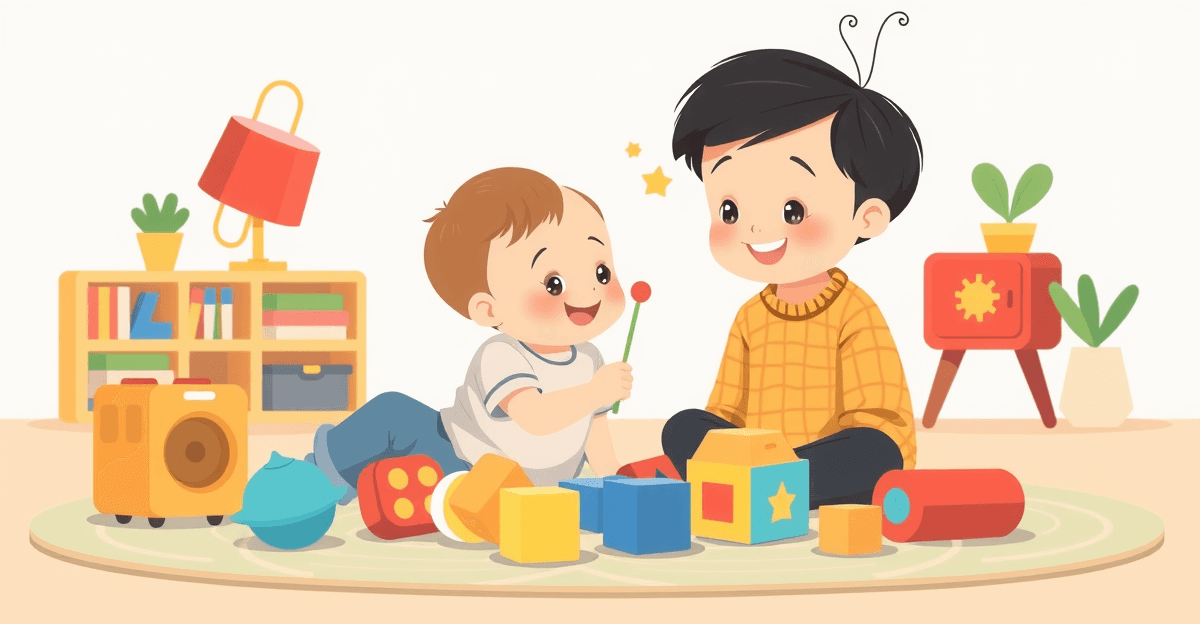
I still remember the moment it clicked. My daughter came home from preschool clutching a worksheet with the letter "S" on it. We sat down after dinner — her still in her uniform, me still smelling like the char kway teow I'd just cooked — and she sounded out "s-u-n." Her face lit up. She'd just read a word, and she knew it.
TL;DR: Help your K1-K2 child master phonics at home with this Singapore parents' guide — practical steps, local curriculum tips, and fun daily routines.
Getting to that moment, though? Took a while. There were weeks of me Googling "how to teach phonics" at midnight, buying flashcards from Popular that gathered dust, and wondering whether her preschool was doing enough. If that sounds familiar, this guide is for you.
I'm not a teacher. Just a parent who figured it out through trial and error, with help from my daughter's kindergarten teachers and a lot of reading. Here's what actually worked.
Why Phonics Matters for Your Singapore Kid
Phonics connects letters to sounds. When your child learns phonics, they gain the ability to look at a word they've never seen — say "ship" — and work out how to read it by sounding out each part. That's decoding, and it's the single most important reading skill.
Here in Singapore, this matters a lot. The P1 English curriculum assumes kids can already do some basic reading when they arrive. If your child walks into Primary 1 with solid phonics skills, they'll feel confident from day one. If they're still guessing at words, they'll spend the first few months playing catch-up while their classmates pull ahead.
The big preschool chains — PCF Sparkletots, My First Skool, Skool4Kidz, and the MOE Kindergartens — all teach phonics in K1 and K2. But here's the reality: classroom time is shared among 20-plus kids. Your child might get five minutes of actual phonics practice in a full school day. Home is where the real repetition happens.
Where Your Child Should Be: K1 vs K2
It helps to know what's normal before you start worrying.
K1 (Age 4-5): Learning the Sounds
At this stage, kids are working on:
- Individual letter sounds (not names — "sss" not "ess")
- Short vowel sounds: a, e, i, o, u
- Simple CVC words: cat, bed, sit, hot, run
- Basic print awareness: reading goes left to right, top to bottom
What this looks like at home: Your child spots letters on the Milo tin, tries to sound out three-letter words, sings along to phonics songs from school.
K2 (Age 5-6): Blending and Beyond
K2 kids move on to:
- Consonant blends: bl, cr, st, tr
- Digraphs: ch, sh, th, wh (two letters, one sound)
- Long vowel patterns: cake, bike, note
- Reading simple sentences and short books on their own
What this looks like at home: Your child reads the captions in picture books, plays word family games, tries writing simple sentences during free play.
How We Built Our Home Phonics Routine
The single best advice I got was from my daughter's K1 teacher: "Ten minutes a day, every day. Don't skip days. Don't do forty minutes on the weekend to make up for it." She was right.
Step 1: Find Out What the School Is Doing
Before you buy anything or plan anything, message or call your child's teacher. Ask three things:
- What phonics programme do you use? (A lot of Singapore preschools use Jolly Phonics.)
- What sounds have the kids covered so far?
- What's coming in the next few weeks?
This is the single most important step, and I nearly skipped it. I was about to teach my daughter sounds in alphabetical order when her teacher told me they were following the Jolly Phonics sequence (s, a, t, i, p, n first). If I'd gone ahead with "a, b, c" at home, it would have confused her.
Step 2: Pick a Time and Stick to It
We do phonics right after her afternoon snack. She's fed, she's had a break from school, and she's not yet in that overtired pre-bedtime zone. That 10-15 minute window works well for us.
Some friends do it first thing in the morning before school. Others squeeze it in before dinner. The specific time doesn't matter — what matters is that you do it at the same time, every day, until it's just part of the routine. Like brushing teeth.
Keep the vibe relaxed. This should feel more like playing than studying. If it starts feeling like homework, you've lost them.
Step 3: Warm Up with Sound Review (3 Minutes)
Start each session by flipping through sounds your child already knows. Flashcards work, or just write letters on a small whiteboard.
Go quickly. If they know it, move on. The goal is to activate what's already in their brain, not to drill things they've mastered. Think of it as stretching before exercise.
Local tip: You can pick up phonics flashcards from Popular Bookstore for under $10. Or honestly, just write letters on index cards. Handwritten works perfectly fine.
Step 4: One New Thing (5 Minutes)
Introduce one new sound, blend, or word family. Just one. K1-K2 kids learn through repetition over many sessions, not by cramming three new things into a single sitting.
For K1 kids working on letter sounds:
- Say it: "This is the sound /sh/"
- Show it: Write "sh" on paper or a whiteboard
- Act it out: If your school uses Jolly Phonics, do the action (finger to lips, "shhhh")
- Find it: Hunt for "sh" words together — "ship," "shop," "shell," "shoe"
For K2 kids working on word families:
Write a word family on the whiteboard — say, -ight: night, light, fight, right, sight. Read through them together. Then cover one and see if your child can read the others. Next session, review the same family before introducing a new one.
Step 5: Read Together (5 Minutes)
End with actual reading. A decodable reader pitched at your child's level, or even a short passage you've written out yourself.
For K1: Try Oxford Reading Tree Stage 1+, Bob Books, or Dandelion Readers. You can find all of these at Popular or borrow them from any NLB library. We went through the entire Bob Books series from the Woodlands Regional Library — all free.
For K2: Move to level 2-3 readers. Usborne Very First Reading is popular here. If your preschool has a take-home reader programme, use those.
Let your child lead. Point to words and give them time to decode. Count to five silently before you step in. The temptation to jump in with the answer is strong — I know because I kept doing it — but the struggling is where the learning happens.
Games That Keep It Fun
The biggest challenge with phonics at home is keeping a 4-year-old interested day after day. Here's what saved us from "I don't want to do phonics" meltdowns:
Sound Hunts
"Find five things in the kitchen that start with /b/." (bowl, banana, biscuit, bottle, bin) We did this at home, at the void deck, at Sheng Siong. My daughter got competitive about it — "I found SIX, Daddy!"
Phonics Bingo
Write 9-12 words your child is currently learning on a bingo grid. Call them out and have your kid mark them off. Simple, but she genuinely asks to play this. I think it's the satisfaction of yelling "BINGO!"
Word Family Flip Books
Cut strips of cardstock. Keep the ending (-at, -in, -og) fixed and add different starting letters on a flip strip. Your kid flips through and reads: "bat, cat, fat, hat, mat, rat, sat." Dead easy to make and weirdly satisfying for kids.
Magnetic Letters on the Fridge
We bought a set of magnetic letters from Daiso — $2 well spent. My daughter started rearranging them while I cooked dinner. First it was random, then she started spelling "cat" and "dog." Now she leaves messages on the fridge like "I LUV U DAD." My heart.
Adaptive Quiz Practice
On days when I'm honestly too tired to run a proper session, an adaptive phonics app picks up the slack. QuizKin is designed for Singapore K1-K2 kids and adjusts difficulty based on how your child is doing — so they're always challenged but not overwhelmed. It tracks progress too, which means I can see exactly what she's nailing and what needs more work, without keeping my own notebook.
Mistakes I Wish I'd Avoided
Teaching Letter Names First
My daughter could recite "A, B, C, D" before she turned four. Sounds great, right? Except when phonics started and she needed /a/, /b/, /k/ sounds instead, we had to undo months of "ay, bee, see" habits. If you haven't started yet, go straight to sounds.
Going Too Fast
Singapore parent culture, lah — always comparing. "My friend's kid reading already, yours still on letter sounds?" I tried to push my daughter ahead before she was ready. She got frustrated, I got stressed, and we both ended up dreading phonics time. Slowing down to her actual pace made everything better. A K1 kid still learning letter sounds is not behind — they're exactly where most kids are.
Skipping the Review
I used to jump straight to new sounds because reviewing old ones felt boring. But kids forget. The review portion isn't wasted time — it's where long-term memory gets built. Every session should start with a quick run through known sounds.
Making It Too Serious
"No, that's wrong. The sound is /d/, not /b/." Hearing myself say that in a sharp tone was a wake-up call. When my daughter reads "bog" instead of "dog," the right response is: "Good try! Let's look at the first letter again. What sound does it make?" The emotional vibe of your phonics sessions matters just as much as the content. Maybe more.
How to Tell If They're Making Progress
You don't need formal assessments. Just keep a casual eye on a few things:
- Are they recognising sounds faster than last month?
- Can they blend a new CVC word without help?
- Do they try to read signs, food packaging, or book titles unprompted?
- Are they enjoying it, or at least not actively resisting?
If you want something more structured, apps like QuizKin track accuracy rates and show you which sounds are solid and which ones need more reps. I found the parent dashboard genuinely useful for spotting gaps I hadn't noticed — my daughter was quietly struggling with /v/ and /w/ and I had no idea until the data showed it.
For parent-teacher meetings at preschool, having a rough sense of your child's progress helps too. You can tell the teacher, "She's solid on single letter sounds but still struggles with 'th' and 'sh'" — and they can reinforce those specific sounds in class.
When to Get Extra Help
Some kids genuinely find phonics difficult, and that's okay. It doesn't mean you're failing as a parent or they're failing as a learner. But keep an eye out for:
- Still mixing up lots of letter sounds after several months of K1
- Can't hold sounds in memory long enough to blend them into a word
- Getting very upset or completely avoiding anything reading-related
If this sounds like your child, talk to their preschool teacher first. Singapore has MOE learning support programmes, and the Dyslexia Association of Singapore offers assessments and targeted help. The earlier you catch genuine difficulties — in K1 or K2 rather than P2 or P3 — the better the outcomes.
The 42 Sounds Your Child Needs to Know
English has about 42 core phonemes (distinct sounds). Most phonics programmes teach them in a specific sequence.
Phase 1: Single-Letter Sounds
A common teaching order (Jolly Phonics sequence, used by many Singapore preschools):
Group 1: s, a, t, i, p, n
Group 2: c/k, e, h, r, m, d
Group 3: g, o, u, l, f, b
Group 4: j, z, w, v
Group 5: y, x, q
This order is deliberate — after just Group 1, your child can read simple words like "sat," "pin," and "tap." That early win matters. It shows them phonics actually works.
Phase 2: Digraphs and Trigraphs
Once single letters are solid, kids learn letter combinations that make new sounds:
- Consonant digraphs: sh, ch, th (voiced and unvoiced), ng, nk
- Vowel digraphs: ai, ee, oa, oo (long and short), ar, or, er, igh, ow, oi
These are critical. So many common English words use digraphs — "the," "this," "she," "rain," "book." A child who only knows single letter sounds will get stuck on almost every sentence.
A Rough Timeline for K1-K2 Phonics
K1 (age 5):
- Months 1-3: Group 1 sounds (s, a, t, i, p, n). Start blending CVC words.
- Months 4-6: Group 2 sounds. Build a small sight word bank.
- Months 7-9: Group 3 sounds. Read simple decodable sentences.
- Months 10-12: Groups 4-5. Introduce common digraphs (sh, ch, th).
K2 (age 6):
- Months 1-4: Master all digraphs and trigraphs. Start reading short texts independently.
- Months 5-8: Build fluency and reading speed. Grow the sight word bank.
- Months 9-12: Read simple picture books with minimal help. Move into early readers.
Every child moves at their own pace. This is a rough guide, not a schedule you should stress over.
The Short Version
You don't need to become a reading specialist. You need three things:
- Find out what sounds your child's school has covered — and follow their sequence
- Set aside 10 minutes every day for phonics practice — same time, same spot
- Get a few phonics readers from the library or Popular and read together
That's it. Everything else is refinement. Every "s-u-n" your child sounds out successfully is one more brick in a reading foundation that'll carry them through primary school and beyond.
Once English phonics is progressing, consider layering in Chinese character recognition. Research shows bilingual literacy skills actually reinforce each other — your child isn't dividing their brain between two languages, they're building one stronger language brain.
Sources
- Report of the National Reading Panel — National Institute of Child Health and Human Development (NICHD), NIH
- The Effects of Synthetic Phonics Teaching on Reading and Spelling Attainment (PDF) — Johnston & Watson, Scottish Executive Education Department, 2005
- Teaching Reading: Report and Recommendations — National Inquiry into the Teaching of Literacy, Australian Government, 2005
- Nurturing Early Learners (NEL) Framework — Ministry of Education, Singapore
Looking for more? Check out find a tutor for free on TuitionLah.
Exploring parenthood in Singapore? Visit ParentLah for practical tips on raising kids in Singapore.
Practise what you’ve read with QuizKin
Adaptive quizzes covering phonics, sight words, numbers, and more — aligned with the Singapore MOE curriculum. Start your free Premium trial today.
Frequently Asked Questions
Most Singapore preschools introduce phonics between ages 4 and 5, which corresponds to K1. MOE Kindergarten, PCF Sparkletots, My First Skool, and PAP Community Foundation centres typically begin with letter sounds and simple CVC words during K1, building toward blending and sight words by K2. If your child is 4 and hasn't started yet, it's not too late — short, playful sessions at home are a great way to begin.
Phonics teaches children to decode words by connecting letters to sounds, so they can read unfamiliar words independently. Sight words (also called high-frequency words) are common words like 'the', 'said', and 'come' that don't follow regular phonics rules and are best memorised by sight. Singapore primary schools expect children to handle both, so yes — your child needs both. A good home routine covers phonics decoding in one session and a quick sight word review in another.
Yes, and the research backs this up. Classroom time is shared among 20–25 children, which means your K1 or K2 child gets limited one-on-one phonics practice each day. Studies consistently show that children who get even 10–15 minutes of targeted home practice make significantly faster progress. Think of home sessions as reinforcement, not replacement — you're giving your child the repetition they need for skills to stick, in a safe space where they can make mistakes without pressure.
Most Singapore preschools use a synthetic phonics approach, where children learn individual letter sounds first, then blend them together to read words. This is aligned with what MOE Kindergartens and the major preschool chains use. At home, consistency with whatever method your child's school uses is more important than switching to a different programme. Ask your child's teacher which phonics scheme they follow — common ones in Singapore include Jolly Phonics and school-developed programmes — and use the same letter-sound order at home.
Synthetic phonics teaches children to sound out each letter in a word and blend them together (c-a-t becomes 'cat'). Analytic phonics starts with whole words and breaks them down into component sounds. Most Singapore kindergartens and international schools use synthetic phonics because research shows it is more effective for beginning readers.
English has approximately 42 to 44 phonemes (distinct sounds), depending on the accent. These are made up of single-letter sounds (like s, a, t), digraphs (two letters making one sound, like 'sh', 'ch', 'th'), and other combinations. QuizKin covers all 42 core letter sounds used in Singapore kindergartens.
Blending is a separate skill from knowing individual sounds. Practise with two-sound words first (e.g., 'at', 'in', 'up'), then move to three-sound CVC words (e.g., 'cat', 'dog', 'sun'). Say each sound slowly, then faster, then blend them together. Use your finger to point under each letter as you say its sound. This skill develops with practice and patience.
About the author
Mervin Tan
Founder, QuizKin
Mervin Tan is the founder of QuizKin and a software engineer and dad of two young children in Singapore. He builds QuizKin's adaptive quiz engine and writes practical K1-K2 learning guides grounded in MOE's Nurturing Early Learners framework and his own experience preparing his kids for Primary 1. QuizKin is built by Adaptels Pte. Ltd., Singapore.
Ready to make learning fun?
QuizKin turns screen time into learning time with adaptive quizzes built for K1-K2 kids in Singapore. Free to start.
Related Articles

Reading Milestones for Children Ages 4-6: What Singapore Parents Should Expect
Worried your K1 or K2 child is behind in reading? Here's what Singapore parents should realistically expect at ages 4, 5, and 6 — and how to help.
The 15-Minute After-School Learning Routine for K1 & K2 Kids (Singapore)
A practical daily routine for reinforcing kindergarten learning at home. 15 minutes of phonics, sight words, and writing practice that Singapore parents can start today.
Storytelling Activities for Singapore Preschoolers: Boost Language and Imagination
Discover fun storytelling activities for K1-K2 children in Singapore. Boost language skills, creativity & confidence with practical tips from early childhood experts.