Storytelling Activities for Singapore Preschoolers: Boost Language and Imagination
Discover fun storytelling activities for K1-K2 children in Singapore. Boost language skills, creativity & confidence with practical tips from early childhood experts.
Mervin Tan · Founder, QuizKin
Published 3 June 2026
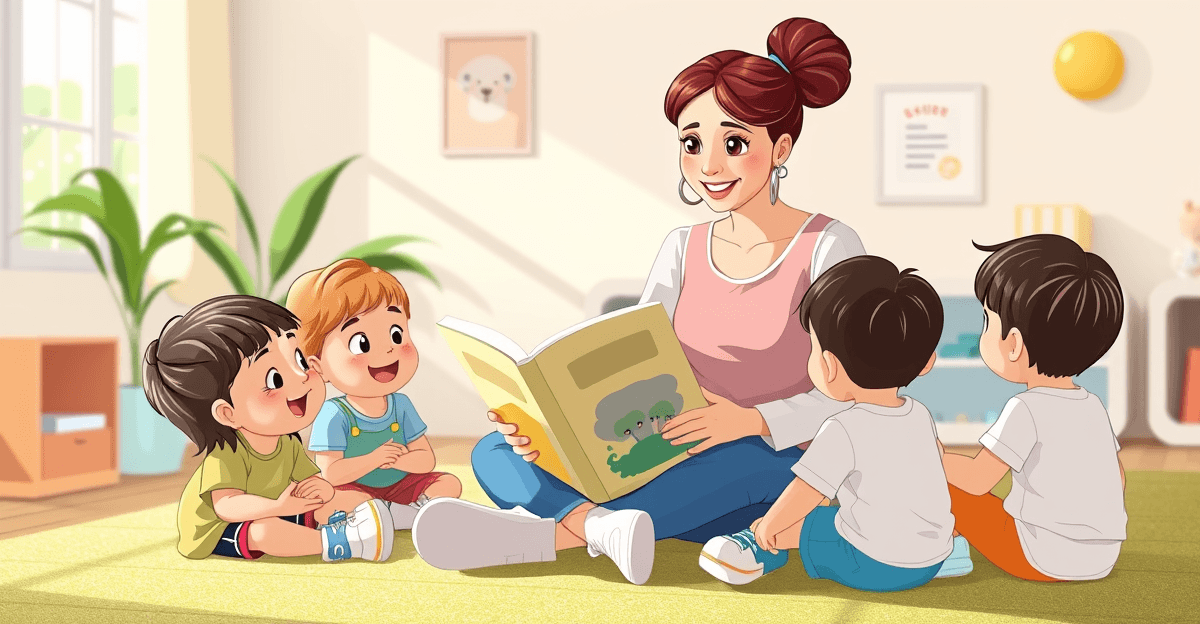
Your 5-year-old sits cross-legged on the living room floor, eyes wide, hanging on every word as you describe a magical garden. Ten minutes in, she suddenly interrupts: "What happens next? Does the butterfly find his friend?"
TL;DR: Discover fun storytelling activities for K1-K2 children in Singapore. Boost language skills, creativity & confidence with practical tips from early childhood experts.
This is the power of storytelling—and it's one of the most underrated tools in the Singapore parent's toolkit for early childhood learning.
If you've noticed that children in K1 and K2 are more engaged, confident, and curious after regular storytelling experiences, you're onto something real. Language development, imagination, emotional intelligence, and even social skills flourish when children encounter stories. Better yet, storytelling costs nothing, requires no apps or screens, and fits perfectly into your family's routine.
In this guide, we'll explore practical storytelling activities designed specifically for Singapore K1-K2 children (ages 4–6), aligned with how local preschools like PCF, My First Skool, and PAP Community Foundation centres incorporate narrative into their curricula.
Why Storytelling Matters for K1-K2 Children in Singapore
Language Skills Beyond Vocabulary
Storytelling is one of the most natural ways children absorb language. When your child listens to a story, they encounter new words in context—not as isolated flashcards. They also begin to understand sentence structure, tense, and how ideas connect.
For Singapore preschoolers, this is particularly valuable. The MOE's English Language syllabus for early years emphasises listening, speaking, and comprehension. A child who regularly hears stories develops stronger phonemic awareness and is better prepared for Primary 1 literacy demands.
Building Confidence and Expression
Shyer children, or those learning English as a second language (common in multicultural Singapore homes), often find their voice through storytelling. When there's no "right answer"—only imagination—children feel safer experimenting with language.
Many Singapore preschool teachers report that quiet children blossom once storytelling becomes a regular activity. They begin to volunteer comments, ask questions, and eventually share their own tales.
Emotional Development and Empathy
Stories help children understand emotions, relationships, and different perspectives. A story about a character feeling lonely, excited, or brave gives children language to name their own feelings and see that others experience similar emotions.
Imagination and Creative Thinking
In a world where structured learning (tuition, flashcards, apps) dominates many Singapore childhoods, storytelling reclaims unstructured creativity. Children who regularly engage with stories develop stronger problem-solving skills, flexibility in thinking, and a genuine love of learning.
6 Storytelling Activities You Can Start This Week
1. Interactive Read-Alouds with Pauses and Questions
Reading aloud isn't passive. The magic happens when you pause and invite participation.
How to do it:
- Choose a picture book appropriate for your child's age (K1 favourites include The Very Hungry Caterpillar or Brown Bear, Brown Bear, What Do You See?; K2 kids enjoy slightly more complex stories like Where the Wild Things Are).
- Before you start, point to the cover and ask: "What do you think this story is about?"
- As you read, pause at key moments: "What do you think will happen next?" or "Why did the character do that?"
- Let your child turn the pages.
- After finishing, ask open-ended questions: "Who was your favourite character?" or "What was the silliest thing in the story?"
Singapore context: Many preschools use this technique during circle time. Replicating it at home reinforces skills and shows your child that reading is a conversation, not a monologue.
2. Story Retelling with Props and Picture Cards
Children this age love repetition, and retelling builds comprehension and sequencing skills.
How to do it:
- Read a familiar story once or twice.
- Gather simple props: stuffed animals, toy furniture, or drawings.
- Invite your child to retell the story using the props. Don't correct; let them make it their own.
- Ask guiding questions if they get stuck: "What happened first?" or "Where did the character go?"
Why it works: Retelling is low-pressure narrative practice. Your child controls the pace and can add their own details, which delights their imagination.
Local tip: PCF preschools often incorporate retelling into their "learning corners." If your child's school does this, ask the teacher which stories they focus on, so you can practise at home.
3. "Tell Me a Story" About Everyday Moments
Some of the best storytelling happens without a book.
How to do it:
- Throughout the day, narrate and dramatise everyday moments: "Once upon a time, there was a little girl named [child's name] who discovered a mysterious orange in the fruit bowl…"
- Turn the walk to the hawker centre into an adventure: "We journeyed through the forest of tall buildings and found the legendary food market…"
- Before bed, ask your child to tell you a story about their day: "Tell me the story of your day. What was the most exciting part?"
Why it works: This demystifies storytelling. Your child learns that stories aren't just in books—they're everywhere. It also builds oral language fluency in a pressure-free way.
4. Story Dice and Picture Prompt Games
Visual prompts spark creativity and help children who struggle with "blank page" syndrome.
How to do it:
- Print 6–10 simple pictures (animals, objects, places) from Google Images or use story dice.
- Spread them out and ask your child to pick 3–4 at random.
- Challenge them to create a story using those images: "This butterfly, this house, and this rainy cloud—what's the story?"
- You can go first to model the activity.
DIY version: Cut out pictures from magazines or use your own photos. Keep a "story box" on a shelf in your child's room.
Singapore twist: Use images of familiar local places—the East Coast Park, Orchard Road, a local temple—to make stories more relatable.
5. Character Role-Play and Puppet Storytelling
Children naturally role-play; give it structure and it becomes powerful language practice.
How to do it:
- Use simple puppets (socks with drawn faces, toy animals, or even your fingers with drawn eyes).
- Start with a simple scenario: "Once upon a time, these two puppets were friends who wanted to climb a tree."
- Let your child manipulate the puppets and speak for them.
- Ask prompts: "What does the first puppet say?" or "What do they do next?"
Why it works: Puppets reduce self-consciousness. Children feel braver speaking through a puppet than speaking for themselves.
6. Collaborative Storytelling: You Take Turns
This is storytelling as a team sport—perfect for building confidence.
How to do it:
- Sit facing each other.
- You start: "Once upon a time, a little boy found a mysterious box in his garden."
- Your child adds the next sentence: "Inside the box was a sleeping dragon."
- Keep alternating, each person adding one or two sentences.
- Let the story go wherever it goes—silly, surprising, nonsensical. That's the fun.
Pro tip: Record these stories on your phone. Replay them later. Children love hearing their own voice in a story, and it reinforces listening skills.
Storytelling in the Context of Singapore Preschool Curricula
Singapore preschools—whether PCF, My First Skool, PAP Community Foundation centres, or private options—build storytelling into their daily routines. Understanding what's happening at school helps you extend learning at home.
In K1 (age 4):
- Teachers focus on listening comprehension and vocabulary building.
- Stories are short, repetitive, and feature relatable characters.
- Circle time includes shared reading and simple discussions.
In K2 (age 5–6):
- Children begin to retell stories and answer questions about plot and characters.
- Teachers introduce sequencing (what happened first, next, last).
- Children may start creating very simple original stories.
Bridging to Primary 1:
The MOE's Primary English Language syllabus builds directly on preschool foundations. A K2 child who has regular storytelling experience transitions more smoothly into Primary 1 reading, writing, and speaking tasks.
Tips for Success: Making Storytelling Part of Your Family Routine
Set a Regular Time
Consistency matters. Many Singapore families find that bedtime storytelling becomes a cherished ritual. Even 10–15 minutes daily is more valuable than an occasional longer session.
Follow Your Child's Lead
If your child wants to hear the same story 20 times, that's fine. Repetition is how young brains consolidate learning. If they lose interest, switch stories. There's no "right" number of stories.
Don't Worry About "Correct" Storytelling
Children's stories are gloriously illogical. A character might fly, turn into a biscuit, and then dance. This is not a problem—it's imagination. Avoid correcting or redirecting ("That doesn't make sense"). Instead, engage: "Oh, the butterfly turned into a biscuit! What flavour?"
Mix Languages If It's Natural for Your Family
Many Singapore households are multilingual. Storytelling in Mandarin, Malay, Tamil, or a mix is wonderful. Research shows it supports cognitive development and cultural connection. Don't worry that it's "confusing"—children are remarkable at code-switching.
Use the Library
Singapore's libraries (especially the National Library Board branches) have excellent children's collections, including books tailored to K1-K2 levels. Many also host storytelling sessions—a great way to expose your child to professional storytellers and other children.
Complementing Storytelling with Structured Learning
While storytelling builds broad language confidence and imagination, structured learning tools help solidify specific skills. For example, adaptive quiz practice that makes learning fun and measurable for K1-K2 kids can reinforce phonics, sight words, and number concepts that complement narrative-based learning.
The combination is powerful: storytelling develops your child's love of language and creative thinking, while focused activities like QuizKin help them master foundational skills at their own pace. Together, they create a balanced, engaging early learning experience.
Common Challenges and Solutions
Challenge: "My child just wants me to read, not to create stories."
Solution: That's completely normal at K1. Focus on interactive read-alouds first. Once your child is comfortable, gently introduce collaborative storytelling. Let them lead.
Challenge: "My child gets distracted or restless during stories."
Solution: Shorter is better. Start with 5 minutes. Choose highly engaging picture books with bold illustrations. Allow movement (puppet play, acting out parts).
Challenge: "My child is learning English as a second language and seems shy about speaking."
Solution: Use lots of visual props, keep pressure low, and celebrate small attempts. Multilingual children often understand more than they produce—this is normal. Patience and positive reinforcement help tremendously.
Wrapping Up: Storytelling as a Gift
Storytelling isn't a skill your child will be tested on. It won't appear as a line item on a Primary 1 admission form. But it's one of the most generous gifts you can give—a love of language, confidence in expression, and the knowledge that their imagination matters.
For Singapore parents juggling school runs, enrichment classes, and the pressure to "optimise" early childhood, storytelling is refreshingly simple. It requires only your presence, your voice, and a willingness to step into a world of possibility alongside your child.
Start this week. Pick a book or a moment. Pause. Ask a question. Listen. Watch your child's eyes light up.
That's where learning—real, joyful, lasting learning—begins.
FAQs: Storytelling for Singapore Preschoolers
Q: How does storytelling help with K1-K2 language development in Singapore?
A: Storytelling develops vocabulary, listening skills, and sentence construction—all core components of the MOE's English Language syllabus for preschoolers. When children listen to and create stories, they naturally absorb new words, grammar patterns, and narrative structure. Regular exposure also builds confidence in verbal expression, which is essential for transition to Primary 1.
Q: What's the best age to start storytelling activities with Singapore preschoolers?
A: Children aged 4 (K1) through 6 (K2) are ideal storytelling participants. At K1, they enjoy listening and answering simple questions about stories. By K2, they can create their own short narratives and describe pictures. Singapore preschools like PCF and My First Skool integrate storytelling into daily routines—you can easily mirror this at home.
Q: How can I encourage my shy K1 or K2 child to participate in storytelling?
A: Start with familiar contexts: retell stories about your child's day, use their favourite characters, or let them tell stories about toys and pets without pressure. Praise effort, not perfection. Many Singapore parents find that props like picture cards or puppet toys help shy children feel more comfortable. Make it playful rather than a formal lesson.
Q: Can storytelling activities complement structured learning like QuizKin?
A: Absolutely. While adaptive quiz practice helps reinforce specific skills in a fun, measurable way, storytelling develops the broader language confidence and creative thinking that make learning enjoyable. Together, they create a well-rounded approach to early literacy.
Sources
Looking for more? Check out find a tutor for free on TuitionLah.
Exploring parenthood in Singapore? Visit ParentLah for practical tips on raising kids in Singapore.
Practise what you’ve read with QuizKin
Adaptive quizzes covering phonics, sight words, numbers, and more — aligned with the Singapore MOE curriculum. Start your free Premium trial today.
Frequently Asked Questions
Storytelling develops vocabulary, listening skills, and sentence construction—all core components of the MOE's English Language syllabus for preschoolers. When children listen to and create stories, they naturally absorb new words, grammar patterns, and narrative structure. Regular exposure also builds confidence in verbal expression, which is essential for transition to Primary 1.
Children aged 4 (K1) through 6 (K2) are ideal storytelling participants. At K1, they enjoy listening and answering simple questions about stories. By K2, they can create their own short narratives and describe pictures. Singapore preschools like PCF and My First Skool integrate storytelling into daily routines—you can easily mirror this at home.
Start with familiar contexts: retell stories about your child's day, use their favourite characters, or let them tell stories about toys and pets without pressure. Praise effort, not perfection. Many Singapore parents find that props like picture cards or puppet toys help shy children feel more comfortable. Make it playful rather than a formal lesson.
Absolutely. While adaptive quiz practice helps reinforce specific skills in a fun, measurable way, storytelling develops the broader language confidence and creative thinking that make learning enjoyable. Together, they create a well-rounded approach to early literacy.
About the author
Mervin Tan
Founder, QuizKin
Mervin Tan is the founder of QuizKin and a software engineer and dad of two young children in Singapore. He builds QuizKin's adaptive quiz engine and writes practical K1-K2 learning guides grounded in MOE's Nurturing Early Learners framework and his own experience preparing his kids for Primary 1. QuizKin is built by Adaptels Pte. Ltd., Singapore.
Ready to make learning fun?
QuizKin turns screen time into learning time with adaptive quizzes built for K1-K2 kids in Singapore. Free to start.
Related Articles

Helping Your Child With Preschool Homework Without Tears (Singapore Guide)
Practical tips for Singapore parents on making K1-K2 homework stress-free, with age-appropriate strategies aligned to local preschool expectations.
Bilingual Learning for Preschoolers: English & Mother Tongue (Singapore)
Raise a bilingual child in Singapore. Strategies for balancing English and Mother Tongue at home, common myths debunked, and daily routines for K1-K2 kids.
Teaching Phonics at Home: Singapore Parents' Step-by-Step Guide
Help your K1-K2 child master phonics at home with this Singapore parents' guide — practical steps, local curriculum tips, and fun daily routines.