School Bus Safety for Singapore Preschoolers
A practical school bus safety guide for Singapore parents of K1-K2 kids. Learn seatbelt rules, drop-off routines, and skills to keep your preschooler safe.
QuizKin Team
Published 6 October 2026
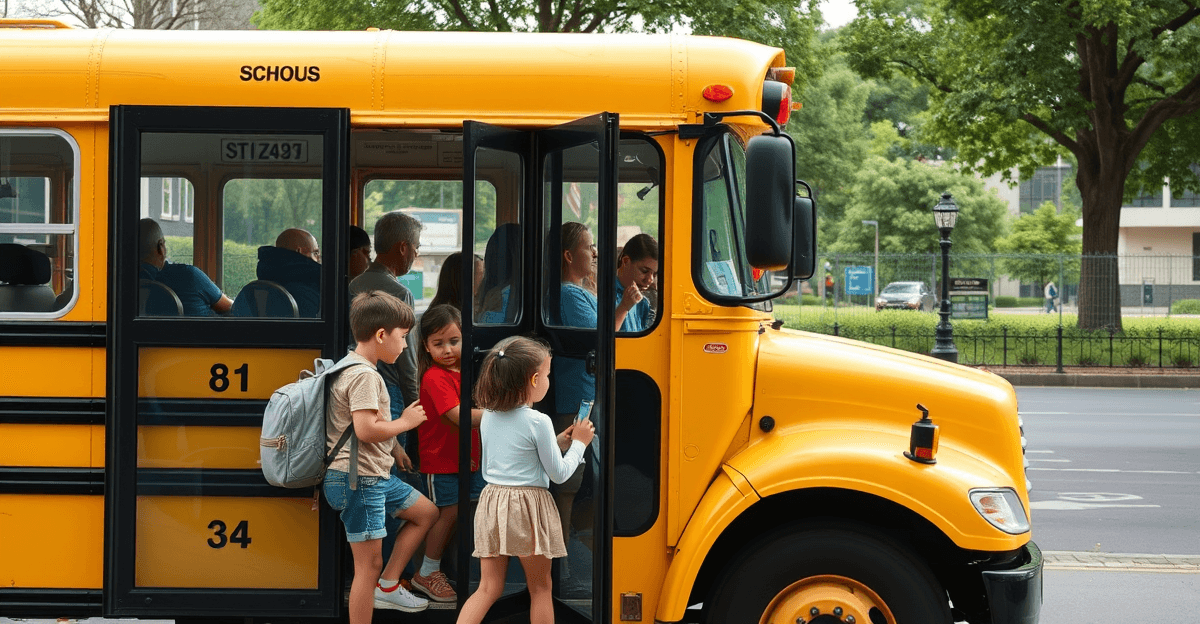
It is 6.45am in Bukit Panjang. Your little one is half-asleep, clutching a water bottle, as the pink preschool bus rounds the corner of your HDB block. You wave, the attendant lifts your child up the steps, and the doors close. For the next 30 minutes your preschooler is on the road without you — and if you are like most Singapore parents, a small part of your heart rides along too. This is exactly why school bus safety deserves a proper conversation, not just a quick wave goodbye. For K1-K2 children aged 4 to 6, a few simple, well-practised habits can make the daily commute to preschool genuinely safe and far less stressful for everyone.
TL;DR — Key Takeaways
- All newly registered school buses in Singapore are required to have seatbelts; always confirm your child's seat has a working one.
- K1-K2 children (ages 4-6) should always have a licensed bus attendant supervising boarding, seating, and alighting.
- The highest-risk moments are boarding and alighting — teach your child to wait, hold hands, and never run toward or behind the bus.
- Practise the daily safety routine through role-play; repetition turns safety steps into automatic habits for a 4-6 year old.
- Know your operator, the route timing, and who to call if the bus is late.
Why School Bus Safety Matters for 4-6 Year Olds
School bus safety matters most for preschoolers because children aged 4 to 6 are still developing the judgement, impulse control, and road awareness that older kids take for granted. A K1 child cannot reliably judge the speed of an oncoming vehicle or remember to check both directions when excited to get home. That developmental gap — not the bus itself — is the real risk, and it is why structured routines and adult supervision make such a difference.
In Singapore, the Land Transport Authority and Traffic Police consistently report that the most vulnerable moments for young passengers are not during the drive, but during boarding and alighting, when children move around the vehicle and into traffic. Pedestrian-related incidents involving young children are a recurring concern in local road safety data, which is why Singapore schools emphasise supervised drop-off zones.
The reassuring news: preschoolers are capable of learning safety routines remarkably well when those routines are consistent and repeated. The same way your child learns to line up for recess or pack their bag, they can learn to buckle up and wait for the attendant — if the steps stay the same every single day. Building this kind of calm, predictable routine also supports broader school readiness skills your child needs for Primary 1.
What Are the School Bus Safety Rules in Singapore?
School bus safety rules in Singapore centre on seatbelts, a licensed bus attendant, and supervised boarding. All newly registered school buses are required to have seatbelts fitted, and operators serving preschools typically assign an adult attendant to every route carrying young children. These two measures — belts plus a dedicated supervising adult — form the backbone of safe preschool transport.
Here is what a well-run preschool bus service in Singapore should offer:
- Seatbelts for every child, with the attendant checking each one is buckled before the bus moves.
- A licensed bus attendant (in addition to the driver) who helps children board, stay seated, and alight safely.
- A fixed pick-up and drop-off point close to your home, ideally away from busy traffic.
- A clear roll-call or headcount system so no child is ever left on board — a critical check, especially in Singapore's heat.
- Communication with parents via a messaging group or app when the bus is delayed or the route changes.
Definitive point: no child aged 4-6 should travel on a preschool bus without an adult attendant present. If your operator cannot confirm this, raise it with your preschool immediately. Large providers such as PCF Sparkletots, My First Skool, and MOE Kindergartens generally work with vetted bus operators, but it is always worth asking directly rather than assuming.
Questions to Ask Your Preschool or Bus Operator
Before the school year starts, a two-minute conversation can resolve most worries:
- Does every seat have a working seatbelt, and does the attendant check them?
- Is there a dedicated bus attendant on my child's route?
- What is the headcount procedure at drop-off to ensure no child is left behind?
- How will I be notified if the bus is running late?
- What is the estimated journey time, and how many stops are before ours?
Teaching Your Child the Daily School Bus Safety Routine
The best way to teach school bus safety to a preschooler is to break the journey into a small, fixed sequence of steps and practise them until they become automatic. Children aged 4-6 learn safety best through repetition and role-play, not lectures. Keep each instruction short, concrete, and always the same.
Here is a simple five-step routine your child can learn:
- Hold hands to the bus. Always walk to the pick-up point holding an adult's hand, and wait a big step back from the kerb.
- Wait for the full stop. Only approach after the bus has completely stopped and the attendant signals it is safe.
- Buckle up straight away. Sit down, click the seatbelt, and keep it on for the whole ride.
- Stay seated and calm. No standing, no leaning out, no swapping seats while the bus is moving.
- Wait for the attendant to alight. Step down carefully, and never walk behind or in front of the bus — walk to the adult waiting for you.
The single most important rule to drill is the "danger zone" rule: the area immediately around the bus where the driver cannot see a small child. Teach your little one to take five giant steps away from the bus after getting off, and to never pick up a dropped item near the wheels — tell an adult instead.
Role-play makes this stick. Line up some chairs at home as a "bus," use a toy steering wheel, and take turns being the attendant. Praising your child each time they buckle up or wait patiently turns safety into something they feel proud of, rather than something they are nagged about. If mornings feel rushed and your child gets anxious about the separation, these same calm, predictable routines help — our guide on reducing test anxiety in preschoolers shares techniques that work just as well for transport jitters.
Making Safety Learning Fun and Stick
Preschoolers remember safety rules best when learning feels like play rather than a warning. Game-based learning taps into how 4-6 year olds are naturally wired to absorb information, which is why songs, stories, and interactive quizzes outperform repeated verbal reminders. The goal is to make the right action feel automatic and even enjoyable.
A few parent-tested ideas:
- Sing a buckle-up song on the way to the pick-up point each morning.
- Read picture books about buses and road safety at bedtime.
- Play "spot the safe choice" — point out when characters in a show do (or don't) follow safety rules.
- Turn it into a quiz. Children love showing what they know. QuizKin offers adaptive quiz practice that makes learning fun and measurable for K1-K2 kids, so you can reinforce everyday concepts — from road signs to colours and counting — in short, playful sessions that grow with your child's ability.
This "learning through play" approach is well supported by early-childhood research, and it is the same reason game-based learning works so well for preschoolers. When safety is woven into fun, your child is far more likely to remember it in the moment that counts. If you are curious about building a wider screen-time-worthy learning routine, our round-up of the best educational apps for 4-year-olds in Singapore is a useful starting point.
Heat, Headcounts, and Being Left Behind: Singapore-Specific Safety
In Singapore's tropical climate, one of the most serious school bus safety risks is a child being accidentally left on board in the heat. Temperatures inside a stationary, un-airconditioned vehicle can rise dangerously within minutes, which is why a reliable headcount system is non-negotiable. This is a specific, local concern every parent should raise.
Reputable operators use a "last seat check," where the attendant or driver walks to the very back of the bus after every drop-off to confirm no child is sleeping or hiding. Ask your preschool whether this check is standard practice. You can also:
- Dress your child in visible colours so they are easy to spot during a headcount.
- Teach your child to honk or call out if they ever wake up alone on a bus (some operators fit a rear alarm button).
- Keep a water bottle in your child's bag, as Singapore mornings can already be warm.
- Confirm the drop-off time and message the group chat if your child does not arrive as expected.
Definitive point: if your child ever reports being left alone on the bus, even briefly, escalate it to the preschool principal in writing the same day. These incidents are rare but entirely preventable with proper procedures.
Building the Independence and Awareness Behind Safety
Behind every safe bus ride is a child who can follow instructions, recognise familiar adults, and stay calm in a new setting. These are the same social and self-regulation skills that underpin school readiness. The more confident and independent your child becomes, the more naturally safe behaviours follow.
Supporting this means nurturing a few areas at once:
- Following multi-step instructions — the heart of any safety routine.
- Recognising trusted adults — knowing the attendant by name and face.
- Communicating needs clearly — saying "I feel unwell" or "I dropped my bag."
These overlap neatly with broader development. Strengthening social skills in your preschooler helps your child interact confidently with the bus attendant and classmates, while age-appropriate physical development milestones for 4-6 year olds — like climbing steps steadily and sitting still when needed — directly support safe boarding and alighting.
If you are weighing up whether the bus is the right choice versus doing drop-offs yourself, or looking for extra learning support as your child approaches Primary 1, a free service like TuitionLah can connect you with tutors without agency fees. And if you want to save on preschool essentials, bags, or family activities, WhyNotDeals rounds up the latest education and family deals in Singapore.
A Quick Morning Checklist for Parents
To make school bus safety effortless, build a short morning ritual you repeat every day:
- ✅ Child dressed, fed, and shoes on well before pick-up time.
- ✅ Water bottle and bag packed the night before.
- ✅ Walk to the pick-up point holding hands, arriving 2-3 minutes early.
- ✅ Wave to the attendant so your child feels secure.
- ✅ Confirm drop-off arrival via the group chat.
Small, consistent habits like these do more for your child's safety than any one-off lecture — and they set the calm, organised tone that helps your little one thrive in their preschool years and beyond.
Sources & References
- Land Transport Authority — School Buses and Vehicle Regulations — official information on school bus registration and seatbelt requirements in Singapore.
- Singapore Police Force — Traffic Police Road Safety — road safety advisories and guidance for pedestrians and children.
- Ministry of Education Singapore — Kindergartens and Preschool — information on MOE Kindergartens and early childhood education.
- Early Childhood Development Agency (ECDA) — regulations and standards for preschools and childcare services in Singapore.
- PCF Sparkletots Preschool — one of Singapore's largest preschool operators, with information on services including transport.
Practise what you’ve read with QuizKin
Adaptive quizzes covering phonics, sight words, numbers, and more — aligned with the Singapore MOE curriculum. Start your free Premium trial today.
Frequently Asked Questions
All newly registered school buses in Singapore are required to have seatbelts fitted, and children should use them where available. For omnibuses carrying standing passengers the rules differ, but most dedicated preschool and school buses are now equipped with lap belts or lap-sash belts. Always confirm with your preschool or bus operator that your child's assigned seat has a working belt and that the bus attendant ensures it is buckled.
There is no fixed legal age, but for K1-K2 children (ages 4-6) a licensed bus attendant should always be present to supervise boarding, seating, and alighting. Most reputable operators used by PCF Sparkletots, My First Skool, and MOE Kindergartens provide a dedicated adult attendant for preschool routes. Never rely on your 4-6 year old to manage the journey independently.
Start with simple, repeatable routines: hold an adult's hand to the bus, wait until the bus fully stops, buckle up, stay seated, and wait for the attendant before stepping down. Practise these steps through role-play at home and praise your child each time they follow them. Consistency over a few weeks helps a 4-6 year old turn safety steps into automatic habits.
Ready to make learning fun?
QuizKin turns screen time into learning time with adaptive quizzes built for K1-K2 kids in Singapore. Free to start.
Related Articles
MOE Kindergarten vs Private Preschool: Honest Comparison
MOE Kindergarten vs private preschool in Singapore? An honest 2026 comparison of cost, curriculum, waitlists and school readiness for your K1-K2 child.
Sparkletots vs My First Skool 2026: Fees & Verdict
Sparkletots or My First Skool? 2026 fees compared (both ~S$770-800/mo before subsidies), plus curriculum, locations, quality — and which suits your child.
Enrichment Classes vs Home Learning for Preschoolers: What Singapore Parents Should Know
Enrichment classes vs home learning for preschoolers in Singapore — what actually works for K1-K2 kids? A practical, balanced guide for busy Singapore parents.