Simple Science Experiments for Singapore Preschoolers at Home
Easy, safe science experiments for Singapore preschoolers at home. 8 hands-on activities for K1-K2 kids (ages 4-6) using everyday HDB kitchen items.
QuizKin Team
Published 13 September 2026
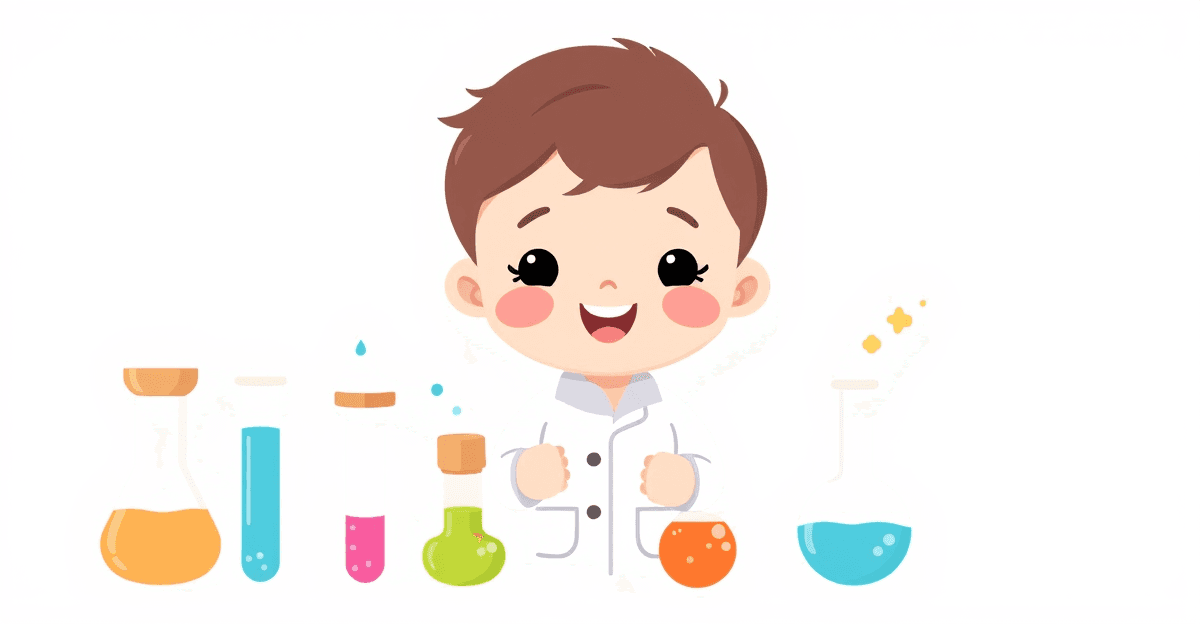
It's a rainy Saturday afternoon, the playground downstairs is soaked, and your little one has already asked "why?" seventeen times before lunch. Sound familiar? That endless curiosity is exactly what makes this the perfect moment for science experiments for preschoolers — no tuition centre, no expensive kits, just the everyday wonder waiting in your HDB kitchen. For Singapore parents of K1-K2 children (ages 4-6), a handful of simple experiments can turn a wet weekend into a joyful, brain-building adventure.
The best part? You don't need to be a scientist or spend a single dollar at Popular. Most of these activities use things you already own, take under 15 minutes, and leave your child buzzing with questions long after the mess is cleaned up.
## 🔑 Key Takeaways (TL;DR)
- Science experiments for preschoolers build curiosity, observation, and reasoning — the foundation MOE looks for at Primary 1 entry.
- You need zero special equipment: baking soda, vinegar, food colouring, and cups are enough for 8+ experiments.
- Keep each activity to 10-15 minutes to match a 4-6 year old's attention span.
- Formal Science is examined from Primary 3, but early hands-on play gives your child a confidence head start.
- Pair experiments with questions and light quiz practice to make learning fun and measurable.
Why Science Experiments for Preschoolers Matter in Singapore
Hands-on science experiments help preschoolers develop critical thinking, vocabulary, and confidence years before formal Science lessons begin. In Singapore, Science is only formally examined from Primary 3, so the K1-K2 years (ages 4-6) are about sparking wonder, not memorising facts. Research consistently shows that children who explore cause-and-effect early develop stronger reasoning skills.
The Ministry of Education's Nurturing Early Learners (NEL) framework — used across PCF Sparkletots, My First Skool, and PAP Community Foundation kindergartens — lists "Discovery of the World" as a core learning area. This is essentially preschool science: observing, questioning, and making sense of the everyday. When you do experiments at home, you're reinforcing exactly what the MOE curriculum values.
Definitive statement: For a 4-6 year old, the goal of a science experiment is never a "correct answer" — it's the habit of predicting, observing, and asking "why?" That habit is the single most transferable skill your child can carry into Primary 1.
Curiosity also supports other domains. The observation and description skills built here overlap beautifully with early literacy — see our guide on reading milestones for children ages 4-6 — and the counting and measuring involved connect naturally to what to expect in a K2 maths assessment.
What Do You Need to Start Science Experiments at Home?
You need almost nothing. The eight experiments below use only common HDB kitchen and bathroom items: baking soda, white vinegar, food colouring, cooking oil, dish soap, cups, plates, and a few coins. Total cost if you buy everything from scratch: under S$10 at any FairPrice or Sheng Siong.
Here's your master shopping list:
- Baking soda (sodium bicarbonate)
- White vinegar
- Food colouring (any 2-3 colours)
- Cooking oil
- Dish soap (e.g. Mama Lemon)
- Clear cups or glasses
- A shallow tray or plate (to catch spills!)
- Optional: raisins, a balloon, black marker pens, coffee filters or kitchen towel
A quick safety note for Singapore parents: none of these experiments involve heat, flames, or anything sharp. Still, always supervise, keep vinegar and dish soap away from little eyes, and remind your child that we don't taste science experiments — even the ones that look like drinks.
8 Simple Science Experiments for Preschoolers at Home
Below are eight tried-and-tested science experiments for preschoolers, each with a "why it works" explainer in kid-friendly language and a question to ask your child. Each takes 10-15 minutes and suits ages 4-6.
1. The Classic Baking Soda Volcano
Put 2 tablespoons of baking soda in a cup, add a squirt of dish soap and a few drops of red food colouring, then pour in vinegar and watch it erupt.
Why it works (for your child): The baking soda and vinegar make a gas called carbon dioxide — the same bubbles in your fizzy drink! The gas rushes out and pushes the soap into foamy "lava."
Ask your little one: "What do you think will happen before we pour the vinegar?" Encouraging a prediction first is the heart of scientific thinking.
2. Dancing Raisins
Drop a few raisins into a clear glass of soda water or any fizzy drink. Watch them sink, then bounce up and down like they're dancing.
Why it works: Tiny gas bubbles stick to the raisins and lift them up. At the top, the bubbles pop and the raisins sink again.
This is a beautifully calm experiment — great for a child who needs a quieter activity or who feels overwhelmed easily. If your child gets anxious around "getting things right," gentle open-ended play like this helps; our article on reducing test anxiety in preschoolers has more on building that low-pressure confidence.
3. Walking Rainbow Water
Line up cups of coloured water (red, yellow, blue) alternating with empty cups. Bridge each pair with a folded strip of kitchen towel. Over an hour, colours "walk" across and mix into new colours.
Why it works: Water climbs up the paper towel fibres — this is called capillary action, the same way plants drink water from the soil.
Ask: "Which two colours made green?" This sneaks in colour-mixing and patience.
4. Magic Milk Fireworks
Pour milk into a shallow plate, add drops of different food colouring in the centre, then touch a cotton bud dipped in dish soap to the surface. The colours explode outward.
Why it works: Dish soap breaks the fat in the milk, and the colours race away from the soap — like tiny fireworks.
5. Sink or Float Challenge
Fill a basin with water and gather household objects — a coin, a Lego brick, a leaf, a plastic spoon, an eraser. Ask your child to predict "sink or float?" before dropping each one in.
Why it works: Some things are heavier than the water they push aside, so they sink. This introduces density in the simplest possible way.
This experiment doubles as fantastic sorting and prediction practice — the kind of hands-on reasoning we love pairing with the confidence-building found in game-based learning for preschoolers.
6. The Balloon Blow-Up
Put baking soda inside a deflated balloon and vinegar in a bottle. Stretch the balloon over the bottle's neck, tip the baking soda in, and watch the balloon inflate on its own.
Why it works: The same carbon dioxide gas from the volcano fills the balloon — proving gas takes up space even though we can't see it.
7. Colour-Changing Chromatography
Draw a thick dot with a washable black marker near the bottom of a strip of coffee filter or kitchen towel. Dip just the tip in water and watch the black separate into blues, purples, and pinks.
Why it works: "Black" ink is secretly made of many colours mixed together. Water carries them up the paper at different speeds.
8. Grow a Rainbow Bean
Line a clear cup with wet cotton wool and tuck a green bean or chickpea against the side. Place it on your kitchen window and watch roots and shoots appear over a week.
Why it works: Seeds hold everything they need to sprout — they just need water, warmth, and a little patience. This one teaches observation over days, not minutes.
Definitive statement: Experiment #8 is the most valuable long-term lesson on this list, because it teaches your child that science — like learning to read or count — rewards patience and daily observation.
How Do You Turn an Experiment into Real Learning?
The experiment itself is only half the learning. The magic happens in the conversation around it: predicting before, observing during, and describing after. Studies in early childhood education show that "serve and return" conversations — where you respond to your child's questions with more questions — significantly boost language and reasoning development.
Try this simple three-step routine with every activity:
- Predict: "What do you think will happen?" (There are no wrong guesses.)
- Observe: "Tell me what you see happening right now."
- Reflect: "Why do you think that happened? What could we try differently?"
This mirrors the inquiry-based approach in the MOE NEL framework and builds the exact vocabulary — "bubble," "float," "mix," "grow" — that helps at a kindergarten interview and beyond.
To make the learning measurable, you can gently check what concepts stuck. This is where adaptive quiz practice that makes learning fun and measurable for K1-K2 kids fits in naturally — after a week of experiments, a few playful questions on QuizKin (like "does a leaf sink or float?" or "what colour do blue and yellow make?") show you what your child truly understands versus what was just fun in the moment. It turns a messy afternoon into visible progress, and because it adapts to your child's level, it never feels like a test.
If you're weighing how much screen time fits into all this, our screen time guide for preschoolers and our roundup of the best educational apps for 4-year-olds in Singapore can help you strike a healthy balance.
Does Home Science Help with Primary 1 Readiness?
Yes — significantly. While Science isn't formally examined until Primary 3, the skills built through home experiments (curiosity, following multi-step instructions, observation, and simple reasoning) are precisely the readiness markers MOE and Singapore primary schools value at P1 entry. Confident, curious children settle into formal schooling faster.
Fine motor skills also get a workout: pouring, squeezing droppers, and folding paper towels all strengthen the little hand muscles needed for writing. If you want to build on that, our guide to fine motor skills activities for K1 kids pairs perfectly with these experiments. And for the bigger picture, our Primary 1 readiness checklist of 30 skills shows exactly where science exploration fits in.
Definitive statement: Doing science at home isn't about giving your child an academic head start — it's about protecting the natural curiosity that makes every future subject easier to love.
Making It Social and Affordable
Science is even more fun with friends. Inviting a neighbour's child over for a "volcano party" builds cooperation, turn-taking, and shared wonder — the social muscles covered in our guide to developing social skills in preschoolers.
And it needn't cost much at all. Beyond the S$10 kitchen kit, you can find affordable science kits, craft supplies, and family activity deals across Singapore on WhyNotDeals if you'd like to expand your experiments. Should your child develop a real passion and you'd like structured enrichment or P1 preparation later on, TuitionLah can help you find a tutor for free with no agency fees — though for ages 4-6, curiosity at the kitchen counter is more than enough.
A Final Word to Singapore Parents
You don't need a laboratory, a syllabus, or a single flashcard to raise a curious child. You need vinegar, a cup, and the willingness to say "let's find out together." Start with one experiment this weekend — the baking soda volcano is a guaranteed hit — and follow your child's questions wherever they lead. That, more than any worksheet, is how a lifelong love of learning begins.
Sources
- MOE Nurturing Early Learners (NEL) Framework — Singapore's national curriculum framework for kindergartens, including the "Discovery of the World" learning area.
- MOE Kindergartens — Ministry of Education — Overview of Singapore's preschool education approach and learning goals.
- PAP Community Foundation (PCF Sparkletots) — Singapore's largest preschool operator, referenced for local curriculum context.
- HealthHub Singapore — Parent Hub (Ages 3–6) — Government health resource on early childhood development and learning through play for preschoolers.
- My First Skool — NTUC First Campus — Major Singapore preschool operator, referenced for early learning context.
Practise what you’ve read with QuizKin
Adaptive quizzes covering phonics, sight words, numbers, and more — aligned with the Singapore MOE curriculum. Start your free Premium trial today.
Frequently Asked Questions
Children as young as 3 can enjoy simple sensory science, but ages 4-6 (K1-K2) is the sweet spot for hands-on experiments they can follow and discuss. At this age your child can make predictions, observe results, and describe what happened — the building blocks of scientific thinking. Keep experiments to 10-15 minutes to match their attention span, and always supervise closely.
No. Almost every experiment in this guide uses items already in your HDB kitchen — baking soda, vinegar, food colouring, cups, and dish soap. Expensive science kits are optional and often overwhelming for a 4-6 year old. The learning comes from your child observing, questioning, and doing, not from fancy equipment.
Science experiments build the exact skills MOE looks for at P1 entry: curiosity, observation, following instructions, and simple reasoning. While Science is only formally examined from Primary 3, early exposure builds confidence and vocabulary that transfers to English, Maths, and inquiry-based learning. Pairing hands-on play with adaptive quiz practice helps you see which concepts have truly stuck.
Ready to make learning fun?
QuizKin turns screen time into learning time with adaptive quizzes built for K1-K2 kids in Singapore. Free to start.
Related Articles
15 Easy Kindergarten Science Experiments to Do at Home in Singapore (K1-K2, 2026)
Fun and educational science experiments for K1 and K2 children in Singapore. Simple materials, real learning outcomes. Build curiosity, observation skills, and early STEM foundations at home.
Water Play Learning Activities for Singapore Preschoolers: Science at Home
Discover engaging water play learning activities for K1-K2 kids in Singapore. Build science skills at home with simple, mess-friendly experiments.
Teaching Phonics at Home: Singapore Parents' Step-by-Step Guide
Help your K1-K2 child master phonics at home with this Singapore parents' guide — practical steps, local curriculum tips, and fun daily routines.