Sensory Play Ideas for Singapore Toddlers at Home
Discover easy, mess-friendly sensory play ideas for Singapore toddlers at home. Boost your K1-K2 child's brain, language and fine motor skills today.
QuizKin Team
Published 4 October 2026
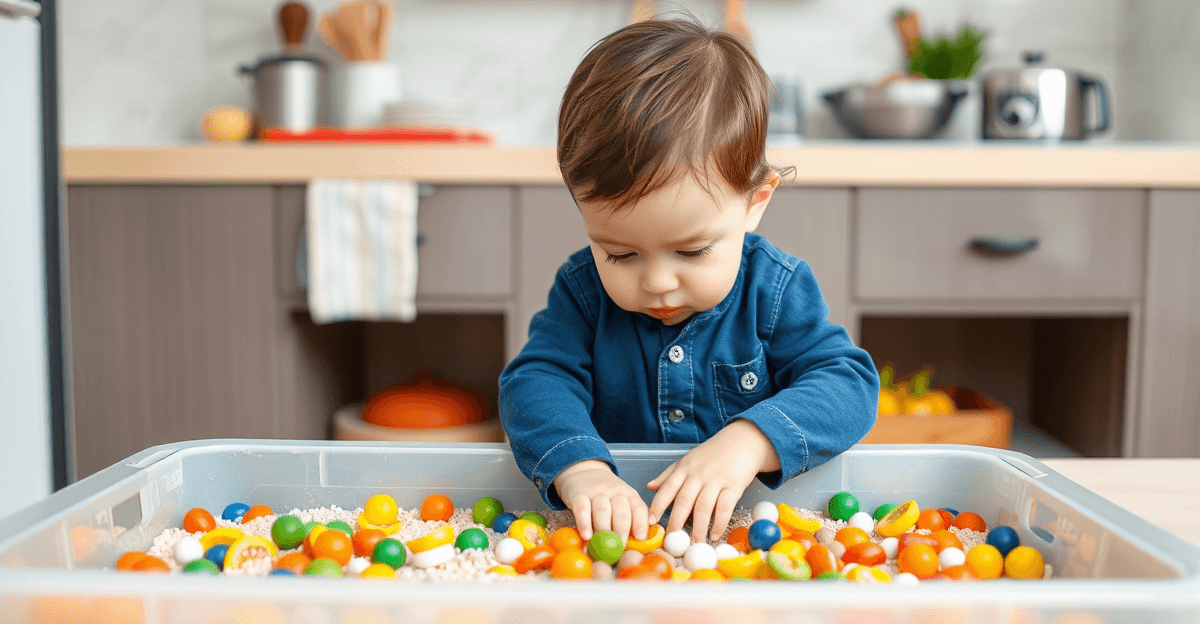
It's a rainy Saturday afternoon, the haze or the heat has cancelled the playground plan, and your little one is bouncing off the walls of your HDB flat. Sound familiar? Before you reach for the tablet, know this: some of the most powerful learning happens through simple, hands-on sensory play ideas you can set up at home with things already in your kitchen. For Singapore toddlers and K1-K2 children, sensory play isn't just a way to pass a wet afternoon — it's a scientifically-backed engine for brain development, language, and the fine motor skills your child will lean on all the way to Primary 1.
In this guide, you'll find practical, low-mess sensory activities tailored to small Singapore homes, realistic ages, and the way local families actually live. No fancy equipment, no Pinterest-perfect pressure — just warm, doable ideas that help your child learn through their senses.
TL;DR — Key Takeaways
- Sensory play (play that engages touch, sight, sound, smell, taste and movement) supports the roughly 1 million new neural connections formed every second in a young child's brain during the early years.
- It directly strengthens fine motor skills, language, focus and emotional regulation — all foundations for Primary 1 readiness.
- You can run most activities in 15-20 minutes using household items, with a tray or the bathroom to contain mess in an HDB flat.
- Pair hands-on play with short, playful academic practice (like QuizKin's adaptive quizzes) to make learning both fun and measurable for K1-K2 kids.
What Is Sensory Play and Why Does It Matter?
Sensory play is any activity that stimulates your child's senses — touch, sight, hearing, smell, taste, and the movement and balance senses. It matters because the first six years of life are when the brain develops fastest: according to Harvard's Center on the Developing Child, more than 1 million new neural connections form every second in the early years, and hands-on sensory experiences are a primary driver of that wiring.
When your little one squishes playdough, pours water, or sorts dried beans, they aren't just making a mess — they're building the neural pathways for language, memory, and problem-solving. Sensory play is one of the most effective, lowest-cost ways to support early childhood development at home, because it engages multiple senses and brain regions at the same time.
This aligns closely with Singapore's MOE Nurturing Early Learners (NEL) framework, which places "Discovery of the World" and learning through purposeful play at the heart of quality preschool education. The play-based approach you see at PCF Sparkletots, My First Skool, and PAP Community Foundation kindergartens can absolutely be extended into your living room.
The developmental benefits at a glance
- Fine motor skills: Scooping, pinching and pouring strengthen the small hand muscles needed for pencil control. (See our guide on fine motor skills activities for K1 kids in Singapore.)
- Language: Describing textures ("slimy", "rough", "cold") expands vocabulary rapidly.
- Cognitive skills: Sorting, measuring and predicting build early maths and science thinking.
- Emotional regulation: Repetitive, tactile play is naturally calming and helps anxious children self-soothe.
Easy Sensory Play Ideas for Singapore Homes
Short on space and time? These sensory play ideas are designed for the realities of Singapore living — small kitchens, shared bathrooms, and busy weekday evenings. Each one uses affordable, easy-to-find items and takes under 20 minutes to set up.
Here's a quick principle to remember: contain first, play second. A large plastic tray, an old shower curtain, or a foldable baby pool turns any corner of your flat into a defined, wipeable play zone.
1. Rice and bean sensory bins (ages 3-6)
Fill a deep tray with uncooked rice or dried beans, then hide small toys, measuring cups and scoops inside. Your child digs, pours and sorts while building hand strength and focus. Add food colouring (dried overnight) to the rice for a visual boost. Tip: For younger toddlers who still mouth objects, swap rice for larger pasta shapes to reduce choking risk, and always supervise.
2. Water play in the bathroom (ages 2-6)
The bathroom is your best friend in a humid climate. Give your little one cups, a funnel, a sponge and some floating toys in a basin. Pouring water between containers teaches volume and cause-and-effect — early maths concepts that feed directly into the kind of thinking assessed later (see what to expect in a K2 maths assessment in Singapore). Cleanup is a quick rinse.
3. Homemade playdough (ages 3-6)
Mix 2 cups flour, 1 cup salt, 1 tablespoon oil and 1 cup water with a few drops of food colouring. Rolling, pinching and cutting playdough is one of the best exercises for developing the hand muscles behind handwriting. Add pandan essence or a drop of vanilla for a gentle scent dimension.
4. Taste-safe "kitchen science" (ages 4-6)
Let your K1-K2 child mix baking soda with a splash of vinegar and watch it fizz, or stir cornflour and water to make "oobleck" that's solid when pressed and liquid when relaxed. These simple experiments spark the "Discovery of the World" curiosity MOE's framework prizes — and they're genuinely wow-worthy for a 5-year-old.
5. Texture treasure hunt (ages 3-6)
Collect everyday objects with different textures — a smooth pebble, a rough loofah, a soft cloth, a bumpy LEGO brick — into a bag. Your child reaches in, feels an object, and describes it before pulling it out. This is a language powerhouse and builds the descriptive vocabulary that supports early reading, which ties into natural reading milestones for children ages 4-6.
How Sensory Play Supports Primary 1 Readiness
Many Singapore parents wonder whether "just playing" is enough when P1 feels like it's looming. The reassuring answer: sensory play builds the exact foundations formal schooling demands. The fine motor control, focus, vocabulary and emotional regulation developed through sensory play are among the strongest predictors of a smooth transition to Primary 1.
Think about what your child needs on their first day of P1: the hand strength to hold a pencil for a whole worksheet, the focus to sit through a lesson, the language to understand instructions, and the calm to cope with a new environment. Every one of these is nurtured through the activities above. For a full breakdown, see our Primary 1 readiness skills checklist for 2027.
There's an emotional benefit too. Children who associate learning with joyful, low-pressure exploration tend to carry less fear into formal assessments — a real concern for local families, which we cover in reducing test anxiety in preschoolers.
Blending hands-on play with gentle academic practice
Sensory play builds the foundation; light, playful academic practice helps you see how it's paying off. After a messy afternoon of pouring and sorting, a few minutes of adaptive quiz practice that makes learning fun and measurable for K1-K2 kids — like QuizKin — lets your child apply early counting, matching and letter skills in a way that feels like a game, not a test. Because the questions adapt to your child's level, your little one stays in the "just right" zone: challenged enough to grow, easy enough to stay confident.
This blend works because young children learn best when play is involved — the same reason game-based learning works so well for preschoolers. If you're exploring digital tools, our roundup of the best educational apps for 4-year-olds in Singapore is a helpful starting point.
How Often Should Your Child Do Sensory Play?
There's no magic number, but a practical target is 15-30 minutes of hands-on sensory play most days, woven into your routine rather than scheduled as a formal "lesson." The World Health Organization recommends that children aged 3-4 get at least 180 minutes of varied physical activity daily, and sensory play — especially movement-based activities like water pouring or textured obstacle courses — counts toward this and toward healthy physical development milestones for 4-6 year olds.
Little and often beats one long session. A 15-minute rice bin before dinner, water play at bath time, and playdough on the weekend add up to a rich sensory diet without overwhelming you or your child.
Keeping It Affordable and Low-Stress
Sensory play should save you money, not cost it. Almost everything you need — rice, flour, cups, old containers — is already in your home. If you do want to add a few affordable tools like scoops, tweezers or a sensory tray, keep an eye on family and education deals through WhyNotDeals for Singapore offers.
And if you find your child would benefit from extra learning support alongside play — especially as P1 approaches — you can find a tutor for free with no agency fees via TuitionLah. But for the toddler and K1-K2 years, know that your warm attention and a tray of rice are already powerful tools.
A Final Word, Parent to Parent
The mess is temporary; the brain-building is forever. You don't need a dedicated playroom, imported kits, or a jam-packed enrichment schedule to raise a curious, capable learner. You need a tray, a few household items, and a few minutes of your attention. Start with one activity this week — maybe the rice bin or the bathroom water play — and watch your little one dive in. The giggles, the "look what I made!", and the quiet, focused concentration are signs of real learning happening, right there on your kitchen floor.
Frequently Asked Questions
At what age should I start sensory play with my child in Singapore?
You can start sensory play from infancy, but ages 3-6 (Nursery to K2) are an especially rich window because your child can now explore independently and talk about what they feel. Simple activities like water play, rice bins and playdough suit toddlers, while K1-K2 children can handle sorting, scooping and simple science experiments. The key is matching the activity to your little one's attention span and supervision needs.
How do I do sensory play in a small HDB flat without a huge mess?
Contain the mess before it starts: use a large plastic tray, an old shower curtain or a foldable baby pool on the kitchen or bathroom floor. Do water-based play in the bathroom so cleanup is a quick rinse, and keep activities to 15-20 minutes. Prepping a "sensory corner" with a wipeable mat means you can pack everything into one box when you're done.
Does sensory play actually help with Primary 1 readiness?
Yes. Sensory play builds the hand strength, focus, vocabulary and problem-solving that underpin school skills like writing, reading and maths. Pouring, scooping and pinching develop the fine motor control needed to hold a pencil, while describing textures grows language. Pairing hands-on play with light, playful academic practice helps your child arrive at P1 confident and curious rather than anxious.
Sources & References
- MOE Nurturing Early Learners (NEL) Framework — Singapore's official curriculum framework for kindergartens, emphasising learning through purposeful play.
- Harvard Center on the Developing Child — Brain Architecture — Research on early neural connection development in young children.
- World Health Organization — Physical Activity Guidelines for Children Under 5 — Daily activity recommendations for children aged 3-4.
- PAP Community Foundation (PCF Sparkletots) — Singapore's largest preschool operator, using play-based early childhood approaches.
- HealthHub Singapore — Parent Hub (3–6 Years) — Government health resource on supporting early childhood development.
Practise what you’ve read with QuizKin
Adaptive quizzes covering phonics, sight words, numbers, and more — aligned with the Singapore MOE curriculum. Start your free Premium trial today.
Frequently Asked Questions
You can start sensory play from infancy, but ages 3-6 (Nursery to K2) are an especially rich window because your child can now explore independently and talk about what they feel. Simple activities like water play, rice bins and playdough suit toddlers, while K1-K2 children can handle sorting, scooping and simple science experiments. The key is matching the activity to your little one's attention span and supervision needs.
Contain the mess before it starts: use a large plastic tray, an old shower curtain or a foldable baby pool on the kitchen or bathroom floor. Do water-based play in the bathroom so cleanup is a quick rinse, and keep activities to 15-20 minutes. Prepping a 'sensory corner' with a wipeable mat means you can pack everything into one box when you're done.
Yes. Sensory play builds the hand strength, focus, vocabulary and problem-solving that underpin school skills like writing, reading and maths. Pouring, scooping and pinching develop the fine motor control needed to hold a pencil, while describing textures grows language. Pairing hands-on play with light, playful academic practice helps your child arrive at P1 confident and curious rather than anxious.
Ready to make learning fun?
QuizKin turns screen time into learning time with adaptive quizzes built for K1-K2 kids in Singapore. Free to start.
Related Articles
Simple Science Experiments for Singapore Preschoolers at Home
Easy, safe science experiments for Singapore preschoolers at home. 8 hands-on activities for K1-K2 kids (ages 4-6) using everyday HDB kitchen items.
Handwriting Practice Tips for K1-K2 Kids in Singapore: From Pencil Grip to Letters
Practical handwriting practice tips for K1-K2 kids in Singapore. Learn pencil grip, letter formation, and fun activities to build writing skills for Primary 1.
Teaching Phonics at Home: Singapore Parents' Step-by-Step Guide
Help your K1-K2 child master phonics at home with this Singapore parents' guide — practical steps, local curriculum tips, and fun daily routines.