Teaching Your Preschooler to Tell Time: Fun Activities for K1-K2 Kids in Singapore
Practical guide for Singapore parents on teaching K1-K2 kids to tell time at home — hands-on clock activities, daily routines, and MOE-aligned learning tips.
Mervin Tan · Founder, QuizKin
Published 22 May 2026
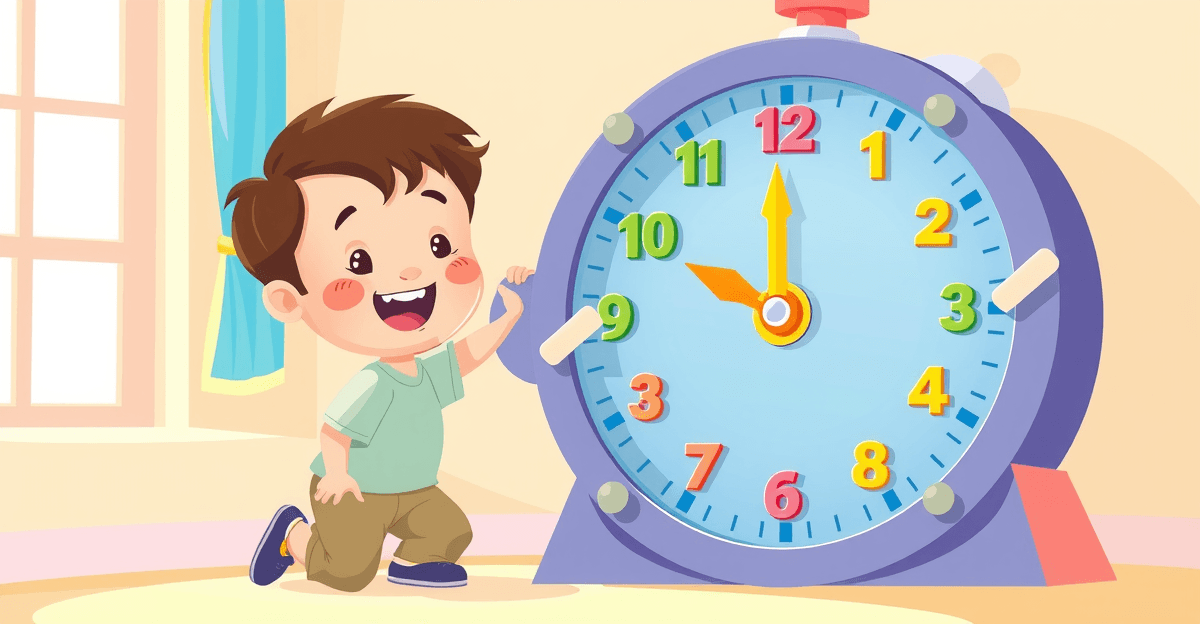
It is 6.45pm on a Tuesday and your K1 child tugs your sleeve for the third time: "Is it Bluey time yet?" You glance at the clock on the wall, then back at your child, and realise they have absolutely no idea what those two hands mean. If this scene plays out daily in your HDB flat or condo, you are not alone. Telling time is one of those skills that feels like it should be simple — there are only 12 numbers on a clock, after all — but for a 4 to 6 year old, it is surprisingly abstract and layered.
TL;DR: Practical guide for Singapore parents on teaching K1-K2 kids to tell time at home — hands-on clock activities, daily routines, and MOE-aligned learning tips.
The good news? Singapore's everyday rhythms — school bell times, MRT departure boards, playground closing hours — give you dozens of natural teaching moments every single day. You do not need expensive enrichment classes or specialised maths tuition to get started. What you need is a basic understanding of how children develop time concepts, a few hands-on activities, and the patience to let it click at your child's own pace.
This guide walks you through practical, MOE-aligned strategies for teaching time to K1 and K2 children at home, with activities you can start today using things you already have in your kitchen drawer.
Why Telling Time Is Harder Than You Think
Before jumping into activities, it helps to understand why telling time is genuinely difficult for preschoolers. Adults take it for granted because we have been reading clocks for decades, but consider what your child needs to grasp simultaneously:
- Two hands doing different things — the short hand counts hours, the long hand counts minutes, and they move at completely different speeds.
- The same numbers mean different things — the number 3 could mean "3 o'clock" or "15 minutes past," depending on which hand you are looking at.
- Circular counting — unlike counting objects in a line, clock numbers loop back from 12 to 1.
- Invisible movement — the hour hand moves so slowly it looks stationary, yet it matters enormously.
- Abstract vocabulary — "half past," "quarter to," "o'clock" are phrases that carry mathematical meaning children need to learn separately.
According to the MOE Numeracy Curriculum Framework, formal time-telling is introduced progressively. In K1, children learn the language and sequences of daily routines (morning, afternoon, night). In K2, they begin reading hour-hand positions on analogue clocks. By Primary 1, they are expected to tell time to the hour and half-hour. So if your child is in K1 and cannot read a clock yet, they are perfectly on track.
Stage 1: Build the Language of Time (K1, Ages 4-5)
Before your child can read a clock, they need to understand what time feels like in their daily life. This is about vocabulary and sequencing, not numbers.
Daily Routine Narration
The simplest and most powerful thing you can do is narrate your child's day using time language. Singapore's structured preschool schedules make this easy:
- "It is morning — time to brush your teeth and get ready for school."
- "You have lunch after circle time at My First Skool."
- "We will go to the playground before dinner."
- "It is night time now — the sky is dark and it is time for bed."
Use words like before, after, first, next, then, later, soon, yesterday, today, and tomorrow as naturally as you can. These sequencing words are the scaffolding your child needs before clock-reading makes any sense.
The "What Comes Next?" Game
During meals or car rides, play a simple sequencing game:
- "What do we do first when we wake up?" (Brush teeth)
- "What happens after school?" (Snack time, then homework)
- "What do we do before bedtime?" (Bath, read a story)
This builds temporal reasoning — the understanding that events happen in a predictable order — which is the conceptual bedrock of telling time.
Visual Schedule Board
Create a simple visual schedule using pictures or drawings on a whiteboard or piece of cardboard. Many PCF Sparkletots and MOE Kindergarten centres already use visual schedules in their classrooms, so this reinforces what your child sees at school.
Divide the board into three sections — Morning, Afternoon, Night — and let your child place picture cards (drawn or printed) in the right section. Over time, add approximate clock faces next to each activity: a clock showing 7 for wake-up time, 12 for lunch, 7 for bedtime.
Stage 2: Introduce the Clock Face (Late K1 to Early K2, Ages 5-6)
Once your child comfortably uses time vocabulary and understands daily sequences, you can introduce the analogue clock itself. Start with the hour hand only — ignore the minute hand entirely at this stage.
Make a Paper Plate Clock
This is the classic activity for good reason — it works. You need:
- 1 paper plate (or cut a circle from cardboard)
- A marker to write numbers 1 through 12
- A brass paper fastener (or a pencil pushed through the centre)
- 1 arrow cut from cardboard (the hour hand only)
Steps:
- Write the numbers 1 to 12 around the edge of the plate, with your child's help. Let them practise number recognition as they go.
- Attach the single arrow to the centre with the fastener.
- Ask your child: "Can you point the arrow to the 7? That is when we wake up — 7 o'clock!"
- Move through daily events: "Where does the arrow point when we eat lunch? 12 o'clock!"
Keep the minute hand off for now. Seriously. Adding it too early is the number one reason children get confused and frustrated with clocks.
Clock Scavenger Hunt
Walk around your home and count how many clocks you can find — the microwave, the oven, the wall clock, your phone, the alarm clock in the bedroom. In Singapore, you might also spot clocks at the void deck, the MRT station, or the community centre.
For each clock, ask your child:
- "Can you find the short hand?"
- "What number is the short hand pointing to?"
- "What number is the long hand pointing to?" (They will notice it exists even if you have not formally taught it yet.)
This builds familiarity with real clock faces in different styles and sizes — important because clocks look different everywhere.
"O'Clock" Matching Game
Write times on index cards (1 o'clock, 2 o'clock, up to 12 o'clock) and draw corresponding clock faces on separate cards. Lay them face down and play a memory matching game. Your child flips two cards at a time and tries to match the written time with the correct clock face.
This is a fantastic rainy-day activity — and Singapore has plenty of rainy afternoons to fill.
Stage 3: Add the Minute Hand and Half-Hours (K2, Ages 5-6)
Once your child can confidently read "o'clock" times with the hour hand, introduce the minute hand. Start with just one new concept: half past.
The Pizza Analogy
Children in Singapore are very familiar with pizza (thanks, Canadian Pizza and Domino's). Use this to explain half-hours:
- Draw a circle and divide it in half with a vertical line.
- "When the long hand is at the top (pointing to 12), it is the start of the hour — we say 'o'clock.'"
- "When the long hand goes all the way down to the bottom (pointing to 6), it has gone halfway around — we say 'half past.'"
- "Just like cutting a pizza in half!"
Practise on the paper plate clock: set the hour hand between two numbers and the minute hand pointing to 6. "The short hand is between 3 and 4, and the long hand is on 6 — so it is half past 3!"
Real-Life Time Checks
Build a habit of asking your child to check the time at predictable moments:
- "What time does the clock say? We need to leave for school at half past 7."
- "Can you tell me when the long hand reaches the 6? Then it will be half past 12 and time for lunch."
- "The cartoon starts at 5 o'clock — what does the clock need to look like?"
In Singapore, punctuality is culturally valued, and most preschool schedules are tightly structured. Use this to your advantage — your child already knows that school starts at a specific time, meals happen on schedule, and the school bus arrives predictably. Connecting clock-reading to these real routines makes the skill meaningful rather than abstract.
QuizKin's Time and Maths Practice
If your child enjoys screen-based learning, QuizKin's adaptive quiz practice makes learning fun and measurable for K1-K2 kids. The app adjusts difficulty based on your child's responses, so they build confidence with number recognition and early maths concepts — skills that directly support time-telling. Short, focused quiz sessions of 5 to 10 minutes complement the hands-on activities in this guide without replacing them.
Stage 4: Quarter Hours and Five-Minute Intervals (Late K2 to P1)
This stage typically bridges K2 and Primary 1, so do not rush into it. If your child is comfortable with o'clock and half past, you can gently introduce quarter hours.
The Pizza Gets Smaller
Extend the pizza analogy:
- Draw the circle again, but this time divide it into four equal slices.
- "One quarter of the way around — the long hand is on the 3 — we say 'quarter past.'"
- "Three quarters of the way around — the long hand is on the 9 — we say 'quarter to' the next hour."
Use real pizza slices or cut a paper circle into quarters to make it tangible. Children who can physically hold a quarter of a circle understand "quarter past" far more intuitively than those who only hear the phrase.
Skip Counting by 5s
Before children can read minutes precisely, they need to skip count by 5s: 5, 10, 15, 20, 25, 30, 35, 40, 45, 50, 55, 60. This is a Primary 1 maths skill under the MOE syllabus, but many K2 children can learn it with practice.
Try these approaches:
- Clap and count: Clap on each multiple of 5 while counting from 1 to 60. Only say the number out loud on the claps.
- Staircase counting: If you live in an HDB flat, count the steps in groups of 5 as you walk up or down.
- Coin stacking: Use 5-cent coins. Stack them one at a time: "5, 10, 15, 20..." This connects skip counting to money concepts as well.
Once skip counting feels natural, return to the clock: "The long hand is on the 3. Let's count by 5s from 12: 5, 10, 15. So it is 15 minutes past the hour."
Common Mistakes Parents Make (and How to Avoid Them)
Starting with Digital Clocks
It is tempting to point at your phone and say "See? It says 3:30." But digital displays do not help children understand what 30 minutes feels like or how time moves continuously. Always start with analogue clocks where the hands physically sweep around the face.
Teaching Hours and Minutes Simultaneously
Introducing both hands and their different meanings at once overwhelms most preschoolers. Spend weeks (even months) on just the hour hand and o'clock times before adding the minute hand. Patience here prevents confusion later.
Correcting Too Quickly
When your child says "It is 6 o'clock" and it is actually half past 5, resist the urge to immediately correct them. Instead, guide them: "Let's look at the short hand — which two numbers is it between? And where is the long hand pointing?" Let them self-correct. This builds problem-solving rather than dependence on you for answers.
Skipping the Vocabulary Stage
Jumping straight to clock-reading without first building sequencing language (before, after, morning, night) is like trying to read sentences before learning the alphabet. The vocabulary stage feels slow, but it creates the mental framework that makes clock-reading click.
Connecting Time to the Singapore Curriculum
The MOE Numeracy Curriculum Framework embeds time concepts within the broader domain of Measurement. Here is how the progression typically works across local preschools:
Nursery (Age 3-4)
- Language of time: day, night, morning, afternoon
- Simple sequencing: what comes first, next, last
K1 (Age 4-5)
- Extended time vocabulary: yesterday, today, tomorrow, before, after
- Daily routine sequencing with visual schedules
- Introduction to clocks as everyday objects
K2 (Age 5-6)
- Reading hour-hand positions (o'clock)
- Introduction to half-hours
- Understanding duration: "We played for a long time" vs "That was quick"
- Connecting clock times to daily schedule
Primary 1 (Age 6-7)
- Telling time to the hour and half-hour
- Reading both analogue and digital clocks
- Simple duration calculations
If your child attends a PCF Sparkletots, My First Skool, or PAP Community Foundation kindergarten, their teachers are already weaving these concepts into daily routines. Your role at home is to reinforce and extend — not to race ahead of the curriculum.
Five-Minute Activities You Can Do Today
Not every learning moment needs to be a structured lesson. Here are quick activities you can weave into your normal Singapore day:
- Countdown timer: Set a kitchen timer for 5 minutes. "Let's see if you can pick up all your toys before the timer rings!" This builds time awareness without any clock-reading required.
- MRT time check: At the MRT station, look at the arrival board together. "The train comes in 3 minutes. Let's count and see if that feels long or short." This is a uniquely Singaporean way to make time tangible.
- Bedtime clock ritual: Every night, show your child the clock when it is bedtime. "See? The short hand is on the 7 and the long hand is on the 12. It is 7 o'clock — bedtime!" Repetition is powerful.
- Commercial break challenge: During TV time, ask: "How many minutes until the show comes back?" Use the clock or a timer to check.
- Cooking timer: When you are heating up dinner, let your child watch the microwave countdown. "It says 2 minutes and 30 seconds. Let's watch the numbers get smaller." Digital countdowns are one context where digital displays are genuinely helpful for young children.
When to Seek Extra Support
Most children master basic time-telling (hours and half-hours) by the end of Primary 1. If your child is still in K1 or K2 and struggling, that is almost certainly normal — this is not a sign of a learning difficulty.
However, if your child is in Primary 1 and shows persistent difficulty with:
- Number recognition up to 12
- Understanding sequencing (what comes before and after)
- Distinguishing the hour and minute hands after repeated practice
...it may be worth mentioning to their class teacher or a learning support specialist. Difficulty with time concepts can sometimes signal broader challenges with abstract reasoning or working memory that benefit from early intervention.
For most families, though, the key is simply consistency: a few minutes of time-talk every day, real clocks on the wall (not just phones), and the patience to let your child's brain develop at its own pace. QuizKin's adaptive learning platform can complement your efforts at home by reinforcing the number recognition and early maths skills that underpin time-telling — all in short, child-friendly quiz sessions that adjust to your child's level.
Wrapping Up: Time Is on Your Side
Teaching your preschooler to tell time is not a race. It is a gradual process that unfolds over months, even years, building from simple words like "morning" and "bedtime" to reading quarter-hours on an analogue clock. The most important thing you can do as a Singapore parent is make time visible and meaningful in your child's daily life — through routines, conversations, and playful activities.
Start where your child is. If they are in K1 and still learning "before" and "after," that is exactly where they should be. If they are in K2 and reading o'clock times confidently, introduce half-hours next. Follow their lead, celebrate the small wins, and remember that every child who eventually reads a clock started exactly where yours is right now.
The clock on your wall is not just a timekeeper. With a little creativity, it is one of the best learning tools in your home.
Sources
Looking for more? Check out find a tutor for free on TuitionLah.
Exploring parenthood in Singapore? Visit ParentLah for practical tips on raising kids in Singapore.
Practise what you’ve read with QuizKin
Adaptive quizzes covering phonics, sight words, numbers, and more — aligned with the Singapore MOE curriculum. Start your free Premium trial today.
Frequently Asked Questions
Most Singapore preschools introduce basic time concepts during K2 (ages 5 to 6), aligning with the MOE Numeracy Curriculum Framework. At K1, children can start learning the language of time — morning, afternoon, before, after — without needing to read a clock face. By the end of K2, many children at centres like PCF Sparkletots and My First Skool can read the hour hand on an analogue clock and understand simple daily schedules. Don't worry if your child takes longer — telling time is an abstract skill that clicks at different ages.
Start with analogue clocks. While digital clocks are everywhere in Singapore — on MRT screens, phones, and microwaves — analogue clocks give children a visual, spatial understanding of how time moves. They can see the hands rotating, understand that 30 minutes is half a circle, and physically feel time passing. Once your child can read hours and half-hours on an analogue clock, transitioning to digital becomes much easier because they already grasp the underlying concept.
Completely normal. Counting to 12 is just one prerequisite for telling time. Your child also needs to understand that the numbers on a clock represent hours, that the two hands move at different speeds, and that the same number 3 can mean 3 o'clock or 15 minutes past the hour depending on which hand points to it. These are layered abstract concepts that develop gradually between ages 4 and 7. Keep practising with real-life routines and playful activities rather than drilling, and the connections will form naturally.
About the author
Mervin Tan
Founder, QuizKin
Mervin Tan is the founder of QuizKin and a software engineer and dad of two young children in Singapore. He builds QuizKin's adaptive quiz engine and writes practical K1-K2 learning guides grounded in MOE's Nurturing Early Learners framework and his own experience preparing his kids for Primary 1. QuizKin is built by Adaptels Pte. Ltd., Singapore.
Ready to make learning fun?
QuizKin turns screen time into learning time with adaptive quizzes built for K1-K2 kids in Singapore. Free to start.
Related Articles
Preschool Maths Worksheets Singapore: What K1 and K2 Kids Actually Need to Learn (2026 Guide)
A parent's guide to preschool maths worksheets in Singapore. What MOE expects by Primary 1, which skills to focus on at K1 and K2, and how to make maths practice effective.
Outdoor Play for Preschoolers in Singapore: Activities, Benefits, and How to Make It a Daily Habit
Why outdoor play matters for K1 and K2 children in Singapore. Research-backed benefits, practical activity ideas for parks and playgrounds, and tips for making outdoor time a daily habit despite the heat.
QuizKin vs KooBits: Which Learning App Does Your Singapore Child Need? (2026)
Comparing QuizKin and KooBits for Singapore parents. Different age groups, different strengths. Find out which app suits your child's learning stage.