Outdoor Play for Preschoolers in Singapore: Activities, Benefits, and How to Make It a Daily Habit
Why outdoor play matters for K1 and K2 children in Singapore. Research-backed benefits, practical activity ideas for parks and playgrounds, and tips for making outdoor time a daily habit despite the heat.
Mervin Tan · Founder, QuizKin
Published 9 May 2026
This article contains affiliate links — if you buy through them, QuizKin may earn a small commission at no extra cost to you. We only link products relevant to the activity.
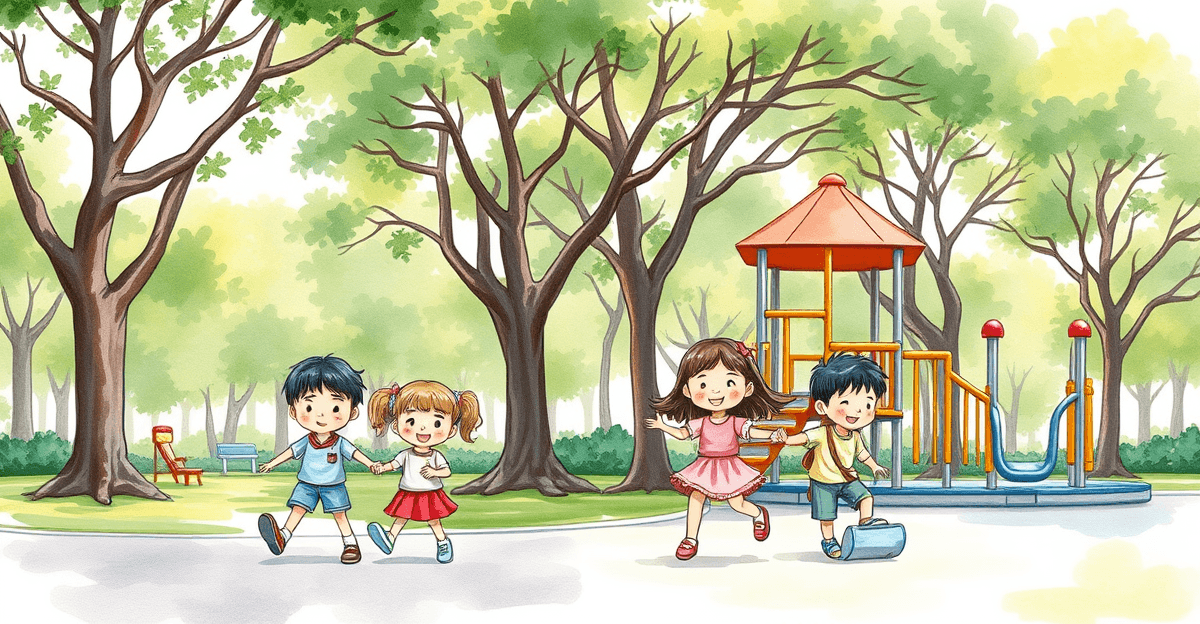
Singapore parents face a genuine tension when it comes to outdoor play. We know it is good for our children. We have read the articles. Our children's teachers mention it. Yet the reality of tropical heat, packed enrichment schedules, and the convenience of air-conditioned indoor play spaces means many preschoolers spend far less time outdoors than they should.
TL;DR: Why outdoor play matters for K1 and K2 children in Singapore. Research-backed benefits, practical activity ideas for parks and playgrounds, and tips for making outdoor time a daily habit despite the heat.
This is not a guilt trip. It is a practical guide. Outdoor play is one of the highest-impact, lowest-cost things you can do for your child's physical, cognitive, and emotional development. And it is more achievable than you think -- even in Singapore, even with the heat.
Why Outdoor Play Matters More Than You Think
Physical Development
Outdoor environments challenge children's bodies in ways that indoor spaces cannot match. Climbing structures build upper body strength. Running on uneven grass develops balance and coordination that flat indoor floors do not require. Swinging teaches rhythm, timing, and core stability.
For preschoolers in K1 and K2, these physical skills directly support fine motor development. A child who can confidently climb, hang, and balance will typically have an easier time with handwriting, cutting with scissors, and other classroom tasks that require hand strength and coordination.
The myopia connection is real. Research from the Singapore National Eye Centre and international studies consistently shows that more time outdoors reduces the risk of childhood myopia. Given that Singapore has one of the highest childhood myopia rates in the world, this alone is a compelling reason to prioritise outdoor play.
Cognitive Benefits
Outdoor play is not a break from learning -- it is a different kind of learning. When a child decides to build a dam in a stream, they are practising problem-solving. When they navigate a climbing frame, they are developing spatial awareness. When they observe insects or plants, they are building scientific thinking skills.
Studies show that children who play outdoors regularly demonstrate:
- Better attention spans in classroom settings
- Higher creativity scores on standardised assessments
- Stronger executive function -- the ability to plan, focus, and manage impulses
- Improved working memory -- essential for reading, maths, and following multi-step instructions
Singapore's MOE Nurturing Early Learners (NEL) framework recognises this, explicitly including outdoor experiences as part of holistic early childhood education.
Emotional and Social Development
The playground is where children learn to negotiate, take turns, manage risk, handle disappointment, and build friendships. These social-emotional skills are harder to develop in structured, adult-directed environments.
Outdoor play also provides a natural outlet for energy and stress. A child who has had 30 minutes of active outdoor play before sitting down for homework will focus better than one who has been indoors all day.
Best Outdoor Activities for K1 and K2 Children
Playground Exploration
Singapore has an excellent network of public playgrounds, from simple neighbourhood HDB playgrounds to destination playgrounds with unique features.
For daily visits (neighbourhood playgrounds):
- Climbing structures build strength and confidence
- Slides develop spatial awareness and risk assessment
- Swings improve core stability, rhythm, and vestibular processing
- Sand play (where available) develops fine motor skills and creativity
For weekend outings (destination playgrounds):
- Admiralty Park -- 26 slides including toddler-friendly options and Singapore's longest slide
- Jurong Lake Gardens -- Clusia Cove and Forest Ramble with nature-themed play elements
- West Coast Park -- adventure playground with flying fox and rope course
- Bishan-Ang Mo Kio Park -- naturalised river play area where children can wade and splash
Nature Walks and Exploration
You do not need a full hiking trail for nature exploration. A 20-minute walk through a park or garden gives children opportunities to:
- Observe insects, birds, and plants
- Collect natural objects -- leaves, stones, seed pods (bring a bag)
- Practice identifying colours, textures, and shapes in nature
- Ask questions and develop curiosity
Good spots for nature walks with preschoolers:
- HortPark (gentle paths, themed gardens)
- Singapore Botanic Gardens (Jacob Ballas Children's Garden)
- Pasir Ris Mangrove Boardwalk (easy, flat, and full of wildlife)
- Your nearest neighbourhood park -- the familiar becomes fascinating when a child looks closely
Water Play
In Singapore's heat, water play is both cooling and developmental. Water play develops hand-eye coordination, teaches cause and effect, and introduces basic science concepts like volume and flow.
Free water play areas:
- Gardens by the Bay Far East Organization Children's Garden
- Jurong Lake Gardens Clusia Cove
- Various neighbourhood splash pads (check NParks for locations near you)
Tips for water play outings:
- Bring a change of clothes and a towel (grab quick-dry kids' towels and swimwear on Shopee)
- Apply sunscreen 30 minutes before arrival
- Bring water bottles -- children often forget to drink when they are having fun
- Visit early (before 10am) or late (after 4pm) to avoid peak heat
Active Games
Simple games that require no equipment work brilliantly for preschoolers:
- Tag and variations -- builds speed, agility, and spatial awareness
- Simon Says -- develops listening skills and body awareness
- Obstacle courses -- use park features (benches, paths, trees) to create a course
- Treasure hunts -- hide objects or create a checklist of natural items to find
- Ball games -- kicking, throwing, and catching develop hand-eye coordination
Making Outdoor Play a Daily Habit
The biggest challenge is not finding activities -- it is building the routine. Here are strategies that work for Singapore families:
Time It Right
- Before 10am or after 4pm to avoid peak heat and UV
- If mornings are rushed, the post-dinner window (5:30pm to 7pm) works well
- Even 20 minutes counts -- do not wait for a full hour of free time
Make It Convenient
- Use the nearest playground. A 2-minute walk from your HDB block is more sustainable than a 30-minute drive to a destination playground
- Keep a "go bag" ready with sunscreen, water bottle, hat, change of clothes, and insect repellent
- Pair outdoor time with existing routines -- walk to the playground after picking up from preschool
Involve Friends
Children are more enthusiastic about outdoor play when friends are involved. Arrange regular playground meetups with classmates or neighbours. A standing weekly playdate at the void deck playground creates consistency.
Manage the Heat
Singapore's heat is the number one barrier to outdoor play. Practical solutions:
- Shade is your friend. Choose playgrounds with shade structures or tree cover
- Hydrate before, during, and after. Bring a filled water bottle every time
- Lightweight clothing. Cotton or moisture-wicking fabrics, light colours, hats
- Accept that sweat happens. Shower when you get home. It is not a reason to stay indoors
Reduce Screen Dependency Gradually
If your child currently spends most free time on screens, do not go cold turkey. Start with a "15 minutes outside, then screen time" trade. Gradually increase the outdoor portion as your child begins to enjoy it. Most children who resist outdoor play simply have not had enough positive experiences to develop the preference.
Balancing Outdoor Play with Structured Learning
Singapore parents often worry that time spent playing outdoors is time taken away from academic preparation. The research says otherwise.
Children who play outdoors regularly show better concentration during structured learning sessions. A study involving Singapore preschoolers found that those with more outdoor play time demonstrated stronger pre-literacy and pre-numeracy skills than peers who spent more time in structured indoor activities.
The practical approach: use outdoor time to reinforce what your child learns in preschool and on learning apps like QuizKin. Count steps together on a walk (maths). Identify letters on signs (literacy). Name colours and shapes in the playground (observation). Learning does not stop when you step outside -- it changes form.
What to Do When It Rains
Singapore's frequent rain should not mean the end of outdoor play. Options for rainy days:
- Covered playgrounds and void decks -- many HDB estates have sheltered play areas
- Indoor alternatives with an outdoor feel -- visit a nature centre, aquarium, or indoor playground (check Klook for discounted attraction tickets)
- Post-rain nature walks -- the 30 minutes after rain stops are perfect for outdoor exploration. Everything is cooler, puddles are fascinating, and wildlife emerges
Building Physical Confidence for School
Children entering Primary 1 in 2027 will face physical education classes, longer school days, and a larger school campus to navigate. Regular outdoor play in K1 and K2 builds the physical confidence and stamina that helps children adapt to the primary school environment.
A child who can run, climb, balance, and navigate playground equipment confidently will transition more smoothly than one whose physical activity has been limited to indoor spaces.
Start This Week
You do not need a plan. You do not need special equipment. You just need to go outside.
Walk to your nearest playground after dinner tonight. Spend 20 minutes. Let your child lead. Watch what they do, what they explore, what they enjoy. That is all it takes to start.
Outdoor play is not an extra -- it is essential. And in Singapore, despite the heat and the busy schedules, it is more accessible than most parents realise.
Sources
- NParks — National Parks Board
- HPB — Health Promotion Board
- ECDA — Early Childhood Development Agency
Looking for more? Check out find a tutor for free on TuitionLah.
Exploring parenthood in Singapore? Visit ParentLah for practical tips on raising kids in Singapore.
Practise what you’ve read with QuizKin
Adaptive quizzes covering phonics, sight words, numbers, and more — aligned with the Singapore MOE curriculum. Start your free Premium trial today.
Frequently Asked Questions
Health experts recommend at least 60 minutes of physical activity per day for children aged 3 to 6, with a significant portion happening outdoors. This does not need to be all at once. Two 30-minute sessions -- such as a morning playground visit and an evening walk -- are equally effective. Singapore's Early Childhood Development Agency (ECDA) actively encourages outdoor learning as part of preschool curricula, recognising its role in holistic child development.
Singapore's tropical climate requires planning but should not prevent outdoor play. Schedule outdoor time for early morning (before 10am) or late afternoon (after 4pm) to avoid peak UV hours. Choose playgrounds with shade structures, bring water bottles, and dress children in lightweight, breathable clothing. Many Singapore playgrounds and parks have sheltered areas, water play features, and covered rest spots designed for the local climate.
Top playgrounds for preschoolers include Admiralty Park (longest slides in Singapore with toddler-friendly sections), Jurong Lake Gardens (nature-themed water play), West Coast Park (adventure playground with flying fox), Bishan-Ang Mo Kio Park (river play area), and Gardens by the Bay (Far East Organization Children's Garden with water play). Most HDB estates also have well-maintained neighbourhood playgrounds suitable for daily visits.
Yes. Research consistently shows that children who engage in regular outdoor play perform better academically. Outdoor play develops executive function skills -- attention, working memory, and self-regulation -- that are essential for classroom learning. Children who play outdoors also tend to have better focus, higher creativity scores, and improved problem-solving abilities. Singapore's MOE Nurturing Early Learners (NEL) framework explicitly includes outdoor experiences as a learning domain.
Start small and make it enjoyable rather than mandatory. Bring a favourite toy or activity outdoors -- colouring books, building blocks, or a toy car. Visit playgrounds with novel features like water play or sand areas. Invite a friend along, as children are more willing to try new environments with peers. Avoid the hottest part of the day. Gradually increase outdoor time as your child becomes more comfortable. Many children who resist outdoor play simply need a positive initial experience to change their minds.
About the author
Mervin Tan
Founder, QuizKin
Mervin Tan is the founder of QuizKin and a software engineer and dad of two young children in Singapore. He builds QuizKin's adaptive quiz engine and writes practical K1-K2 learning guides grounded in MOE's Nurturing Early Learners framework and his own experience preparing his kids for Primary 1. QuizKin is built by Adaptels Pte. Ltd., Singapore.
Ready to make learning fun?
QuizKin turns screen time into learning time with adaptive quizzes built for K1-K2 kids in Singapore. Free to start.
Related Articles
Toilet Training Readiness: A Complete Guide for Singapore Preschool Parents
Is your child ready for toilet training? Learn the readiness signs, practical strategies, and common mistakes Singapore parents make. Expert-backed tips for K1-K2 preschoolers.

Sensory Play Activities for Preschoolers in Singapore: 20 Ideas That Build Real Skills (2026)
20 sensory play activities for preschoolers in Singapore. Develop fine motor skills, language, and focus through hands-on exploration. Indoor and outdoor ideas for K1 and K2 kids.

Simple Cooking Activities for Singapore Preschoolers: Learning Through Food
Discover fun cooking activities for K1-K2 kids in Singapore that build maths, science, and language skills. Perfect for busy parents!