Art and Craft Activities for K1-K2 Kids in Singapore: Creative Ideas at Home
Discover fun art and craft activities for K1-K2 kids in Singapore. Easy creative projects that build fine motor skills, boost confidence, and support your child's learning at home.
Mervin Tan · Founder, QuizKin
Published 9 June 2026
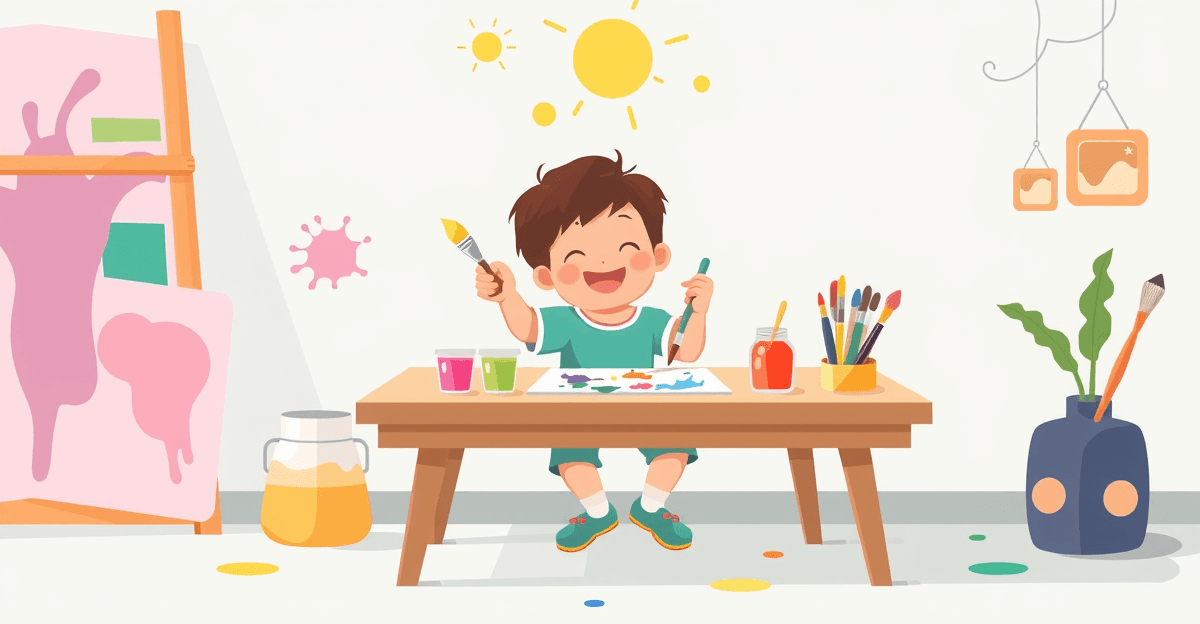
I'll be honest — I used to think art and craft was just about keeping my kid occupied on rainy afternoons. Then one day, I watched my K1 daughter carefully cutting along a line she'd drawn herself, tongue poking out in concentration, and it hit me: this is the same focus she needs for writing Chinese characters next year. That $2 pair of DAISO safety scissors was doing more for her P1 readiness than I realised.
If you're a Singapore parent looking for art and craft activities for K1-K2 kids, you really don't need much. Our dining table, some old newspapers spread across it, and whatever supplies we grabbed from Popular Bookstore last month — that's our "art studio." Whether you're in a 4-room HDB flat like us or a condo, the setup is the same.
Key Takeaway: Art and craft activities do more than keep kids busy. They strengthen hand muscles for writing, teach patience and focus, and build creative thinking — all aligned with MOE's Nurturing Early Learners (NEL) framework for preschool education.
Why Art and Craft Actually Matters (More Than You Think)
I used to lump art into the "nice to have" category — until my daughter's K1 teacher told me her cutting skills were ahead of most classmates. We hadn't done anything special. She'd just been doing crafts at home most weekends.
Turns out, MOE's Nurturing Early Learners framework lists aesthetics and creative expression as one of six key learning domains for preschoolers. PCF Sparkletots, My First Skool — they all weave art into daily lessons for a reason.
Here's what your child is actually building during craft time:
- Fine motor strength: Every time your kid cuts, tears, or pastes, those small hand muscles get a workout. Same muscles they'll use forming Chinese characters and writing in Primary 1. If your child struggles with grip strength, these fine motor skills activities for K1 kids can help.
- Thinking skills: Following multi-step craft instructions teaches sequencing and planning. My daughter now tells me "first we cut, then we paint, THEN we glue" — she figured out project planning from making paper plate animals lah.
- Emotional outlet: Art gives kids a way to express feelings they can't put into words yet. This builds the kind of resilience we all want our children to develop early.
- Concentration: Finishing a craft project from start to finish builds attention span — exactly what K2 children need as they prep for Primary 1.
A 2023 study by the National Institute of Education (NIE) found that preschoolers who did structured art activities at least three times a week showed a 20% improvement in fine motor assessment scores. That's significant for something that feels like play.
10 Easy Art and Craft Activities You Can Do at Home
All of these use materials you probably already have, or can grab at DAISO or Popular for a few dollars. I've tried every single one with my own kids.
1. Paper Plate Animals (K1-K2)
What you need: Paper plates, paint, googly eyes, coloured paper, glue stick
This one's a crowd favourite in our house. Turn a paper plate into a lion, frog, or fish — your child paints the plate, cuts out shapes for ears or fins, and glues everything together. Takes about 20-30 minutes. My daughter once made a "merlion" and insisted we display it on the fridge for a month.
2. Toilet Roll Stamps (K1-K2)
What you need: Toilet rolls, paint, paper
Bend toilet rolls into shapes — hearts, stars, flowers — and use them as stamps. K1 kids love the repetitive stamping motion (great for hand strength), while K2 kids can create patterns, which sneaks in some early maths concepts.
3. Torn Paper Collage (K1)
What you need: Old magazines or coloured paper, glue, cardboard
Don't underestimate tearing paper — it's actually excellent fine motor practice for younger K1 children who aren't confident with scissors yet. Let your child tear pieces and arrange them into a picture. There's no wrong answer, which is great for building creative confidence.
4. Nature Collage Walk (K1-K2)
What you need: A walk outdoors, leaves, twigs, flowers, glue, cardboard
This is one of our weekend favourites. Take a short walk around your neighbourhood park or the garden area downstairs your HDB block. Collect fallen leaves, small twigs, and petals. Back home, arrange and glue them onto cardboard. It combines outdoor time with art — plus it ties into the NEL Discovery of the World domain, if you want to impress your child's teacher.
5. Homemade Playdough Creations (K1-K2)
What you need: 1 cup flour, 1/2 cup salt, 1/2 cup water, food colouring
Making playdough from scratch is itself a learning activity — measuring ingredients introduces early maths. Kneading and shaping builds hand strength. We challenge our K2 kid to sculpt letters or numbers, which reinforces what she's learning in school. And honestly, the adults end up playing with it too.
6. Cotton Ball Painting (K1)
What you need: Cotton balls, clothespins, paint, paper
Clip cotton balls into clothespins to create simple paintbrushes. The pinching action strengthens the same muscles used for pencil grip. K1 children love the soft, dabbing texture, and the results are surprisingly pretty — we've framed a few.
7. Paper Chain Countdown (K2)
What you need: Coloured paper strips, glue or tape
Perfect for K2 children counting down to something exciting — a birthday, school holiday, or the first day of Primary 1. Your child cuts strips, writes numbers on them, and links them together. Cutting, writing, and number recognition all in one simple activity.
8. Egg Carton Caterpillar (K1-K2)
What you need: Egg carton, paint, pipe cleaners, googly eyes
Cut an egg carton in half lengthwise for the caterpillar body. Paint it, add pipe cleaner antennae, and stick on googly eyes. Great for practising painting within boundaries — a skill that carries over to colouring and handwriting.
9. Straw Blow Painting (K2)
What you need: Watered-down paint, straws, paper
Drop blobs of watery paint onto paper and blow through a straw to spread it. The results look like tree branches or fireworks — always a surprise. K2 children find this exciting. Bonus: it strengthens oral motor muscles, which supports speech development too.
10. Handprint Calendar Gift (K1-K2)
What you need: Paper, paint, markers
This one's brilliant around Grandparents' Day or Teachers' Day. Each page features a handprint transformed into a seasonal design — a Christmas tree in December, fireworks for National Day in August. My mother-in-law cried when she received hers. Seriously.
How This Fits the MOE Kindergarten Curriculum
Singapore's MOE kindergarten curriculum explicitly values creative expression. The NEL framework identifies six learning domains, and art sits within Aesthetics and Creative Expression. These activities aren't extras — they're core to how Singapore educates young children.
In MOE kindergartens and many private preschools, art and craft are used to integrate learning across domains. A craft project about community helpers might involve drawing (aesthetics), discussion (language and literacy), and counting materials (numeracy). When you do crafts at home, you're reinforcing what's already happening in school.
Pair a craft session with a short quiz on shapes, colours, or letters, and you've created a well-rounded learning moment. QuizKin's adaptive quiz practice makes this easy — it adjusts to your child's level so they're always challenged but never frustrated, making learning fun and measurable for K1-K2 kids.
What Art and Craft Supplies Do You Actually Need?
You don't need to spend a fortune. Here's a practical starter kit:
- Washable paint set — DAISO or Popular, about $2-$8
- Safety scissors — Popular or Shopee, $2-$5
- Glue sticks (pack of 3) — DAISO, $2
- Coloured paper (A4 pack) — Popular Bookstore, $3-$6
- Googly eyes & pipe cleaners — Art Friend, Shopee, or Lazada, $2-$4
- Playdough — Make your own for free, or buy for about $5
Budget tip: Household recyclables are some of the best craft materials. Toilet rolls, egg cartons, bottle caps, old newspapers, cereal boxes — keep a "craft box" in your storeroom and toss in clean recyclables through the week. Our craft box is just an old shoebox, nothing fancy. For more savings on art supplies and enrichment classes, check out WhyNotDeals for the latest family and education deals in Singapore.
Setting Up a Craft Station in Your HDB Flat
Small space? Join the club. Here's how we make it work:
- Spread plastic mat or old newspaper on the dining table. Cleanup takes two minutes and saves your table from paint stains.
- Keep one shelf or box dedicated to art supplies. When everything's in one place, your child can independently choose to craft — building initiative and self-directed learning.
- Old clothes or a smock. An oversized adult t-shirt works perfectly as a painting smock. My daughter calls hers her "artist shirt."
- Set a timer. K1 kids usually manage about 20 minutes of focused craft time. K2 children can often go 30-40 minutes. Don't force it — follow your child's lead.
- Display their work. Stick finished art on the fridge or a wall with washi tape. This tells your child their effort matters. We've got a whole "gallery wall" in our corridor now lor.
Screen-Free Time That Actually Works
Art and craft activities give you a solid screen-free option during the K1-K2 years. The Health Promotion Board recommends limiting recreational screen time for preschoolers to under one hour daily, and creative hands-on play is one of the best alternatives.
That said, not all screen time is equal. When you do allow screen time, choosing purposeful, educational content matters. For practical tips, read our guide on screen time rules for preschoolers in Singapore.
Pairing craft time with short, focused digital learning — like adaptive quiz sessions on QuizKin — gives your child hands-on creativity and structured academic practice in age-appropriate doses.
Building Primary 1 Readiness Through Craft
If your child is in K2, Primary 1 prep is probably on your mind. Art and craft quietly develop several Primary 1 readiness skills that go beyond academics:
- Pencil grip and writing readiness — Every crayon, marker, or paintbrush strengthens the tripod grip needed for writing.
- Following instructions — Multi-step crafts teach your child to listen, sequence, and execute — exactly what a P1 classroom demands.
- Independence — Managing their own materials, cleaning up, and completing a project builds self-reliance.
- Creative thinking — MOE values creativity across all levels, from kindergarten through PSLE and beyond.
If you're working on academic readiness too, subjects like sight words and phonics pair well with creative projects. After practising letter sounds, your child could build those letters with pasta or popsicle sticks — we've done this and it's surprisingly effective.
For families who want additional academic support, TuitionLah helps you find a tutor with no agency fees — useful if your child could benefit from one-on-one guidance alongside creative learning at home.
Making the Most of Craft Time
A few things I've learned from doing this regularly:
- Ask open-ended questions. Instead of "What is it?", try "Tell me about your picture." You'd be amazed at the stories they come up with.
- Process over product. Your K1 child's painting won't look like the Pinterest example — and that's completely fine. Praise the effort, the experimentation, the persistence.
- Connect to school themes. If your child is learning about animals at preschool, do an animal craft at home. Reinforces vocabulary and makes your kid feel like an expert.
- Involve siblings. Art and craft is one of the few activities K1 and K2 children can genuinely do together, building social skills and cooperation.
- Keep it fun. The moment it feels like homework, the magic disappears. Let your child lead.
Your Weekly Art and Craft Routine
You don't need elaborate projects every day. Even two to three sessions per week — each lasting 20 to 40 minutes — makes a real difference. Here's what works for us:
- Monday: Free drawing or painting (just let them go wild)
- Wednesday: Guided craft project (pick one from the list above)
- Saturday: Nature walk + collage, or a bigger project together
Consistency matters more than complexity. Over time, you'll notice your child's cutting becomes neater, their drawings more detailed, and their patience longer. These are visible signs of growth — much like watching their quiz scores improve week by week.
Art and craft activities for K1-K2 kids don't need to be complicated or expensive. A little preparation, a lot of encouragement, and a willingness to let your dining table get messy — that's really all it takes to build confidence, skills, and wonderful memories, one craft at a time.
Sources
- MOE Nurturing Early Learners (NEL) Framework — Singapore's curriculum framework for kindergarten education, including the Aesthetics and Creative Expression learning domain
- Health Promotion Board — Screen Time Guidelines — Singapore's recommendations for children's screen time and physical activity
- MOE Kindergarten Programme — Information on MOE's approach to kindergarten education in Singapore
- National Institute of Education, Singapore — Research on early childhood education and development
- HealthHub Singapore — Child Development Milestones — Developmental milestones for preschool-aged children in Singapore
Practise what you’ve read with QuizKin
Adaptive quizzes covering phonics, sight words, numbers, and more — aligned with the Singapore MOE curriculum. Start your free Premium trial today.
Frequently Asked Questions
K1 children (aged 4-5) enjoy activities like paper tearing and pasting, simple origami, finger painting, and playdough sculpting. These art and craft activities build fine motor skills that support early writing. Choose projects with fewer steps and larger materials, as K1 kids are still developing hand coordination and attention span.
Art and craft activities strengthen pencil grip, hand-eye coordination, and focus — all essential skills for Primary 1. Cutting along lines, colouring within boundaries, and folding paper all develop the fine motor control needed for writing Chinese characters and English letters. MOE's Nurturing Early Learners framework recognises aesthetics and creative expression as a key learning domain.
Popular Bookstore, DAISO, and Art Friend offer budget-friendly art supplies suitable for young children. You can also find value packs on Shopee and Lazada. Many everyday household items — egg cartons, toilet rolls, bottle caps, and old newspapers — make excellent craft materials at no extra cost.
About the author
Mervin Tan
Founder, QuizKin
Mervin Tan is the founder of QuizKin and a software engineer and dad of two young children in Singapore. He builds QuizKin's adaptive quiz engine and writes practical K1-K2 learning guides grounded in MOE's Nurturing Early Learners framework and his own experience preparing his kids for Primary 1. QuizKin is built by Adaptels Pte. Ltd., Singapore.
Ready to make learning fun?
QuizKin turns screen time into learning time with adaptive quizzes built for K1-K2 kids in Singapore. Free to start.
Related Articles
Fine Motor Skills Activities for K1 Kids in Singapore: Strengthen Little Hands
Discover practical fine motor skills activities for K1 kids in Singapore. Build hand strength, coordination & pencil grip with expert tips from local educators.

Best Podcasts for Singapore Parents on Education
The best podcasts for Singapore parents on education — expert-backed shows on K1-K2 learning, child development, and Primary 1 readiness you can play on the MRT.
NLB Library Activities for Singapore Preschoolers
Discover the best NLB library activities for Singapore preschoolers. A parent's guide to free storytimes, reading programmes and learning fun for K1-K2 kids.