Fine Motor Skills Activities for K1 Kids in Singapore: Strengthen Little Hands
Discover practical fine motor skills activities for K1 kids in Singapore. Build hand strength, coordination & pencil grip with expert tips from local educators.
Mervin Tan · Founder, QuizKin
Published 1 June 2026
This article contains affiliate links — if you buy through them, QuizKin may earn a small commission at no extra cost to you. We only link products relevant to the activity.
My K1 girl came home from school with a crumpled worksheet covered in oversized, shaky letters. She gripped her crayon so tight her fingers went white. I panicked a bit — shouldn't she be past this stage? Turns out, heaps of Singapore parents have the same worry about their 4 or 5-year-old's fine motor skills.
TL;DR: Discover practical fine motor skills activities for K1 kids in Singapore. Build hand strength, coordination & pencil grip with expert tips from local educators.
Here's the encouraging truth: fine motor development is trainable, measurable, and deeply rewarding to watch unfold. With the right activities, intentional practice, and a relaxed home environment, your K1 child can strengthen their little hands and build the foundation for confident writing, drawing, and learning ahead.
This guide shares practical, tested fine motor activities designed specifically for Singapore's K1 curriculum context—many of which align with what preschools like PAP Community Foundation and PCF Sparkletots already teach. You'll learn why each activity matters, how to set it up at home, and when to expect progress.
Why Fine Motor Skills Matter for K1 Kids (Ages 4-5)
Fine motor skills are the ability to control small muscles in your hands, fingers, and wrists. They're essential for:
- Handwriting and pencil control – the foundation of all academic writing
- Self-care independence – buttoning shirts, zipping bags, using cutlery
- Play and creativity – drawing, building, puzzle-solving
- Confidence and learning readiness – kids who can manipulate objects feel more capable
In Singapore's MOE framework, K1 children are expected to begin pre-writing skills: holding writing tools with emerging control, tracing lines and shapes, and showing hand-eye coordination during play. By K2, expectations increase to copying simple letters and numbers.
The key insight: Fine motor development isn't just about writing. It's about building neural pathways, hand strength, and the coordination that underpins all learning. When your child can comfortably grip a pencil or manipulate small objects, their brain is free to focus on what to write, not how to hold the pen.
Core Components of Fine Motor Development
Before diving into activities, understand what you're building:
1. Hand Strength and Stability
Young hands need strength to sustain grip and control. Weak hand muscles tire quickly, leading to sloppy handwriting and frustration.
2. Hand-Eye Coordination
The ability to guide hand movement based on visual input—essential for tracing, cutting, and aiming small objects into containers.
3. Pencil Grip and Tripod Position
The mature tripod grip (three fingers on the pencil, stable wrist) typically emerges between ages 4-6. Before this, children use a palmar grip (whole hand), which is developmentally normal.
4. Bilateral Coordination
Using both hands together in different ways—one stabilizing while the other manipulates. Think: holding paper still while cutting, or holding a jar while screwing the lid.
5. Finger Isolation and Dexterity
Moving individual fingers independently, crucial for writing, typing, and fine manipulation tasks.
Top Fine Motor Activities for K1 Kids at Home
1. Playdough and Modeling Activities
Why it works: Playdough naturally builds hand and finger strength without feeling like "work." Squeezing, rolling, pinching, and shaping engage all the small muscles your child needs for writing.
Setup:
- Use store-bought or homemade playdough (flour, salt, water, food colouring)
- Provide simple tools: plastic cutters, rolling pins, toothpicks
- No instructions needed—let your child explore freely
Progressive challenges:
- Week 1-2: Free exploration, rolling balls, making snakes
- Week 3-4: Introduce shape cutters (star, circle, heart)
- Week 5+: Create detailed scenes—trees, animals, faces with toothpick details
Time commitment: 10-15 minutes, 3-4 times per week
Singapore context: Many PCF and PAP Community Foundation preschools include playdough stations daily. Replicating this at home extends the benefit and reinforces skills learned in class.
2. Threading and Beading
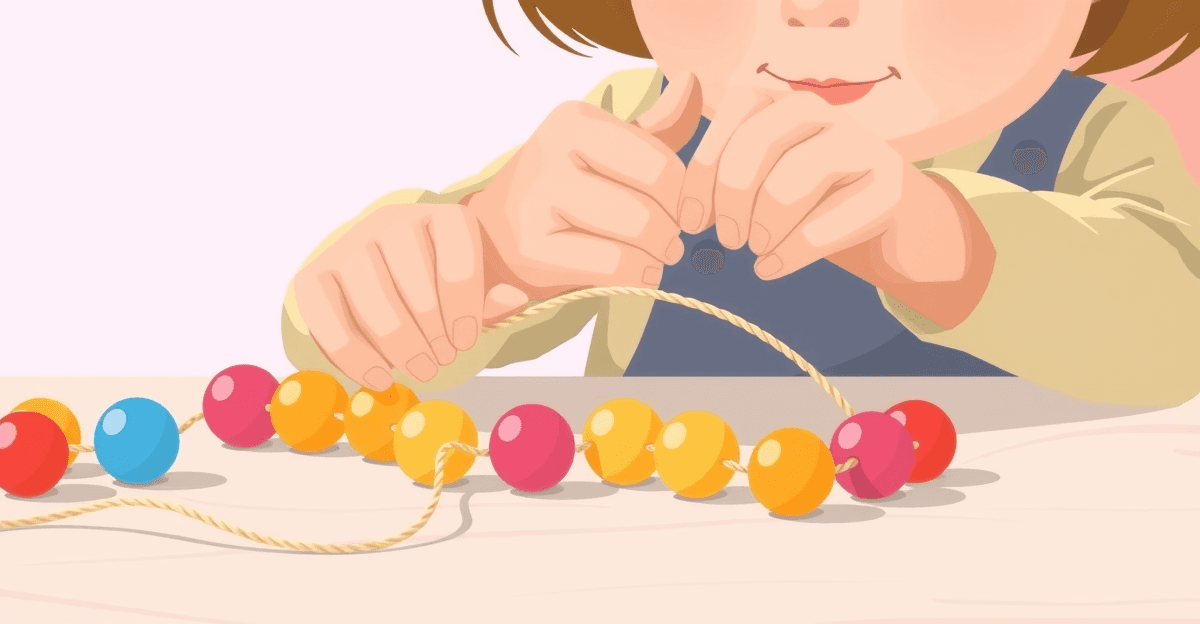
Why it works: Threading large beads onto string or yarn requires bilateral coordination, hand-eye coordination, and finger control. It's like a miniature version of the motor control needed for writing.
Setup:
- Large wooden beads (at least 2cm diameter) from Art Friend, Spotlight Singapore, or grab them on Shopee
- Thick string, yarn, or shoelace (pre-tie a bead at the bottom so beads don't slide off)
- Start with 5-10 beads per session
Progressive challenges:
- Week 1-2: Simple threading, any order
- Week 3-4: Threading beads in a specific pattern (red-blue-red-blue)
- Week 5+: Smaller beads, longer sequences, making necklaces or bracelets
Time commitment: 10 minutes, 2-3 times per week
Pro tip: Make this a social activity—thread together, sing songs while threading, or create "gifts" for family members. This keeps motivation high for a task that might otherwise feel repetitive.
3. Cutting and Scissor Skills
Why it works: Cutting develops bilateral coordination, hand strength, and the finger control needed for writing. It's also one of the earliest "productive" tasks kids do, building pride and confidence.
Setup:
- Child-safe scissors with rounded tips (Fiskars makes excellent models)
- Thick paper, cardstock, or construction paper
- Start with thick, easy-to-cut materials
Progressive challenges:
- Week 1-2: Snipping paper into strips (no specific target)
- Week 3-4: Cutting along thick, straight lines drawn with markers
- Week 5-8: Cutting simple shapes (triangles, hearts) or following curved lines
- Week 9+: Cutting out simple pictures for collages
Time commitment: 10-15 minutes, 2-3 times per week
Safety note: Supervise always. Teach your child to carry scissors with blades pointing down and to pass them handle-first to others. Most Singapore preschools introduce scissor safety by mid-K1.
4. Tracing and Pre-Writing Activities
Why it works: Tracing bridges the gap between free drawing and controlled writing. It teaches pencil control and directional awareness without the pressure of producing "correct" letters.
Setup:
- Large dot-to-dot sheets (start with 4-6 dots in simple shapes)
- Tracing worksheets with thick lines (available free online or from MOE-aligned K1 workbooks)
- Bold markers or chunky crayons (easier to grip than thin pencils)
- Avoid small, intricate worksheets—aim for large, chunky patterns
Progressive challenges:
- Week 1-4: Large dots-to-dots (circles, squares, triangles)
- Week 5-8: Tracing thick straight and curved lines
- Week 9-12: Tracing simple shapes (circle, square, triangle, cross)
- Week 13+: Pre-letter shapes (vertical lines, curved lines, the building blocks of letter formation)
Time commitment: 5-10 minutes, 3-4 times per week. Keep it short—quality over quantity prevents frustration.
QuizKin tip: As your child progresses, complement at-home tracing with interactive quiz practice on QuizKin. Shape-recognition quizzes reinforce the shapes your child is learning to trace, turning isolated worksheet practice into connected, purposeful learning.
5. Drawing and Sketching
Why it works: Free drawing is how children explore pencil control, hand pressure, and creative expression simultaneously. It's more motivating than worksheets for most kids.
Setup:
- Large paper (A4 or larger)
- Chunky crayons, markers, or triangular pencils (easier to grip than standard pencils)
- Washable materials only (for peace of mind on your furniture)
- Minimal instruction—let your child lead
Ideas to spark creativity:
- "Draw our family"
- "Draw your favourite food"
- "Draw what you see outside the window"
- "Draw a pattern" (dots, stripes, squiggles)
- Draw together—model pencil grip naturally while you draw
Time commitment: 15-20 minutes, as often as your child asks
Why this matters: Drawing is intrinsically motivating for most K1 kids, so they naturally practice pencil control and hand strength without resistance. The goal isn't "good" art—it's sustained pencil grip and hand movement.
6. Sticker and Stamping Activities
Why it works: Peeling stickers off sheets and placing them precisely requires bilateral coordination and fine hand control. Stamping develops hand pressure awareness.
Setup:
- Reusable sticker sheets (sticker books are inexpensive at Popular or Guardian)
- Ink stamps and washable ink pads
- Activity sheets with spaces for stickers or stamps
- Or create your own: draw simple outlines for your child to "fill" with stickers
Progressive challenges:
- Week 1-2: Free sticker placement on blank paper
- Week 3-4: Placing stickers within boundaries (large outlined areas)
- Week 5+: Stamping patterns or creating scenes with stamps
Time commitment: 10-15 minutes, 1-2 times per week
7. Button and Fastener Practice
Why it works: This is a life-skill activity that directly builds finger isolation and hand strength. Kids love the independence it brings.
Setup:
- Practice board with large buttons (DIY: sew buttons onto fabric or a cloth board)
- Oversized buttons and thick thread (pre-thread a needle for safety)
- Zips, velcro, poppers, and snaps on separate fabric pieces
- No pressure to master immediately—just explore and play
Progressive challenges:
- Week 1-4: Buttoning and unbuttoning large buttons on a board
- Week 5-8: Zipping and unzipping
- Week 9+: Practicing on their own clothing during dressing routines
Time commitment: 5-10 minutes, 2-3 times per week
Real-life application: This directly supports self-care during K1 school transitions—bathroom independence, changing for PE, and managing their own belongings.
8. Pincer Grip Activities (Pea Picking, Tongs, Tweezers)
Why it works: These games develop the specific finger muscles and control needed for mature pencil grip. They're especially helpful for children still using a palmar grip at age 4-5.
Setup:
- Small items: peas, pompoms, beads, or cereal pieces
- Tools: child-friendly tweezers, small tongs, or chopsticks
- Two containers: one with items, one to "pick" into
Game ideas:
- "Pick the peas into the bowl" (set a timer for 2 minutes)
- "Sort colours" (pick blue pompoms into a blue cup, red into red, etc.)
- "Feed the elephant" (pick items into a drawn elephant's mouth)
- "Chopstick challenge" (pick items using child-sized chopsticks)
Time commitment: 10-15 minutes, 2-3 times per week
Why it's effective: The repetitive picking motion directly mimics the fingers' role in holding a pencil, while the game format keeps kids engaged without feeling like practice.
Creating a Fine Motor-Friendly Home Environment
Activities work best within a supportive environment. Here's how to set yours up:
1. Accessible Materials
Keep a low shelf with easy-to-reach supplies: crayons, paper, playdough, beads, and scissors. When materials are visible and accessible, kids naturally gravitate toward them.
2. Unstructured Exploration Time
Not every activity needs instruction. Set out playdough and tools, then step back. Let your child explore, experiment, and discover what their hands can do.
3. Model Good Pencil Grip
When you write, draw, or colour, hold your pencil in a mature tripod grip and comment on it naturally: "I'm holding my pencil with three fingers so I can write neatly." Children learn more from observation than instruction.
4. Minimize Screen Time
Hands-on activities require practice. Excessive screen time leaves no room for this crucial development. Most Singapore paediatricians recommend limiting screens for K1 kids to 1 hour per day maximum.
5. Patience and Celebration
Progress takes weeks, not days. Celebrate small wins: "You held your pencil steady for the whole line!" or "You threaded five beads today—yesterday was three!" This builds confidence and motivation.
Fine Motor Development Timeline: What to Expect
Ages 4-4.5 (Early K1):
- Emerging pencil grip (often palmar or power grip)
- Can scribble and colour within large areas
- Thread large beads with adult support
- Struggle with scissors; may need two hands or adult guidance
Ages 4.5-5 (Mid-Late K1):
- Tripod grip beginning to emerge
- Can trace simple shapes with guidance
- Thread beads independently
- Cut along thick lines with supervision
- Button and unbutton large buttons
- Begin copying simple shapes
Ages 5-5.5 (K2 transition):
- Established tripod grip
- Copy simple letters and numbers
- Cut along curved lines
- Fine control during drawing and colouring
- Increased hand strength and stamina
Remember: This timeline is a guide, not a prescription. Some children develop these skills earlier, others later—both are normal. If your child is significantly behind their peers at preschool or if you have concerns, chat with their teacher or paediatrician.
Integrating Fine Motor Practice with Academic Learning
Fine motor skills don't exist in isolation. They support all learning. Here's how to integrate them:
With Shape Recognition:
Your child traces a circle at home, then recognizes circles in their environment at school. Later, they write the letter "O" using the same muscle memory. This connected learning reinforces neural pathways and makes learning stick.
With Letter Formation:
Before introducing letter writing, ensure your child can trace pre-letter patterns (vertical lines, curves, circles). Only then introduce letters. Many Singapore preschools follow MOE's structured progression, but home practice accelerates readiness.
With Counting and Number Skills:
Picking up objects using tweezers while counting ("One pea, two peas, three peas...") combines fine motor practice with numeracy. Threading beads in patterns combines fine motor with early sequencing concepts.
Common Fine Motor Challenges and Solutions
Challenge: Child Refuses Writing or Tracing Activities
Solution: Don't force it. Increase non-academic fine motor play (playdough, beads, drawing) for 2-3 weeks. When the child has more hand strength and confidence, structured activities feel less frustrating. Reframe: "Let's trace together" or "I need your help drawing a line" rather than "practice your letters."
Challenge: Weak Grip; Child Tires Quickly
Solution: This suggests insufficient hand strength. Prioritize playdough, tweezers, and button activities for 4-6 weeks before returning to pencil work. Short sessions (5 minutes) prevent fatigue frustration. Use chunky pencils and triangular grips to reduce effort needed.
Challenge: Poor Hand-Eye Coordination; Messy Colouring
Solution: Do more dot-to-dot, threading, and aiming games (tossing items into containers). These directly build coordination. Accept messy colouring for now—the goal is movement practice, not perfection.
Challenge: Child Still Using Palmar Grip at Age 5+
Solution: Increase pincer-grip activities (tweezers, chopsticks, picking activities). Model tripod grip during your own writing. Use pencil grips (foam or rubber sleeves that fit on pencils) if the child is motivated. Most children naturally transition by K2 if hand strength is adequate. If not, consult an occupational therapist.
The Role of Preschool and Home Collaboration
Singapore's preschools—whether MOE-affiliated, PCF, My First Skool, or other providers—typically dedicate structured time to fine motor skill development. Your role at home is to:
- Extend learning – Replicate activities your child does at school (ask their teacher what they're working on)
- Build confidence – Celebrate progress; avoid comparisons with other children
- Provide variety – Different materials and activities strengthen different aspects
- Maintain consistency – 15 minutes, 3-4 times per week beats 60 minutes once a month
Many preschools send home workbooks or learning plans. Use these as guides, not rigid prescriptions. If a worksheet feels frustrating, stop and return to free play activities for a week.
When to Seek Professional Support
Most K1 children develop fine motor skills within typical ranges with consistent home practice. However, consult your child's preschool teacher or paediatrician if:
- By age 5, your child cannot hold a crayon or pencil at all
- Grip is extremely tight or causes tremors
- Significant difficulty with bilateral coordination (e.g., cannot use scissors with any safety awareness)
- Marked clumsiness compared to same-age peers
- Extreme avoidance or anxiety around fine motor tasks
- No improvement after 8-12 weeks of consistent, varied practice at home
Occupational therapists in Singapore (available through Healthhub, private clinics, or paediatrician referral) can assess and provide targeted strategies if needed.
Quick Activity Checklist for This Week
Ready to get started? Pick three activities from above and commit to this week:
- ☐Playdough play – 15 minutes, Monday and Thursday
- ☐Threading beads – 10 minutes, Tuesday
- ☐Free drawing – 15 minutes, Wednesday (child leads)
- ☐Button practice – 5 minutes during dressing, daily
- ☐Scissor cutting – 10 minutes, Friday
Next week, add one new activity and rotate out one you've done for a month. Variety keeps kids engaged and ensures all fine motor components are being developed.
Final Thoughts: Patience, Play, and Progress
Fine motor skill development isn't a race. Your K1 child has years ahead to master writing, drawing, and manipulation tasks. What matters now is regular, joyful practice in a low-pressure environment.
The most effective approach combines:
- Structured activities (tracing, cutting, threading) for targeted skill-building
- Free play (drawing, playdough) for confidence and creativity
- Real-life practice (buttoning, feeding themselves with utensils) for motivation
- Encouragement without pressure to keep the joy in learning
Your child's little hands are building the foundation for all future learning. Every time they grip a crayon, thread a bead, or carefully cut along a line, they're strengthening neural pathways and building confidence.
Trust the process. Celebrate progress. Keep it playful. And remember: with interactive quiz practice on apps like QuizKin, you can extend these fine motor gains into broader literacy and numeracy skills as your child grows.
You've got this — and so do your child's little hands.
Frequently Asked Questions
Q: My child's preschool uses a worksheet-heavy approach. Should I do more worksheets at home?
A: Not necessarily. While worksheets have their place, they're only one tool. For K1, emphasize hands-on, varied fine motor play at home. Worksheets should be short (5-10 minutes max) and varied. Too many worksheets early on can breed frustration. Preschool provides worksheets; home should provide joyful, playful practice.
Q: Is it okay if my child is left-handed? Should I encourage right-handed writing?
A: Absolutely encourage your child's natural handedness. About 10% of the population is left-handed, and it's not something that needs "fixing." Provide left-handed scissors, observe whether your child naturally reaches with the left hand, and accommodate naturally. Many Singapore preschools are now more inclusive of left-handedness than they were a generation ago.
Q: How do I know if my child is progressing well? What's "on track"?
A: Progress looks like: sustained engagement with activities week to week, increased hand strength (less fatigue during tasks), emerging grip changes (moving from palmar toward tripod grip), longer attention span for fine motor work, and increased confidence and willingness to try new activities. You should see noticeable changes every 4-6 weeks with consistent practice. Your child's preschool teacher is also an excellent source for benchmarking against peers.
Sources
- HPB — Health Promotion Board
- KKH — KK Women's and Children's Hospital
- ECDA — Early Childhood Development Agency
Looking for more? Check out find a tutor for free on TuitionLah.
Exploring parenthood in Singapore? Visit ParentLah for practical tips on raising kids in Singapore.
Practise what you’ve read with QuizKin
Adaptive quizzes covering phonics, sight words, numbers, and more — aligned with the Singapore MOE curriculum. Start your free Premium trial today.
Frequently Asked Questions
K1 children (ages 4-5) are at a critical stage for fine motor development. Most Singapore MOE-aligned preschools expect kids to begin holding pencils with a tripod grip and performing simple cutting tasks. Every child develops at their own pace, so focus on progress rather than perfection. By the end of K1, most children should be able to trace basic shapes and hold crayons with better control.
Signs include difficulty holding crayons or pencils, poor grip strength, struggle with buttoning or fastening, difficulty with scissors, messy handwriting, or reluctance to engage in drawing activities. If you notice significant delays compared to peers at your child's preschool, consult your paediatrician or early childhood specialist. Regular practice with varied activities at home can make a substantial difference within weeks.
Absolutely. Strong fine motor skills developed in K1-K2 form the foundation for neat handwriting, which impacts exam presentation in primary school and beyond. Additionally, hand-eye coordination developed through these activities supports learning across subjects. Early intervention and consistent practice now prevent writing struggles later, making the primary school transition smoother.
About the author
Mervin Tan
Founder, QuizKin
Mervin Tan is the founder of QuizKin and a software engineer and dad of two young children in Singapore. He builds QuizKin's adaptive quiz engine and writes practical K1-K2 learning guides grounded in MOE's Nurturing Early Learners framework and his own experience preparing his kids for Primary 1. QuizKin is built by Adaptels Pte. Ltd., Singapore.
Ready to make learning fun?
QuizKin turns screen time into learning time with adaptive quizzes built for K1-K2 kids in Singapore. Free to start.
Related Articles

Nature Play and Learning for Singapore Kids: Outdoor Exploration Ideas
Discover outdoor nature play activities for Singapore K1-K2 kids (4-6 years). Boost early learning through exploration, observation & hands-on discovery.
Fun Maths Activities for K1-K2 Kids in Singapore: Beyond Worksheets
Discover engaging maths activities for K1-K2 kids in Singapore. Move beyond worksheets with hands-on games that build numeracy skills aligned to MOE curriculum.
Teaching Shapes and Patterns to K1-K2 Kids: Hands-On Activities for Singapore Parents
Master shapes and patterns teaching for K1-K2 kids with hands-on activities aligned to Singapore MOE curriculum. Expert tips for preschool parents.