The Bilingual Brain: Benefits for Singapore Children
Discover how the bilingual brain benefits Singapore children aged 4-6 — from stronger focus to PSLE readiness. Evidence-based tips for K1-K2 parents.
Mervin Tan · Founder, QuizKin
Published 8 July 2026
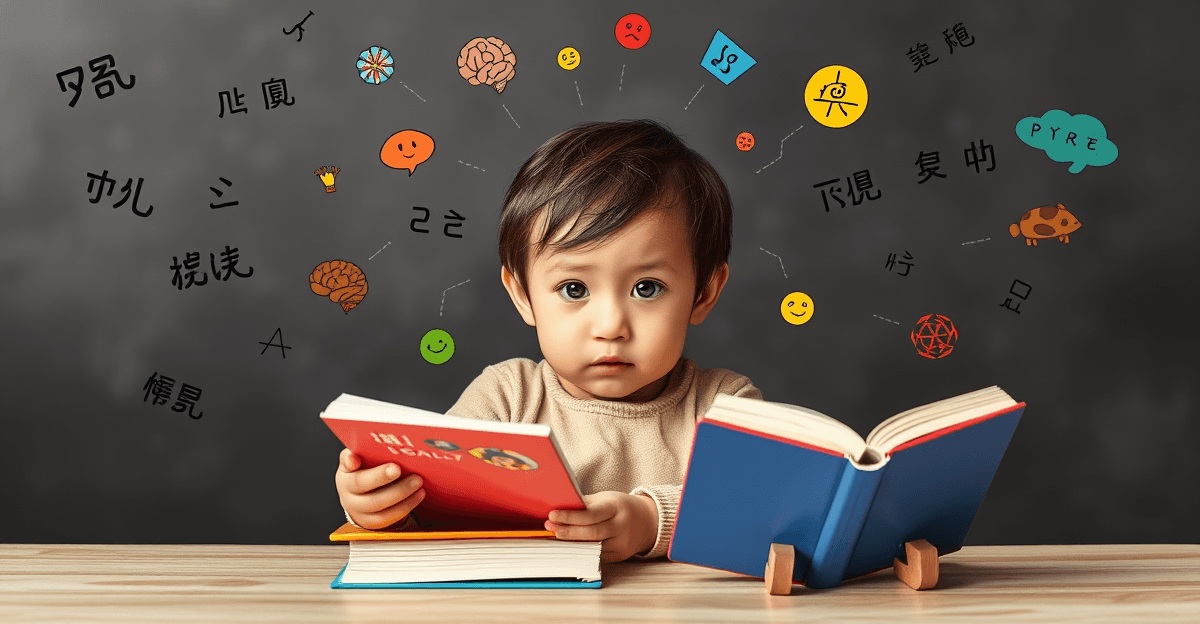
Picture your little one switching effortlessly from asking "Can I have water?" in English to greeting Ah Ma in Mandarin, Malay, or Tamil — all within the same breath. If you're raising a child in Singapore, this everyday magic is the bilingual brain at work, and it's giving your child cognitive advantages that reach far beyond language. As a parent, you might sometimes worry that juggling two languages is too much for a 4-year-old. The reassuring truth, backed by decades of research, is that a bilingual brain isn't overloaded — it's being strengthened in ways that benefit focus, memory, and even future exam performance.
Key Takeaway (TL;DR)
- The bilingual brain builds stronger "executive function" — focus, self-control, and mental flexibility — from as early as age 4.
- Bilingualism does not cause speech delays or confusion; mixing languages is normal and healthy.
- Singapore's bilingual policy means mother tongue counts toward PSLE and beyond — an early foundation pays off.
- The birth-to-age-7 window is the brain's peak time for absorbing two languages naturally.
- Consistent, playful daily exposure beats formal drilling every time.
What Does the Bilingual Brain Actually Mean?
The bilingual brain refers to the way a child's mind physically develops when it regularly manages two languages. Neuroscientists have found that bilingual children show increased grey matter density and more active connections in regions responsible for attention and decision-making. In short, your child's brain gets a daily mental workout that monolingual brains don't.
Here's why: when your bilingual child wants to say a word, both languages "activate" at once. Their brain must constantly select the right language and suppress the other. This tiny act of switching, repeated hundreds of times a day, trains the brain's executive control system — the same system your child will later rely on to sit still, follow instructions, and focus during a Primary 1 lesson.
Definitive statement: Bilingualism is one of the few everyday experiences proven to reshape a young child's brain for the better, and Singapore's dual-language environment gives your child this advantage naturally.
What Are the Benefits of a Bilingual Brain for Young Children?
A bilingual brain gives children measurable cognitive, social, and academic advantages. Studies suggest bilingual children outperform monolingual peers on tasks requiring focus and task-switching by meaningful margins, and these gains appear as early as the preschool years. For Singapore families, the benefits align perfectly with the demands of local schooling.
Sharper focus and self-control
Because the bilingual brain is always deciding which language to use, it becomes exceptionally good at ignoring distractions. Research on children as young as 4 shows bilinguals perform better on "executive function" tasks — the mental skills that let your little one resist blurting out, wait their turn, and concentrate. These are exactly the skills that ease the transition into a structured classroom. If you're already thinking ahead to formal schooling, our Primary 1 Readiness checklist shows how attention and self-regulation top the list of what your child needs.
Stronger memory and problem-solving
Constantly holding two vocabularies boosts working memory — the mental "sticky note" your child uses to remember a set of instructions or a sequence of numbers. This spills directly into early maths. Children who can hold and manipulate information in their heads tend to grasp number concepts faster, which is why bilingual advantages often show up in early K2 maths assessments.
Greater empathy and social awareness
To communicate in the right language, a bilingual child must constantly consider who they're talking to — does Uncle understand English, or should I speak Mandarin? This builds perspective-taking, a foundation of empathy. It's one reason bilingual children often shine in the social settings explored in our guide to developing social skills in preschoolers.
A head start on Singapore's bilingual education
Definitive statement: In Singapore, mother tongue is not optional — it is a compulsory examinable subject from Primary 1 through to the PSLE and beyond. A child who arrives at Primary 1 already comfortable in two languages carries a genuine, lasting advantage. The MOE bilingual policy, in place since 1966, treats English as the working language and mother tongue as the anchor to culture and identity. Building that foundation during the K1-K2 years means your child spends Primary school deepening a language rather than scrambling to catch up.
How the Bilingual Brain Develops from Ages 4-6
The preschool years are the single best window for building a bilingual brain. Between birth and roughly age 7, the brain is uniquely wired to absorb the sounds, rhythms, and grammar of multiple languages without conscious effort. After this window, learning a second language becomes more like hard work and less like breathing.
In Singapore, this developmental sweet spot lines up neatly with K1 and K2. Whether your child attends PCF Sparkletots, My First Skool, or another PAP Community Foundation or private preschool, the curriculum introduces mother tongue alongside English through songs, stories, and play. This isn't accidental — it's designed around how the bilingual brain learns best.
What "normal" bilingual development looks like
Many parents panic when their bilingual child mixes languages — saying something like "I want to makan now." Please don't worry. This is called code-switching, and far from being confusion, it's a sign of a sophisticated brain flexibly using every tool it has. Here's what to expect:
- Around age 4: Your child understands more than they can express in each language. Vocabulary may seem smaller per language than a monolingual peer, but the combined total is comparable.
- Around age 5: Code-switching is frequent and completely normal. Sentence structure in both languages strengthens.
- Around age 6: Your child begins to separate the two languages more deliberately, choosing the right one for the right listener.
If you'd like a broader picture of what to expect, our guide to reading milestones for children ages 4-6 maps out how language and literacy unfold in these years.
How Can Singapore Parents Support the Bilingual Brain at Home?
The most effective way to nurture a bilingual brain is consistent, joyful daily exposure — not flashcards and drilling. Children learn language through emotional connection and play, so the goal is to make both languages feel warm, useful, and fun rather than like a chore.
Practical strategies that work
- Assign languages to people or places. One popular approach: Mum speaks English, Dad speaks mother tongue — or the family speaks mother tongue at home and English elsewhere. Consistency helps the brain organise both languages.
- Lean on grandparents. Ah Ma and Ah Gong are Singapore's secret bilingual weapon. Regular conversation and video calls give your child authentic, loving exposure.
- Read aloud in both languages every day. Even 10 minutes builds vocabulary and bonding. Borrow bilingual picture books free from your nearest National Library Board branch.
- Sing, cook, and play. Nursery rhymes, cooking while naming ingredients, and pretend play embed vocabulary painlessly.
- Make screen time count. If your child watches cartoons, switch some to the mother tongue. Purposeful, limited screen use can support language — see our screen time guide for preschoolers for healthy limits.
Keep it playful and pressure-free
The fastest way to make a child resist a language is to turn it into stressful homework. This is where play-based, game-based learning genuinely helps preschoolers — children practise far more willingly when it feels like a game. Tools like QuizKin offer adaptive quiz practice that makes learning fun and measurable for K1-K2 kids, so you can build daily language and reasoning habits without tears or nagging. Because the difficulty adjusts to your child, they stay in that sweet spot of "challenging but achievable" — exactly where the bilingual brain thrives.
If you'd like structured support beyond home, a mother-tongue enrichment tutor can help — you can find one with no agency fees through TuitionLah. And for discounts on bilingual books, enrichment classes, and learning apps, parents often spot deals via WhyNotDeals.
Common Worries About Raising a Bilingual Child
Let's gently put the biggest fears to rest, because worry can hold families back from a wonderful gift.
"Won't two languages delay my child's speech?" No. This is the most persistent myth. Bilingual children reach speech milestones within the same normal range as monolingual children. If you have genuine concerns about a delay, that concern would apply regardless of one or two languages — speak to your paediatrician or a KKH speech therapist, not to dropping a language.
"My child mixes languages — is something wrong?" No. As covered above, code-switching is healthy and intelligent.
"I'm not fluent in the mother tongue myself." That's okay. Learn alongside your child, use audio books and apps, and lean on relatives. Your enthusiasm matters more than your perfection.
"My child gets anxious about mother tongue tests." Test pressure is real, even for the very young. Our guide to reducing test anxiety in preschoolers offers calm, practical steps — the key is keeping language joyful, not fearful.
The Bottom Line for Singapore Families
Raising a child with a bilingual brain is one of the most valuable gifts you can offer — and in Singapore, you're already living in the perfect environment for it. Your little one is not being burdened by two languages; they're being quietly equipped with sharper focus, stronger memory, deeper empathy, and a genuine head start on their PSLE journey. Trust the process, keep both languages warm and playful, and celebrate every mixed-up, code-switched sentence as proof that your child's remarkable brain is growing exactly as it should.
References
- MOE — Strengthening Mother Tongue Language Learning — Ministry of Education Singapore on mother tongue languages and the bilingual policy.
- MOE — Mother Tongue Languages Curriculum — Official curriculum framework and examination requirements from Primary 1 to PSLE.
- HealthHub (MOH) — Child Development and Language — Singapore government health resource on early childhood development milestones.
- National Library Board — Bilingual Resources for Children — Free bilingual books and reading programmes for young children.
- PAP Community Foundation (PCF Sparkletots) — Preschool programmes and bilingual early learning in Singapore.
Want to make bilingual and early-learning practice feel like play? Explore how the best educational apps for young children in Singapore — including adaptive tools like QuizKin — can turn daily practice into something your little one actually looks forward to.
Practise what you’ve read with QuizKin
Adaptive quizzes covering phonics, sight words, numbers, and more — aligned with the Singapore MOE curriculum. Start your free Premium trial today.
Frequently Asked Questions
Earlier is better — the birth-to-age-7 window is when the brain most easily absorbs two languages. In Singapore, most children begin their mother tongue alongside English from K1 (around age 4-5) in preschool. You don't need to wait for formal school; everyday conversation, songs, and reading in both languages from infancy builds the strongest foundation.
No. Decades of research show bilingualism does not cause language delay or confusion. Bilingual children may temporarily mix languages (called code-switching), which is a normal, intelligent sign of a developing bilingual brain — not a problem. Total vocabulary across both languages is typically on par with monolingual peers.
This is very common in Singapore's English-dominant environment. Make the mother tongue fun and low-pressure: watch cartoons, sing songs, cook together while naming ingredients, and video-call grandparents who speak it. Consistency and positive emotional association matter far more than drilling. Adaptive practice apps and games can also make daily exposure feel like play rather than homework.
About the author
Mervin Tan
Founder, QuizKin
Mervin Tan is the founder of QuizKin and a software engineer and dad of two young children in Singapore. He builds QuizKin's adaptive quiz engine and writes practical K1-K2 learning guides grounded in MOE's Nurturing Early Learners framework and his own experience preparing his kids for Primary 1. QuizKin is built by Adaptels Pte. Ltd., Singapore.
Ready to make learning fun?
QuizKin turns screen time into learning time with adaptive quizzes built for K1-K2 kids in Singapore. Free to start.
Related Articles
Self-Regulation Skills for K1-K2: Managing Big Emotions
Help your K1-K2 child build self-regulation skills to manage big emotions. A warm, evidence-based guide for Singapore parents of 4-6 year olds.
Fostering Creativity in Young Children Beyond Art Class
Practical ways to foster creativity in young children beyond art class. A Singapore parents' guide to nurturing imagination in K1-K2 kids aged 4-6.
Sensory Processing in Preschoolers: Singapore Parent Guide
A warm, evidence-based guide to sensory processing in preschoolers for Singapore parents of K1-K2 kids — signs, activities, and when to seek help (ages 4-6).