Building Emotional Intelligence in K1-K2 Kids: Activities for Singapore Families
Help your K1-K2 child develop emotional intelligence with practical, fun activities. Expert tips for Singapore parents aligned with MOE values and preschool development.
Mervin Tan · Founder, QuizKin
Published 2 June 2026
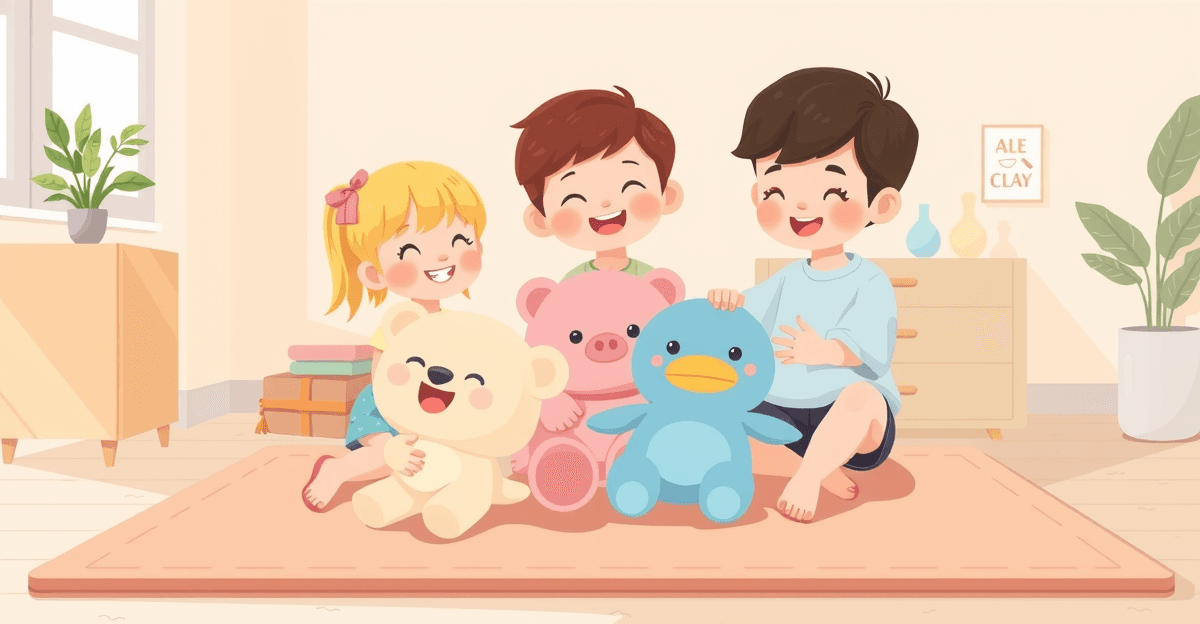
My 5-year-old walked out of preschool in tears because her friend wouldn't share the toy kitchen. That same week, she smacked her younger sister over a crayon. Both times I thought — am I doing something wrong? Turns out, this is completely normal. At ages 4-6, children are still learning to name emotions, regulate impulses, and navigate friendships. The good news? With intentional practice and the right activities, you can help your little one build emotional intelligence skills that will serve them throughout school and life.
TL;DR: Help your K1-K2 child develop emotional intelligence with practical, fun activities. Expert tips for Singapore parents aligned with MOE values and preschool development.
In Singapore, where preschool transitions, academic pressure, and competitive environments can feel intense even at young ages, emotional intelligence is a superpower. It helps children handle stress, build resilience, and thrive socially. Let's explore practical, evidence-backed activities you can do at home—no fancy materials needed.
What Is Emotional Intelligence, and Why Does It Matter?
Emotional intelligence is the ability to recognise, name, and manage emotions—in yourself and others. For K1-K2 children, this means:
- Identifying feelings: "I'm feeling angry right now"
- Understanding emotions in others: "My friend looks sad"
- Managing big feelings: Using calm-down strategies instead of hitting or screaming
- Building empathy: Comforting someone who's upset
- Cooperating and sharing: Working with peers without constant conflict
Why is this crucial? Singapore's MOE Character and Citizenship Education framework explicitly emphasises values like respect, responsibility, and resilience from kindergarten onwards. Children strong in EI adapt better to preschool social demands, manage transitions smoothly (like moving from K2 to Primary 1), and develop healthier friendships. Plus, research consistently shows that emotional skills predict academic success—sometimes more strongly than IQ.
The Foundation: Emotion Labelling and Awareness
Before your child can manage emotions, they need to recognise and name them. This is the bedrock of EI.
Activity 1: Emotion Face Charts
Create a simple chart with four basic emotions: happy, sad, angry, scared. Use simple drawings, stickers, or even photos of your child making these faces. Laminate it so it lasts through enthusiastic use.
How to use it:
- Throughout the day, point to the chart: "You look angry. Is this how you're feeling?" This normalises emotion language.
- Before bed, ask: "What emotion did you feel today? Show me the face."
- When your child is upset, say gently: "I see you're angry. Can you point to the angry face?" This validates feelings and builds vocabulary.
Why it works: Young children are concrete thinkers—they respond to visuals. By pairing feelings with images and words repeatedly, you're literally rewiring their brain to recognise and name emotions, which is the first step to managing them.
Activity 2: Emotion Charades at Home
Make emotion charades a fun family game. Act out emotions exaggerated and silly—walk around like you're so happy with a big smile, then slump down looking sad, then stomp around angrily. Ask your child: "What feeling is Mummy showing?"
Then take turns: you describe a scenario ("Your toy broke!"), and your child acts out the emotion. Laugh together. This makes emotion learning playful and social.
Singapore tip: During Chinese New Year or Hari Raya, incorporate emotions into cultural celebrations. "During Deepavali, people feel happy and joyful! Let's show a happy face together."
Building Regulation Skills: The Calm-Down Toolbox
Naming emotions is step one. Managing them is step two. K1-K2 children need concrete, memorable strategies they can actually use when overwhelmed.
Activity 3: Create a Calm-Down Corner
Designate a small, quiet space in your home—a corner of the bedroom, under a table, or on a cushion. Stock it with items that soothe your child:
- A soft toy or blanket
- A bottle filled with glitter and water (shake it and watch the glitter settle—calming to watch)
- A small drum or rain stick for gentle sounds
- Picture books about feelings
- A timer (if your child likes structure)
How to use it:
When your child is upset but safe, calmly say: "You're feeling really angry right now. Let's go to our calm-down corner together." Sit with them (don't isolate them). Once calm, talk about what happened.
Important: Introduce the corner during calm times, not just during meltdowns. Practice: "Let's pretend you're upset. What could we do in the calm-down corner?" This primes the brain for actual emotional moments.
Activity 4: Breathing and Body Awareness Games
Young children respond brilliantly to imaginative breathing exercises. They're not developmentally ready for formal meditation, but playful breathing games work wonders.
Bubble Breathing: "Let's pretend we're blowing bubbles. Take a deep breath in... now blow out slowly, like you're making a big, beautiful bubble." Do this 3-5 times when your child is upset or overstimulated.
Flower and Candle: "Smell the flower (breathe in through nose), blow out the candle (breathe out through mouth)." Kids love the imagery, and it naturally slows their breathing.
Starfish Pose: Lie down and stretch arms and legs wide like a starfish. "Breathe in as you stretch, breathe out as you relax." Combine movement with calming—perfect for restless K2 kids.
Why this works: When children are upset, their nervous system is in "fight or flight." Slow breathing signals safety to the brain. The imaginative framing makes it fun rather than clinical.
Building Empathy and Social Awareness
Emotional intelligence isn't just about managing yourself—it's about understanding others. This foundation, built in K1-K2, leads to better friendships and later academic collaboration.
Activity 5: Feelings in Stories
Read picture books that highlight emotions and social scenarios. Singapore-friendly options include:
- The Feelings Book by Todd Parr (celebrates emotions and differences)
- Today I Feel Silly by Jamie Lee Curtis
- The Color Monster by Anna Llenas
- Local preschool readers from PCF or My First Skool often include emotion-focused stories
After reading, ask:
- "How did the character feel?"
- "Why did they feel that way?"
- "Have you ever felt like that?"
- "What could help them feel better?"
This trains your child's brain to recognise emotions in others and think through solutions—core EI skills.
Activity 6: Role-Playing Social Scenarios
Act out common K1-K2 conflicts and cooperation moments. Keep it light and playful.
Scenarios to practise:
- Friend won't share a toy → how do you ask nicely? How does it feel if someone won't listen?
- Friend trips and falls → what do you say? How can you help?
- You want the same toy as your friend → what can you do together?
- Older sibling is mean → how do you feel? Who can help?
Let your child be both characters—this builds perspective-taking. Pause and ask: "How is that person feeling right now?"
Singapore context: Many K1-K2 children attend preschools like PCF, PAP Community Foundation, or private institutions where they encounter diverse peers. Role-playing helps them navigate cultural differences, sharing norms, and conflict with confidence.
Supporting Emotional Learning Through Play-Based Practice
Beyond structured activities, everyday play is your strongest tool. And here's where adaptive approaches help: just as children learn math and literacy at different paces, they learn emotional skills differently too. Pay attention to what resonates with your child.
Some children respond to movement and physical play. Others prefer stories and conversation. Some learn through imaginative play; others through sensory activities.
Think of emotional learning like any other skill—you observe what clicks, you adjust, you celebrate progress. There's no one-size-fits-all approach. If your child shuts down during intense role-play, dial it back. If they light up when telling stories about feelings, lean into that.
Activity 7: Feelings Journal (with pictures)
K1-K2 children can't write, but they can draw. Each evening, ask: "Draw how you felt today" or "Draw something that made you happy." Use simple prompts and celebrate whatever they create—it's not about artistic skill, it's about reflection.
This builds self-awareness and gives you insight into their emotional world. You'll notice patterns: maybe Monday mornings are hard, or your child gets anxious before preschool.
Activity 8: Gratitude and Pride Moments
Daily, ask: "What made you proud today?" or "What are you thankful for?" Keep it light—a small accomplishment (shared nicely with a friend, tried a new food, helped Mummy) counts as much as a big win.
This trains your child's brain toward positivity and resilience. When they inevitably face frustration, they have a neural pathway toward hope and capability.
Handling Big Emotions: The Real Test
All the activities above prevent and reduce emotional dysregulation. But sometimes, K1-K2 kids still have meltdowns. Here's how to stay steady:
During the storm:
- Stay calm yourself (your nervous system regulates theirs)
- Validate without solving: "You're so angry right now. That's big feelings."
- Offer comfort if they'll accept it; give space if they won't
- Don't problem-solve during intense emotion—their brain can't access reasoning
After calm returns (10-30 minutes later):
- Talk gently about what happened
- Name the emotion: "You were angry because..."
- Explore choices: "Next time, you could... What do you think?"
- Reassure: "Everyone feels angry sometimes. I love you."
Red Flags and When to Seek Support
Most K1-K2 children have emotional moments. But watch for patterns that might need professional support:
- Extreme aggression or destructiveness that doesn't improve with strategies
- Persistent withdrawal and no interest in social play
- Intense anxiety that interferes with preschool or sleep
- Emotional responses that seem extreme compared to the trigger
If concerned, chat with your preschool teacher first—they see your child daily and can offer perspective. Then consider a consultation with a child psychologist or paediatrician. Singapore has excellent paediatric mental health services, and early support makes a real difference.
Consistency Over Perfection
Here's the truth: you don't need fancy materials, perfect execution, or hours per day. Emotional intelligence grows through consistent, loving practice.
Start with one or two activities. Do them regularly—daily if possible. Notice what your child responds to. Adjust. Celebrate small wins. Miss a day? That's okay. Resume tomorrow.
Over weeks and months, you'll notice shifts. Your K1 child naming their own emotions without prompting. Your K2 child comforting a crying friend. Fewer meltdowns. Easier preschool transitions. These aren't accidents—they're the fruit of intentional, loving practice.
Final Thoughts
As Singapore parents, you're already managing pressure—school readiness, enrichment activities, academic expectations. But emotional intelligence might be the most valuable skill you help your child develop. It supports everything else: academic learning, friendships, resilience, wellbeing.
The activities above are simple, playful, and grounded in how young children actually learn. Try one this week. Notice what your child enjoys. Build from there. You've got this—and your K1-K2 child is lucky to have a parent thoughtful enough to invest in their emotional growth.
What emotion activity will you try first? We'd love to hear what works for your family.
Sources
- ECDA — Early Childhood Development Agency
- KKH — KK Women's and Children's Hospital
- HealthHub Singapore
Looking for more? Check out find a tutor for free on TuitionLah.
Exploring parenthood in Singapore? Visit ParentLah for practical tips on raising kids in Singapore.
Practise what you’ve read with QuizKin
Adaptive quizzes covering phonics, sight words, numbers, and more — aligned with the Singapore MOE curriculum. Start your free Premium trial today.
Frequently Asked Questions
Emotional intelligence (EI) is the ability to recognise, understand, and manage emotions in yourself and others. For K1-K2 children in Singapore, developing EI early supports better classroom behaviour, friendships, and academic success. MOE's Character and Citizenship Education emphasises these values from the earliest years, and research shows children with strong EI skills adapt better to the transition from preschool to primary school.
Watch for signs like difficulty expressing feelings, frequent emotional outbursts, trouble sharing or cooperating, or seeming withdrawn from peers. This is completely normal at ages 4-6—most K1-K2 children are still learning these skills. If concerns persist despite consistent practice at home, chat with your child's preschool teacher or paediatrician for guidance tailored to your child.
Emotional development is gradual. Most parents notice small improvements within 2-3 weeks of consistent practice, and more significant changes over 2-3 months. Every child develops at their own pace, so celebrate small wins like your child naming an emotion or using a calming strategy independently. Consistency matters more than perfection.
About the author
Mervin Tan
Founder, QuizKin
Mervin Tan is the founder of QuizKin and a software engineer and dad of two young children in Singapore. He builds QuizKin's adaptive quiz engine and writes practical K1-K2 learning guides grounded in MOE's Nurturing Early Learners framework and his own experience preparing his kids for Primary 1. QuizKin is built by Adaptels Pte. Ltd., Singapore.
Ready to make learning fun?
QuizKin turns screen time into learning time with adaptive quizzes built for K1-K2 kids in Singapore. Free to start.
Related Articles
Balancing Screen Time for Toddlers in Singapore: A Parents' Practical Guide
Learn how Singapore parents can balance screen time for K1-K2 toddlers (ages 4-6). Practical tips aligned with MOE guidelines and preschool readiness.
The Bilingual Brain: Benefits for Singapore Children
Discover how the bilingual brain benefits Singapore children aged 4-6 — from stronger focus to PSLE readiness. Evidence-based tips for K1-K2 parents.
Montessori Activities at Home for Singapore Preschoolers: Practical Life Skills
Discover Montessori practical life activities for K1-K2 kids at home. Simple, budget-friendly ideas aligned with Singapore preschool learning outcomes.