Bilingual Learning Tips for Singapore Parents: Raising English-Chinese Speakers
Practical bilingual learning tips for Singapore parents raising English-Chinese speakers. Help your K1-K2 child (ages 4-6) build strong foundations in both languages.
Mervin Tan · Founder, QuizKin
Published 10 June 2026
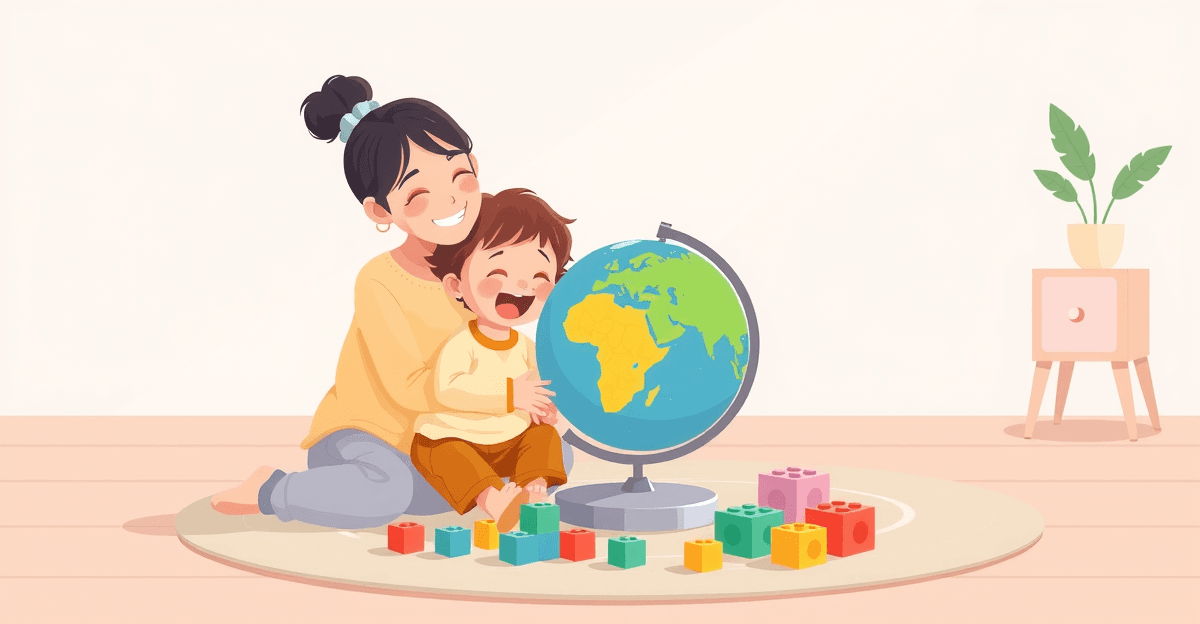
You're at the hawker centre and your four-year-old confidently orders "chicken rice, uncle!" But when Ah Ma asks "你要吃什么?", your little one goes quiet and looks at you for help. Sound familiar?
If you're nodding right now, welcome to the club. My daughter did exactly this until about halfway through K1, and it drove me slightly mad. We speak mostly English at home, and despite her attending a kindergarten with daily Chinese lessons, Mandarin just wasn't sticking in a way she'd actually use.
The good news: ages 4 to 6 really are a golden window for language development. And after a year of trying different approaches, I can tell you that the right bilingual learning tips make a genuine difference — without turning your home into a Chinese tuition centre.
Key Takeaway: Children ages 4-6 are in the peak window for bilingual language acquisition. Singapore parents can build strong English-Chinese foundations by combining daily routines, play-based activities, and consistent exposure — without turning every moment into a lesson.
Why This Matters More Than You Think
Bilingualism isn't just a nice-to-have in Singapore — it's built into the system. MOE's bilingual policy means Chinese Language carries real weight from Primary 1 through PSLE and beyond. But beyond exams, the research is genuinely interesting.
Research consistently shows that children who develop strong oral foundations in both languages before age 6 tend to perform better in early literacy assessments. Bilingual children also demonstrate measurably stronger executive function skills — attention, memory, cognitive flexibility — compared to monolingual peers. That's not a small difference.
The key is making both languages feel natural at home. Not forced. Not homework. Just... part of life.
Creating a Bilingual Home (Even If Your Chinese Is Rusty)
I'll be honest — my own Mandarin is functional at best. I can order food and have basic conversations with my parents, but reading a Chinese storybook to my daughter without stumbling? That took some practice. If you're in the same boat, don't let that stop you.
The "One Context, One Language" Approach
Rather than the textbook "one parent, one language" method (which doesn't work for every family), try assigning languages to specific activities:
- Meal times — Chinese: Talk about food and flavours in Mandarin. Start simple: "好吃吗?" or "你要喝水吗?"
- Bath time and bedtime stories — English: Build vocabulary around daily routines
- Grocery shopping — Chinese: Name fruits, vegetables, and colours. My daughter now knows all the fruits in Mandarin because we do this every weekend at the NTUC
- Car rides — Alternate between English and Chinese songs
Things That Actually Work
- Bilingual labels around the house. We stuck simple labels on common objects — 门 (door), 冰箱 (fridge), 桌子 (table). Sounds silly, but your child absorbs these passively throughout the day.
- Chinese media with intention. Shows like Xiao Xiao Ban and Chinese nursery rhymes on YouTube give natural listening exposure. We do about 20-30 minutes daily.
- Get the grandparents involved. If Ah Gong or Ah Ma speaks Mandarin, they become your secret weapon. Regular conversations — even video calls — make a huge difference. Children learn language best through people they love.
- Read together in both languages. NLB has an excellent bilingual section for preschoolers. We go every other Saturday and always grab a few Chinese books.
Don't stress about keeping languages perfectly separated. When my daughter says "Mummy, I want to eat 面," that's actually a good sign — it means she's processing both languages actively. Linguists call it code-mixing, and it's completely normal.
Building Chinese Vocabulary (The Part That Feels Hardest)
This is where most Singapore parents feel stuck. Your child understands spoken Mandarin but won't speak it. Here's what helped us close that gap.
Focus on the 100 most common characters first. MOE expects about 400-500 characters by end of P1. In K1-K2, just aim for the foundational 100 — characters like 大, 小, 人, 上, 下, 我, 你, 他. Even recognising 50-80 before Primary 1 gives your kid a real head start.
Making Chinese Fun (Not a Battle)
- Character treasure hunts: Hide flashcards around the house. When your child finds one, they say it aloud and try using it in a sentence. My daughter treats this like a game.
- Drawing characters: Turn stroke practice into art. 山 looks like mountains. 火 looks like a campfire. These visual connections make characters stick.
- Cooking together in Chinese: Follow a simple recipe using only Mandarin. "放一点盐" (add a little salt) teaches real vocabulary while building fine motor skills.
- Hawker stall role-play: Set up a pretend hawker stall and transact in Chinese. "老板,多少钱?" is a phrase every Singapore kid should learn, and they love playing shopkeeper.
For more structured practice, QuizKin offers K1-K2 Chinese vocabulary exercises that adjust to your child's level — making progress visible without the tears.
What MOE Actually Expects
Singapore's bilingual policy means Chinese Language from P1 through PSLE. Here's what that translates to for K1-K2 preparation:
Listening (Chinese) — Understand simple instructions and stories. What to do: daily Chinese conversations, audiobooks.
Speaking (Chinese) — Express basic needs and ideas in Mandarin. What to do: practice through play, family conversations.
Character Recognition — Recognise basic Chinese characters. What to do: introduce 3-5 new characters per week.
English Reading — Basic phonics and sight words. What to do: regular reading aloud, phonics practice.
English Speaking — Communicate clearly in simple sentences. What to do: daily conversations, storytelling.
Parents working on Primary 1 readiness should know that most primary schools assess both English and Chinese early on. Kids with consistent bilingual exposure — even 30 minutes of structured practice in each language daily — adapt much faster.
A Daily Routine That Works
The best bilingual learning tip I can give you: consistency beats intensity. A child who uses both languages for 20-30 minutes every day will do better than one who sits through two hours of Chinese tuition once a week.
What Our Weekday Looks Like
- 7:00 AM — Morning routine (Chinese): Greet your child in Mandarin. Chat about the weather, what to wear, breakfast choices — all in Chinese. Doesn't have to be perfect.
- 3:30 PM — After-school chat (English): Ask about their day. Encourage full sentences: "I played with blocks and we built a castle."
- 5:00 PM — Reading time (alternate daily): Monday/Wednesday/Friday: English books. Tuesday/Thursday/Saturday: Chinese books. Sunday: whatever they want.
- 6:30 PM — Dinner (Chinese): We try to make dinner a Chinese-only zone. Even simple exchanges count. Some days it works better than others.
- 7:30 PM — Screen time (Chinese): If your child gets screen time, make some of it Mandarin content.
- 8:00 PM — Bedtime story (English): Wind down with a favourite English book to build reading milestones.
Track Progress Lightly
Keep a simple log of new words in each language each week. Aim for 5-10 new English and 5-10 new Chinese words during K1. That adds up to 250-500 new words per language over a year — more than enough for a strong foundation.
QuizKin's adaptive quiz practice tracks this automatically, adjusting difficulty based on your child's performance so they're always practising at the right level.
Five Mistakes to Watch Out For
- Correcting every mistake immediately. When your child says "我要 eat 饭," don't pounce. Just model the correct form naturally: "哦,你要吃饭?好的!" This recasting approach works better than direct correction.
- Giving up on Chinese when they resist. Around ages 4-5, many kids go through a phase of preferring English — it's the dominant language in Singapore media and among friends. Stay the course. This phase usually passes within 6-12 months with consistent, positive exposure.
- Over-relying on flashcard drilling. Flashcards have their place, but language is learned through real interaction. Prioritise conversations, stories, and play over memorisation.
- Comparing to other kids. Every bilingual child develops differently. Some are stronger in English first, others in Chinese. By P2-P3, most even out if both languages get consistent support.
- Focusing on writing before speaking. In K1-K2, oral fluency should come first. A child who can chat comfortably in Mandarin will find character recognition much easier later.
Choosing the Right Resources
For structured Chinese learning:
- PCF Sparkletots, My First Skool, and MOE Kindergartens all integrate bilingual learning following the NEL framework
- Enrichment options include Berries, Chengzhu Mandarin Centre, and Little Mandarins
- As your child approaches P1, TuitionLah can help find experienced Chinese tutors with no agency fees
For English foundations:
- Focus on phonics-based learning combined with whole-language approaches
- Build a solid base of sight words for K1-K2
- Read together daily — this single habit predicts reading success better than anything else
For digital tools:
- Choose apps that adapt to your child's level, not one-size-fits-all
- Look for Singapore curriculum alignment
- Our guide to the best educational apps for preschoolers has curated picks
The Emotional Side of Language Learning
Language learning is deeply personal for young kids. A child who feels embarrassed about their Chinese pronunciation may shut down completely. Keep these in mind:
- Celebrate effort. "Wah, you tried to say that in Chinese — well done!" goes a long way.
- Let home be a safe space for mistakes. If your child mixes up tones, laugh together. Don't make it a teaching moment every time.
- Connect language to identity. Talk about why your family speaks Chinese. Visit Chinatown, celebrate festivals in Mandarin, share stories about grandparents. When language carries meaning, kids want to learn.
- Build resilience around challenges. Bilingual children will sometimes struggle, and that's okay. The ability to persist is a life skill.
Quick Reference by Age
K1 (Age 4-5): English — phonics basics, 50+ sight words, storytelling. Chinese — oral vocabulary (300+ words), basic strokes, 20-30 characters. Daily target: 20 min English + 20 min Chinese.
K2 (Age 5-6): English — reading simple books, writing name, 100+ sight words. Chinese — simple sentences, 50-80 characters, basic hanyu pinyin. Daily target: 30 min English + 30 min Chinese.
Sources
- MOE Bilingual Education Policy — Overview of Singapore's Mother Tongue Language policy and curriculum expectations
- Nurturing Early Learners (NEL) Framework — MOE's curriculum framework for preschool education in Singapore
- National Library Board — Children's Collection — Access bilingual children's books and early literacy resources
- CNA — Bilingual Challenges for Singapore Families — Reporting on bilingual education trends and challenges in Singapore
- Bialystok, E. (2017). "The bilingual adaptation." Developmental Science — Research on cognitive advantages of bilingualism in early childhood
Practise what you’ve read with QuizKin
Adaptive quizzes covering phonics, sight words, numbers, and more — aligned with the Singapore MOE curriculum. Start your free Premium trial today.
Frequently Asked Questions
Research shows that children benefit most from bilingual exposure from birth through age 6, when the brain is most receptive to language acquisition. For Singapore parents, starting English and Chinese exposure during the K1 years (age 4-5) is ideal, as it aligns with MOE's emphasis on Mother Tongue Languages. Even if you start later, children up to age 7 can still develop strong bilingual foundations with consistent daily practice.
This is extremely common in Singapore, where English often dominates in media and social settings. Avoid forcing your child — instead, create positive associations with Chinese through songs, cartoons (e.g., Xiao Xiao Ban), and play-based activities. Designate specific 'Chinese time' at home, and consider playdates with Mandarin-speaking peers. Consistency and patience matter more than intensity.
No — decades of research confirm that young children can learn two or more languages simultaneously without confusion. Code-mixing (switching between languages mid-sentence) is a normal part of bilingual development, not a sign of confusion. In fact, bilingual children often show stronger cognitive flexibility and problem-solving skills. Singapore's bilingual education model is built on this well-established evidence.
About the author
Mervin Tan
Founder, QuizKin
Mervin Tan is the founder of QuizKin and a software engineer and dad of two young children in Singapore. He builds QuizKin's adaptive quiz engine and writes practical K1-K2 learning guides grounded in MOE's Nurturing Early Learners framework and his own experience preparing his kids for Primary 1. QuizKin is built by Adaptels Pte. Ltd., Singapore.
Ready to make learning fun?
QuizKin turns screen time into learning time with adaptive quizzes built for K1-K2 kids in Singapore. Free to start.
Related Articles
Memory Games for Preschoolers: Boost Brain Power at Home
Discover fun, science-backed memory games for preschoolers that boost brain power at home. A Singapore parent's guide for K1-K2 kids aged 4-6.
Teaching Malay Language Basics to Singapore Preschoolers
A warm, practical guide to teaching Malay language basics to Singapore preschoolers (K1-K2). Fun activities, MOE context, and daily tips for parents of 4-6 year olds.

Building Vocabulary: Everyday Strategies for Preschoolers
Practical everyday strategies for building vocabulary in preschoolers. Singapore parents' guide to helping K1-K2 kids learn new words before Primary 1.