How to Choose a Kindergarten in Singapore (2026)
Compare MOE Kindergarten, PCF, NTUC, and private preschools in Singapore. Fees, curriculum, teacher quality, and what to look for during kindergarten visits.
QuizKin Team
Published 23 April 2026
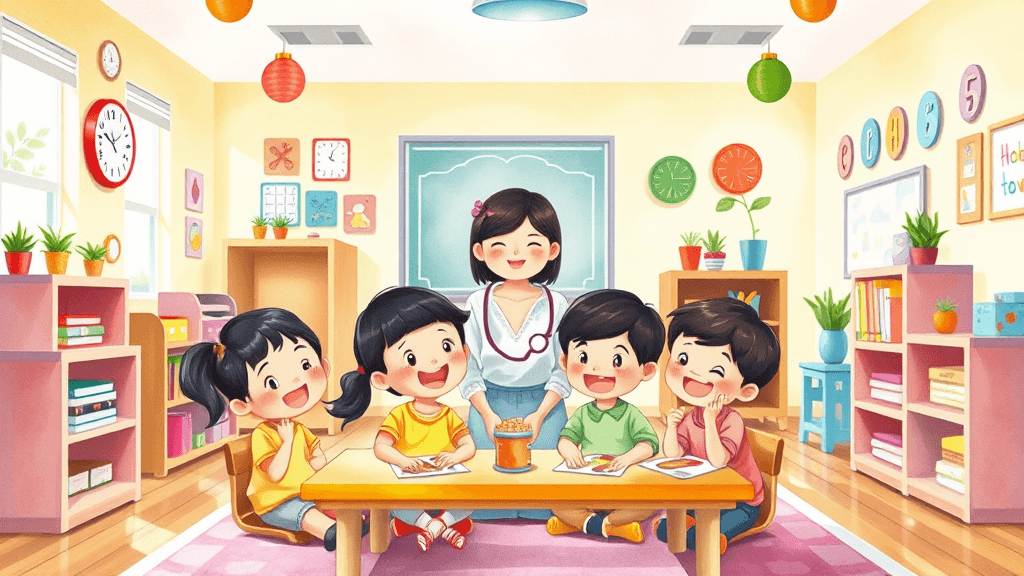
We visited five kindergartens before deciding on one for our daughter. By the third visit, we had a checklist. By the fifth, we had strong opinions about what actually mattered — and what was just marketing. If you are at the start of this process, staring at a spreadsheet of options and wondering where to even begin, you are not alone.
Singapore has over 1,800 preschool centres. The fee range alone is enough to give you whiplash — from MOE Kindergartens at around $160 a month to premium private programmes that cross $2,000. Everyone has an opinion. The school that your colleague swears by may be a disaster for your kid's personality. So how do you actually decide?
TL;DR: Compare MOE Kindergarten, PCF, NTUC, and private preschools in Singapore. Fees, curriculum, teacher quality, and what to look for during kindergarten visits.
This guide cuts through the marketing. It compares the major kindergarten types in Singapore, explains what actually matters for your child's development, and gives you a practical framework for making this decision without losing sleep.
The Four Types of Kindergartens in Singapore
1. MOE Kindergartens (MK)
What they are: Government-run kindergartens operated by the Ministry of Education. Currently 60 MOE Kindergartens across Singapore, each located within a primary school compound.
Fees: Approximately $160 per month for Singapore citizens (before subsidies). The most affordable option available.
Key features:
- Kindergarten curriculum developed directly by MOE, fully aligned with the NEL framework
- Bilingual programme: English and a Mother Tongue language
- Located within primary schools — children experience the primary school environment before P1
- K1 and K2 only (no Nursery or childcare programme)
- Operating hours: typically 8 am to 5 pm (4-hour programme with optional afternoon KCare)
Best for: Families who want strong NEL alignment, affordable fees, and a smooth transition to the primary school environment.
Limitations: No infant or toddler care. The core programme is only 4 hours, which does not work if both parents are working full-time unless you add the KCare extension. And with only 60 locations island-wide, you may simply not have one nearby.
2. PAP Community Foundation (PCF) Sparkletots
What they are: The largest preschool network in Singapore, operated by the PAP Community Foundation with over 360 centres, mostly located in HDB estates.
Fees: Approximately $200-400 per month for K1-K2 (varies by centre and programme type). Subsidies available.
Key features:
- Wide network — likely the most accessible option for HDB residents
- Full-day programmes available (7 am to 7 pm) — suitable for working parents
- Infant care, childcare, and kindergarten under one roof
- NEL framework aligned
- Offers various specialised programmes at different centres (bilingual, STEM, arts)
Best for: Families living in HDB estates who need full-day care and want a well-established, affordable network.
Limitations: Quality can vary quite a bit across centres. The PCF near our HDB block was our first stop — and honestly, the visit left us with mixed feelings. The facilities were fine, but the classroom felt rushed. That said, friends who enrolled at a different PCF branch were very happy. Do not judge the whole network by one centre.
3. NTUC My First Skool
What they are: Operated by NTUC (National Trades Union Congress), with about 150 centres across Singapore.
Key features:
- Full-day programmes including infant care, childcare, and kindergarten
- NEL framework aligned
- Emphasis on bilingual education with Mother Tongue immersion
- Partnerships with various enrichment providers
- NTUC union member discounts available
Fees: Approximately $200-450 per month for K1-K2. Subsidies available.
Best for: NTUC member families who want full-day care with a structured curriculum.
4. Private Kindergartens
What they are: Independently operated centres ranging from single-location boutique preschools to large chains. Examples include Pat's Schoolhouse, EtonHouse, Little Village, Canadian International School, and many others.
Fees: $500 to $2,000+ per month, depending on the programme.
Key features:
- Widest variety of pedagogical approaches (Montessori, Reggio Emilia, Waldorf, IB PYP, thematic)
- Often smaller class sizes
- May offer specialised programmes: bilingual immersion, outdoor learning, STEM focus
- Some include enrichment activities (music, art, sports) in the fee
- Longer operating hours at most centres
Best for: Families with specific pedagogical preferences, those willing to invest more for smaller class sizes, or expatriate families seeking international curricula. If you're deciding between this tier and a local centre, our international preschool & kindergarten comparison breaks down the real cost gap and P1-readiness trade-offs.
Limitations: Significantly higher fees. Not all private kindergartens follow the NEL framework. And here is the thing nobody says out loud: the most expensive option is not necessarily the best. We toured one gorgeous private centre with beautiful Scandinavian-style furniture and a teacher who barely looked up from her phone during free play. Facilities are not everything.
What Actually Matters When Choosing
After you cut through the marketing brochures — the ones with the sun-dappled photos of children building towers and discovering butterflies — here are the factors that research consistently shows matter most for preschool quality.
1. Teacher Quality (Most Important)
This is the one. The single most important factor in early childhood education quality is the teacher. A great teacher in an average facility will produce better outcomes than an average teacher in a premium facility. Full stop.
What to look for:
- Qualification level: All kindergarten teachers in Singapore must have a minimum Diploma in Early Childhood Care and Education. Look for centres where teachers have a degree-level qualification.
- Experience: Ask about teacher tenure. High teacher turnover is a red flag — it means children frequently lose their primary attachment figure.
- Teacher-child interaction: During your visit, observe how teachers speak to children. Are they warm, responsive, and engaged? Do they get down to the child's level? Do they ask questions rather than just giving instructions?
2. Curriculum Approach
Most Singapore kindergartens claim to follow the NEL framework. But how they implement it matters enormously. "NEL-aligned" on a brochure tells you very little about what actually happens in the classroom at 9:30 on a Tuesday morning.
Key questions to ask:
- "How do you teach phonics? Do you use synthetic phonics?"
- "What is your approach to bilingual education? How much time is spent in Mother Tongue?"
- "How do you assess children's progress?"
- "Can I see a sample weekly plan or lesson schedule?"
Good signs: structured curriculum with clear learning objectives, balance between teacher-directed and child-initiated activities, regular assessment and parent communication.
Red flags: "We follow the child's interests entirely" (which can mask a lack of structure), inability to articulate specific learning goals, heavy reliance on worksheets without any hands-on activities.
3. Learning Environment
Walk through the centre slowly and notice what is actually there. It sounds obvious, but a lot of parents get swept up in the pitch and forget to just look around.
- Space: Is there enough room for children to move, play, and work? Are there clearly defined areas (reading corner, art area, construction area)?
- Materials: Are learning materials accessible to children, not locked away in cabinets? Are there age-appropriate books, manipulatives, and creative materials?
- Outdoor space: Is there an outdoor play area? Outdoor play is critical for gross motor development — the NEL framework explicitly includes it, so a kindergarten without outdoor access should raise questions.
- Cleanliness and safety: Is the centre clean, well-maintained, and child-proofed?
4. Class Size and Ratios
Smaller class sizes generally lead to better outcomes because each child gets more individual attention. ECDA mandates a maximum of 1:20 for K1-K2, but many centres do better than this.
Ask specifically: "What is the actual class size, and how many adults are in each classroom?" A class of 16 with a teacher and an assistant is a fundamentally different experience from a class of 20 with one teacher alone. These numbers matter for real.
5. Communication with Parents
How does the kindergarten keep you in the loop about your child's progress? This matters more than most parents realise — especially in the early months when children cannot always articulate what happened at school.
Look for:
- Regular parent-teacher meetings (at least twice a year)
- Daily or weekly updates on learning activities
- Progress reports that discuss specific skills, not just generic comments like "doing well"
- Open-door policy for parent observations
- Staff who are responsive when you raise concerns
6. Practical Considerations
These should not override quality factors, but they shape your daily life in ways you will feel very quickly.
- Location and commute: A 15-minute journey beats a 45-minute one, especially for a 4-year-old who is already tired by 5 pm
- Operating hours: Match your work schedule, including any extended-day or KCare options
- Fees and subsidies: Calculate the actual out-of-pocket cost after subsidies. Use ECDA's subsidy calculator to estimate what you will actually pay
- Sibling policy: Some centres offer priority enrolment or fee discounts for siblings
- Transport: Some centres offer bus services, which is worth exploring if the location is not walkable
Subsidies: What You Are Entitled To
Singapore offers substantial subsidies for preschool education. Your actual cost may be much lower than the sticker price — and a lot of families leave money on the table simply because they do not realise they qualify.
Basic Subsidy
All Singapore citizen children receive a Basic Subsidy for preschool. The amount depends on whether the centre is an Anchor Operator, Partner Operator, or non-listed operator.
Additional Subsidy (KiFAS)
The Kindergarten Fee Assistance Scheme (KiFAS) provides additional fee subsidies based on household income. Families earning below $12,000 per month may qualify for additional support.
How to Check
Use ECDA's online subsidy calculator or ask the kindergarten directly. They are required to help you understand and apply for available subsidies — so do not be shy about asking.
How to Visit a Kindergarten: A Practical Checklist
Most kindergartens offer open houses or scheduled visits. Here is what to actually do and look for when you go.
Before the Visit
- Research the centre on ECDA's website (check SPARK certification and any past regulatory actions)
- Prepare a list of 5-6 priority questions based on your family's specific needs
- If possible, try to visit during regular operating hours — not during an open house, nap time, or transition time. You want to see actual teaching happening.
During the Visit
- Watch the children: Are they engaged, happy, and active? Or passive and unoccupied?
- Watch the teachers: How do they speak to children? Are they warm, present, getting down to the child's level?
- Check the physical space: Clean, well-lit, well-ventilated? Are materials accessible?
- Ask about the daily schedule: A good K1-K2 programme balances structured learning, free play, outdoor time, and rest — not just one of these things
- Ask about transition to Primary 1: How does the centre prepare children for P1?
After the Visit
- Talk to your child (if they came with you) about what they thought — their reaction matters
- Try to chat with other parents at the centre if the opportunity comes up
- Compare your notes across centres before deciding. It helps to write things down immediately after each visit while impressions are fresh.
Common Mistakes Parents Make When Choosing
Mistake 1: Choosing Based on Fees Alone
Cheaper does not mean worse, and pricier does not mean better. Some of the most nurturing classrooms we visited were at PCF and NTUC centres. Some of the most impressive-looking facilities had average teaching. Judge on quality indicators — teacher warmth, curriculum clarity, environment — not sticker price.
Mistake 2: Prioritising Academics Over Play
At the kindergarten level, play IS learning. When a centre boasts that their K1 children can do multiplication, that is not a selling point — it is a warning sign. The MOE NEL framework explicitly emphasises learning through play. Look for centres that balance structured learning with plenty of free play, creative activities, and outdoor time. If worksheets dominate every corner of the classroom, ask why.
Mistake 3: Ignoring the Commute
A "better" kindergarten 45 minutes away is not actually better if your child arrives exhausted and spends 90 minutes a day strapped into a car seat. Young children feel distance differently from adults. Proximity matters more than most people account for.
Mistake 4: Not Visiting During Operating Hours
Marketing open houses show the centre at its absolute best — curated activities, extra staff, everything freshly tidied. If you possibly can, arrange a separate visit on a regular school day to see what daily life actually looks like.
Mistake 5: Deciding Based on Other Parents' Opinions Alone
Every child is different. The centre that was perfect for your neighbour's outgoing, high-energy child may be completely wrong for your quieter, more sensitive one. Take recommendations as data points, not verdicts. Then go see for yourself.
Supporting Your Child's Learning at Home
Regardless of which kindergarten you choose, what happens at home makes a real difference. The MOE NEL framework is designed with the assumption that parents reinforce learning outside school hours — so this is not optional background noise, it is part of the equation.
Simple daily practices that genuinely help:
- Read together for at least 15 minutes daily — in both English and Mother Tongue (reading guide)
- Practise phonics and sight words through play and conversation, not just drills
- Count and sort objects in daily life — sorting laundry, counting stairs, dividing snacks (numeracy activities)
- Use educational tools like QuizKin for structured, adaptive practice aligned with the MOE K1-K2 curriculum — 10 to 15 minutes daily is plenty
The best kindergarten and consistent home learning together build a foundation that carries children well into Primary 1 and beyond. Neither alone is as powerful as both together.
Summary
Choosing a kindergarten is a significant decision, but it does not have to be paralysing. The research is actually pretty clear on what matters: teacher quality first, then curriculum structure, then the learning environment, then practical fit with your family's life. Visit during operating hours, not just open days. Ask specific questions. Trust your gut when you walk into a classroom — you will usually feel whether something is right or off. The "perfect" kindergarten does not exist. Every option involves trade-offs. What matters most is that your child lands in a safe, stimulating environment with caring, qualified teachers — and that you stay engaged with their learning at home.
Sources
- ECDA Preschool Search and Information — Early Childhood Development Agency, Singapore
- MOE Kindergartens — Ministry of Education, Singapore
- Nurturing Early Learners (NEL) Framework — Ministry of Education, Singapore
- KiFAS Fee Assistance — Early Childhood Development Agency, Singapore
Looking for more? Check out find a tutor for free on TuitionLah.
Exploring parenthood in Singapore? Visit ParentLah for practical tips on raising kids in Singapore.
Practise what you’ve read with QuizKin
Adaptive quizzes covering phonics, sight words, numbers, and more — aligned with the Singapore MOE curriculum. Start your free Premium trial today.
Frequently Asked Questions
Fees vary widely. MOE Kindergartens are the most affordable at around $160 per month for Singapore citizens before subsidies. PAP Community Foundation (PCF) Sparkletots and NTUC My First Skool charge approximately $200-400 per month. Private kindergartens range from $500 to over $2,000 per month depending on the programme. Government subsidies and the KiFAS scheme can significantly reduce fees for lower- and middle-income families.
Most kindergartens offer programmes starting at Nursery (age 4, turning 4 that calendar year). K1 starts at age 5 and K2 at age 6. Some kindergartens also offer pre-nursery programmes for children as young as 18 months. The MOE Kindergarten programme specifically covers K1 and K2 (ages 5-6).
Neither is inherently better — it depends on your family's priorities. MOE Kindergartens offer the most affordable fees, direct alignment with the NEL framework, and a smooth transition to the P1 curriculum. Private kindergartens may offer smaller class sizes, specialised programmes (bilingual immersion, Montessori, Reggio), longer operating hours, and more enrichment activities. The best kindergarten is one that matches your child's needs and your family's circumstances.
ECDA regulations cap class sizes at 20 children for K1 and K2 classes, with a minimum teacher-to-child ratio of 1:20. However, many kindergartens maintain smaller class sizes of 12-16 children, especially private operators. MOE Kindergartens typically have classes of 20 with one teacher and one teaching assistant.
Yes, there is no catchment restriction for kindergartens in Singapore (unlike Primary 1 registration, which prioritises children living near the school). You can enrol your child in any kindergarten that has vacancies, regardless of where you live. However, consider the daily commute — a long journey twice a day can be tiring for young children.
Ready to make learning fun?
QuizKin turns screen time into learning time with adaptive quizzes built for K1-K2 kids in Singapore. Free to start.
Related Articles
Montessori vs Structured Learning in Singapore: Which Preschool Approach Is Right?
Montessori or structured preschool? Compare both approaches for Singapore K1-K2 children — curriculum, cost, P1 readiness, and how to decide based on your child's temperament.
How to Teach Your Preschooler to Write in Singapore: A Step-by-Step Guide for Parents (2026)
Practical guide for Singapore parents teaching K1 and K2 children to write. Handwriting readiness, letter formation, pencil grip, and when to start. Aligned with MOE expectations.
Preschool Maths Worksheets Singapore: What K1 and K2 Kids Actually Need to Learn (2026 Guide)
A parent's guide to preschool maths worksheets in Singapore. What MOE expects by Primary 1, which skills to focus on at K1 and K2, and how to make maths practice effective.