Primary 1 Readiness: 30 Skills Your Child Needs (2027 Checklist)
Complete P1 readiness checklist for Singapore children entering Primary 1 in 2027. Covers reading, writing, math, social skills, and independence — with actionable tips to close any gaps.
QuizKin Team
Published 18 May 2026
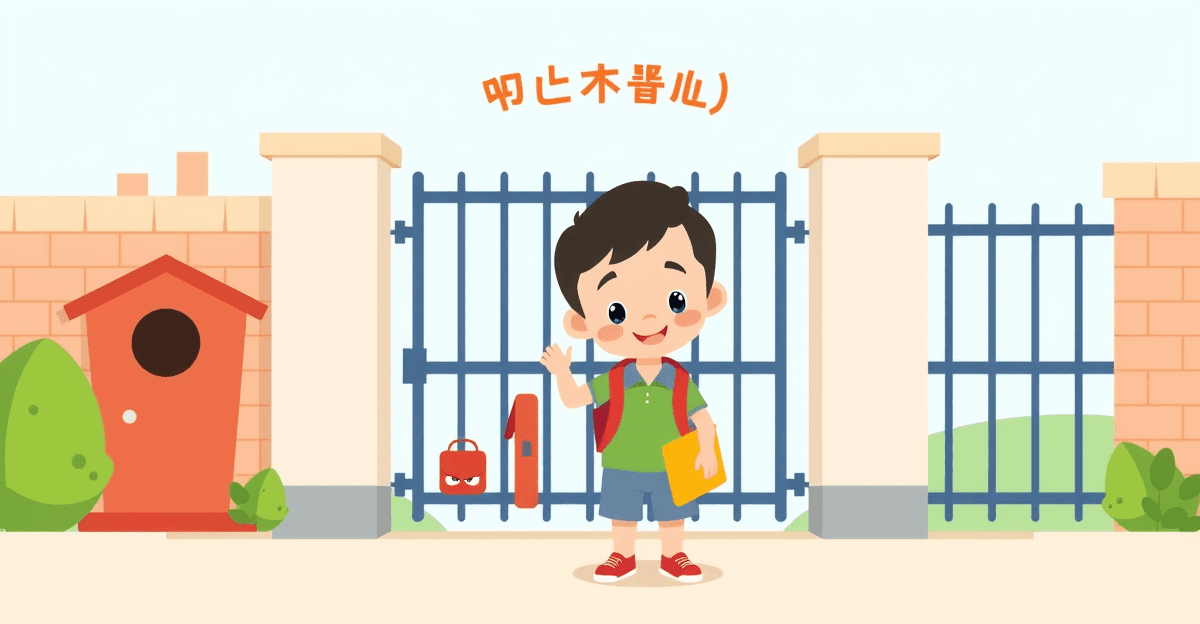
When my daughter was in K2, I went looking for a P1 readiness checklist. I found a few, but they were either way too vague ("develop a love of learning" — okay, how?) or ridiculously ambitious ("read simple chapter books" — she was five). I wanted something specific. Something I could actually use to figure out where the gaps were and what to focus on in the months we had left.
TL;DR: Complete P1 readiness checklist for Singapore children entering Primary 1 in 2027. Covers reading, writing, math, social skills, and independence — with actionable tips to close any gaps.
So this is that checklist. Thirty concrete skills, based on the MOE NEL framework, conversations with P1 teachers, and our own family's experience. Use it as a diagnostic — tick off what your kid can already do and spend the remaining K2 months working on the gaps.
If your child is entering P1 in January 2027, you've got the whole K2 year. That's plenty of time.
Reading and Language (Skills 1-8)
These are the skills that give your child the smoothest start. Kids who walk into P1 with some phonics knowledge and basic reading confidence adjust faster and feel less overwhelmed. But "basic" is the key word — nobody expects fluent reading on day one. For a step-by-step approach to building these, see our guide to teaching your child to read at home.
1. Recognise all 26 uppercase and lowercase letters
Show any letter, and your child should name it or say its sound without long hesitation. If there are letters they still mix up — b/d and p/q are the classic ones — target those specifically. We stuck the tricky letters on the bathroom mirror so she'd see them every morning.
2. Know the sound each letter makes
Letter sounds, not letter names. M says /m/, not "em." S says /sss/, not "ess." This is the foundation of reading. My daughter knew her alphabet song perfectly but couldn't read because she'd learned "bee" not /b/. We had to basically start over with sounds. Learn from my mistake.
3. Blend CVC words
Sound out and read three-letter words: c-a-t, d-o-g, s-u-n. This is the core phonics skill. If your child can do this, they can learn to read anything. We practised this for about five minutes every night — just grabbing random CVC words and sounding them out together.
4. Recognise 30-50 sight words
High-frequency words like "the," "is," "and," "was," "said" — the ones that pop up in every sentence. These are best memorised by sight because many of them don't follow neat phonics rules. We had a sight word wall in the living room. Every new word mastered got added. She was so proud of that wall. See our complete K1-K2 sight word list for the specific words.
5. Read simple sentences
"The cat sat on the mat." "I can see a big dog." We're talking five to seven words, mostly sight words and CVC words. Your child doesn't need chapter books. Being able to read a simple sentence independently is the target.
6. Understand what they read
Reading without understanding is just word-calling. After your child reads a sentence, can they answer "What did the cat do?" We made a habit of asking a quick question after every page — even simple ones. It taught my daughter that reading is about meaning, not just getting through the words.
7. Listen to a story and retell the main events
Read a short picture book, then ask your child to tell you what happened. "First the boy found a dog. Then the dog ran away. Then..." This builds narrative comprehension and sequencing — skills that matter hugely in P1 English.
8. Speak in complete sentences
"I want water" not just "Water." "The boy is running because the dog is chasing him" not just "Boy running." If your child's speech seems behind for their age, our guide on speech and language milestones can help you figure out if it's within the normal range.
Writing and Motor Skills (Skills 9-14)
P1 involves writing from the first week. Not paragraphs — but copying letters, writing their name, and tracing sentences from the whiteboard. Kids with decent pencil grip and basic letter formation find this manageable. Kids who are still using a fist grip find it exhausting and frustrating.
9. Write their own name clearly
First name, capital first letter, lowercase for the rest. Legible enough that someone else can read it. This was actually the first "writing" skill we worked on. Your name is motivating in a way that random letters aren't.
10. Write all 26 uppercase letters from memory
Not tracing — writing on a blank line from memory. Formation doesn't need to be perfect. Every letter should be recognisable. We practised a few letters each week in no particular order, starting with the ones in her name.
11. Write all 26 lowercase letters from memory
Lowercase is harder because so many look similar — b, d, p, q are the nightmare squad. My daughter confused b and d until halfway through K2. We used the "bed" trick: make fists with thumbs up, left hand is "b," right hand is "d," together they spell "bed." It actually worked.
12. Hold a pencil with a tripod grip
Three fingers — thumb, index, middle — holding the pencil near the tip. If your child still uses a fist grip at K2, work on it gently but consistently. Our guide on fine motor skills and handwriting readiness has specific exercises. The occupational therapist at our polyclinic recommended playdough squeezing and threading small beads — simple stuff that builds the right muscles.
13. Write on lined paper
Letters sit on the baseline and stay within the lines. This spatial awareness takes practice. We bought a cheap exercise book from Popular and did 5 minutes of writing practice a few times a week. Not daily — she'd revolt if it was daily.
14. Copy a short sentence from a board
P1 teachers write on the whiteboard, and children copy into their exercise books. This means: look up, read a few words, remember them, look down, write them. It's surprisingly complex. We practised by writing a short sentence on a piece of paper, propping it up across the table, and having her copy it into a notebook. Instant "whiteboard."
Numeracy (Skills 15-22)
The P1 maths curriculum moves fast once it starts. Kids who arrive with solid number sense — not memorised sums, but genuine understanding of what numbers mean — have a real advantage.
15. Count to 30 and beyond
Forward counting to at least 30, touching each object as they count (one-to-one correspondence). Many K2 kids can count to 100. We counted everything. Steps, grapes, Shopee parcels arriving at the door.
16. Count backwards from 10
10, 9, 8, 7... Harder than it sounds. Important for subtraction readiness. We turned it into a rocket launch game. "Ten, nine, eight... BLAST OFF!" Worked like a charm.
17. Recognise and write numerals 0-20
Show any number from 0-20 and your child should name it immediately. They should also write numbers from dictation. We practised this alongside letter writing — a few numbers mixed in with a few letters.
18. Compare quantities
"Which group has more?" "Are there enough plates for everyone?" Understanding more, less, equal. Real-life practice: "There are four of us and three apples. Do we have enough?"
19. Simple addition with objects
"You have 3 toy cars and I give you 2 more. How many altogether?" Using real objects, not written sums. Combine snacks at the table, count toys during clean-up. Keep it hands-on. Our kindergarten math games guide has more activity ideas.
20. Simple subtraction with objects
"You have 5 biscuits and you eat 2. How many left?" Again — concrete, physical, real. No written symbols yet. P1 teachers will introduce the + and = signs. Your job is the conceptual understanding.
21. Recognise basic 2D and 3D shapes
Circle, square, triangle, rectangle. Sphere, cube, cylinder, cone. My daughter learned these mostly from pointing at things in the neighbourhood. "The wheel is a circle. The tissue box is a... what shape?" "RECTANGLE!"
22. Understand simple patterns
Red, blue, red, blue, red... what comes next? Circle, square, circle, square... what comes next? Pattern recognition is foundational for maths thinking. We used coloured blocks, fruit arrangements at the table, and even songs ("head, shoulders, knees and toes" is a pattern).
Social and Emotional Skills (Skills 23-27)
Ask any P1 teacher what matters most and they'll say this section, not the reading or maths. Every single one we spoke to said the same thing.
23. Follow multi-step instructions
"Take out your English book, open to page 12, and write your name at the top." Three steps, in sequence, without being reminded of each one. Practise at home with everyday tasks. Start with two steps, then work up to three.
24. Sit and focus for 30 minutes
P1 lessons are about 30 minutes. Your child needs to stay seated, pay attention, and resist chatting to the kid next to them. This was actually one of our harder ones — my daughter is naturally fidgety. We built up gradually from 10-minute reading sessions to longer ones over the K2 year.
25. Take turns and share
Group work, queuing at the canteen, sharing erasers. Happens dozens of times daily. Board games at home are brilliant practice for turn-taking and losing gracefully. We played Snakes and Ladders, Uno, and even simple card games — all teach patience and fairness.
26. Ask for help when stuck
"Teacher, I don't understand" might be the most important sentence your child learns before P1. Kids who sit silently when confused fall behind quickly. We role-played this at home: "Pretend I'm your teacher and you don't know what to do. What do you say?" It felt silly, but it gave her the words.
27. Handle minor conflicts without adult intervention
"You took my eraser." These tiny dramas happen constantly in P1. Your child should be able to use words, not hands, and sort out simple disputes. Our guide on social-emotional learning covers this well.
Independence and Life Skills (Skills 28-30)
P1 is often the first time kids handle daily tasks without an adult hovering.
28. Pack and unpack their school bag
Know what goes in the bag each day, find the right book for each lesson, keep the bag somewhat organised. We made a laminated daily checklist and stuck it on the fridge. She packed her bag every night, checking items off. By P1, it was automatic.
29. Buy food at the canteen
This is the one that surprises parents. Your child needs to queue, choose food, pay with coins, carry a tray, eat within the time limit, and find their way back to class. We practised at hawker centres — gave her a few dollars and let her order and pay herself. Terrifying the first time, completely normal by the fifth.
30. Use the toilet independently
Everything: wiping, flushing, washing hands, managing zips and buttons. No teacher help available. Practise at home until this is totally automatic.
Closing the Gaps: A Realistic K2 Game Plan
If your child has gaps in this checklist, don't panic. The K2 year is long enough to address most of them with consistent daily practice.
January to March: Focus hard on phonics and letter sounds. If your child doesn't know all their letter sounds, this is the single biggest gap to close first. Ten minutes a day with QuizKin's phonics quizzes or flashcards makes a real difference.
April to June: Layer in sight words and simple reading. Keep phonics going and add sight word recognition and CVC word blending.
July to September: Shift attention to writing and numeracy. Letter and number writing on lined paper. Counting games and hands-on maths activities every day. Our math games guide has practical ideas.
October to December: Independence and social skills become the priority. Let your child pack their own bag, handle money, manage meals with minimal help. Arrange playdates. Practise the morning routine.
Adjusting to the P1 Routine
The daily structure in primary school is completely different from kindergarten. Start adjusting 2-3 months before P1 begins.
Sleep
P1 typically starts at 7:30am. That means waking up by 6:00-6:30am. Work backwards: a 6-year-old needs about 10 hours of sleep, so bedtime should be 8:00-8:30pm. If your child currently sleeps at 9:30pm, shift gradually — 15 minutes earlier each week.
Morning Routine
Build a routine your child can do with minimal supervision:
- Wake up, use the toilet
- Get dressed (uniform laid out the night before)
- Eat breakfast
- Check the bag checklist
- Shoes on, out the door
Practise this during the December holidays. Run it as a dress rehearsal several mornings in a row. By the time school starts, it should feel routine.
Recess
Recess is often the most stressful part of P1 for kids. Crowded canteen, choosing food, handling money, finding a seat, eating fast enough, finding their way back. We did two things that helped massively: took her to order food at hawker centres a bunch of times in the months before P1, and sent a packed lunch for the first two weeks to reduce the overwhelm.
What You Can Skip
P1 syllabus pre-teaching. Some parents enrol their kid in classes that cover the entire P1 first term before school even starts. I've talked to teachers who actively dislike this — the kids arrive already knowing the material, get bored, zone out, and develop bad listening habits. Bad trade-off.
Perfect handwriting. Neat and legible is the goal. Not beautiful. P1 teachers expect work-in-progress.
Fluent reading. P1 English starts with simple sentences. Fluency develops throughout P1 and P2.
Worrying about a slow start. The first 2-4 weeks are rocky for almost everyone. Tearful mornings, "I don't want to go," tiredness, lower test scores than expected. Almost always temporary.
P1 Supplies: The Quick List
School bag: Ergonomic, padded straps, not too big. Your child should be able to pack and unpack it alone.
Stationery: 2B pencils (standard for P1 in Singapore), eraser, 15cm ruler, sharpener with a container, colour pencils (12 is enough), glue stick, child-safe scissors, a pencil case they can open easily.
Lunch: A lunchbox your child can open independently (test this!), a water bottle with a no-spill cap, a small napkin.
The Bottom Line
P1 readiness isn't about being the smartest kid in the class. It's about having a broad enough foundation that your child can handle the pace and expectations of formal school without feeling completely overwhelmed.
Use this checklist as a diagnostic, not a source of anxiety. Every child develops at their own pace. The K2 year is long enough to close most gaps with consistent, daily practice. Start with the fundamentals — phonics, number sense, and independence — and build from there.
For the broader P1 preparation picture — including registration timelines, the Learning Support Programme, and emotional readiness — there's plenty more to explore. If you're earlier in the journey, our K1-K2 readiness checklist covers the foundational skills that lead up to this.
Sources
- MOE — Primary 1 Registration
- MOE — Primary School Education
- ECDA — Early Childhood Development Agency
Looking for more? Check out find a tutor for free on TuitionLah.
Exploring parenthood in Singapore? Visit ParentLah for practical tips on raising kids in Singapore.
Practise what you’ve read with QuizKin
Adaptive quizzes covering phonics, sight words, numbers, and more — aligned with the Singapore MOE curriculum. Start your free Premium trial today.
Frequently Asked Questions
A P1-ready child should recognise all 26 letters and their sounds, read simple 3-4 letter words, count to at least 30, write their own name, follow multi-step instructions, sit still for 30 minutes, manage their own belongings, and use the toilet independently. Social skills like taking turns, asking for help, and resolving minor conflicts are equally important.
Not necessarily. Singapore primary schools teach reading from scratch in P1. However, children who enter P1 with strong phonics skills and some sight word knowledge adjust faster and feel more confident. If your child knows letter sounds and can blend simple CVC words (cat, dog, sun), they have a solid head start.
Read aloud daily for 15-20 minutes, practise letter sounds and sight words using an app like QuizKin, play counting and math games at home, visit the school before the first day, and gradually build independence skills (packing bag, buying food, using the toilet alone). Consistency matters more than intensity — 15 minutes of daily practice is better than weekend cramming.
Start building foundational skills from K1 (age 4-5) and intensify practice in the K2 year. The 6 months before P1 entry (July to December of K2) are the most impactful for targeted preparation. Focus on phonics and reading first, then numeracy, then independence and social skills.
Most educators say the biggest adjustment is not academic but social and behavioural. Primary school classes are larger (30-40 children vs 15-25 in kindergarten), the day is longer, recess is unstructured, and children must be more independent. Building self-help skills and social confidence is at least as important as academic preparation.
Fluent reading is not expected at P1 entry. Your child should be able to read simple sentences and recognise common sight words, but the P1 English curriculum assumes children are still developing their reading skills. What matters more is that your child has phonics skills (can sound out unfamiliar words) and enjoys books.
Ready to make learning fun?
QuizKin turns screen time into learning time with adaptive quizzes built for K1-K2 kids in Singapore. Free to start.
Related Articles
Before Primary 1: What Learning Tools Actually Work in the K2 Bridge Year (2026)
KooBits, Practicle and Geniebook all start at P1 — so what should your K2 child use in the year before Primary 1? An honest guide to the K2-to-P1 bridge year for Singapore parents.
Free K2 Assessment Test: Is Your Child Ready for Primary 1? (Singapore 2026)
Take a free P1 readiness assessment for your K2 child. Covers sight words, phonics, number bonds, and Chinese — the skills Singapore Primary 1 expects from Day 1.
Primary 1 Orientation Singapore: What to Expect and How to Prepare
Primary 1 orientation Singapore guide for parents of K1-K2 kids: what happens on the day, timeline, and simple ways to prepare your child for P1.