Enrichment Classes vs Home Learning for Preschoolers: What Singapore Parents Should Know
Enrichment classes vs home learning for preschoolers in Singapore — what actually works for K1-K2 kids? A practical, balanced guide for busy Singapore parents.
QuizKin Team
Published 8 June 2026
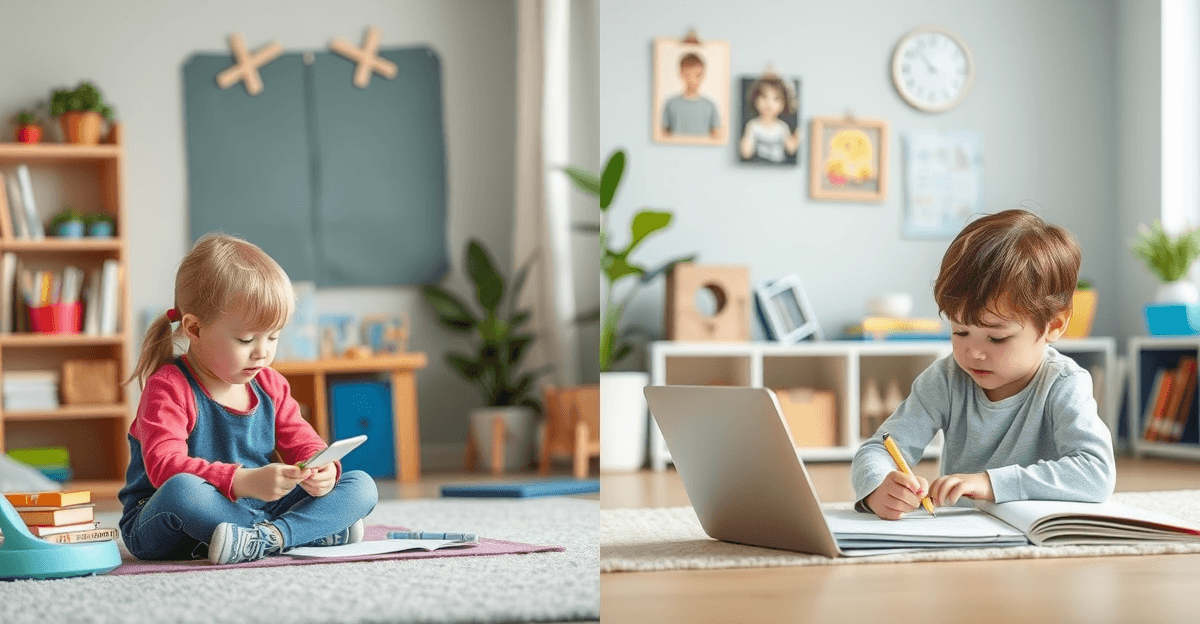
You're at a birthday party, coffee in hand, and another parent mentions their four-year-old attends phonics on Tuesday, abacus on Saturday, and art enrichment every other week. You smile and nod, but inside you're thinking: Should I be doing more? Are we falling behind?
I've had this exact moment. Multiple times. And I've come to realise that the enrichment classes vs home learning question is one of the most loaded conversations among Singapore parents — right up there with "which primary school are you balloting for?"
Here's what I've learned after going through the K1-K2 years: there's no single right answer, but there's definitely a more informed way to think about it.
TL;DR
- Singapore parents spend an estimated $500-$800+ per month on preschool enrichment; costs can be cut significantly with intentional home learning.
- Research shows play-based and exploratory learning is as effective as structured instruction for building foundational skills in 4-6 year olds.
- The best approach for most K1-K2 families is a hybrid model: targeted enrichment where your child needs it, supplemented by consistent home practice.
- Consistency beats intensity — 15 minutes daily at home outperforms one long weekly class session.
The Pressure Is Real (But So Is the Data)
Singapore parents face a uniquely intense version of this decision. Our high-achieving education culture, competitive P1 registration process, and wall-to-wall enrichment centres create pressure to start early and stack up every advantage. More than 60% of Singapore preschoolers attend at least one enrichment class, and many attend two or three.
But here's what the data actually says: the most important variable in your child's early learning isn't where it happens — it's whether it's engaging, age-appropriate, and consistent. Home learning, done well, can match or beat enrichment classes for K1-K2 children building foundational skills.
What Enrichment Classes Actually Give You
At the K1-K2 level, common enrichment options include:
- Phonics and literacy — often aligned with MOE's English curriculum
- Abacus or mental maths — building numeracy fluency
- Speech and drama — confidence and communication
- Art and craft — supporting fine motor development alongside creativity
- Chinese enrichment — popular with families aiming for Higher Chinese in primary school
Providers range from chains like Kumon, Julia Gabriel, and I Can Read, to smaller boutique centres run by former MOE teachers.
What they do well:
- Structured, curriculum-aligned content from trained instructors
- Consistent peer-learning environment
- Routine and a sense of achievement outside the home
- Can address specific gaps (e.g., a child who needs more phonics than their preschool provides)
What they don't guarantee:
- That your child will actually enjoy it (I've pulled my kid out of a class she clearly dreaded)
- Skills transferring to real-world situations
- Better P1 outcomes than children who learned primarily at home
If you're considering tutoring support, TuitionLah lets you find a tutor with no agency fees — making one-on-one academic help more accessible.
Why Home Learning Gets Unfairly Dismissed
Home learning gets underestimated in Singapore, partly because you can't put it on a CV and partly because parents feel they're not "qualified" to teach. But for K1-K2 children, the bar for effective home learning is lower than you think.
Why home learning works:
- You control the pace — follow your child's energy and interest, not a class schedule
- Stronger bonding — shared learning time at this age is genuinely precious
- Immediate feedback — you notice when they're confused, bored, or ready to move on
- Way cheaper — books, apps, and free MOE-aligned resources cost a fraction of enrichment fees
- Less stress — fewer after-school activities means more time for free play, which ECDA identifies as essential for cognitive and social development
The biggest misconception is that home learning means worksheets. The most effective home learning for K1-K2 kids looks like: reading together before bed, counting mangoes at NTUC, building with blocks, or using adaptive quiz practice that tracks progress without pressure. Low-key, high-engagement stuff that builds genuine understanding.
What the Research Actually Shows
Harvard's Center on the Developing Child and the OECD's Starting Strong reports keep pointing to the same finding: for children aged 4-6, quality of interactions matters far more than type of instruction.
The key insights:
- Children learn best through play, exploration, and conversation with caring adults — not passive instruction
- Spaced repetition (short, frequent practice) beats massed practice (one long session) for retention — works the same at home or in class
- Early literacy is strongly predicted by how many words a child hears and reads at home — making daily shared reading one of the highest-ROI activities you can do. Our guide on reading milestones for ages 4-6 covers what to expect.
- Social learning — group activities, turn-taking, peer interaction — offers benefits that are harder to replicate at home, especially for only children
This doesn't mean enrichment is bad. It means the value is conditional: it works best when your child enjoys it, the content matches their readiness, and it's not crowding out free play and rest.
How to Actually Decide
Rather than treating this as either/or, most families do best with a hybrid approach. Here's my framework:
Start with your child, not the class catalogue. What does your child genuinely enjoy? What skills does their preschool not cover well? Where do you feel less confident teaching at home? Those gaps are where enrichment adds the most value.
One or two enrichment activities is plenty for K1-K2. Child development specialists generally advise against more than two structured after-school activities per week at this age. Over-scheduling increases cortisol, reduces sleep quality, and can actually slow learning. I learned this the hard way when my daughter started having meltdowns every Tuesday evening.
Fill gaps with structured home practice — but keep it short. Fifteen to twenty minutes of daily intentional practice (phonics, reading, simple maths) builds more durable skills than a once-a-week class. If your child dreads it, change the format.
Track progress. One genuine advantage of enrichment is external feedback — reports, assessments, teacher comments. You can replicate this at home with adaptive apps that show you exactly where your child is progressing and where they need more support, without making every session feel like a test.
Making Home Learning Sustainable
Many parents start strong and quietly drop home learning after two weeks because it feels like another job. Here's what makes it stick:
Attach learning to existing routines. Reading after bath time. Counting steps to the car. "What sound does this start with?" while unpacking groceries. These micro-moments add up enormously over months.
Use Singapore's bilingual environment. Use both English and Mandarin naturally throughout the day — label items, sing songs, watch quality content together. Your everyday environment is a classroom.
Know when to stop. If your child is tired, unwell, or just not feeling it, that's information — not failure. Forcing a learning session when they're dysregulated teaches them to associate learning with stress. We've all been there.
Build towards P1, not ahead of it. The goal isn't teaching P1 content early — it's building foundational skills and positive learning habits that make P1 manageable. Our P1 readiness checklist covers exactly what those skills look like.
Getting the Balance Right
The enrichment industry will always offer more than any family can realistically take on. That's supply and marketing, not a reflection of what your child needs. The parents who seem most confident about their child's P1 readiness aren't always those who enrolled in the most classes. They're often those who stayed consistent, stayed attuned to their child, and didn't confuse being busy with making progress.
If you're navigating enrichment costs, WhyNotDeals regularly features promotions on kids' education programmes and trial classes — useful for trying before committing to a full term.
Whether you lean towards enrichment, home learning, or a mix, the most powerful thing you can do for your K1-K2 child is this: make learning feel safe, enjoyable, and successful every day. That foundation — more than any specific class or curriculum — carries them through primary school and beyond.
Sources
- Early Childhood Development Agency (ECDA) — Child Development Resources
- Ministry of Education Singapore — Preschool Education
- Harvard Center on the Developing Child — Science of Early Childhood Development
- OECD Starting Strong — Early Childhood Education and Care
- CNA — Singapore parents and enrichment spending
Practise what you’ve read with QuizKin
Adaptive quizzes covering phonics, sight words, numbers, and more — aligned with the Singapore MOE curriculum. Start your free Premium trial today.
Frequently Asked Questions
Enrichment class fees in Singapore vary widely depending on the subject and provider. Group classes typically cost between $150 and $400 per month per subject, while one-to-one tutoring runs $60–$120 per hour. Over a full year, two enrichment subjects can add up to $4,000–$8,000 or more. It's worth comparing this against structured home learning tools, which can deliver measurable results at a fraction of the cost.
Most enrichment centres in Singapore accept children from age 3–4, with some offering music and movement classes from 18 months. For K1 and K2 children (ages 5–6), many parents focus on literacy, numeracy, and creative enrichment to build school readiness ahead of Primary 1. That said, child development research consistently shows that play-based learning remains most effective at this age — so quality matters more than quantity of classes.
For many K1-K2 children, structured home learning can be just as effective as enrichment classes, particularly for literacy, numeracy, and general knowledge. The key ingredients are consistency and engagement: short daily sessions of 15–20 minutes tend to outperform long weekend cram sessions. Using adaptive learning tools, phonics games, and regular reading practice can make home learning both measurable and enjoyable — without the cost and commute of enrichment centres.
Ready to make learning fun?
QuizKin turns screen time into learning time with adaptive quizzes built for K1-K2 kids in Singapore. Free to start.
Related Articles
Sparkletots vs My First Skool 2026: Fees & Verdict
Sparkletots or My First Skool? 2026 fees compared (both ~S$770-800/mo before subsidies), plus curriculum, locations, quality — and which suits your child.
K2 in Singapore: Age, Curriculum & What Kids Learn
What age is K2 and what do children learn? The MOE-aligned K2 curriculum, key milestones, and how to get your child ready for Primary 1 — a parent's guide.
What Do K1 Children Learn in Singapore?
Wondering what K1 children learn in Singapore? A parent's guide to the MOE-aligned kindergarten curriculum, key skills, and how to support your 4-6 year old.