Gamification: Why Game-Based Learning Works for Preschoolers
Discover why game-based learning works for K1-K2 kids in Singapore. Science-backed tips to make learning fun, measurable, and stress-free for your child.
Mervin Tan · Founder, QuizKin
Published 29 June 2026
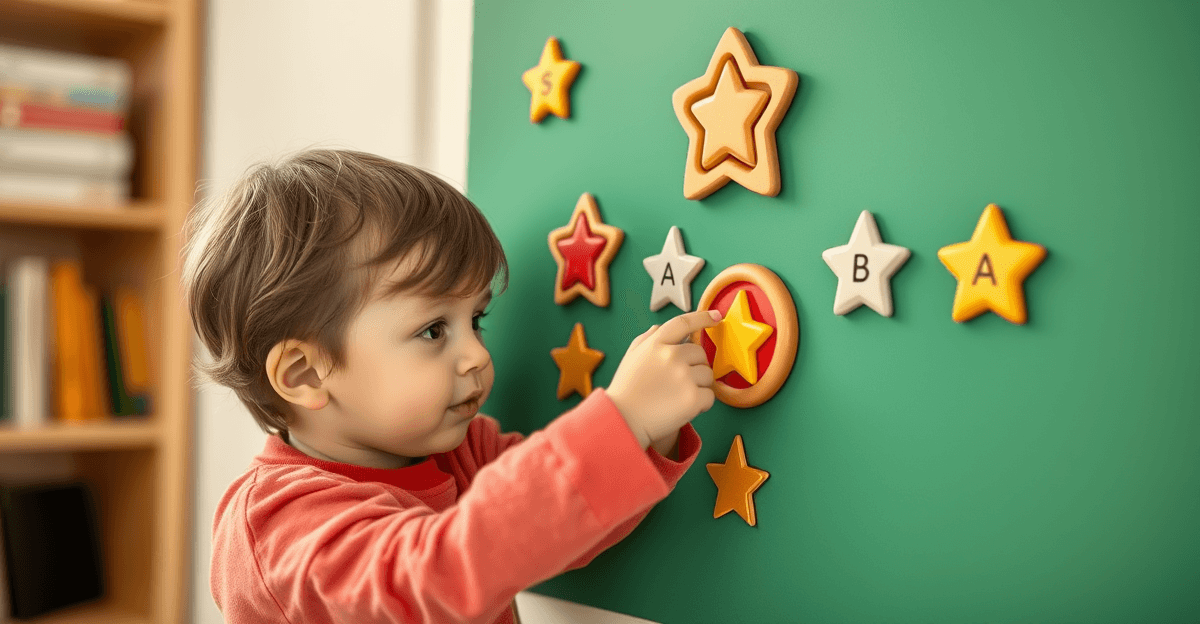
Picture this: it's 7pm on a weeknight in your HDB flat, you've just cleared dinner, and you'd love your K1 child to practise her numbers before bed. You pull out the worksheet — and within two minutes there are tears, a thrown pencil, and a very firm "I don't want to!" Sound familiar? Now imagine the same child happily counting dinosaurs to "unlock" the next level of a game, asking for "one more round" instead of running away. That's the quiet power of game-based learning, and for preschoolers it isn't a gimmick — it's how their brains are wired to learn best.
In this guide, we'll unpack why gamification works so well for 4-to-6-year-olds, what the research actually says, and how Singapore parents can use it without falling into the screen-time trap.
TL;DR — Key Takeaways
- Game-based learning turns abstract skills (numbers, letters, sight words) into playful challenges with instant feedback, which matches how preschoolers naturally learn.
- Children retain more and stay engaged longer when learning feels like play — research consistently shows that gamified early-learning settings produce meaningful gains in engagement and persistence compared with traditional drilling.
- It works because play triggers dopamine, lowers anxiety, and gives kids a sense of progress and control.
- The key is purposeful games tied to real learning goals (like the MOE Nurturing Early Learners framework) — not random tablet entertainment.
- Balance is everything: keep sessions short, supervised, and within Singapore's recommended one-hour daily screen limit.
What Is Game-Based Learning, and Why Does It Work for Preschoolers?
Game-based learning is the use of game elements — points, levels, rewards, instant feedback, and friendly challenges — to teach real skills. For preschoolers, it works because young children learn primarily through play, not instruction: their brains are built to explore, repeat, and respond to immediate feedback rather than sit still for a lesson.
This isn't a new or fringe idea. Decades of early-childhood research, from Lev Vygotsky to today's neuroscientists, point to the same conclusion: play is the natural language of learning for young children. When your little one stacks blocks, sorts shapes, or races to match a picture to a word, she is doing serious cognitive work — she just doesn't experience it as work.
Here's the definitive point Singapore parents should hold onto: a child between the ages of 4 and 6 can sustain focused attention for roughly two to five minutes per year of age — so about 8 to 15 minutes for a typical K1 or K2 child. Game-based learning fits neatly inside that window because it delivers small wins quickly, keeping motivation high before fatigue sets in.
The brain science, in plain language
When your child succeeds at a small challenge — counting the right number of stars, tapping the matching letter — her brain releases a little hit of dopamine, the "feel-good" chemical linked to motivation and memory. That tiny reward makes her want to try again. Over many repetitions, the skill moves from effortful to automatic. Worksheets can build the same skill, but they rarely trigger that motivation loop, which is why so many end in frustration.
Singapore's own Ministry of Education recognises this. The Nurturing Early Learners (NEL) framework, which guides kindergarten curricula across PCF Sparkletots, My First Skool, and PAP Community Foundation centres, explicitly champions "learning through purposeful play" as a core principle for K1 and K2. Game-based learning is simply that principle, brought into a structured, often digital, format.
How Game-Based Learning Boosts Engagement and Results
Game-based learning improves outcomes by raising engagement, lowering anxiety, and giving children a visible sense of progress. Research on gamified early-learning programmes consistently finds meaningful gains in engagement and persistence compared with traditional drilling, and children in playful learning environments show stronger motivation to keep trying after they make a mistake.
Let's break down the three mechanisms that make it stick.
1. Instant feedback keeps the motivation loop alive
A worksheet might be marked an hour later — long after your child has forgotten the question. A good learning game responds immediately: a cheerful sound for a correct answer, a gentle nudge to try again for a wrong one. This instant feedback is one of the single most powerful drivers of early learning, because it closes the gap between effort and result while your child's attention is still on the task.
2. Small wins build confidence (and reduce anxiety)
Preschoolers thrive on a sense of "I can do it." Levels, badges, and progress bars break a big goal ("learn your numbers to 20") into bite-sized wins your child can actually feel. This matters enormously for confidence — and it's closely tied to reducing pressure around assessments. If your child gets anxious around tests or evaluations, you may find our guide on reducing test anxiety in preschoolers a helpful companion, because the same low-stakes, playful approach calms nervous learners.
3. Adaptivity meets your child where she is
The best game-based tools adapt: they get a little easier when your child struggles and a little harder when she breezes through. This keeps her in the "just right" zone — challenged enough to stay interested, but never so stretched that she gives up. This is exactly the philosophy behind QuizKin's adaptive quiz practice that makes learning fun and measurable for K1-K2 kids: instead of a one-size-fits-all worksheet, the difficulty shifts with your child, and you get a clear picture of what she's mastered and where she needs a little more practice.
That measurability is the part parents often overlook. Play that's fun and trackable means you're not guessing — you can see, for example, that your child recognises 18 of 20 target sight words, and focus the next few sessions on the two she keeps missing.
What Skills Can Preschoolers Build Through Game-Based Learning?
Game-based learning is well suited to almost every foundational K1-K2 skill: early literacy, numeracy, shape and colour recognition, memory, and even fine motor control. The format simply repackages these skills as challenges children want to repeat — and repetition is exactly what early skill-building requires.
Here are the areas where playful, gamified practice tends to shine:
- Early numeracy — counting, number recognition, simple addition, and patterns. For a sense of what's expected by K2, see our overview of the K2 maths assessment in Singapore.
- Sight words and early reading — matching games and timed challenges help words become automatic. Our list of sight words every K1-K2 child should know pairs perfectly with gamified drilling.
- Letter and sound recognition — phonics games turn an abstract skill into a treasure hunt.
- Memory and attention — matching-pair games strengthen working memory, a key predictor of later school success.
- Fine motor skills — tracing and tapping games complement hands-on practice; combine them with the hands-on ideas in our fine motor skills activities for K1 kids for the best of both worlds.
All of these feed directly into school readiness. If you're mapping out the bigger picture, our Primary 1 readiness skills checklist shows how these foundations connect to the transition into formal schooling — and yes, the habits of focus and persistence built now pay dividends all the way to PSLE years later.
Game-Based Learning Without the Screen-Time Guilt
You can enjoy the benefits of game-based learning while keeping screen time healthy — the trick is supervision, short sessions, and balance. Singapore's Health Promotion Board recommends no more than one hour of quality screen time per day for children aged 2 to 6, and that limit is easy to honour when learning games are intentional rather than a digital babysitter.
A few practical guardrails:
- Sit with your child. Co-playing turns screen time into shared time and lets you celebrate wins together. This also models the social warmth that supports social skills development in preschoolers.
- Keep it short. Two 10-minute sessions beat one 40-minute marathon for both attention and eyesight.
- Mix digital and physical. Pair a counting app with real-world counting — buttons, stairs to the lift, oranges at the wet market.
- Choose purpose over flash. Not all apps are equal. Our roundup of the best educational apps for 4-year-olds in Singapore can help you separate genuine learning tools from glorified entertainment.
For a deeper framework on setting limits the whole family can live with, our screen time rules for preschoolers guide breaks it down by age and situation.
Definitive takeaway: Game-based learning is not about more screen time — it's about making whatever screen time you allow genuinely educational, supervised, and tied to real progress you can measure.
A Simple At-Home Game-Based Learning Routine
You don't need fancy equipment to start. Here's a balanced weekly rhythm many Singapore parents find realistic:
- Monday/Wednesday/Friday (digital, ~10 min): A short adaptive quiz session focused on one skill — say, numbers or sight words — so you can track progress over the week.
- Tuesday/Thursday (hands-on, ~15 min): Board games, flashcard matching, or a counting hunt around the house. No screen needed.
- Weekend (real-world play): Bring learning into daily life — count items at NTUC, spot letters on signboards along the way to the playground, sort laundry by colour.
The combination matters more than any single tool. Digital games give you measurement and adaptivity; physical play builds fine motor skills, social interaction, and creativity. Together they cover what a preschooler needs.
If you're also weighing additional learning support — such as a tutor to reinforce foundations before Primary 1 — you can explore options at no cost through TuitionLah, which helps Singapore parents find a tutor for free with no agency fees. And if you're keeping an eye on the family budget, WhyNotDeals regularly lists education and enrichment promotions worth a look.
The Bottom Line for Singapore Parents
Game-based learning works for preschoolers because it speaks their native language: play. It harnesses how a 4-to-6-year-old's brain is naturally wired — through curiosity, instant feedback, small wins, and the joy of "one more try." Used thoughtfully and in moderation, it transforms the nightly battle over worksheets into something your child actually looks forward to, while giving you a clear, measurable window into what she's learning.
Start small, stay involved, keep it joyful — and let the games do what they do best: make learning something your little one wants to come back to.
Sources
- MOE — Nurturing Early Learners (NEL) Framework for Kindergartens
- HealthHub (Health Promotion Board) — Screen Time Guidelines for Young Children
- Ministry of Education Singapore — Preschool Education Overview
- Early Childhood Development Agency (ECDA) Singapore
- PAP Community Foundation (PCF Sparkletots) — Early Childhood Programmes
Practise what you’ve read with QuizKin
Adaptive quizzes covering phonics, sight words, numbers, and more — aligned with the Singapore MOE curriculum. Start your free Premium trial today.
Frequently Asked Questions
Children as young as 3 can benefit from game-based learning, but the sweet spot in Singapore is K1 and K2 (ages 4-6). At this stage, your little one is developing the focus, language, and fine motor skills needed to enjoy structured play. Keep sessions short — 10 to 15 minutes — and always follow your child's lead. The goal is curiosity, not completion.
No. Game-based learning uses game mechanics — points, levels, instant feedback, and challenges — that are deliberately tied to a learning goal, such as recognising sight words or counting to 20. A random tablet game entertains; a well-designed learning game teaches and measures progress. Look for tools aligned with the MOE Nurturing Early Learners framework and that show you what your child has actually mastered.
Set a clear daily limit — Singapore's Health Promotion Board recommends no more than one hour of quality screen time a day for children aged 2-6. Use a timer, sit with your child during sessions, and balance digital games with hands-on play like board games, flashcards, and counting with real objects. Quality and supervision matter far more than total minutes.
About the author
Mervin Tan
Founder, QuizKin
Mervin Tan is the founder of QuizKin and a software engineer and dad of two young children in Singapore. He builds QuizKin's adaptive quiz engine and writes practical K1-K2 learning guides grounded in MOE's Nurturing Early Learners framework and his own experience preparing his kids for Primary 1. QuizKin is built by Adaptels Pte. Ltd., Singapore.
Ready to make learning fun?
QuizKin turns screen time into learning time with adaptive quizzes built for K1-K2 kids in Singapore. Free to start.
Related Articles

Structured vs Unstructured Play: Finding the Balance
Structured vs unstructured play for K1-K2 kids in Singapore: how to balance both for learning, confidence, and Primary 1 readiness. A practical parent guide.

Learning Milestones for K1 Kids: What to Expect at Age 5
A warm, evidence-based guide to learning milestones for K1 kids in Singapore. What your 5-year-old should know in literacy, numeracy, social and motor skills.
Teaching Children to Learn From Mistakes
Help your K1-K2 child learn from mistakes with a growth mindset. Practical, evidence-based tips for Singapore parents of 4-6 year olds to build resilience.