Worksheets vs Interactive Learning: What Works Best?
Worksheets vs interactive learning for K1-K2 kids in Singapore: discover which method builds stronger skills, retention, and confidence — backed by research.
QuizKin Team
Published 23 June 2026
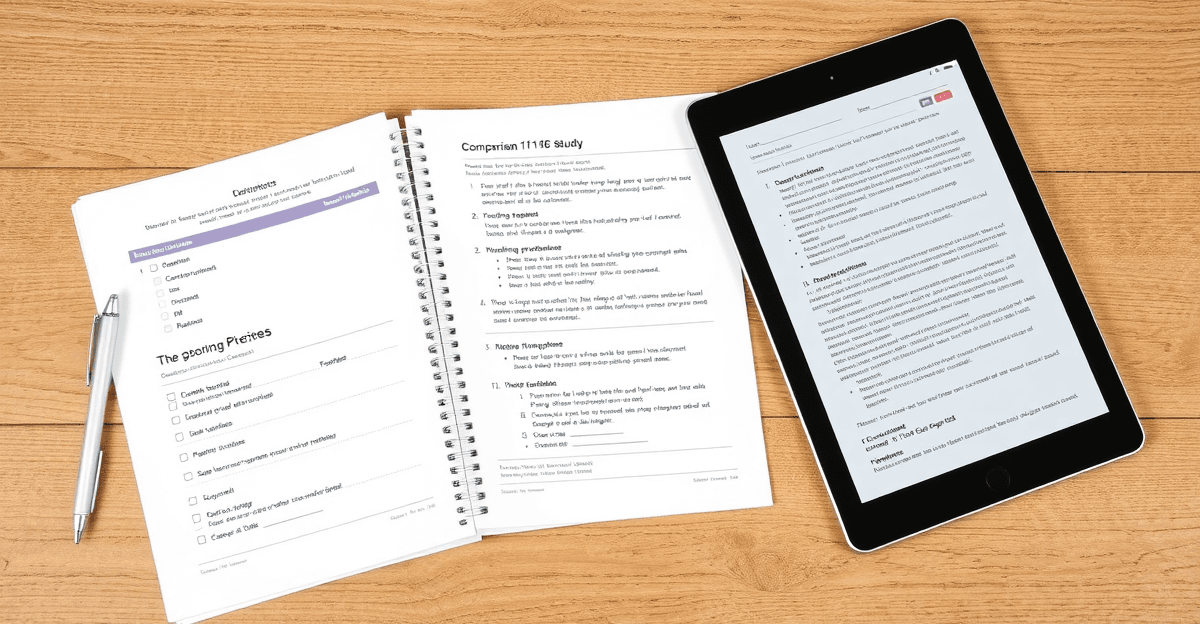
It's a familiar scene in Singapore homes: it's 7pm, dinner is done, and your little one is slumped over a stack of phonics worksheets while you gently (or not so gently) coax them to finish "just one more page." Meanwhile, a neighbour swears their K2 child learns everything from a tablet app and won't touch a pencil. If you've ever wondered whether worksheets or interactive learning works best for your child, you're asking exactly the right question — and the honest answer surprises most parents.
The debate over worksheets vs interactive learning isn't really about choosing a winner. For children aged 4 to 6, the science of early childhood development points to something more practical: each method does a different job, and your child benefits most when you use them together with intention. This guide breaks down what each approach actually builds, what the research says, and how Singapore parents can blend both without burning out their child — or themselves.
TL;DR — Key Takeaways
- Worksheets are excellent for fine motor skills, letter and number formation, and getting comfortable with the paper format your child will use in Primary 1.
- Interactive learning drives deeper understanding, problem-solving, and retention — studies show active methods improve learning outcomes by an average of around 6% compared with passive instruction, with many individual studies showing considerably larger gains.
- The winner is "both." A blended approach — short worksheet sessions plus playful, hands-on interactive practice — produces the strongest, most confident learners.
- Keep total structured learning to 15-30 minutes a day for K1-K2 kids. More than that risks burnout, not better results.
What's the difference between worksheets and interactive learning?
Worksheets are paper-based exercises where your child reads, writes, traces, colours, or circles answers on a fixed page. Interactive learning is any method where your child actively does, manipulates, explores, or responds and receives feedback — through games, hands-on materials, conversation, or adaptive apps. The core difference is direction of energy: worksheets ask your child to record what they know, while interactive learning asks them to figure things out.
In a typical Singapore preschool — whether it's a PAP Community Foundation (PCF) Sparkletots centre, My First Skool, or a private kindergarten — your child likely meets both every week. They might trace the number "8" on a worksheet in the morning and then count out eight buttons into a cup during a learning-corner activity. Both touch the same skill. But they engage the brain very differently.
Definitive point: Worksheets primarily strengthen output and recall, while interactive learning primarily strengthens understanding and transfer — the ability to apply a skill in a new situation. A child who can circle the right answer on a worksheet doesn't always understand why it's right, and that gap matters enormously by Primary 1.
A quick comparison
| Factor | Worksheets | Interactive Learning |
|---|---|---|
| Fine motor & handwriting | Strong | Weak to moderate |
| Conceptual understanding | Moderate | Strong |
| Retention over time | Lower (passive recall) | Higher (active recall) |
| Engagement for 4-6 year olds | Drops quickly | Stays high |
| Cost & convenience | Very low | Varies |
| Instant feedback | No | Yes |
| Primary 1 format familiarity | Strong | Weak |
Why interactive learning boosts retention and understanding
Interactive learning works because young children learn by doing, not by sitting still. When your child physically counts objects, sorts shapes, or answers a question and immediately sees whether they got it right, the brain forms stronger, more durable connections than it does during passive copying. This is why interactive learning consistently outperforms drill-based methods on tests of genuine understanding.
The evidence here is robust. A landmark analysis of 225 studies published in the Proceedings of the National Academy of Sciences found that students in active learning environments performed significantly better and were about 1.5 times less likely to fail than those taught through passive methods. While that research focused on older students, early childhood specialists report the same pattern in young children: hands-on, responsive learning sticks.
For a 4 to 6 year old, interactive learning also solves the biggest practical problem — attention. A K1 child's focused attention span is roughly 8 to 12 minutes. Ask them to sit through three worksheets and you'll lose them by page two. Turn the same content into a game where they tap, sort, or shout out answers, and they'll happily stay engaged. Engagement isn't a "nice to have" at this age; it's the precondition for any learning to happen at all.
This is exactly the gap that adaptive tools are designed to close. QuizKin offers adaptive quiz practice that makes learning fun and measurable for K1-K2 kids — questions adjust to your child's level so they're never bored or overwhelmed, and you get a clear picture of which skills are solid and which need more play. Used in short bursts alongside hands-on activities, it turns "practice" into something your little one actually asks to do.
If you're weighing digital interactive tools, it's worth reading our guide to the best educational apps for 4-year-olds in Singapore and our practical screen time rules for preschoolers so technology stays a help, not a crutch.
Where worksheets still genuinely matter
Worksheets are not the villain of this story. They remain one of the most effective tools for building fine motor control, correct letter and number formation, and pencil grip — physical skills that interactive screens simply cannot teach. For Primary 1 readiness in Singapore, where children still write on paper daily, this hands-on practice is essential.
Here's the snippet-ready truth: your child needs to write, and writing is a physical skill built through repetition. Tracing, copying, and forming letters on a worksheet strengthens the small muscles in the hand and trains the brain-hand coordination that handwriting demands. No app replicates the resistance of pencil on paper or the precise control of staying within the lines.
Worksheets also serve a quietly important purpose: format familiarity. In Singapore primary schools, assessments, spelling, and class work are paper-based. A child who has never sat with a worksheet can find the Primary 1 format jarring, even if they know the content. Gentle exposure to worksheets in K1 and K2 removes that shock. This connects directly to building hand strength — our article on fine motor skills activities for K1 kids shows playful ways to prepare little hands before the formal writing begins.
The key is dosage and design. A short, colourful, well-chosen worksheet that takes 5 to 10 minutes builds skill without dread. A thick photocopied stack of repetitive sums builds resentment. If your child cries at the sight of worksheets, the problem is usually the volume and the pressure — not the paper.
So which works best? The case for a blended approach
For K1-K2 children, the best method is not worksheets or interactive learning — it's both, used deliberately for what each does well. Use interactive learning to build understanding and keep your child engaged, and use worksheets to cement handwriting, formation, and paper-format confidence. This blended model consistently produces the most well-rounded, school-ready learners.
Think of it as a simple daily rhythm rather than a rigid timetable. Here's what a balanced week might look like for a K2 child:
- Understanding new concepts → interactive learning. Counting games, sorting real objects, adaptive quiz practice, reading aloud together.
- Practising handwriting & formation → worksheets. Short tracing and copying sessions, 5-10 minutes.
- Reviewing & checking progress → interactive learning. Quick quizzes that show you what's stuck and what's slipping, with instant feedback your child enjoys.
- Building confidence before assessments → a gentle mix of both, kept light and pressure-free.
This matters because how your child feels about learning at age 5 shapes how they approach school for years. Pushing too hard on worksheets can create early anxiety, which is why we wrote about reducing test anxiety in preschoolers. Keeping at least part of the learning playful and interactive protects your little one's love of learning — arguably the most valuable thing you can give them before Primary 1.
How much daily practice is right for a K1-K2 child?
Keep structured learning short: 15 to 30 minutes total per day is plenty for most 4 to 6 year olds, ideally split into two or three mini-sessions. Singapore's Ministry of Education emphasises play-based, holistic development in the early years for good reason — young children learn most through exploration, not extended desk time. Quality and consistency beat quantity every time.
If you're mapping out what skills to focus that time on, our Primary 1 readiness skills checklist and the sight words every K1-K2 child should know give you concrete, MOE-aligned targets — so your blended practice builds the right foundations rather than random busywork.
Making it work in real Singapore homes
The blended approach only works if it fits your actual life. You don't need an elaborate setup or expensive materials — you need a few good resources and a calm, consistent routine. Start small, watch what genuinely engages your child, and adjust.
Practical tips that work for busy local families:
- Anchor learning to a daily slot — after dinner or before bath. Predictability reduces resistance.
- Let your child choose the order. "Worksheet first or quiz first?" Small choices reduce power struggles.
- Follow the curriculum your child already knows. Match home practice to the maths and literacy your preschool covers — see what's expected in our guide to K2 maths assessment in Singapore.
- Stop while they still want more. Ending on a high keeps your little one coming back.
- Watch for free or affordable resources. You don't need to overspend — sites like WhyNotDeals often list education and family deals in Singapore, and many quality learning apps offer free tiers.
If your child needs more structured support — for example, with school readiness, an upcoming kindergarten interview, or a specific skill gap — a tutor can help without you carrying it all alone. You can find one for free, with no agency fees, through TuitionLah. For interview-specific preparation, our kindergarten interview guide walks through what Singapore schools actually look for.
The bottom line
In the worksheets vs interactive learning debate, the research and the reality both point the same way: neither method wins alone, and your child needs both. Interactive learning builds the understanding, retention, and joy that carry your little one forward; worksheets build the handwriting and format-readiness that Singapore primary school demands. Blend them in short, playful daily sessions, keep the pressure low, and let your child's engagement be your guide.
Your child doesn't need more hours at the table. They need the right mix — a little hands-on practice, a little interactive fun, and a lot of your encouragement. Get that balance right, and you're not just preparing them for Primary 1. You're teaching them that learning is something to look forward to.
References
- Active learning increases student performance — PNAS meta-analysis (Freeman et al.)
- MOE Nurturing Early Learners: Singapore's Kindergarten Curriculum Framework
- Health Promotion Board — Screen time and young children guidance
- MOE Primary 1 Registration and school readiness
- Early Childhood Development Agency (ECDA) — Singapore
Practise what you’ve read with QuizKin
Adaptive quizzes covering phonics, sight words, numbers, and more — aligned with the Singapore MOE curriculum. Start your free Premium trial today.
Frequently Asked Questions
No — worksheets are not bad, and they have a real place in your child's learning. They build fine motor control, letter formation, and pencil grip, which Singapore preschools like PCF Sparkletots and My First Skool still use daily. The issue is over-reliance: worksheets alone tend to test recall rather than build understanding. The healthiest approach blends short worksheet sessions with interactive learning, where your child explores, manipulates, and gets instant feedback.
For children aged 4-6, Singapore's Health Promotion Board recommends no more than one hour of quality screen time per day, ideally in short bursts. Interactive learning apps work best in 10-15 minute sessions, with you alongside your little one. Quality matters more than quantity — an adaptive, age-appropriate app used briefly beats long passive video watching. Always balance screen-based interactive learning with hands-on play and physical worksheets.
Research suggests a blended approach prepares children best. Worksheets help your child get comfortable with the paper-based format they'll meet in primary school, while interactive learning builds the deeper understanding and confidence that supports long-term success. Focus on foundational skills like number sense, phonics, and listening rather than drilling. A mix of both methods, kept playful and low-pressure, gives your child the strongest Primary 1 readiness.
Ready to make learning fun?
QuizKin turns screen time into learning time with adaptive quizzes built for K1-K2 kids in Singapore. Free to start.
Related Articles

Effective Parent-Teacher Communication in Singapore
A warm, practical guide to effective parent-teacher communication in Singapore for parents of K1-K2 kids. Build strong home-school partnerships that help your child thrive.
Gamification: Why Game-Based Learning Works for Preschoolers
Discover why game-based learning works for K1-K2 kids in Singapore. Science-backed tips to make learning fun, measurable, and stress-free for your child.
What Is Adaptive Learning and Why It Works
Discover what adaptive learning is and why it works for K1-K2 preschoolers in Singapore. Learn how personalised quizzes help your child build confidence before Primary 1.