How to Prepare Your Child for K2 Assessment in Singapore
Practical guide for Singapore parents on preparing K2 children for year-end assessments. Covers literacy, numeracy, social skills, and stress-free strategies.
Mervin Tan · Founder, QuizKin
Published 7 June 2026
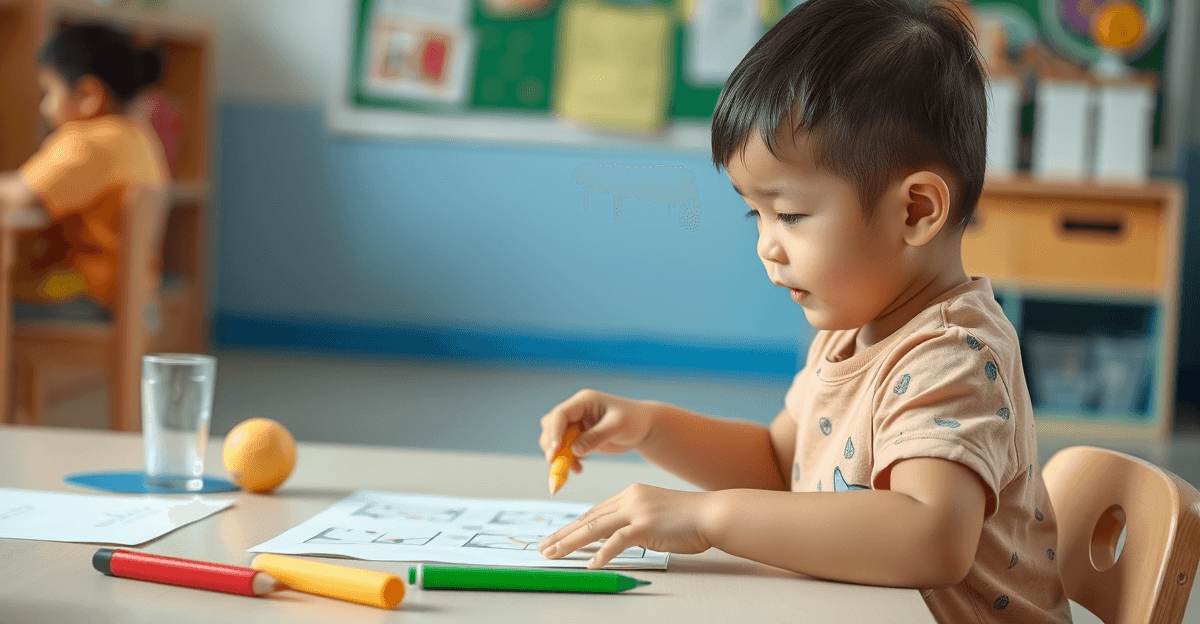
When my daughter was in K2, another parent forwarded a sample assessment worksheet to the class group chat. I looked at it, looked at my kid who was at that moment trying to put her shoes on the wrong feet, and had a brief moment of panic. Can she really do all this?
Turns out — yes, she could. And yours probably can too. The key is understanding that K2 assessments aren't exams in disguise. They're age-appropriate, they're low-pressure, and the best preparation is the stuff you're probably already doing at home.
Key Takeaway: K2 assessments in Singapore evaluate basic literacy, numeracy, and social readiness. The best preparation isn't drilling worksheets — it's consistent, play-based practice woven into daily life over several months.
What K2 Assessments Actually Are
K2 assessments are year-end evaluations done by most Singapore kindergartens — MOE Kindergartens, PCF Sparkletots, My First Skool, private preschools, all of them. They check whether your child has hit developmental milestones from the NEL framework before moving to Primary 1.
Here's the important part: there's no pass or fail. Teachers use them to understand each child's progress and readiness. You get a progress report or parent-teacher meeting, not a grade.
What They Cover
Most K2 assessments look at four areas:
- Language and Literacy — Letter recognition (upper and lowercase), sight words, simple reading, basic comprehension
- Numeracy — Counting to 100, number bonds to 10, basic addition and subtraction, patterns, shapes
- Motor Skills — Writing letters and numbers, colouring within lines, cutting, other fine motor tasks
- Social-Emotional — Following multi-step instructions, working in a group, taking turns, expressing needs
When to Start Preparing (Hint: Not the Night Before)
The honest answer: preparation should be gradual, not last-minute. The habits you build from the start of K2 (or even late K1) carry your child through just fine. Most kindergartens hold assessments between August and November, so starting focused practice around May or June gives you a comfortable 3-4 month runway.
And "preparation" doesn't mean hours of worksheets. At ages 5-6, kids learn best through short, engaging activities — think 10-15 minutes of focused practice daily, not a weekend cram session.
Literacy: What Your Child Should Be Working Towards
This is the area parents worry about most. Here's the checklist:
- Recognises all 26 letters, uppercase and lowercase
- Knows letter sounds (phonics basics)
- Reads 20-30 common sight words ("the," "is," "and," "can")
- Reads simple 3-5 word sentences
- Understands basic comprehension questions ("Who is in the story?")
If your child isn't quite there, don't panic. Focus on daily reading together — even 10 minutes before bedtime builds vocabulary, comprehension, and a genuine love of books. Check our guide on reading milestones for ages 4-6 for more detail.
What Actually Works
- Label things around the house. Word cards on everyday objects — "door," "table," "cup." Your child reads them naturally throughout the day. We had labels everywhere; visitors probably thought we were strange.
- Play "I Spy" with letters and words. At the supermarket, the hawker centre, on the bus — ask your child to spot letters or read simple signs.
- Combine phonics with sight words. Blending sounds ("c-a-t") and recognising whole words ("the") work together, not against each other.
- Write together. Let your child help with the grocery list or a note to grandma. Doesn't matter if it's messy — the practice is what counts.
Numeracy: Making Numbers Feel Natural
The maths portion of K2 assessments is straightforward, but consistent practice makes a big difference in how confident your child feels.
What Your Child Should Know
- Count forward and backward from 1 to at least 100
- Recognise and write numbers 1 to 100
- Number bonds up to 10 (7 + 3 = 10)
- Simple addition and subtraction within 20
- Basic 2D shapes and some 3D shapes
- Extend simple patterns (red-blue-red-blue-?)
- Compare using "more than," "less than," "equal to"
Making It Fun
- Cook together. Measuring ingredients involves counting, fractions ("half a cup"), and sequencing. My daughter learned her number bonds through baking — "We need 10 raisins. You counted 7. How many more do we need?"
- Play board games. Snakes and Ladders is stealth maths — counting, number recognition, and turn-taking all rolled into fun.
- Use everyday moments. "How many steps to the lift?" "Count the red cars." "If we have 5 apples and eat 2, how many left?"
- Short daily practice. Adaptive quiz apps like QuizKin make daily numeracy feel like a game, adjusting difficulty to match your child so they're always challenged but never overwhelmed.
The Social-Emotional Stuff (Don't Skip This)
Many parents focus purely on academics and miss that K2 assessments also evaluate how well your child handles structured situations. Primary 1 teachers consistently say that social readiness matters just as much as reading and counting.
What They're Looking For
- Following instructions — Can your child handle 2-3 step instructions? ("Take out your pencil, write your name, then turn to page 3.")
- Working independently — Can they complete a short task without constant guidance?
- Taking turns and sharing — Essential for P1 group work
- Managing frustration — Can they handle a difficult question without shutting down?
- Asking for help — Do they know how to approach a teacher when stuck?
How to Build These
Give your child small responsibilities at home: setting the table, packing their school bag, tidying toys with a timer. These build independence and follow-through — exactly what assessments (and P1) require.
If your child tends to get anxious in evaluative situations, our guide on building resilience in preschoolers has practical strategies.
A Simple Weekly Plan
Here's what worked for us — realistic and not overwhelming:
Monday: Sight words — flashcard game or matching activity (10-15 min)
Tuesday: Number bonds — oral quizzes or manipulatives like buttons and blocks (10-15 min)
Wednesday: Reading — short book together, comprehension questions (10-15 min)
Thursday: Writing — practise letters, numbers, or simple sentences (10-15 min)
Friday: Shapes and patterns — drawing, completing sequences (10-15 min)
Weekend: Free play + review — board games, cooking together, outdoor "I Spy"
Consistency matters more than intensity. Even on busy days, a quick 5-minute chat about numbers or a bedtime story keeps momentum going.
What NOT to Do
This is just as important:
- Don't say "test" or "exam." Frame it as a fun activity where the teacher wants to see what cool things they've learned.
- Don't compare. Every child develops at their own pace. Focus on your child's progress, not the neighbour's kid.
- Don't cram. Last-minute drilling creates anxiety and rarely helps. Steady daily practice wins every time.
- Don't focus only on weaknesses. Celebrate what they can already do. Confidence is massive at this age.
- Don't skip play. Outdoor play, art, and unstructured time aren't wasted — they support everything else.
Bridging K2 to Primary 1
K2 assessments aren't just an end-of-kindergarten milestone — they're a stepping stone. The skills your child builds now directly support the P1 transition. For a comprehensive view, our Primary 1 Readiness Checklist for 2027 covers 30 essential skills across literacy, numeracy, and life skills.
For parents wanting extra support in specific areas, TuitionLah lets you find a tutor with no agency fees — helpful if your child needs targeted help with reading or maths before the transition.
Assessment Day Itself
Keep things normal:
- Stick to the usual routine. Same wake-up time, same breakfast, same drop-off.
- Brief positive reminder. "Today your teacher has some fun activities for you. Just do your best!"
- Don't quiz them on the way to school. That just adds pressure.
- Plan a small treat after. Ice cream, playground trip — gives them something to look forward to and signals the day isn't about "passing."
After the assessment, resist grilling your child on what was asked. Ask open-ended questions instead: "What was the most fun part today?" or "Did anything surprise you?"
The Bigger Picture
K2 assessments are a snapshot, not a verdict. They capture where your child is at one moment. Some kids shine in literacy; others are maths naturals; some are the social butterflies. What matters is that your child feels supported, curious, and confident about learning.
Make learning a natural part of daily life — through conversations, stories, games, and yes, adaptive quiz practice on QuizKin. When your child connects learning with positive experiences, they carry that attitude into P1 and beyond.
You've got this. And so does your little one lah.
Sources
- MOE Nurturing Early Learners (NEL) Framework — Singapore's curriculum framework for kindergartens, outlining learning goals for children ages 4-6.
- MOE Primary 1 Registration — Official information on the Primary 1 registration process and timeline.
- MOE Kindergarten Programme — Details on the MOE Kindergarten curriculum and approach.
- Early Childhood Development Agency (ECDA) — Singapore's regulatory body for early childhood education, with resources for parents and educators.
- HealthHub – Child Development Milestones — Singapore government health portal with age-appropriate developmental milestone information.
Practise what you’ve read with QuizKin
Adaptive quizzes covering phonics, sight words, numbers, and more — aligned with the Singapore MOE curriculum. Start your free Premium trial today.
Frequently Asked Questions
K2 assessments typically cover literacy (letter recognition, sight words, simple reading), numeracy (counting, number bonds, basic addition and subtraction), and general knowledge. Many kindergartens also assess social-emotional development, fine motor skills, and the ability to follow instructions. The format varies by school but is usually a mix of worksheets and one-on-one observation.
Most Singapore kindergartens conduct K2 assessments in Term 3 and Term 4, roughly between August and November. Some preschools hold mid-year check-ins as well. It's best to confirm exact dates with your child's kindergarten early in the year so you have ample time to prepare.
Keep practice sessions short (10-15 minutes), use play-based activities like puzzles and board games, and praise effort rather than results. Avoid using the word 'test' — frame it as a fun activity. Children at this age learn best through encouragement and routine, not pressure. A consistent daily reading and counting habit goes much further than last-minute cramming.
About the author
Mervin Tan
Founder, QuizKin
Mervin Tan is the founder of QuizKin and a software engineer and dad of two young children in Singapore. He builds QuizKin's adaptive quiz engine and writes practical K1-K2 learning guides grounded in MOE's Nurturing Early Learners framework and his own experience preparing his kids for Primary 1. QuizKin is built by Adaptels Pte. Ltd., Singapore.
Ready to make learning fun?
QuizKin turns screen time into learning time with adaptive quizzes built for K1-K2 kids in Singapore. Free to start.
Related Articles
K2 in Singapore: Age, Curriculum & What Kids Learn
What age is K2 and what do children learn? The MOE-aligned K2 curriculum, key milestones, and how to get your child ready for Primary 1 — a parent's guide.
MOE Kindergarten Curriculum: What Singapore Parents Should Expect
Learn what MOE's K1-K2 kindergarten curriculum covers in Singapore. Expert guide to child development milestones, learning outcomes, and how to support your child at home.
School Bus Safety for Singapore Preschoolers
A practical school bus safety guide for Singapore parents of K1-K2 kids. Learn seatbelt rules, drop-off routines, and skills to keep your preschooler safe.