International Preschool & Kindergarten Singapore: Worth It?
International preschool & kindergarten vs local in Singapore — real fees, curricula (IB PYP, Montessori), class sizes, P1 readiness, and when it's worth it.
Mervin Tan · Founder, QuizKin
Published 6 July 2026 · Updated 22 August 2026
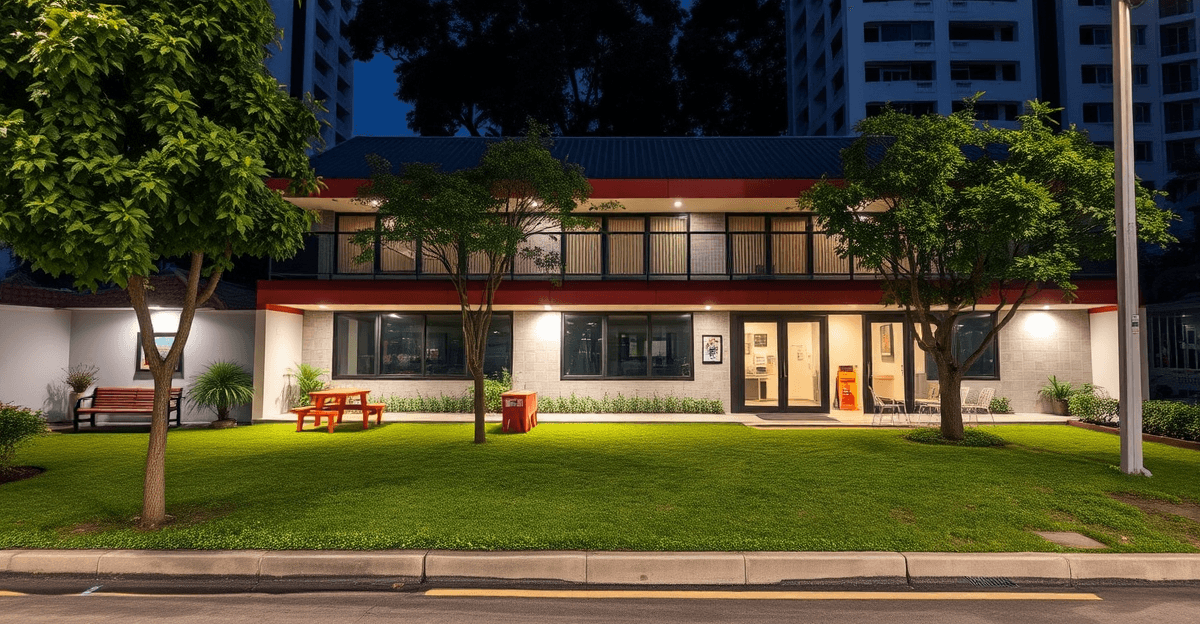
You're standing at the preschool open house, clutching a glossy brochure, watching your four-year-old build a tower of blocks in the corner. On one side of you, a school promises "globally-minded, inquiry-based learning" with fees that make your stomach flip. On the other, a familiar local centre down the road offers bilingual lessons at a third of the price. If you've been quietly agonising over the international vs local preschool in Singapore question, you're in good company — it's one of the most common crossroads Singapore parents face, and there's no single right answer. There's only the right answer for your child and your family.
Let's walk through it together, parent to parent, so you can decide with confidence instead of guilt.
Key Takeaway (TL;DR): For families whose children will enter Singapore's local Primary 1 system, a good local or MOE Kindergarten offers strong bilingual foundations, cultural continuity, and P1 alignment at S$700–S$1,500/month. International preschools (at significantly higher monthly fees) suit expat or globally-mobile families and those planning the international school track, offering smaller classes and play-based curricula like Montessori or IB PYP. The "better" choice isn't the pricier one — it's the one that matches your child's next 12 years of schooling.
What's the real difference between international and local preschools?
The core difference between international and local preschools in Singapore is the curriculum pathway and the language of learning. Local preschools follow Singapore's Ministry of Education (MOE) Nurturing Early Learners framework and teach bilingually — English plus a Mother Tongue. International preschools typically use globally-recognised approaches (Montessori, Reggio Emilia, or the IB Primary Years Programme) and lean heavily English-medium, often with a play-based, inquiry-led philosophy.
Here's what that looks like day to day:
Local preschools (like PCF Sparkletots, My First Skool, and PAP Community Foundation centres) structure the K1-K2 years around school readiness. Your little one learns to recognise letters and numbers, practises Mother Tongue, and gets used to a routine that mirrors primary school. The rhythm is intentional: by K2, children are being gently prepared for the pace and expectations of Primary 1.
International preschools (such as EtonHouse, Stamford American, and various IB and Montessori centres) tend to prioritise child-led discovery, smaller class sizes, and a more relaxed academic timeline. A four-year-old might spend an afternoon investigating why ice melts rather than completing a worksheet. It's a beautiful model — but it's built for a different destination.
Definitive statement: The single most important factor in choosing between international and local preschool in Singapore is which primary school system your child will eventually enter — because that determines whether curriculum continuity works in your favour or against it.
What counts as an "international preschool & kindergarten" in Singapore?
The label covers three quite different kinds of centre, and knowing which one you're touring helps you compare fairly:
- Standalone international preschools — independent centres (EtonHouse is a well-known example) that run their own early-years programme, often Reggio Emilia-inspired or bilingual-immersion, typically taking children from around 18 months through to age 6.
- The early-years section of a full international school — kindergartens attached to schools like Stamford American or the Canadian International School. These follow the school's whole-of-school curriculum (commonly the IB Primary Years Programme or a British EYFS-style framework), and enrolling here usually positions your child for continued enrolment into the school's primary years.
- International-curriculum local centres — Singapore-run preschools that adopt an international pedagogy (Montessori, Reggio Emilia, IB PYP) while still serving mostly local families. If this hybrid appeals to you, our comparison of Montessori vs structured learning in Singapore preschools digs into how the classroom experience actually differs.
One naming quirk to watch: international schools often call the K1-K2 years KG1/KG2, Reception, or Pre-K/Kindergarten rather than K1/K2, and their cut-off dates can follow a different academic calendar (August intakes are common for American and IB schools, versus Singapore's January year). Always check which year-group your child would actually join — it isn't always the one that matches their local cohort.
Admission-wise, most international preschools and kindergartens are non-selective at this age, though popular ones run waitlists and some include a casual meet-the-child session. If yours does, our guide to preparing your child for a kindergarten interview keeps it low-pressure.
How much does preschool cost in Singapore?
Preschool in Singapore ranges from roughly S$160 to over S$4,000 a month, depending on the type of centre. Local anchor operators are the most affordable, private local preschools sit in the middle, and international preschools are the most expensive. Government subsidies can dramatically reduce costs for Singaporean families at licensed local centres.
Here's a realistic breakdown for full-day K1-K2 programmes (before subsidies):
| Type of preschool | Typical monthly fee (before subsidy) |
|---|---|
| Anchor Operators (PCF Sparkletots, My First Skool) | Up to ~S$665 (childcare, incl. GST) |
| MOE Kindergartens | S$160 – S$320 (half-day) |
| Private local preschools | Higher than anchor operators; varies by centre |
| International preschools | Significantly higher than local options; varies by school |
For Singaporean families, the Basic Subsidy and Additional Subsidy administered by the Early Childhood Development Agency (ECDA) can significantly lower fees at licensed centres — working mothers can receive a basic subsidy of up to S$600/month for full-day childcare, with additional means-tested subsidies on top. International preschools, by contrast, generally do not qualify for these subsidies, which widens the real-world cost gap considerably.
Don't forget the hidden extras: registration fees, refundable deposits (often one month's fee), uniforms, insurance, and enrichment add-ons. Over a two-year K1-K2 stretch, an international preschool can cost substantially more than a subsidised local one. That's a meaningful sum — think of it as a university fund or, more immediately, years of enrichment and family experiences.
If you're weighing up the budget, it's worth keeping an eye on seasonal promotions and trial-class offers — sites like WhyNotDeals round up education and family deals in Singapore that can soften the cost of enrichment and holiday programmes.
Which is better for your child's development?
Neither type is universally "better" — the right fit depends on your child's temperament, your family's language goals, and where your child is headed after preschool. Local preschools excel at bilingual literacy and structured school readiness; international preschools excel at independence, creativity, and small-group attention. Both can raise a happy, capable child.
When a local preschool makes sense
- Your child will enter Primary 1 in Singapore. Curriculum continuity is a genuine advantage. Your little one arrives at P1 already familiar with the bilingual routine, letter-sound work, and classroom structure.
- Mother Tongue matters to your family. Local centres embed daily Mandarin, Malay, or Tamil in a way most international schools simply don't.
- You want strong value. With subsidies, a quality local education is remarkably affordable.
- Community and culture. Local centres reflect Singapore's multicultural everyday life — your child grows up alongside neighbours and future classmates.
When an international preschool makes sense
- You're an expat family who may relocate, and want a portable curriculum (IB) that transfers globally.
- You plan the international school track (IB Diploma or IGCSE) rather than PSLE and the local system.
- You value smaller classes and a play-based, inquiry-led philosophy above early academics.
- English is your home priority and Mother Tongue is less central to your plans.
Definitive statement: Research on early childhood consistently shows that the quality of teacher-child interaction predicts outcomes far more reliably than the type of school — a warm, well-run local preschool will serve your child better than an average international one, and vice versa.
Whichever path you choose, remember that development at this age isn't only about academics. Building social skills in your preschooler and strengthening fine motor skills through K1 activities matter just as much as letters and numbers — and both local and international settings can nurture these beautifully.
Does preschool choice affect PSLE and Primary 1 readiness?
Preschool choice has a modest, indirect effect on later PSLE performance — no reputable evidence suggests one preschool type guarantees exam success. What matters far more for the local pathway is that your child enters Primary 1 emotionally settled, bilingually confident, and comfortable with classroom routines. A local preschool aligns naturally with this; an international one may require some bridging.
If your child attends an international preschool but will enter local P1, plan ahead. The two areas that most often need reinforcement are Mother Tongue (which many international preschools don't emphasise) and familiarity with the local classroom pace. This isn't cause for panic — it's simply something to be aware of.
This is where a little intentional practice at home goes a long way. Short, playful learning sessions help bridge any gaps without pressure. QuizKin offers adaptive quiz practice that makes learning fun and measurable for K1-K2 kids — it adjusts to your child's level so they're gently stretched, never overwhelmed, and you can actually see which foundational skills are solid and which need a little more love. For families making the international-to-local transition, that visibility is reassuring.
To get a clear sense of where your child stands, our Primary 1 readiness checklist of 30 skills is a practical starting point, and if numeracy is on your mind, here's what to expect in a K2 maths assessment in Singapore.
Definitive statement: By the start of Primary 1, MOE expects children to recognise letters and basic sight words, count and do simple addition, follow instructions, and sit for short structured tasks — none of which are exclusive to any one preschool type.
What about the transition and interview process?
Some sought-after preschools and primary schools include a short interaction or "interview" as part of enrolment. These are age-appropriate — think a friendly chat, some picture-naming, and simple play — not high-stakes tests. Preparation is about comfort and confidence, not drilling.
If your child has one coming up, our guide on how to prepare your child for a kindergarten interview in Singapore walks through it calmly. And because some children do feel nervous in unfamiliar settings, it's worth reading up on reducing test anxiety in preschoolers — a settled, unpressured child performs and feels far better regardless of school type.
If you're leaning towards local schooling and want extra support with the P1 transition — or a specific skill like early reading — a good tutor can help without the hard sell. TuitionLah lets you find a tutor for free with no agency fees, which is handy for short-term, targeted help.
A simple way to decide
Ask yourself three honest questions:
- Where will my child go after preschool? Local P1, or the international/IB track? This single answer resolves most of the debate.
- What are our language goals? If Mother Tongue fluency matters, local centres have the edge.
- What can we sustain comfortably for two-plus years? A school you can afford without strain — leaving room for family life, holidays, and rest — is almost always the wiser choice than the "prestigious" one that stretches you thin.
There's no trophy for spending the most. Some of the most confident, curious, well-adjusted K2 children we know come from humble neighbourhood centres — because what they had, in abundance, was warm teachers and engaged parents. Learning at this age thrives on play, and if you're curious about why that works, our piece on game-based learning for preschoolers explains the science in plain language.
The bottom line
So — international vs local preschool in Singapore: worth it? An international preschool is genuinely worth it for globally-mobile families, those committed to the international school pathway, or parents who deeply value a play-led, small-class environment and can comfortably afford it. For the majority of Singapore families whose children will enter local Primary 1, a good local or MOE Kindergarten offers stronger curriculum alignment, bilingual foundations, and outstanding value — the extra tens of thousands of dollars aren't buying better outcomes so much as a different destination.
Choose the path that fits your child's future, your family's language, and your budget without strain. Then pour your energy into what truly moves the needle: warm relationships, plenty of play, and a little joyful, consistent practice at home. That's the formula — and it works in any classroom.
Sources
Practise what you’ve read with QuizKin
Adaptive quizzes covering phonics, sight words, numbers, and more — aligned with the Singapore MOE curriculum. Start your free Premium trial today.
Frequently Asked Questions
It depends on your family's plans. If you're expatriates who may relocate, or you want your child to eventually enter the international school system (IB or IGCSE), an international preschool offers continuity and smaller class sizes. But for families whose children will enter the local Primary 1 system, a good local or MOE Kindergarten provides strong English and Mother Tongue foundations at a fraction of the cost. Worth is about fit, not price.
Generally, yes — for the local pathway. Local preschools and MOE Kindergartens follow the Nurturing Early Learners framework aligned with Singapore's primary school system, including bilingual instruction and structured literacy and numeracy. International preschools often use play-based approaches (Montessori, Reggio Emilia, IB PYP) that build creativity and independence but may not mirror the local P1 pace or Mother Tongue expectations.
Local anchor operator preschools (PCF Sparkletots, My First Skool) typically cost S$700–S$1,200 a month before subsidies, and Singaporean families can receive substantial government subsidies. Private local preschools are priced higher than anchor operators, while international preschools are significantly more expensive again. Always factor in registration fees, deposits, and enrichment add-ons.
About the author
Mervin Tan
Founder, QuizKin
Mervin Tan is the founder of QuizKin and a software engineer and dad of two young children in Singapore. He builds QuizKin's adaptive quiz engine and writes practical K1-K2 learning guides grounded in MOE's Nurturing Early Learners framework and his own experience preparing his kids for Primary 1. QuizKin is built by Adaptels Pte. Ltd., Singapore.
Ready to make learning fun?
QuizKin turns screen time into learning time with adaptive quizzes built for K1-K2 kids in Singapore. Free to start.
Related Articles
Fostering Creativity in Young Children Beyond Art Class
Practical ways to foster creativity in young children beyond art class. A Singapore parents' guide to nurturing imagination in K1-K2 kids aged 4-6.
How to Choose a Kindergarten in Singapore (2026)
Compare MOE Kindergarten, PCF, NTUC, and private preschools in Singapore. Fees, curriculum, teacher quality, and what to look for during kindergarten visits.
MOE Kindergarten vs Private Preschool: Honest Comparison
MOE Kindergarten vs private preschool in Singapore? An honest 2026 comparison of cost, curriculum, waitlists and school readiness for your K1-K2 child.