P1 Readiness: Skills Your Child Needs Before Primary 1 in Singapore
Master P1 readiness for Singapore kids. Essential skills checklist, milestones, and practical activities to prepare your child for Primary 1 success.
Mervin Tan · Founder, QuizKin
Published 6 June 2026
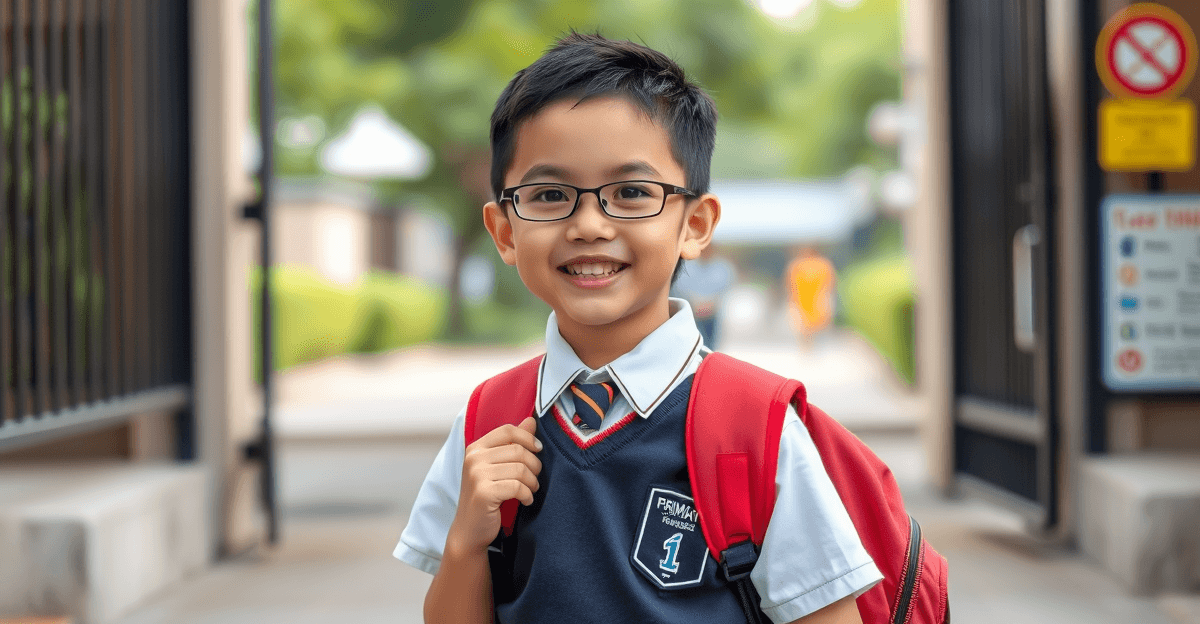
When my older daughter was finishing K2, I was quietly panicking. The P1 orientation letter had arrived, I'd seen the photos of tiny kids in white uniforms, and all the parent chat groups were buzzing about whether their kids were "ready." One mum said her son could already do two-digit addition. Another was worried her daughter still couldn't write in a straight line.
I spent weeks worrying about the wrong things.
Looking back now — with one child through the P1 transition and another approaching it — I can tell you that P1 readiness is way less about academics than most Singapore parents think. The kids who struggled weren't the ones who couldn't read fluently. They were the ones who couldn't sit still, couldn't handle it when things got frustrating, or fell apart during recess because they didn't know how to buy food on their own.
Here's what actually matters. No fluff, just real experience mixed with what the teachers told us.
The Honest Truth About What "P1 Ready" Means
P1 readiness is mostly about your child's ability to cope with the structure, pace, and independence demands of primary school. Not about being the smartest kid in the room.
Think about it from a teacher's perspective. They've got 30-plus kids. They can't help each child open their water bottle, remind each one to go to the toilet, or comfort each child who cries when they get an answer wrong. The kids who settle in fastest are the ones who can manage themselves — emotionally, physically, and socially.
Your child doesn't need to be reading chapter books. They need to be able to sit in a class for half an hour, follow instructions, ask for help when they're stuck, and not melt down when something is hard.
1. Can They Take Care of Themselves?
This sounds basic, but it trips up more kids than you'd expect.
In K2, there's always a teacher nearby. Need help opening your lunchbox? Teacher's right there. Need the toilet? Teacher walks you. In P1, your child is largely on their own for these things. Thirty kids, one teacher — the maths doesn't work for hand-holding.
What your K2 kid should be practising:
- Using the toilet independently — the whole routine, including wiping, flushing, and washing hands
- Opening their own water bottle and food containers (test the ones you plan to buy for P1!)
- Eating without making a huge mess, within a reasonable time
- Telling an adult when they urgently need something: "Teacher, I need to go to the toilet NOW"
- Finding their own belongings — recognising their bag, their shoes, their pencil case
What we did at home: We stopped jumping in to help with things she could do herself. Sounds simple, but it took effort. My instinct was to open the jam jar for her, pack her bag, zip up her dress. We had to consciously step back and let her struggle a bit. The result? By December of K2, she could get herself dressed, pack her school bag from a checklist on the fridge, and manage a full meal without help.
Builds on: Our guide on building resilience in preschoolers has more practical tips — resilience starts with these small daily wins.
2. Can They Listen and Follow Instructions?
This is the one P1 teachers told us matters most. Not reading ability. Not maths. Listening.
In P1, the teacher gives instructions to the whole class at once. "Take out your English book, open to page 12, and write your name at the top." That's three steps. A child who can listen, hold the steps in memory, and do them without asking "what?" after each one will sail through. A child who zones out after the first instruction will feel lost all day, every day.
What "listening ready" looks like at K2:
- Can sit through a 12-15 minute story without constantly squirming or wandering off
- Follows 2-3 step instructions: "Go to your room, put on your socks, then come to the door"
- Knows to raise their hand instead of shouting out
- Can say "I don't understand" or "Can you say it again?" when confused
What worked for us: Reading aloud every night for 15 minutes. Honestly, this single habit probably did more for P1 readiness than anything else. It builds focus, vocabulary, and listening stamina all at once. Let your child pick the book — engagement matters more than difficulty level.
We also played "Simon Says" and gave multi-step instructions during daily life. "Please put your shoes on the rack, wash your hands, then sit at the table." Sounds mundane. It's training.
Screen time alternative: On busy days, adaptive learning tools like QuizKin give kids short, focused practice that builds listening and attention skills through quiz-style challenges. The sessions are brief enough to keep young attention spans engaged.
3. Reading: What They Actually Need (And What They Don't)
Let me be straight with you: your child does NOT need to be reading fluently before P1. I know the kiasu parent groups make it feel that way, but every P1 teacher I've spoken to says the same thing — they expect a range of reading abilities and the curriculum is built to handle it.
What's genuinely helpful by end of K2:
- Recognises 20-30 common sight words ("the," "is," "and," "I," "to")
- Understands that letters make sounds (basic phonics awareness)
- Can blend simple 3-letter words: cat, sit, run
- Shows interest in stories and books
- Understands print goes left to right
What's NOT necessary (despite what other parents say):
- Reading whole sentences fluently
- Knowing every letter sound perfectly
- Writing paragraphs
- Reading chapter books (seriously, stop comparing)
The child who loves books and can sound out simple words will thrive in P1. The child who was drilled on reading until they hate it... won't.
What we did: Daily reading together (15-20 minutes), phonics practice through an app and flashcards, and pointing out words everywhere — on cereal boxes, MRT signs, restaurant menus. We kept it light and fun. No worksheets, no tears.
Want the full word list? Our guide on sight words for K1-K2 covers the MOE-aligned words your child should recognise, plus fun practice ideas.
4. Numbers: Less Than You Think
Singapore's P1 maths uses the CPA approach (Concrete-Pictorial-Abstract). This means your child doesn't need to write sums on paper yet. They need to understand what numbers mean using real objects.
Realistic K2 targets:
- Counts to 20 reliably (touching each object as they count)
- Recognises numbers 0-10 by sight
- Understands "more," "less," "same"
- Can do simple addition with objects: "You have 3 grapes. I give you 2 more. How many now?"
- Knows basic shapes: circle, square, triangle, rectangle
How we practised without worksheets: Counting steps on the way home. Sharing crackers equally between siblings ("Is that fair? Does everyone have the same?"). Playing Snakes and Ladders. Sorting laundry by colour and counting each pile.
P1 teachers will introduce the written symbols (+, -, =). Your job right now is to make sure your child understands the concepts through play.
Full checklist: Primary 1 readiness skills checklist 2027 covers all 30 specific skills including detailed numeracy expectations.
5. Pencil Grip and Writing Readiness
P1 involves a lot of writing from week one. Kids who can hold a pencil properly and form basic letters will feel less frustrated. Kids who still use a fist grip will struggle and tire quickly.
K2 targets:
- Holds a pencil with a tripod grip (thumb, index, and middle finger)
- Draws lines, circles, and basic shapes with some control
- Copies simple letters — doesn't need to be neat, just recognisable
- Can use scissors to cut roughly along a line
What helped us: Playdough. Seriously. All that squishing and rolling and pinching builds the exact hand muscles needed for writing. Threading beads, building with small Lego bricks, peeling stickers — all good. We limited formal "pencil practice" to 5-10 minutes because any more than that and she'd lose focus and start getting frustrated.
Don't obsess over perfect handwriting. P1 teachers expect work-in-progress. The goal right now is hand strength and basic control.
Activity ideas: Our guide on fine motor skills for K1 kids has 15 no-cost activities you can do at home.
6. The Skills Nobody Talks About: Emotional and Social Readiness
This is where I see the biggest gap between what parents prepare for and what actually matters.
I know parents who spent the entire K2 year drilling phonics and maths. Their kids could read at a P2 level before day one. And then those same kids fell apart in the first week because they couldn't handle the noise in the canteen, or because a classmate took their eraser, or because the teacher didn't praise them after every single task.
The social-emotional skills P1 actually demands:
- Handling frustration. Getting a question wrong. Not being picked for something. Losing a game. Your child needs to be able to feel disappointed without exploding.
- Sharing and turn-taking. Group work, queuing at the canteen, sharing materials — this happens dozens of times daily.
- Asking for help. "Teacher, I don't understand" is one of the most important sentences your child can learn. Kids who sit silently when confused fall behind fast.
- Separating from you. Most K2 kids are fine with this. But the transition to a bigger, noisier, less familiar school can bring back separation anxiety. Talk about it openly.
- Making new friends. Your child won't know everyone in their P1 class. Can they approach another kid and say "Can I play?"
How we built these skills: Regular playdates with kids outside of school. Board games (losing gracefully is a real skill). Naming emotions out loud — "You look really frustrated right now. That's okay. What could we do about it?" Modelling our own emotions: "Daddy's feeling annoyed because the car won't start. I'm going to take a deep breath."
More on this: Our guide on building resilience in preschoolers goes deeper into practical strategies for developing grit and emotional regulation.
7. Talking and Communicating
Your child needs to express themselves clearly enough for the teacher to understand them, and understand what the teacher is saying.
By K2, most kids can:
- Speak in 3-5 word sentences comfortably
- Tell you about their day in basic terms
- Ask questions (the "why" phase can feel endless, but it's a great sign)
- Understand everyday conversation
If your child's speech seems behind: Talk to their K2 teacher. Singapore has good early intervention support, and catching speech-language issues in K2 gives the best outcomes. Our guide on speech and language milestones can help you figure out what's normal for their age.
Daily habit that helps: Real conversations. Not quizzing, not drilling — just talking. "What was the best thing that happened today?" "Why do you think your friend was upset?" Open-ended questions build language skills faster than any worksheet.
8. Physical Skills: Can They Run, Climb, and Not Trip?
P1 kids run on the field, climb stairs to their classroom, navigate crowds during recess, and sit on chairs without falling off. Good gross motor skills build physical confidence, which feeds into everything else.
By K2, your child should be able to:
- Run without constantly tripping
- Climb stairs using alternating feet
- Kick and catch a ball with some accuracy
- Balance on one foot for a few seconds
The simplest fix: Outdoor play. Every day. The playground at the void deck, the neighbourhood park, swimming at the CC pool. At least an hour of active play daily. This isn't just exercise — it builds coordination, spatial awareness, and confidence that carries over into the classroom.
A Timeline That Won't Stress You Out
6 Months Before P1 (Mid-K2)
- Visit the P1 school if possible — familiarity reduces anxiety
- Read books about starting school together
- Talk positively about P1: "Your cousin likes his school. He plays football there!"
- Notice your child's strengths and any areas that need a bit more work
3 Months Before P1
- Lock in a consistent daily routine: early bedtime, morning sequence, meal times
- Ramp up independence practice: toileting, dressing, packing their bag
- Arrange playdates so they get comfortable with different kids
- Start mentioning the school's name casually: "At your new school, there'll be a canteen where you choose your own food"
Last Month
- Buy the uniform and let them wear it around the house a few times (removes the novelty anxiety)
- Do full dress rehearsals of the morning routine — wake time, breakfast, getting ready
- Visit the school campus if there's an orientation event
- Address any specific fears calmly: "Are you worried about making friends? Let's talk about that."
- Keep life stable — avoid major changes if you can
The Part Nobody Wants to Hear
Most P1 struggles aren't academic. They're behavioural.
A child who can't sit still, can't listen, can't manage frustration — they'll struggle with P1 academics even if they already know how to read. A child who is emotionally steady, socially comfortable, and curious about learning — but can't read yet — will catch up within weeks and thrive.
P1 teachers told me this repeatedly. I didn't fully believe it until I watched it happen. The kids who adjusted fastest weren't the ones who could read the most. They were the ones who could regulate themselves.
When to Get Extra Help
Talk to a professional if your child:
- Can't follow simple 2-step instructions by late K2
- Uses very few words or very short sentences
- Really struggles with peer interaction or withdraws consistently
- Can't manage basic fine motor tasks that most K2 kids handle
- Gets extremely distressed during any transition or change
Early intervention works. K2 is the best time to address concerns — much better than waiting until P1 to see if they "grow out of it."
You're Doing Better Than You Think
If you're reading an article about P1 readiness, you care about your child's transition. That care already puts you ahead.
Most kids are ready for P1 by age six. The system is designed for children at different levels. Your child's P1 teacher has seen every combination of strengths and gaps, and they know how to work with it.
Focus on the foundations: emotional security, listening skills, self-care independence, and a genuine love of learning. The academics will follow. They always do.
Trust your child. Trust their teachers. And trust yourself — you know your kid better than any checklist.
More Resources
We've put together several guides specifically for Singapore parents going through this:
- Primary 1 Readiness: 30 Skills Your Child Needs (2027 Checklist) — The full printable checklist
- Reading Milestones for Children Ages 4-6 — What to realistically expect for literacy
- Fine Motor Skills Activities for K1 Kids — 15 free activities for hand strength and pencil control
- Building Resilience in Preschoolers — Practical grit-building for everyday life
How QuizKin Fits In
At QuizKin, we built adaptive quiz practice that makes learning feel like play for K1-K2 kids. No pressure, no worksheets — just challenges that adjust to your child's level, celebrate effort, and build confidence in small doses.
Use it for gentle literacy practice (letter sounds, sight words, rhyming), number sense activities, and listening comprehension games. It's a tool to support your child's development, not replace the reading, play, and connection that matter most.
Sources
- MOE — Primary 1 Registration
- MOE — Primary School Education
- ECDA — Early Childhood Development Agency
Your child's P1 journey is theirs. Trust the process, celebrate the small wins, and know that you're already doing a great job preparing them.
Practise what you’ve read with QuizKin
Adaptive quizzes covering phonics, sight words, numbers, and more — aligned with the Singapore MOE curriculum. Start your free Premium trial today.
Frequently Asked Questions
Most Singapore parents begin P1 readiness activities during K1 (age 4-5). However, the foundation starts in nursery. Focus on building core skills like listening, following instructions, and basic literacy and numeracy from age 4 onwards. There's no need to rush formal academics—play-based learning is most effective at this stage.
Not necessarily. While recognising some sight words and phonics basics helps, the MOE curriculum is designed for children at varying reading levels. What matters more is your child's ability to focus, listen to instructions, and show interest in stories. Many children learn to read fluently after entering P1 with proper support.
Ready children typically show independence in basic self-care (toileting, eating), can follow 2-3 step instructions, sit and focus for 10-15 minutes, express emotions appropriately, and interact with peers. If you're unsure, discuss concerns with your child's K2 teacher or the P1 school—they can provide targeted advice based on your child's individual needs.
Early intervention is key. Talk to your K2 educator about specific areas of concern. Many children develop at different rates, and targeted practice at home makes a real difference. Consider adaptive learning tools or professional support if recommended by your school. Remember, every child's developmental journey is unique.
About the author
Mervin Tan
Founder, QuizKin
Mervin Tan is the founder of QuizKin and a software engineer and dad of two young children in Singapore. He builds QuizKin's adaptive quiz engine and writes practical K1-K2 learning guides grounded in MOE's Nurturing Early Learners framework and his own experience preparing his kids for Primary 1. QuizKin is built by Adaptels Pte. Ltd., Singapore.
Ready to make learning fun?
QuizKin turns screen time into learning time with adaptive quizzes built for K1-K2 kids in Singapore. Free to start.
Related Articles
International Preschool & Kindergarten Singapore: Worth It?
International preschool & kindergarten vs local in Singapore — real fees, curricula (IB PYP, Montessori), class sizes, P1 readiness, and when it's worth it.
School Bus Safety for Singapore Preschoolers
A practical school bus safety guide for Singapore parents of K1-K2 kids. Learn seatbelt rules, drop-off routines, and skills to keep your preschooler safe.
P1 English Readiness Checklist: Literacy Skills Needed
P1 English readiness checklist for Singapore parents: the literacy skills your K1-K2 child needs before Primary 1, plus simple ways to build them at home.