Music and Rhythm Activities for Singapore Preschoolers: Learning Through Sound
Discover music and rhythm activities for Singapore preschoolers that boost cognitive development. Fun, evidence-based ideas for K1-K2 kids aged 4-6.
Mervin Tan · Founder, QuizKin
Published 9 June 2026
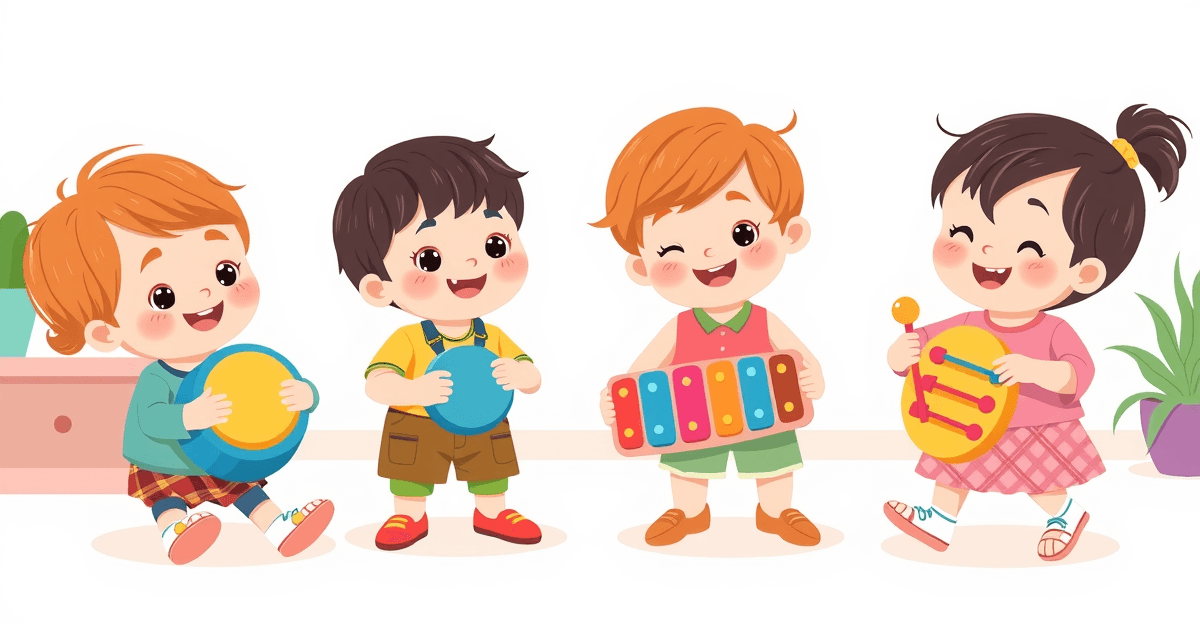
Picture this: your little one is banging a wooden spoon on a pot lid, creating a joyful racket that echoes through your HDB flat. Before you reach for the earplugs, consider this — your child is actually learning. Music activities for preschoolers in Singapore are far more than entertainment. Research shows that music and rhythm engage the same brain regions responsible for language, numeracy, and memory, making them one of the most powerful (and fun) developmental tools for K1-K2 children aged 4 to 6.
Key Takeaway: Music and rhythm activities build cognitive, language, and social-emotional skills in preschoolers. You don't need expensive classes — simple, everyday activities at home can make a real difference. Aim for 15-20 minutes of music-based play daily for the best results.
Why Music Activities Matter for Preschoolers in Singapore
Music is not a "soft" skill — it is a brain-building powerhouse. A landmark study by the Brain and Creativity Institute at the University of Southern California found that musical experiences in early childhood accelerate brain development, particularly in the areas of language acquisition and reading skills. For Singapore's K1-K2 children, this has direct relevance as they prepare for the structured learning environment of Primary 1.
Here's what the research tells us about the benefits of music for preschoolers:
- Language development: Children who engage in regular music activities develop 20-30% stronger phonological awareness — the ability to hear and manipulate sounds in words. This is a foundational skill for phonics learning.
- Mathematical thinking: Rhythm and beat naturally introduce patterns, counting, and sequencing. Clapping along to a 4/4 beat is, at its core, an exercise in maths.
- Memory and concentration: Learning song lyrics and following musical patterns strengthens working memory, which your child will rely on heavily in Primary school.
- Social-emotional skills: Group music activities teach turn-taking, cooperation, and self-expression — vital social skills for preschoolers.
Singapore's Ministry of Education (MOE) Nurturing Early Learners (NEL) framework explicitly includes "Aesthetics and Creative Expression" as one of six core learning areas for preschoolers. Music is central to this, and quality preschools like PCF Sparkletots, My First Skool, and NTUC First Campus integrate daily music and movement sessions into their curriculum.
How Does Music Support Your Child's Brain Development?
When your child listens to or creates music, multiple brain areas activate simultaneously — auditory, motor, visual, and emotional centres all fire together. This "whole-brain" engagement is what makes music uniquely powerful for early learning.
Between ages 4 and 6, your child's brain is forming neural connections at an extraordinary rate. Music activities strengthen these connections in three critical ways:
1. Auditory Processing and Language
Distinguishing between musical pitches trains the same auditory skills needed to tell the difference between similar speech sounds (like "b" and "d"). This is why children who sing regularly often develop stronger reading skills — they can hear the building blocks of language more clearly.
2. Motor Coordination and Timing
Clapping, tapping, dancing, and playing simple instruments develop fine and gross motor control. Holding a maraca or pressing piano keys strengthens the same small muscles your child needs for writing and drawing — activities that overlap with fine motor skills development.
3. Pattern Recognition
Music is built on repeating patterns. When your child recognises that a chorus comes back after each verse, or that a rhythm follows an ABAB pattern, they are exercising the same cognitive skill that underpins early maths and logical reasoning.
Music and Numeracy: The Rhythm-Maths Connection
The connection between music and maths is not just theoretical. Practical musical activities directly reinforce K1-K2 numeracy concepts.
Counting and Number Sense
Counting songs like "Five Little Ducks" and "Ten Green Bottles" embed number sequences and basic subtraction into memorable musical experiences. Children learn to count forwards and backwards, understand concepts of more and less, and grasp one-to-one correspondence — all foundational numeracy skills — through song.
Rhythm and Fractions
Clapping along to different rhythms introduces the concept of division and fractions intuitively. A whole note, half note, and quarter note in music are literally musical fractions. While K1-K2 children do not need to understand fractions formally, the intuitive experience of dividing beats prepares neural pathways for later mathematical reasoning.
Spatial-Temporal Reasoning
Playing music or moving to music develops spatial-temporal reasoning — the ability to think in sequences and visualise spatial patterns. This cognitive skill is directly linked to performance in geometry and problem-solving tasks in later primary school years.
10 Music and Rhythm Activities for K1-K2 Children at Home
You don't need a music degree or expensive instruments to bring music into your child's day. Here are 10 practical activities designed for Singapore preschoolers, using items you likely already have at home.
Activity 1: Kitchen Percussion Band
What you need: Pots, pans, wooden spoons, plastic containers, chopsticks
Let your child explore different sounds by tapping various surfaces. Ask guiding questions: "Does the metal pot sound the same as the plastic bowl?" This builds scientific thinking and auditory discrimination.
Learning boost: Count the beats together — "Let's tap 4 times, then stop!" This integrates counting with rhythm.
Activity 2: Freeze Dance
What you need: Any music player (phone or speaker)
Play music and let your child dance freely. When you pause the music, they must freeze in place. This classic game develops listening skills, self-regulation, and body awareness.
Singapore twist: Use local children's songs in Mandarin, Malay, or Tamil to reinforce Mother Tongue language exposure.
Activity 3: Rhythm Echo Game
What you need: Just your hands!
Clap a simple rhythm pattern (e.g., clap-clap-pause-clap) and ask your child to copy it. Start with 2-3 beats and gradually increase complexity. This strengthens working memory and auditory processing — skills that directly support classroom learning.
Activity 4: DIY Shakers
What you need: Empty plastic bottles, dried rice, beans, or pasta, tape
Fill bottles with different materials and seal them securely. Let your child shake them and compare sounds. "Which one is loud? Which one is soft?" This introduces volume, comparison, and cause-and-effect thinking.
Activity 5: Sing-Along Story Time
What you need: Picture books with repetitive text or rhymes
Turn reading time into singing time. Many popular children's books — like "Brown Bear, Brown Bear" or "Five Little Ducks" — can be sung to simple melodies. This reinforces sight word recognition and comprehension through melody.
Activity 6: Musical Chairs — The Cooperative Version
What you need: Chairs, music
Instead of eliminating players, remove one chair each round but let children sit on each other's laps or share seats. This keeps everyone included and builds cooperation — ideal for playdates or sibling bonding.
Activity 7: Body Percussion
What you need: Nothing at all
Teach your child to make sounds using their body — clapping, stomping, patting their thighs, clicking their tongue. Create a sequence together: stomp-stomp-clap-pat. This is a portable activity you can do anywhere — waiting at the clinic, on the MRT, or during a car ride.
Activity 8: Mood Music Exploration
What you need: Various music genres (classical, pop, traditional)
Play different types of music and ask your child how each one makes them feel. "Does this music make you feel happy or sleepy?" This develops emotional vocabulary and self-awareness — key components of social-emotional learning.
Activity 9: Nursery Rhyme Actions
What you need: Knowledge of a few nursery rhymes
Pair classic songs like "Head, Shoulders, Knees and Toes" or "If You're Happy and You Know It" with exaggerated actions. Gradually speed up the tempo. This develops coordination, listening accuracy, and following multi-step instructions.
Activity 10: Sound Walk Around the Neighbourhood
What you need: A walk around your HDB estate, park, or playground
Take your child on a "listening walk." Ask them to identify every sound they hear — birds, traffic, the kopitiam uncle, an MRT train. Back home, try to recreate those sounds using voice or household objects. This sharpens auditory awareness and connects music learning to the real world.
Music Activities for Preschoolers in Singapore: Programmes and Resources
Beyond home activities, Singapore offers several avenues for structured music exposure for K1-K2 children.
Preschool Curriculum
Under the MOE NEL framework, all licensed preschools incorporate music and movement. If your child attends a MOE Kindergarten, PCF Sparkletots, or My First Skool, they are already receiving regular music-based learning. Ask your child's teacher what songs they're learning and reinforce them at home.
Community Programmes
Many Community Centres (CCs) run affordable enrichment classes for preschoolers, including music and movement courses. The National Library Board (NLB) also hosts free storytelling sessions that often include songs and rhymes — a great weekend activity.
Enrichment Classes
If your child shows particular interest, dedicated music programmes like Kindermusik, Musikgarten, and the Yamaha Music School offer age-appropriate group classes across the island. Expect to invest between $150-$350 per month, depending on the programme.
When deciding on enrichment, consider your child's overall schedule. Balance is important — if your little one is already attending tuition or other classes, music at home may be the better fit. If you're exploring academic support options, TuitionLah can help you find tutors without agency fees, freeing up budget for enrichment activities your child truly enjoys.
How to Build a Daily Music Routine for Your Preschooler
Consistency matters more than duration. Even 15 minutes of daily music-based play delivers measurable developmental benefits. Here's a simple routine you can adapt:
| Time of Day | Activity | Duration |
|---|---|---|
| Morning | Sing a wake-up song together | 3-5 min |
| After school | Rhythm echo game or kitchen percussion | 10 min |
| Before bed | Calm sing-along or lullaby | 5 min |
Tips for success:
- Follow your child's lead. If they love drumming but dislike singing, lean into drumming. Enjoyment drives learning.
- Mix languages. Singapore's multilingual environment is an asset. Sing in English, Mandarin, Malay, and Tamil to normalise all four languages.
- Don't correct "mistakes." There's no wrong way to make music at this age. Encourage experimentation and creativity.
- Connect music to other learning. After a music session, your child might enjoy a different kind of pattern practice. QuizKin offers adaptive quiz practice that makes learning fun and measurable for K1-K2 kids — a great way to extend pattern recognition skills from rhythm into numbers and words.
Connecting Music Learning to Primary 1 Readiness
You might wonder: will music activities actually help my child when they start Primary 1? The answer is a clear yes. The skills built through music — listening comprehension, pattern recognition, memory, following instructions, and self-regulation — map directly onto the skills needed for Primary 1 readiness.
Children who have regular music exposure tend to:
- Follow multi-step classroom instructions more accurately
- Demonstrate stronger phonemic awareness, supporting early reading
- Show better concentration during structured learning tasks
- Transition more smoothly into the formal school environment
Music doesn't replace academic preparation — it supercharges it. When your child practises adaptive quizzes on QuizKin alongside creative activities like music, they build a well-rounded foundation that covers both cognitive rigour and creative expression.
What If My Child Isn't "Musical"?
Here's the truth: every child is musical. Research from the Harvard Graduate School of Education confirms that musical ability is not a fixed trait — it develops with exposure and practice, just like language.
If your child seems disinterested in music activities, try these approaches:
- Change the genre. Some children respond to upbeat pop, others to classical or traditional music. Experiment.
- Make it physical. Many children engage better when music involves movement — dancing, marching, or jumping to the beat.
- Involve technology thoughtfully. Age-appropriate music apps can spark interest, but keep screen time within healthy limits. Pair digital music play with hands-on activities for balance.
- Be patient. Like any skill, musical engagement develops over time. Keep offering opportunities without pressure.
Making Music Learning Fun and Sustainable
The most effective music activities are the ones your child asks to do again. Keep things playful, pressure-free, and connected to your child's interests. If they love dinosaurs, sing dinosaur songs. If they're fascinated by vehicles, make engine sounds and turn them into rhythms.
In Singapore's achievement-oriented culture, it can be tempting to turn every activity into a structured lesson. Resist that urge with music. The developmental benefits flow naturally when children are genuinely enjoying themselves. Your role is to provide the opportunity, join in the fun, and let the learning happen organically.
Looking for deals on music enrichment programmes or children's instruments? Check WhyNotDeals for the latest family and education promotions in Singapore.
Sources
- MOE Nurturing Early Learners Framework — Singapore's guiding framework for preschool curriculum, including Aesthetics and Creative Expression
- Brain and Creativity Institute, University of Southern California — Music and Brain Development Research — Longitudinal study on music training and childhood brain development
- National Library Board Singapore — Programmes for Children — Free storytelling and music sessions at public libraries
- Harvard Graduate School of Education — Project Zero Arts Education Research — Research on arts and music in early childhood development
- Singapore Straits Times — Early Childhood Education Coverage — Reporting on preschool enrichment trends and MOE curriculum updates
Practise what you’ve read with QuizKin
Adaptive quizzes covering phonics, sight words, numbers, and more — aligned with the Singapore MOE curriculum. Start your free Premium trial today.
Frequently Asked Questions
Children as young as 4 (K1) are developmentally ready for structured music and rhythm activities. Most Singapore preschools, including PCF Sparkletots and My First Skool, incorporate music into their daily curriculum from Nursery level onwards. You don't need formal lessons — simple singing, clapping, and rhythm games at home are a great starting point.
Yes, research consistently shows that music activities strengthen neural pathways linked to language, maths, and memory. A 2016 study from the University of Southern California found that music training accelerates brain development in areas responsible for reading and speech. For K1-K2 children preparing for Primary 1, music activities build pattern recognition, listening skills, and concentration — all essential for school readiness.
You don't need expensive instruments or classes. Use household items like pots, spoons, and plastic containers as drums. Sing along to nursery rhymes in English, Mandarin, or Malay to support bilingual development. Many community centres (CCs) and public libraries in Singapore also offer free or low-cost music programmes for young children during school holidays.
About the author
Mervin Tan
Founder, QuizKin
Mervin Tan is the founder of QuizKin and a software engineer and dad of two young children in Singapore. He builds QuizKin's adaptive quiz engine and writes practical K1-K2 learning guides grounded in MOE's Nurturing Early Learners framework and his own experience preparing his kids for Primary 1. QuizKin is built by Adaptels Pte. Ltd., Singapore.
Ready to make learning fun?
QuizKin turns screen time into learning time with adaptive quizzes built for K1-K2 kids in Singapore. Free to start.
Related Articles

Best Podcasts for Singapore Parents on Education
The best podcasts for Singapore parents on education — expert-backed shows on K1-K2 learning, child development, and Primary 1 readiness you can play on the MRT.
NLB Library Activities for Singapore Preschoolers
Discover the best NLB library activities for Singapore preschoolers. A parent's guide to free storytimes, reading programmes and learning fun for K1-K2 kids.
Best Board Games for Learning: Singapore Preschooler Picks
Discover the best board games for learning in Singapore for K1-K2 kids (ages 4-6). Parent-tested picks that build maths, literacy & social skills through play.