Toilet Training Readiness: A Complete Guide for Singapore Preschool Parents
Is your child ready for toilet training? Learn the readiness signs, practical strategies, and common mistakes Singapore parents make. Expert-backed tips for K1-K2 preschoolers.
Mervin Tan · Founder, QuizKin
Published 8 May 2026
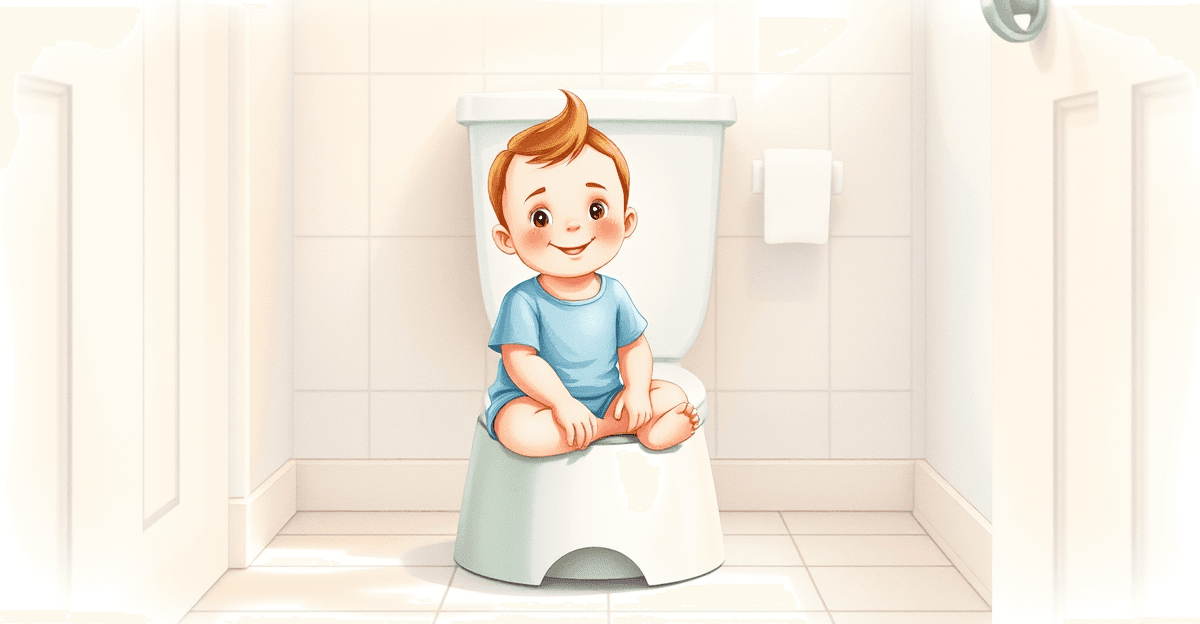
Toilet training is one of those parenting milestones that generates more anxiety than it should. Every parent hears conflicting advice: start early, wait until they are ready, use rewards, never use rewards, try the three-day method, be patient and let it happen naturally.
TL;DR: Is your child ready for toilet training? Learn the readiness signs, practical strategies, and common mistakes Singapore parents make. Expert-backed tips for K1-K2 preschoolers.
The truth is simpler than the noise suggests. Toilet training works best when your child is genuinely ready -- and when you know what readiness actually looks like. Starting too early does not produce faster results. It usually produces a longer, more stressful process for everyone.
This guide is written for Singapore parents with children aged 18 months to 4 years, covering readiness signs, practical strategies that work in Singapore's context, how to coordinate with your child's preschool, and the common mistakes that derail training.
What Does Toilet Training Readiness Actually Mean?
Readiness is not about age. It is about a combination of physical, cognitive, and emotional milestones that indicate your child's body and brain are mature enough to learn bladder and bowel control.
A child who shows all the readiness signs at 2 years old will likely train faster and with less frustration than a child pushed to start at 18 months without those signs.
Physical Readiness Signs
These indicate your child's body is physically capable of controlling elimination:
- Stays dry for at least 2 hours during the day, or wakes up dry from naps -- this shows their bladder can hold urine for a meaningful period
- Has regular, predictable bowel movements -- you can roughly predict when they will poo
- Can walk to and sit on a potty or toilet steadily
- Can pull pants up and down with minimal help
- Shows discomfort with wet or soiled diapers -- tugging at them, asking to be changed, or moving away from the mess
Cognitive and Emotional Readiness Signs
These indicate your child understands what toileting involves:
- Understands simple instructions like "sit down" and "pull up your pants"
- Can communicate the need to go -- through words, gestures, or facial expressions
- Shows interest in the toilet -- wants to watch you or older siblings, asks questions about it
- Demonstrates a desire for independence -- wants to do things by themselves
- Can follow two-step instructions like "walk to the bathroom and sit on the potty"
Signs Your Child Is NOT Ready Yet
Do not start training if your child:
- Shows no awareness of wet or dirty diapers
- Cannot sit still for 2 to 3 minutes
- Is going through a major life change (new sibling, starting school, moving house)
- Actively resists sitting on the potty or toilet
- Has no words or gestures to communicate basic needs
If your child is not showing readiness signs, wait a few weeks and check again. Readiness can emerge quickly, and waiting costs nothing.
Practical Toilet Training Strategies for Singapore Parents
Once your child shows readiness signs, here is how to approach training in a structured but low-pressure way.
Step 1: Prepare the Environment
Before you start active training, set up your home for success:
- Choose your equipment -- a floor potty or a toilet seat adapter with a step stool. Let your child help choose if possible
- Stock up on underwear -- at least 10 pairs. Let your child pick designs they like
- Place the potty in the bathroom or, initially, wherever your child spends the most time
- Get a waterproof mattress protector for the bed
- Keep cleaning supplies accessible -- accidents will happen, and your calm reaction matters
Step 2: Build Awareness Before Switching
Before removing diapers, spend a few days building your child's awareness:
- Let them observe you or older siblings using the toilet (normalise the process)
- Read simple picture books about using the potty
- Start narrating their elimination: "Oh, you are doing a poo. Can you feel it?"
- Introduce the potty as a familiar object -- let them sit on it fully clothed if they want
Step 3: Make the Switch
When you are ready to start active training:
- Switch to underwear during the day -- pull-ups and diapers feel the same to the child, so they do not reinforce the sensation of being wet
- Set a timer -- offer the potty every 60 to 90 minutes at first. As your child gets better, extend the intervals
- Watch for cues -- squirming, holding themselves, going quiet, hiding behind furniture. These are signals to gently guide them to the potty
- Celebrate success -- genuine praise and excitement when they use the potty. A simple "You did it! You went pee on the potty!" is enough
- Stay calm with accidents -- "Oops, that is okay. Next time, let us try to get to the potty." Clean up matter-of-factly
Step 4: Build the Routine
Once your child is having some successes:
- Toilet before transitions -- before meals, before going out, before nap time, before bed
- Teach hand washing as part of the toilet routine from day one
- Gradually extend intervals as your child starts self-initiating
- Night-time training comes later -- keep using diapers at night until your child consistently wakes up dry
Singapore-Specific Considerations
Preschool Expectations
Most Singapore preschools have specific expectations around toilet training:
- Playgroup and Nursery 1 (18 months to 3 years): schools generally expect parents to be working on toilet training. Diapers are still acceptable
- Nursery 2 and K1 (3 to 5 years): most schools expect children to be substantially toilet trained during the day. Occasional accidents are understood
- K2 (5 to 6 years): children should be independently managing toileting with minimal assistance
Talk to your child's teachers before starting. Most Singapore preschools have structured toilet breaks and experienced teachers who can reinforce your home approach during school hours.
Weather and Clothing
Singapore's tropical climate actually helps with toilet training:
- Children wear lighter clothing with fewer layers, making it easier to pull pants up and down quickly
- Less bulky clothing means children can feel wetness more readily
- Warm weather means accidents on tile floors are easy to clean
- You can let your child go without pants at home during early training (many parents do this on weekends)
Multi-Generational Households
Many Singapore families live with grandparents who may have different views on toilet training. Common points of friction:
- Grandparents may push for earlier training based on their own experience (different generation, different norms)
- Inconsistent approaches between caregivers confuse the child
- Shame-based methods (scolding for accidents) that grandparents may default to
The solution is a family conversation before you start. Explain your approach, ask for their support, and agree on a consistent response to accidents.
Common Mistakes That Derail Toilet Training
Starting Too Early
The most common mistake. If your child is not ready, you will spend months in a frustrating cycle of attempts and failures. Waiting two or three months for readiness signs to appear will save you time in the long run.
Punishing Accidents
Scolding, shaming, or expressing disappointment when your child has an accident creates anxiety around toileting. Anxiety makes training harder, not easier. Accidents are a normal part of learning, not misbehaviour.
Inconsistency Between Caregivers
If one parent uses the potty but grandma puts the child back in diapers, the child receives conflicting signals. All caregivers need to follow the same approach.
Going Back to Diapers
Once you switch to underwear during the day, try not to go back. Switching between diapers and underwear sends mixed messages. If training is truly not working, it is better to stop completely, wait a few weeks, and restart fresh.
Comparing With Other Children
Your friend's child was trained at 18 months. Your neighbour's child took until age 4. Neither timeline tells you anything about your child. Development varies enormously, and toilet training age has no correlation with intelligence or future success.
When to Seek Professional Help
Most children complete daytime toilet training by age 3 to 4. However, consult your paediatrician or a child development specialist if:
- Your child is over 4 and shows no interest in or readiness for toilet training
- Your child was previously trained but starts having frequent accidents again (regression lasting more than a few weeks)
- Your child experiences pain during urination or bowel movements
- Your child consistently holds their bowel movements, leading to constipation
- You notice signs of developmental delay that may be affecting the training process
In Singapore, you can get referrals through your child's paediatrician or polyclinics. The KK Women's and Children's Hospital and NUH also have child development units that assess toileting difficulties.
Building Independence Beyond Toileting
Toilet training is part of a broader developmental phase where your child is learning independence and self-care skills. The same readiness indicators -- following instructions, communicating needs, wanting to do things themselves -- apply to other areas of development.
If your child is in the K1-K2 age range and you want to support their overall readiness for Primary 1, building self-care skills like toileting, dressing, and hand washing is just as important as academic preparation.
Apps like QuizKin can support this developmental phase by building your child's confidence with age-appropriate learning activities. When children feel capable in one area -- whether that is using the toilet independently or completing a phonics quiz -- that confidence transfers to other challenges.
Key Takeaways
- Readiness matters more than age -- look for physical, cognitive, and emotional signs before starting
- Consistency is everything -- all caregivers should follow the same approach
- Stay calm and positive -- your reaction to accidents shapes your child's attitude toward the process
- Coordinate with preschool -- Singapore schools have structured routines that support training
- Night-time dryness comes later -- focus on daytime training first
- Every child's timeline is different -- comparing creates stress without providing useful information
Toilet training is temporary. The frustrating weeks of accidents and reminders will pass, and your child will master this skill like they master everything else -- at their own pace, with your patient support.
Sources
Looking for more? Check out find a tutor for free on TuitionLah.
Exploring parenthood in Singapore? Visit ParentLah for practical tips on raising kids in Singapore.
Practise what you’ve read with QuizKin
Adaptive quizzes covering phonics, sight words, numbers, and more — aligned with the Singapore MOE curriculum. Start your free Premium trial today.
Frequently Asked Questions
Most children in Singapore show readiness signs between 18 months and 3 years old, with the average being around 2 to 2.5 years. However, readiness matters more than age. Many Singapore preschools expect children to be toilet trained by Nursery 2 or K1, so parents often begin the process between 2 and 3 years old. Do not rush -- starting before your child shows readiness signs usually leads to a longer, more frustrating process.
For most children, the active training phase takes 3 to 6 months from start to consistent daytime dryness. Some children learn in a few weeks, while others take longer. Night-time dryness typically comes 6 months to a year after daytime training is established. Boys tend to take slightly longer than girls on average, but individual variation is much more significant than gender differences.
Most Singapore kindergartens expect children to be substantially toilet trained by K1, meaning they can indicate when they need the toilet and manage most of the process with minimal help. If your child is starting K1 without toilet training, speak to the teachers early -- most schools are experienced with children who are still learning and will support the process. Accidents are normal and expected in K1.
Both approaches work. In Singapore, where most homes have Western-style toilets, many parents start with a small potty on the floor because it is less intimidating for young children and allows their feet to touch the ground (which helps with pushing). Others use a child-sized toilet seat adapter with a step stool. Let your child choose if possible -- some children prefer the potty, others want to use the big toilet like mummy and daddy.
Communication is key. Inform your child's teachers when you begin toilet training at home so they can follow the same approach at school. Share what words or signals your child uses, whether they use a potty or toilet, and any reward system you have in place. Consistency between home and school speeds up the process significantly. Most Singapore preschools have structured toilet routines that support training.
About the author
Mervin Tan
Founder, QuizKin
Mervin Tan is the founder of QuizKin and a software engineer and dad of two young children in Singapore. He builds QuizKin's adaptive quiz engine and writes practical K1-K2 learning guides grounded in MOE's Nurturing Early Learners framework and his own experience preparing his kids for Primary 1. QuizKin is built by Adaptels Pte. Ltd., Singapore.
Ready to make learning fun?
QuizKin turns screen time into learning time with adaptive quizzes built for K1-K2 kids in Singapore. Free to start.
Related Articles
Outdoor Play for Preschoolers in Singapore: Activities, Benefits, and How to Make It a Daily Habit
Why outdoor play matters for K1 and K2 children in Singapore. Research-backed benefits, practical activity ideas for parks and playgrounds, and tips for making outdoor time a daily habit despite the heat.
QuizKin vs Maomi Stars: Which Chinese Learning App for Your Singapore Child? (2026)
An honest comparison of QuizKin and Maomi Stars for Singapore K1-K2 families. Chinese writing practice, stroke order, pricing, and which app fits your home language.
QuizKin vs Khan Academy Kids: Honest Comparison for Singapore Parents (2026)
Detailed comparison of QuizKin and Khan Academy Kids for Singapore K1-K2 children. MOE alignment, Chinese support, pricing, and which app suits your child best.