P1 English Readiness Checklist: Literacy Skills Needed
P1 English readiness checklist for Singapore parents: the literacy skills your K1-K2 child needs before Primary 1, plus simple ways to build them at home.
QuizKin Team
Published 1 October 2026
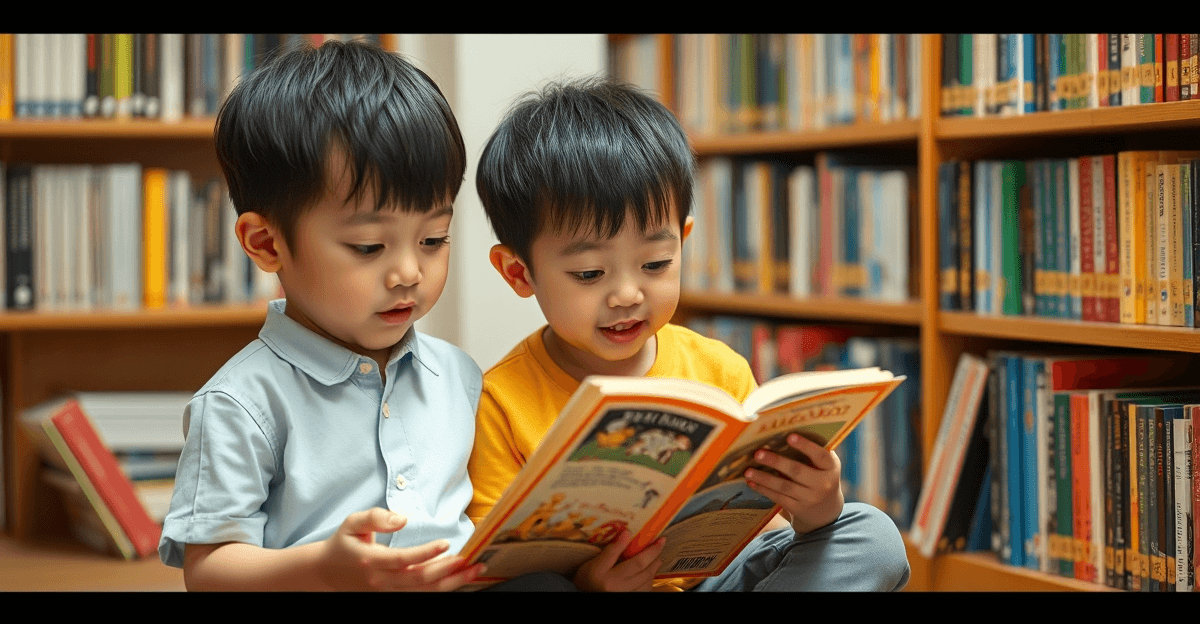
Picture this: it's the first week of January, and your little one walks into a Primary 1 classroom for the very first time. The teacher hands out a worksheet, reads a short story aloud, and asks the class to write their names at the top. In that moment, you want your child to feel capable and calm — not lost. Building strong P1 English readiness in the K1-K2 years is what makes that first week feel exciting instead of overwhelming, and the good news is that it comes down to a handful of specific, learnable literacy skills.
This checklist walks Singapore parents through exactly what those skills are, how they map to the MOE curriculum, and simple ways to nurture them at home — no drilling, no stress, just steady progress.
Key Takeaway (TL;DR): By the time your child starts Primary 1, aim for these five English foundations: (1) recognises all 26 letters and their sounds, (2) reads simple CVC words like "cat" and "pen," (3) writes their own name and some letters, (4) speaks in full sentences and follows 2-3 step instructions, and (5) enjoys being read to. You do NOT need a fluent reader — you need a confident, curious one. Ten to fifteen minutes of daily practice in K2 is enough to build all five.
What Is P1 English Readiness (and Why It Matters)?
P1 English readiness means your child has the emergent literacy foundations — letter knowledge, sound awareness, basic reading, early writing, and spoken English — needed to thrive in Singapore's Primary 1 English classroom. It is not about reading chapter books at age six; it is about arriving with confidence and the building blocks to learn quickly.
Here's the definitive point: MOE's Primary 1 English Language syllabus is built on the assumption that children arrive with emergent literacy, not blank slates. The national STELLAR (Strategies for English Language Learning and Reading) approach used in local primary schools starts with shared reading and phonics, so children who already recognise letters and sounds settle in far more smoothly. Research from Singapore preschools consistently shows that early language skills at age 5-6 are among the strongest predictors of later reading achievement — and reading underpins every subject, right through to the PSLE.
The reassuring truth for parents: readiness is a range, not a finish line. Children at PCF Sparkletots, My First Skool, PAP Community Foundation kindergartens, and MOE Kindergartens all arrive at Primary 1 with different starting points, and the syllabus is designed to teach from wherever they begin.
The P1 English Readiness Checklist: 5 Core Literacy Skills
Below are the five skill areas that matter most, each with what "ready" looks like and how to support it. Think of this as your at-a-glance P1 English readiness map for the K2 year.
1. Letter Recognition and Letter Sounds (Phonics Foundation)
Snapshot answer: Your child should recognise all 26 uppercase and lowercase letters and know the most common sound each one makes (e.g., "b" says /b/) before Primary 1. This is the single most important pre-reading skill.
Letter-sound knowledge is the engine of early reading. A child who knows that "s-u-n" makes three sounds that blend into "sun" is ready to decode. Aim for these milestones:
- By end of K1 (age 5): recognises most uppercase letters and around half the letter sounds.
- By end of K2 (age 6): recognises all upper- and lowercase letters and knows the majority of single-letter sounds.
Try at home: Point out letters on HDB lift signs, MRT station names, and cereal boxes. Play "I spy something that starts with /m/." Sing the alphabet slowly, pointing to each letter. Keep sessions short — five minutes is plenty for this age.
2. Phonemic Awareness: Hearing the Sounds in Words
Snapshot answer: Phonemic awareness is the ability to hear and play with individual sounds in spoken words — rhyming, clapping syllables, and identifying beginning sounds. It develops through listening games, not worksheets, and it is the strongest early predictor of reading success.
Many parents skip this because it doesn't look like "real" reading, but it's foundational. A child who can tell you that "cat" and "hat" rhyme, or that "fish" starts with /f/, is building the mental machinery for reading. Definitive statement: phonemic awareness is more predictive of reading success than IQ or socioeconomic background in the early years.
Try at home: Clap out syllables in your child's name and family members' names. Play rhyming games during car rides. Ask, "What sound does 'ball' start with?" These oral games need no materials at all.
3. Early Reading: Sight Words and Simple Sentences
Snapshot answer: Before Primary 1, aim for your child to read simple 3-letter CVC words (consonant-vowel-consonant, like "dog," "pen," "sit") and recognise 20-30 common sight words such as "the," "and," "is," and "you."
Blending sounds into words is where phonics becomes reading. You're not aiming for fluency — you're aiming for the "aha!" moment when your child realises letters make words that mean something. Common sight words that appear constantly in early readers include the, a, is, it, and, to, you, my, we, and see.
Try at home: Use simple decodable readers (many Singapore libraries stock them free via the NLB app). Make small word cards for CVC words and build them together. Celebrate every word they sound out — encouragement fuels persistence. For a deeper look at what's typical at each age, see our guide on reading milestones for children ages 4-6.
This is also where a little structured, playful practice helps. Tools like QuizKin offer adaptive quiz practice that makes learning fun and measurable for K1-K2 kids — so instead of guessing whether your child has mastered letter sounds or CVC blending, you can actually see their progress and spot the specific gaps to work on next.
4. Early Writing and Fine Motor Skills
Snapshot answer: By Primary 1, your child should be able to hold a pencil correctly, write their own name, and copy or form most letters. Neat handwriting is not expected — controlled, recognisable letters are.
Writing readiness is as much physical as it is cognitive. Forming letters requires hand strength and control that develop through play — cutting, threading, playdough, and drawing. If your child finds pencil work tiring, that's a fine motor signal, not a lack of intelligence.
Try at home: Encourage drawing, tracing, and "writing" shopping lists. Practise name-writing on a small whiteboard. Build hand strength through play — our article on fine motor skills activities for K1 kids in Singapore has plenty of easy, materials-light ideas. You can also read about the broader physical development milestones for 4-6 year olds to see where your child sits.
5. Spoken English and Listening Comprehension
Snapshot answer: Your child should be able to speak in full sentences, answer "why" and "how" questions, follow 2-3 step instructions, and retell a simple story. Oral language is the foundation that reading and writing are built on.
In multilingual Singapore homes, many children juggle English, Mandarin, Malay, Tamil, and dialects — a wonderful asset, but it means English exposure matters. Children who talk about their day, ask questions, and listen to stories arrive with the vocabulary and comprehension that make classroom English click. Definitive statement: a child's spoken vocabulary at age six is one of the clearest signals of how easily they will learn to read.
Try at home: Read aloud daily and pause to ask, "What do you think happens next?" Narrate your errands. Give two-step instructions ("Please put your shoes away, then wash your hands") to build listening skills.
How to Use This Checklist Without Stressing Your Child
Snapshot answer: The most effective P1 English readiness routine is short, daily, and playful — around 10-15 minutes a day beats a two-hour weekend cram. Consistency and enjoyment matter more than intensity at this age.
Anxiety is the enemy of early learning. A child who feels tested shuts down; a child who feels safe explores. Keep the mood light, follow your child's interest, and stop before they tire. If you notice your little one getting nervous around anything that feels like a "test," our guide on reducing test anxiety in preschoolers can help.
Game-based learning works especially well for this age group because it turns practice into play — you can read why in our piece on why game-based learning works for preschoolers. Whether you use flashcards, storybooks, or an app, the principle is the same: make it feel like fun, and progress follows.
For a complete, whole-child view beyond English — covering maths, motor, and social readiness — see our Primary 1 readiness: 30 skills checklist. And if you're weighing digital tools, our roundup of the best educational apps for 4-year-olds in Singapore is a helpful starting point.
When to Seek Extra Support
Snapshot answer: If your child shows little interest in letters or books by mid-K2, struggles to hear rhymes, or finds it hard to follow simple spoken instructions, it's worth a conversation with their preschool teacher — early support is far easier than catch-up later.
Most children develop these skills naturally with exposure and encouragement. But if you have concerns, act early rather than waiting. Preschool teachers see hundreds of children and can tell you what's typical. If you'd like structured one-to-one help, you can find a tutor for free with no agency fees on TuitionLah — useful for targeted support with reading or phonics. And when you're stocking up on books, learning kits, or enrichment, WhyNotDeals lists the latest education and family deals in Singapore so you can spend less.
Remember: readiness varies widely, and a slower start is not a life sentence. What matters is steady, encouraging support — and you're already giving it by reading this.
Your P1 English Readiness Quick-Reference
| Skill area | "Ready for P1" looks like |
|---|---|
| Letter recognition | Knows all 26 letters + most sounds |
| Phonemic awareness | Hears rhymes, beginning sounds, syllables |
| Early reading | Reads CVC words + 20-30 sight words |
| Early writing | Writes own name, forms most letters |
| Spoken English | Full sentences, follows 2-3 step instructions |
Every child arrives at Primary 1 on their own timeline. Use this checklist as a gentle compass — not a scorecard — and celebrate the small wins along the way. With warm, consistent support at home, your little one will walk into that January classroom ready to learn, and that confidence is the greatest head start of all.
References
- MOE English Language Syllabus (Primary) — official Primary English curriculum and the STELLAR approach.
- MOE Kindergarten & Nurturing Early Learners Framework — Singapore's national framework for kindergarten learning, including language and literacy.
- MOE Primary 1 Registration — official information on Primary 1 enrolment in Singapore.
- National Library Board (NLB) — free access to early readers, storybooks, and children's reading resources.
- PAP Community Foundation (PCF Sparkletots) — one of Singapore's largest preschool operators, offering K1-K2 programmes.
Note: I attempted to save this to /private/tmp/p1-english-readiness-singapore.md but file-writing permission was denied in the current mode, so I've output the full post above. If you'd like me to write it to a file, let me know and enable write access (or tell me the target path).
Practise what you’ve read with QuizKin
Adaptive quizzes covering phonics, sight words, numbers, and more — aligned with the Singapore MOE curriculum. Start your free Premium trial today.
Frequently Asked Questions
Before Primary 1, your child should recognise all 26 letters and most letter sounds, read simple 3-letter (CVC) words like 'cat' and 'sun', write their own name, and speak in full sentences. MOE's Primary 1 English curriculum assumes children arrive with these emergent literacy foundations. You do not need your child reading fluently — the goal is confidence and curiosity, not perfection.
No, K2 is actually the ideal window. Most children make their biggest literacy leaps between ages 5 and 6, so the year before Primary 1 is when short, consistent daily practice pays off most. Even 10-15 minutes a day of reading together and playing with letter sounds can move your child forward significantly before January enrolment.
No. Singapore's Primary 1 English syllabus is designed to teach reading systematically from the start, so fluent reading is not a prerequisite. What matters more is phonemic awareness (hearing sounds in words), letter-sound knowledge, a love of books, and the ability to follow instructions and express themselves in English.
Ready to make learning fun?
QuizKin turns screen time into learning time with adaptive quizzes built for K1-K2 kids in Singapore. Free to start.
Related Articles
Before Primary 1: What Learning Tools Actually Work in the K2 Bridge Year (2026)
KooBits, Practicle and Geniebook all start at P1 — so what should your K2 child use in the year before Primary 1? An honest guide to the K2-to-P1 bridge year for Singapore parents.
SPARK Certified Preschools: Does It Matter? (2026)
What SPARK certification really tells you about a Singapore preschool — how centres are assessed, what it misses, and how to use it when shortlisting.
Primary 1 Readiness: 30 Skills Your Child Needs (2027 Checklist)
Complete P1 readiness checklist for Singapore children entering Primary 1 in 2027. Covers reading, writing, math, social skills, and independence — with actionable tips to close any gaps.