Before Primary 1: What Learning Tools Actually Work in the K2 Bridge Year (2026)
KooBits, Practicle and Geniebook all start at P1 — so what should your K2 child use in the year before Primary 1? An honest guide to the K2-to-P1 bridge year for Singapore parents.
Mervin Tan · Founder, QuizKin
Published 28 August 2026
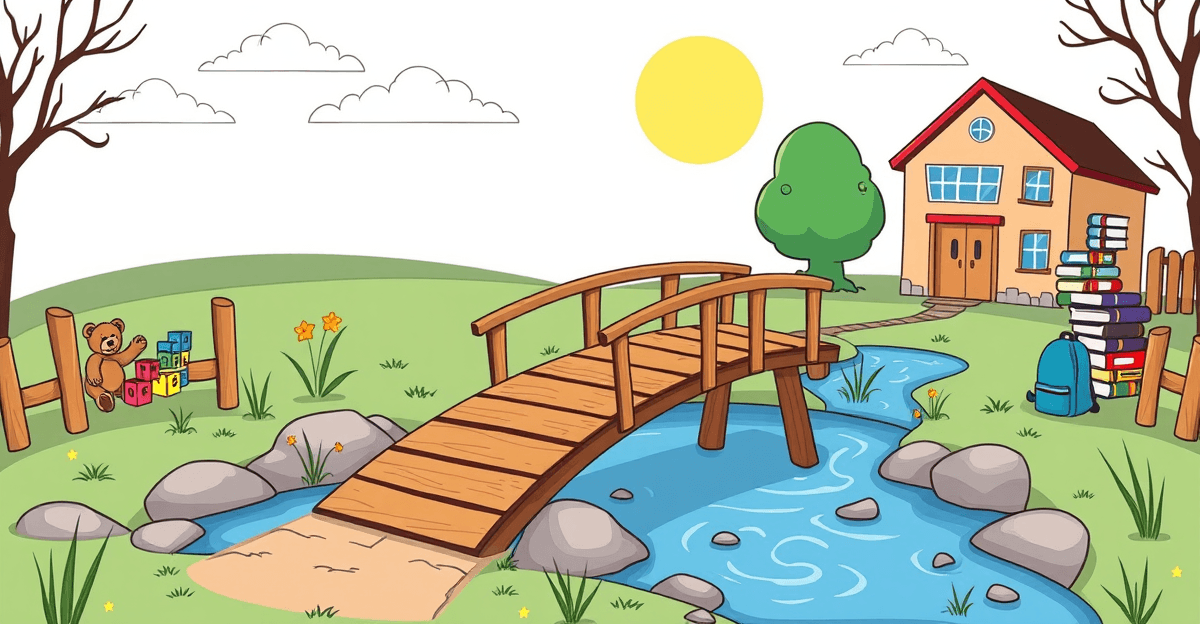
Here's an odd gap in Singapore's education market. Once your child starts Primary 1, you'll have no shortage of digital learning platforms competing for your money — KooBits, Practicle, Geniebook, and more. But in the K2 year — the year that actually decides whether your child walks into P1 confident or overwhelmed — those same platforms have nothing for you. They all start at P1.
So what do you actually use in the bridge year? This guide lays out the honest options: what the P1 platforms are (and why they're too early for K2), what free apps do well, where a Singapore-aligned K1-K2 app fits, and a realistic routine that doesn't turn your five-year-old's last kindergarten year into a bootcamp.
TL;DR: The major Singapore learning platforms (KooBits, Practicle, Geniebook) are built for P1-P6 and are too advanced for K2 children. In the bridge year, focus on foundations: reading simple sentences, letter and character formation, number bonds within 10, and independence skills. Free apps like Khan Academy Kids help but follow the US curriculum with no Chinese; QuizKin is built specifically for this K1-K2 window on the Singapore progression. Ten minutes of daily practice from early K2 beats any last-minute sprint.
The K2 Gap: Why Your Options Look Thin
If you've asked around about learning apps for your K2 child, you've probably had this conversation:
"Try KooBits — my P3 boy uses it."
"Is it OK for K2?"
"...actually I'm not sure."
The answer is that it isn't, really. Here's the current landscape (prices as listed on official sites at the time of writing — always check before subscribing):
- KooBits — Maths, Science, English and Chinese for P1-P6 only. Listed at S$17.99/month billed annually (about S$216/year), annual-only, with a 7-day trial that requires a credit card. Widely used, partly because many primary schools use it in class.
- Practicle — adaptive maths for P1-P6 only, aligned to the MOE syllabus, with annual plans listed from S$168 to S$388 per year.
- Geniebook — likewise targets primary-school levels, not preschool.
None of this is a criticism — these are solid products for the age they serve. But their content starts at P1 and assumes the K2 foundations are already in place: letter sounds, basic reading, number bonds, pencil control. If those foundations are shaky, a P1 platform doesn't fix them; it just frustrates your child a year early.
The bridge year needs bridge-year tools.
What P1 Actually Expects (The Short Version)
Before choosing tools, know what you're building toward. Our P1 readiness skills checklist covers this in depth, but the essentials teachers mention again and again:
- Reading — decoding simple sentences independently, recognising the common sight words. (See how to teach your child to read.)
- Writing — correct letter formation, writing their own name, sufficient fine-motor strength for a full school day of writing.
- Numeracy — counting confidently, number bonds within 10, basic addition and subtraction with objects.
- Chinese — P1 Chinese moves quickly; ting xie starts almost immediately, so character recognition and some writing exposure in K2 pays off disproportionately.
- Self-management — following multi-step instructions, managing their own belongings, asking for help. Honestly, teachers rank this above academics.
Registration itself is a separate adventure — if you haven't been through it, start with the P1 registration guide.
Your Actual Options in K2 — Honestly Compared
Free apps: genuinely good, with caveats
Khan Academy Kids is completely free — no ads, no subscriptions — and excellent for broad early learning. If budget is the constraint, use it without guilt. Its limitations for the Singapore bridge year are structural, not quality issues: it follows the US curriculum with American English pronunciation and spelling, and has no Chinese content, so it can't cover the Mother Tongue side of P1 prep at all.
Duolingo ABC (also free) does polished English phonics and tracing — again with American pronunciation, English only.
Our full app roundup compares these in detail.
Singapore-aligned practice: where QuizKin fits
QuizKin exists precisely for this window — it's built for K1-K2 on the Singapore progression, covering the spread P1 will actually test: phonics and sight words in British English, numeracy through number bonds, and Chinese (characters, vocabulary, pinyin, reading, sentences), plus writing practice in both English and Chinese. The free plan (one quiz a day, three categories) is enough to try the approach; paid plans are S$9.90/month or S$99/year — deliberately a fraction of what you'll pay for P1 platforms a year later, let alone enrichment classes.
We're obviously not neutral about our own app, so here's the honest framing: if Khan Academy Kids' US-curriculum coverage is fine for you and Chinese is handled elsewhere, free tools may be all you need. QuizKin earns its keep when you want practice that matches the Singapore sequence and covers Chinese — the two things free apps don't do.
Enrichment centres: effective, expensive
Phonics and Chinese enrichment centres commonly charge S$150-300+ per month. They work — small-group teaching with a trained teacher is powerful — and for children significantly behind in reading, a structured programme may be worth it. But for a typically-developing K2 child, daily short practice at home covers the same foundations at a small fraction of the cost. Many families land on a sensible hybrid: home practice daily, one enrichment class for the subject that needs the most support.
Worksheets and printables
Printable worksheets (Twinkl and similar, or free MOE-adjacent resources) are useful for pencil-and-paper stamina — which matters, because P1 is still substantially a pencil-and-paper world. Use them alongside, not instead of, interactive practice: a worksheet can't hear your child blend a word or correct a stroke order.
A Realistic K2 Bridge-Year Routine
You do not need hours a day. You need consistency:
- 10-15 minutes of app or worksheet practice daily — rotate focus: phonics/reading, numeracy, Chinese.
- 10-15 minutes of reading together daily — no app replaces this. (Book ideas here.)
- Weekly: one writing session (letters and name-writing), one Chinese-focused session if Chinese isn't in the daily rotation.
- Term 3-4: walk through the K2 assessment-style checks casually to spot gaps while there's time to close them — not to drill for scores.
- Throughout: hand over small responsibilities — packing their own bag, managing a water bottle, building independence. This is P1 prep too.
That's roughly 25 minutes a day. A child who does this from January of K2 arrives at P1 with more than 100 hours of foundation practice — accumulated painlessly.
The Handover: K2 Tools → P1 Tools
Think of it as a relay. QuizKin (or your chosen K2 tools) run the leg up to the end of K2; platforms like KooBits and Practicle take the baton at P1. They're complements at different stages, not competitors — we've written an honest QuizKin vs KooBits comparison if you want the detail.
The one mistake to avoid is the gap year in reverse: paying for a P1 platform in K2 because "earlier must be better." Content pitched a year above your child's level doesn't accelerate learning — it teaches them that learning apps are frustrating. Build the foundations with K-level tools first.
Want to see what Singapore-aligned K2 practice looks like? Create a free QuizKin account — no credit card, and the free plan doesn't expire.
Sources
- MOE Primary 1 Registration — Official MOE guide to the P1 registration phases, balloting, and timeline
- MOE Primary Curriculum and Syllabuses — MOE primary school subject syllabuses, including English Language and Mathematics frameworks
- Early Childhood Development Agency (ECDA) — Singapore's regulatory authority for early childhood education, governing K1–K2 kindergartens and developmental frameworks
- Khan Academy Kids — Free early learning app; US curriculum, English only, no Chinese content
- KooBits — Singapore Primary School Learning Platform — Official site for current pricing and subject coverage (P1–P6)
Practise what you’ve read with QuizKin
Adaptive quizzes covering phonics, sight words, numbers, and more — aligned with the Singapore MOE curriculum. Start your free Premium trial today.
Frequently Asked Questions
Not really — both are built for Primary 1 to Primary 6. KooBits and Practicle content starts at P1 level and assumes foundational skills like letter sounds, number bonds, and basic reading are already in place. Most K2 children would find the material too advanced. The K2 year is for building those foundations, and you need K-level tools to do it.
As of writing, KooBits lists S$17.99/month billed annually (about S$216/year, annual-only, with a 7-day trial requiring a credit card). Practicle lists annual plans from S$168 to S$388 per year for its adaptive maths. Prices change, so check the official sites, but the pattern is consistent: Singapore parents routinely pay S$170-390/year once a child is in primary school.
Not necessarily — Khan Academy Kids is genuinely excellent and completely free, and for many families it's enough. Its limitation for Singapore is that it follows the US curriculum with American English and has no Chinese content. A Singapore-aligned app adds value if you specifically want practice matching what local kindergartens teach and P1 expects — phonics in British English, local sight words, number bonds, and Chinese.
The K2 year is the natural window — that's the year of P1 registration itself (typically mid-year) and the year kindergartens consolidate reading, writing, and numeracy. Starting light, consistent practice at the beginning of K2 beats a panicked sprint in November. Ten minutes a day from January is far more effective than an hour a day in the last school holidays.
Teachers consistently point to: reading simple sentences independently, writing their own name and forming letters correctly, number bonds within 10, listening and following multi-step instructions, and self-management (toileting, packing a bag, asking for help). Academic head-starts beyond that matter less than parents think — P1 teachers reteach from the start, but children who lack the foundations struggle to keep up.
About the author
Mervin Tan
Founder, QuizKin
Mervin Tan is the founder of QuizKin and a software engineer and dad of two young children in Singapore. He builds QuizKin's adaptive quiz engine and writes practical K1-K2 learning guides grounded in MOE's Nurturing Early Learners framework and his own experience preparing his kids for Primary 1. QuizKin is built by Adaptels Pte. Ltd., Singapore.
Ready to make learning fun?
QuizKin turns screen time into learning time with adaptive quizzes built for K1-K2 kids in Singapore. Free to start.
Related Articles
Free K2 Assessment Test: Is Your Child Ready for Primary 1? (Singapore 2026)
Take a free P1 readiness assessment for your K2 child. Covers sight words, phonics, number bonds, and Chinese — the skills Singapore Primary 1 expects from Day 1.
Primary 1 Readiness: 30 Skills Your Child Needs (2027 Checklist)
Complete P1 readiness checklist for Singapore children entering Primary 1 in 2027. Covers reading, writing, math, social skills, and independence — with actionable tips to close any gaps.
P1 English Readiness Checklist: Literacy Skills Needed
P1 English readiness checklist for Singapore parents: the literacy skills your K1-K2 child needs before Primary 1, plus simple ways to build them at home.