Physical Development Milestones for 4-6 Year Olds
A Singapore parent's guide to physical development milestones for 4-6 year olds — gross and fine motor skills, red flags, and simple home activities for K1-K2 kids.
QuizKin Team
Published 30 September 2026
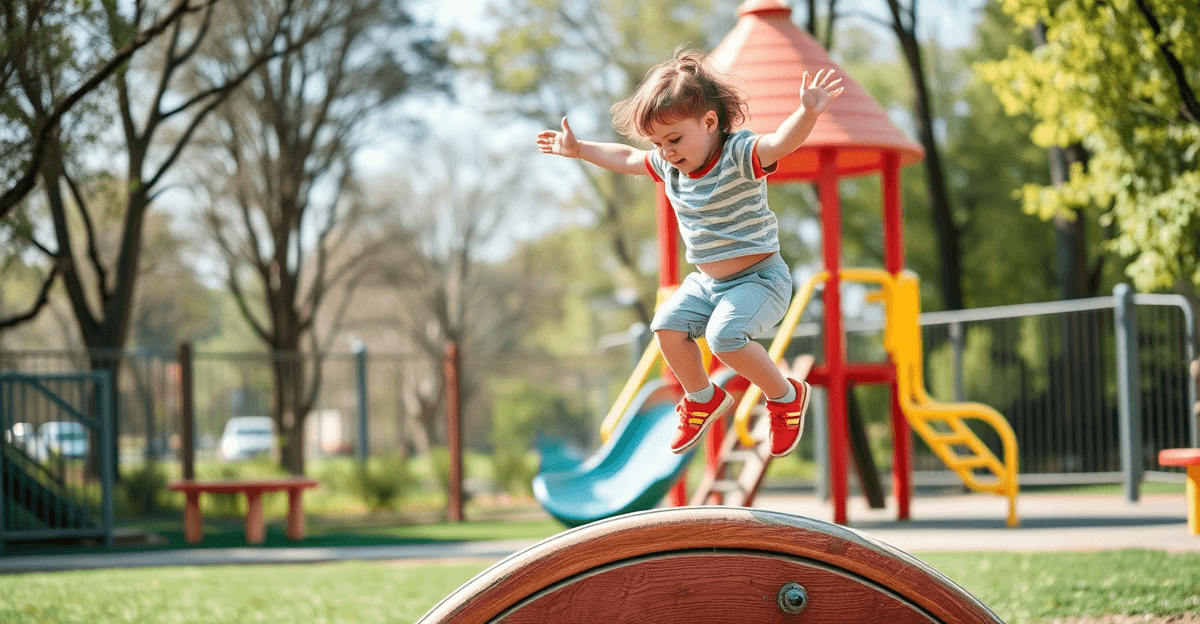
You watch your little one wobble across the playground balance beam at the void deck, arms out like a tightrope walker, and you wonder — is this normal for her age? Should she be doing more? Understanding the physical development milestones for 4-6 year olds helps you answer that question with confidence instead of comparing your child to the neighbour's. Between K1 and K2, your child's body is quietly rewiring itself for the demands of Primary 1: sitting still, gripping a pencil for an hour, carrying a school bag, and keeping up with active recess play.
This guide walks you through what to expect, what's normal, and when to gently seek help — all grounded in the Singapore preschool context.
TL;DR — Key Takeaways
- Between ages 4-6, children master gross motor skills (hopping, skipping, catching) and fine motor skills (pencil grip, cutting, buttoning).
- Aim for at least 180 minutes of physical activity daily, including 60 minutes of energetic play (HPB guideline).
- By age 5, most kids can hop on one foot, copy a triangle, and dress themselves with little help.
- Milestones are ranges, not deadlines — a 3-6 month variation is completely normal.
- Physical readiness (especially fine motor) directly supports Primary 1 handwriting and stamina.
Why Physical Development Milestones for 4-6 Year Olds Matter
Physical development in the 4-6 age range is the foundation for almost everything your child does at school. Gross motor strength lets them sit upright at a desk without fatigue, while fine motor control determines whether holding a pencil feels natural or exhausting. In short: a physically confident child is a child who can focus on learning instead of on their own body.
Research consistently links early motor development with later academic performance. A child who cannot yet control a pencil will struggle with handwriting, and a child who tires quickly during play may find a full Primary 1 school day overwhelming. This is why MOE-registered kindergartens and preschools like PAP Community Foundation (PCF) Sparkletots, My First Skool, and PAP Community Foundation centres build daily outdoor play, obstacle courses, and craft work into the K1 and K2 curriculum — not as filler, but as deliberate developmental scaffolding.
Gross Motor Milestones: What to Expect at Each Age
Snippet summary: Gross motor skills involve the large muscles used for running, jumping, and balancing. Between ages 4 and 6, children progress from basic hopping to coordinated skipping, ball games, and confident stair climbing.
Here's a realistic breakdown of gross motor progress, keeping in mind these are typical ranges rather than fixed rules.
Around Age 4 (K1)
- Hops forward on one foot two or three times
- Catches a large ball bounced to them (most of the time)
- Walks up stairs using alternating feet
- Pedals and steers a tricycle or balance bike confidently
- Stands on one foot for about 4-5 seconds
Around Age 5 (K2)
- Skips using alternating feet
- Hops on one foot smoothly, five or more times
- Catches a small ball with hands rather than trapping it against the body
- Walks down stairs with alternating feet
- Balances on one foot for 8-10 seconds — think of the "freeze" games at the playground
Around Age 6 (Early Primary 1)
- Runs, changes direction, and stops with good control
- Jumps rope, swings on monkey bars, and rides a bicycle (often still with training wheels)
- Throws a ball overhand with reasonable aim
Definitive statement: By age 5, the ability to hop on one foot and skip with alternating feet is one of the clearest markers that a child's gross motor development is on track.
A simple way to support this in land-scarce Singapore: use what's around you. The void deck, the neighbourhood playground, and HDB open spaces are perfect for hopscotch, "catching," and balance games. Cycling at East Coast Park or a stroll up the stairs instead of the lift all count toward that daily movement goal.
Fine Motor Milestones: The Skills That Prepare Little Hands for School
Snippet summary: Fine motor skills use the small muscles of the hands and fingers for tasks like drawing, cutting, and buttoning. These skills are the single biggest physical predictor of a smooth transition to Primary 1 handwriting.
Fine motor development often gets less attention than running and jumping, but it's the one that most directly affects school readiness. Here's the typical progression:
Around Age 4 (K1)
- Copies a cross (+) and a square
- Uses a functional pencil grip (though not always mature)
- Cuts along a straight line with child scissors
- Builds a tower of 9-10 blocks
- Threads large beads
Around Age 5-6 (K2 to P1)
- Copies a triangle and begins writing recognisable letters and numbers
- Holds a pencil with a mature tripod grip (thumb, index, middle finger)
- Cuts out simple shapes along a curved line
- Buttons, zips, and often ties shoelaces
- Draws a person with six or more body parts
Definitive statement: A mature tripod pencil grip and the ability to copy a triangle by age 5-6 are strong indicators that a child is ready for the handwriting demands of Primary 1.
If your little one resists drawing or tires quickly during craft, don't panic — but do build in more practice. Playdough, tearing paper, tweezers-and-pompom games, and threading are far more effective (and fun) than pushing worksheets. For a deeper toolkit of home activities, our guide to fine motor skills activities for K1 kids is a great next read.
How Much Physical Activity Does a K1-K2 Child Actually Need?
Snippet summary: Singapore's Health Promotion Board recommends at least 180 minutes of physical activity daily for children aged 3-6, including a minimum of 60 minutes of energetic, heart-pumping play.
The good news: this does not require enrolling your child in three sports classes. Movement spread throughout the day — walking to the MRT, playing tag before dinner, dancing to music while you cook — adds up quickly. What matters is variety and consistency, not intensity.
A practical Singapore-friendly daily mix might look like:
- Morning: 20-minute walk or scoot to preschool
- Afternoon: Structured play at the childcare centre (already built into PCF and My First Skool schedules)
- Evening: 30-45 minutes of free play at the playground or void deck
Because energetic play and screen time compete for the same hours, it's worth having a plan. Our screen time rules for preschoolers guide can help you strike a healthy balance without daily battles.
Physical Milestones and Primary 1 Readiness
Physical development and academic readiness are deeply connected. A child who can sit with core stability, grip a pencil comfortably, and last a full active day at school is a child who can channel energy into learning. This is exactly why fine and gross motor benchmarks appear alongside literacy and numeracy in most Primary 1 readiness checklists.
Once the physical foundation is solid, cognitive practice becomes far more effective — a child who isn't fighting their own hand can enjoy learning letters and numbers. That's where tools like QuizKin come in: adaptive quiz practice that makes learning fun and measurable for K1-K2 kids, adjusting to your child's pace so that early academic skills grow alongside their physical confidence. Pairing daily active play with short, playful learning sessions gives your little one a well-rounded head start.
If your child gets nervous around anything that feels like a "test," building confidence early helps — see our tips on reducing test anxiety in preschoolers.
When Should You Seek Help? Red Flags to Watch
Snippet summary: While milestones vary, certain signs warrant a chat with your paediatrician or a developmental clinic. Early intervention in Singapore is most effective when started young.
Consider seeking advice if, by age 5, your child:
- Frequently trips, falls, or seems unusually clumsy compared to peers
- Cannot hop on one foot or climb stairs with alternating feet
- Strongly avoids drawing, colouring, or holding a pencil
- Cannot cut with scissors or manage buttons and zips
- Has lost a physical skill they previously had (regression)
Definitive statement: Regression — losing a skill your child once had — is always worth a professional conversation, regardless of age.
In Singapore, your first stop is your polyclinic or paediatrician, who can refer your child to developmental services at KK Women's and Children's Hospital or the National University Hospital. Early Intervention Programme for Infants and Children (EIPIC) services are subsidised and designed to support children who need extra help. Raising a concern early costs nothing and, more often than not, brings reassurance.
Practical Ways to Support Physical Development at Home
You don't need fancy equipment — Singapore's everyday environment is full of opportunities:
- Balance: Walk along void-deck kerbs (holding your hand), play "statues," or use masking tape lines on the floor.
- Strength & coordination: Animal walks (bear crawl, crab walk), pillow obstacle courses, and playground monkey bars.
- Fine motor: Playdough, LEGO, threading pasta, tearing and gluing paper, and helping to peck open snack packets.
- Ball skills: Rolling, bouncing, and catching a soft ball in the corridor or at the park.
Making movement playful is the secret — children this age learn best through games. The same principle powers effective learning apps, which is why game-based learning works so well for preschoolers. Looking to keep costs down on classes, gear, or enrichment? You can browse current family and education promotions on WhyNotDeals, and if you ever want extra learning support down the road, TuitionLah lets you find a tutor for free with no agency fees.
The Bottom Line
Physical development milestones for 4-6 year olds are a range, not a race. Most children hit the key markers — hopping, skipping, gripping a pencil, dressing themselves — somewhere within a comfortable window, and the best thing you can do is offer daily, playful movement and a low-pressure environment. Keep an eye out for genuine red flags, celebrate the wobbly progress, and trust that your little one is building the body and brain foundations for a confident start to school.
Your child doesn't need to be the fastest runner or the neatest colourer in K2. They just need consistent chances to move, play, and grow — and a parent like you paying attention.
Sources & References
- Health Promotion Board — Physical Activity for Children — Singapore guidelines on daily physical activity for young children.
- MOE — Kindergarten & Preschool Curriculum (Nurturing Early Learners) — Ministry of Education framework for K1-K2 development.
- KK Women's and Children's Hospital — Child Development — Developmental assessment and paediatric services in Singapore.
- ECDA — Early Childhood Development Agency — Preschool standards and early intervention information.
- MOH — Early Intervention (EIPIC) — Overview of subsidised early intervention services for children in Singapore.
Practise what you’ve read with QuizKin
Adaptive quizzes covering phonics, sight words, numbers, and more — aligned with the Singapore MOE curriculum. Start your free Premium trial today.
Frequently Asked Questions
By age 5, most children can hop on one foot, catch a bounced ball, walk up and down stairs with alternating feet, and skip. On the fine motor side, they should be able to hold a pencil with a mature grip, copy a triangle, cut along a line with scissors, and dress themselves with minimal help. These skills line up with what MOE-registered kindergartens and preschools like PCF Sparkletots and My First Skool expect during K1 and K2. Remember that milestones are ranges, not deadlines — a few months either way is normal.
Singapore's Health Promotion Board and international guidelines recommend at least 180 minutes (3 hours) of physical activity spread across the day for children aged 3-6, including at least 60 minutes of energetic play like running, jumping, or climbing. This does not need to be structured sport — free play at the playground, cycling in the void deck, or dancing at home all count. Breaking it into short bursts throughout the day works better than one long session.
Speak to your paediatrician or a KK Hospital or NUH developmental clinic if, by age 5, your child frequently falls, cannot hop on one foot, avoids drawing or holding a pencil, cannot climb stairs with alternating feet, or has clearly regressed in skills they once had. Early intervention services in Singapore, including EIPIC, are most effective when started early. Trust your instincts — you know your little one best, and raising a concern early costs nothing.
Ready to make learning fun?
QuizKin turns screen time into learning time with adaptive quizzes built for K1-K2 kids in Singapore. Free to start.
Related Articles

Speech and Language Milestones for Ages 4-6: Singapore Parent Guide
Discover speech and language milestones for ages 4-6 with Singapore-specific guidance for K1-K2 parents. Know the signs and when to seek help.
Teaching Independence Skills to Your Preschooler: Singapore Parent Guide
Practical ways to teach your K1-K2 child independence skills before Primary 1 — dressing, packing bags, eating alone, and more. Singapore-focused guide.
Developing Social Skills in Preschoolers: Tips for Singapore Parents
Practical guide to helping your K1-K2 child build social skills — sharing, turn-taking, conflict resolution, and making friends. Singapore-focused advice.