Dealing With Picky Eating in Preschoolers: Nutrition Tips for Singapore Parents
Help your K1-K2 child overcome picky eating with practical nutrition strategies tailored for Singapore families. Expert tips to build healthy eating habits early.
Mervin Tan · Founder, QuizKin
Published 25 May 2026
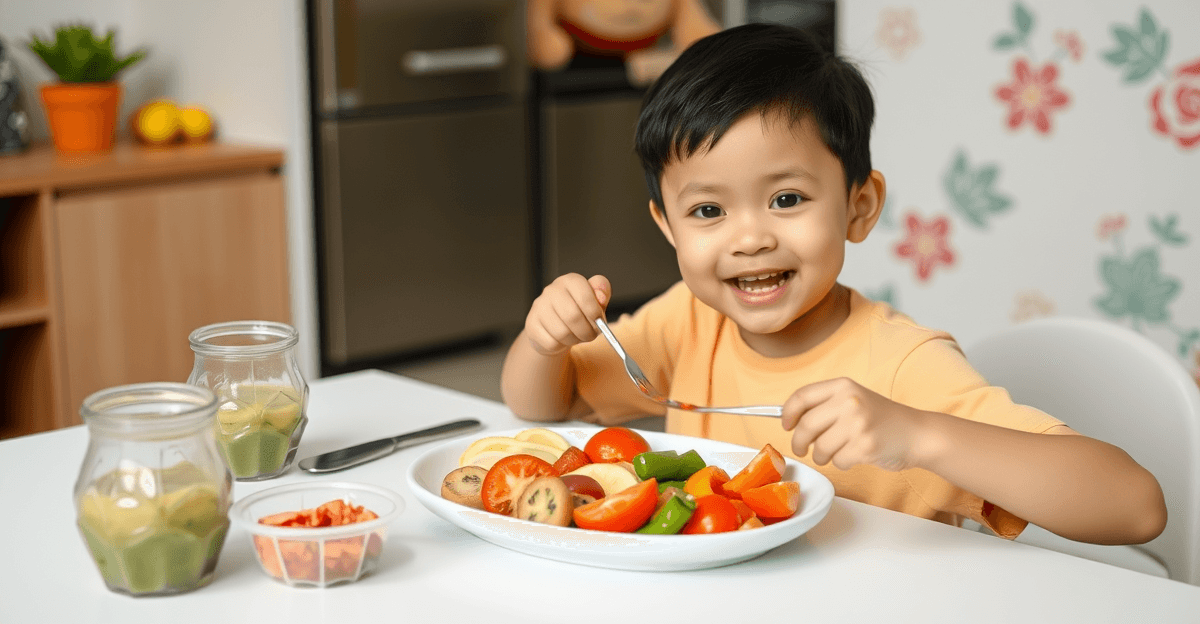
You're packing lunch for your K1 child's preschool drop-off, and yet again, they've declared war on anything green. Meanwhile, you're scrolling through Singapore parenting forums where other parents seem to have children happily munching on organic broccoli and salmon. Sound familiar?
TL;DR: Help your K1-K2 child overcome picky eating with practical nutrition strategies tailored for Singapore families. Expert tips to build healthy eating habits early.
If your K1 or K2 child is a picky eater, you're not alone—and more importantly, you're not failing as a parent. Picky eating is one of the most common concerns Singapore parents bring up, whether chatting at PCF Jurong or at the playground. The good news? With a few strategic approaches grounded in child development and nutrition science, you can help your preschooler build a healthier relationship with food—without turning mealtimes into a battleground.
Understanding Why Preschoolers Become Picky Eaters
Before jumping to solutions, it helps to understand what's actually happening in your child's brain and body between ages 4-6.
Developmental Neophobia: A Normal Stage
Around age 3, something interesting happens in the toddler brain. Children become more cautious about new foods—a phase called "food neophobia." This is actually a protective mechanism that served our ancestors well when they needed to avoid potentially toxic plants. Your K1 child's pickiness isn't defiance; it's their developing brain doing exactly what it's designed to do.
During the K1-K2 years, this caution peaks. Your child may have happily eaten a certain food at age 2, then rejected it entirely by age 4. This isn't regression—it's normal development.
Taste Bud Changes & Sensory Development
Between K1 and K2, children's palates are still developing. Some foods may taste too strong, too bitter, or have a texture that feels uncomfortable in their mouth. In Singapore's tropical climate, children may also be more sensitive to food temperatures and freshness. A child who refuses curry one week might accept it weeks later—not because you've done anything differently, but because their sensory systems have matured slightly.
Autonomy & Control
Preschoolers are in a critical developmental window where independence matters enormously. When you insist they eat something, you're inadvertently triggering a power struggle. Giving children some control over mealtimes (within boundaries you set) respects this developmental need and paradoxically reduces resistance.
The Division of Responsibility: A Game-Changer for Singapore Families
One of the most effective frameworks comes from paediatrician Ellyn Satter's "Division of Responsibility." It's simple but transformative:
You (the parent) decide:
- What foods are offered
- When meals and snacks happen
- Where eating takes place
Your child decides:
- Whether to eat
- How much to eat
This approach removes the pressure dynamic and lets children tune into their own hunger cues—a skill that matters for life, not just preschool.
How This Works in Practice
Let's say dinner is at 6 PM at your Bukit Timah home. You've prepared three components: rice, a vegetable (say, stir-fried bok choy), and grilled chicken. Your K2 daughter sees all three but decides to eat only rice and chicken. You stay calm and don't cajole. She's eaten protein and carbs. That's enough.
Over the next month, as she watches you and siblings eating the bok choy without pressure, and as her taste receptors continue developing, she may tentatively try it. Or she may not—but you've created an environment where food exploration feels safe, not coerced.
Many Singapore preschools like My First Skool actually use similar principles during mealtimes, so your approach at home reinforces what teachers are already doing.
Building a Nutritionally Balanced Plate (Even With a Picky Eater)
The Health Promotion Board (HPB) provides clear guidelines for K1-K2 nutrition. Here's how to apply them realistically with a selective eater:
The Three-Component Plate System
Create meals with three distinct components:
- A carbohydrate (rice, noodles, bread, potato)
- A protein (chicken, fish, tofu, eggs, legumes)
- A vegetable or fruit
This ensures that even if your child only eats two of the three, they're still getting balanced nutrition across the week.
Leverage "Safe Foods" (The Anchor Foods Strategy)
Every picky eater has foods they'll reliably eat. Identify these—your child's "safe foods." For many Singapore K1 kids, this might be white rice, steamed chicken, or scrambled eggs. Don't judge these preferences; instead, use them as anchors.
Build meals around safe foods while gradually introducing new items:
- Rice (anchor), stir-fried chicken with vegetables (new textured exploration), cucumber slices (familiar)
- Noodles (anchor), fish cake (mild protein), steamed broccoli (new)
Over time, the "new" items become familiar, and you can introduce others.
Preparing Foods in Multiple Ways
Rejection often isn't about the food itself but how it's prepared. Carrots might be rejected as a boiled mush but accepted raw with hummus. Bell peppers might be refused when whole but eaten diced into fried rice.
Try the same vegetable in 2-3 different forms over 2-3 weeks. You'll likely find at least one preparation method your child accepts.
Practical Tips Specific to Singapore Preschool Life
Coordinate With Your Preschool
Whether your child attends a PCF centre, My First Skool, PAP Community Foundation preschool, or private kindergarten, communicate with teachers about your child's picky eating. Most preschools in Singapore have experienced this thousands of times. Teachers often use peer modeling—sitting near children who eat a wider variety—which works remarkably well. Don't send notes requesting special meals unless medically necessary; instead, ask teachers to share observations about what your child does eat at school.
Many children eat better at preschool than at home because of peer influence and different serving styles.
Time Meals Strategically
Singapore's heat affects appetite. A K1 child might not eat much at lunch during a 35°C afternoon but have a robust appetite at 5:30 PM. Adjust mealtimes to match your child's natural rhythm, and don't assume refusal means they don't like the food—sometimes it's just timing.
Also, ensure snacks don't happen within 90 minutes of mealtime. Even a small cup of milk or juice can blunt appetite.
Make Food Familiar Through Low-Pressure Exploration
Here's where something like QuizKin's adaptive learning approach actually has indirect relevance: just as your K1 child learns best when activities feel playful and exploratory rather than test-like, the same applies to food. Involve your child in choosing vegetables at the market, placing items in the shopping basket, or helping wash produce. Let them observe (not necessarily try) you eating and enjoying vegetables.
This builds familiarity and positive associations without any pressure to consume.
Normalize Eating Vegetables Through Storytelling
Singapore's multicultural context is a strength here. Food has stories. Tell your K2 child: "This kangkung is from the farm in Lim Chu Kang. The farmer picked it this morning." Or share that their friend at preschool loves eating broccoli because it makes them strong. Stories create emotional connection that pressure never will.
Nutrition Gaps: When to Seek Professional Help
Most picky eaters are nutritionally adequate. However, speak with your GP or a paediatrician if:
- Your child hasn't grown along their growth curve (checked at polyclinic)
- They eat from fewer than 10-15 distinct foods total (different from just preferring certain foods)
- They're lethargic or seem unwell
- You're genuinely concerned about specific nutrients
The HPB and most Singapore healthcare providers are excellent resources and won't judge.
Foods That Work for Most Picky Preschoolers in Singapore
While every child is different, these foods tend to be accepted more readily:
Proteins:
- Eggs (scrambled, baked, in fried rice)
- Mild fish (barramundi, dory)
- Chicken breast (steamed or shredded)
- Tofu (soft, silken varieties)
- Dhal (mild curry)
Carbohydrates:
- White or brown rice
- Pasta with mild sauces
- Bread, roti
- Potato (mashed, roasted, or in soup)
Vegetables (prepared simply):
- Corn
- Carrots (raw or cooked until soft)
- Cucumber
- Tomato (seeds removed, if preferred)
- Broccoli florets (small pieces)
Fruits:
- Banana
- Apple slices
- Mango
- Watermelon
- Papaya
The Patience Principle: Setting Realistic Expectations
Here's what research consistently shows: it takes an average of 10-15 exposures to a new food before a young child accepts it. Some children need 20+ exposures. This isn't failure; it's neurobiology.
This means introducing a new vegetable, accepting refusal calmly, and trying again next week—for months—is exactly the right approach. It feels slow, but it's actually the most efficient path to expanding your child's diet long-term.
What NOT to Do (Common Mistakes Singapore Parents Make)
- Don't use dessert as a reward ("Eat your vegetables and you can have ice cream"). This elevates dessert's value and teaches your child that vegetables are a chore.
- Don't force eating. It backfires and creates negative food associations lasting years.
- Don't assume you know why they're refusing. Ask: "Would you like to try this?" rather than assuming a "no" before they've decided.
- Don't compare to other children. Every K1-K2 child's development, including eating, is individual.
- Don't prepare completely separate meals. Offer one family meal; your child eats what they choose from it.
Connecting Food Habits to Lifelong Learning
While it might seem unrelated, the skills your child develops around accepting new foods—managing uncertainty, trying again after initial discomfort, learning from observation—are the same ones they'll need for academic growth. Kids who've learned to approach new experiences (including unfamiliar foods) with curiosity rather than fear tend to approach new learning similarly.
Just as adaptive quiz practice that makes learning fun and measurable for K1-K2 kids works because it meets children where they are developmentally, feeding a picky eater works best when you meet them where they are too—respecting their developmental stage, sensory preferences, and need for autonomy.
Moving Forward: Your Action Plan
This week:
- Identify three "safe foods" your child reliably eats
- Observe (without commenting) what your child eats at preschool
- Choose one familiar food to prepare in a slightly different way
This month:
- Implement the Division of Responsibility at one meal daily
- Involve your child in food selection or preparation once
- Introduce one new food, accepting whatever response comes
Ongoing:
- Stay patient—progress is measured in weeks and months, not days
- Celebrate small wins (trying a new food, eating what they choose)
- Remember: you're not raising a "good eater"; you're raising a person with a healthy relationship to food
Final Thought
Singapore parents are high-achievers by nature. That excellence serves you well in many areas, but feeding a picky preschooler isn't a problem to solve quickly—it's a developmental process to support patiently. Your K1 or K2 child's expanding palate will develop on their timeline, not the internet's. Trust the process, stay consistent, and know that this phase, while currently front-and-centre in your daily life, is genuinely temporary.
You've got this.
Have you found strategies that work for your picky eater in Singapore? Share your experience in the comments below—other parents would love to hear what's worked for your family.
Sources
Looking for more? Check out find a tutor for free on TuitionLah.
Exploring parenthood in Singapore? Visit ParentLah for practical tips on raising kids in Singapore.
Practise what you’ve read with QuizKin
Adaptive quizzes covering phonics, sight words, numbers, and more — aligned with the Singapore MOE curriculum. Start your free Premium trial today.
Frequently Asked Questions
Yes, extremely normal. Between ages 4-6, children naturally become more selective as their taste preferences develop. Many Singapore parents report this happens right around preschool entry when children are also managing new social environments. It's a developmental phase, not a problem—consistency and patience help tremendously. Most children grow out of it within 1-2 years if you avoid using food as a reward or punishment.
The Health Promotion Board (HPB) recommends K1-K2 children eat about ½ to ¾ cup of grains, 2-3 servings of vegetables, 1-2 servings of fruit, and 1-2 servings of protein daily. However, appetites vary greatly by child—some days they'll eat more, other days less. Let hunger and fullness cues guide you rather than forcing plate-cleaning. If your child is growing normally (checked at your polyclinic or GP), their intake is likely adequate.
Many Singapore preschools like PCF centres and My First Skool offer family-style meals where children see peers eating vegetables, which helps normalise them. At home, keep offering vegetables without pressure—it can take 10-15 exposures before acceptance. Try involving your child in choosing vegetables at the market or helping prepare meals; ownership builds interest. If truly concerned about nutrition gaps, speak with your GP or a paediatrician who can assess if supplementation is needed.
About the author
Mervin Tan
Founder, QuizKin
Mervin Tan is the founder of QuizKin and a software engineer and dad of two young children in Singapore. He builds QuizKin's adaptive quiz engine and writes practical K1-K2 learning guides grounded in MOE's Nurturing Early Learners framework and his own experience preparing his kids for Primary 1. QuizKin is built by Adaptels Pte. Ltd., Singapore.
Ready to make learning fun?
QuizKin turns screen time into learning time with adaptive quizzes built for K1-K2 kids in Singapore. Free to start.
Related Articles
Creating the Perfect Home Learning Environment
Learn how to create the perfect home learning environment for your K1-K2 child in Singapore. Practical, space-saving tips to boost focus and school readiness.

Sensory Processing in Preschoolers: Singapore Parent Guide
A warm, evidence-based guide to sensory processing in preschoolers for Singapore parents of K1-K2 kids — signs, activities, and when to seek help (ages 4-6).

Reducing Test Anxiety in Preschoolers
A warm, evidence-based guide to reducing test anxiety in preschoolers for Singapore parents of K1-K2 kids, with practical calm-down strategies that actually work.