Balancing Screen Time for Toddlers in Singapore: A Parents' Practical Guide
Learn how Singapore parents can balance screen time for K1-K2 toddlers (ages 4-6). Practical tips aligned with MOE guidelines and preschool readiness.
Mervin Tan · Founder, QuizKin
Published 31 May 2026
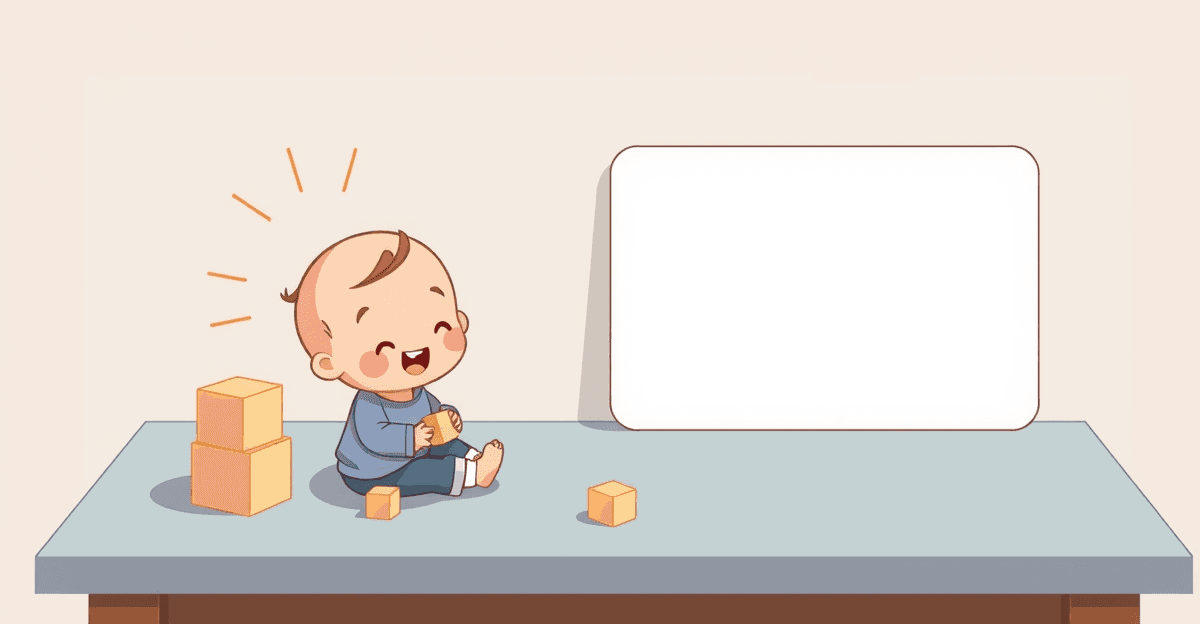
It's 6 PM on a Tuesday in Singapore, and you're cooking dinner while your K1 child is glued to a tablet. Sound familiar? You're not alone. In our high-pressure education culture, where kiasu parenting runs deep and competition starts early, the screen time question looms larger than ever. How much is too much? What's actually helpful? Will my child fall behind if they're not using educational apps?
TL;DR: Learn how Singapore parents can balance screen time for K1-K2 toddlers (ages 4-6). Practical tips aligned with MOE guidelines and preschool readiness.
The truth is messier than any algorithm. But with the right framework, Singapore parents can navigate screen time thoughtfully—honoring both digital reality and developmental needs.
Understanding Screen Time in Singapore's Context
Singapore is a hyperconnected society. We're ranked among the world's top countries for broadband speeds and digital adoption. Our kids grow up surrounded by screens—at home, in malls, at childcare centers using interactive whiteboards. So the question isn't whether screens are part of childhood anymore; it's how to integrate them purposefully.
The Ministry of Education (MOE) doesn't publish strict screen time guidelines like Western health bodies do. Instead, Singapore's kindergarten framework emphasizes holistic development: play-based learning, social-emotional growth, curiosity, and resilience. Screens can fit into this vision—but only when they serve these goals, not replace them.
Most established local preschools—PCF (PAP Community Foundation) kindergartens, My First Skool, Petit World, and others—maintain balanced curricula with minimal screen time. They know what matters: block play, water play, storytelling, peer interaction, and adult guidance. These are the foundations.
The Real Impact of Screen Time on K1-K2 Development
Your 4-6 year old's brain is in explosive growth mode. About 90% of brain development happens before age 5, and the K1-K2 years are critical for:
Language Development: Children learn vocabulary best through conversation, not passive viewing. If your child watches 3 hours of cartoons daily but rarely talks with you about stories, they're missing the reciprocal language-building that fuels literacy later.
Fine Motor Skills: Pencil grip, scissor control, and hand-eye coordination develop through drawing, crafting, and play—not swiping. These skills are foundational for Primary 1 writing readiness.
Social-Emotional Learning: Navigating friendships, managing frustration, reading social cues, and cooperating with peers happens in real interactions. Screens can't replicate this, and children who spend excessive time on devices often struggle with social flexibility.
Attention & Impulse Control: Here's the hard truth: fast-paced screens (quick cuts, bright flashes, constant novelty) can condition children's brains toward shorter attention spans. When a K1 child can't focus during a 10-minute teacher-led lesson, that matters. It's not laziness; it's neural patterning.
Sleep: Blue light from screens suppresses melatonin. Kids who use devices close to bedtime often struggle with sleep quality—and sleep is when learning consolidates.
None of this means screens are evil. But it means they need guardrails.
Setting Realistic Screen Time Limits for Your Family
Rather than a single number, think in terms of quality + quantity + context.
For K1-K2 (ages 4-6): Aim for no more than 1-2 hours of screen time daily, and only high-quality content. In practice, this might look like:
- 20-30 minutes of educational content in the morning (while you prepare breakfast)
- 15-20 minutes during a midday wind-down
- No screens 1-2 hours before bed
For younger K1 (age 4): Many Singapore parents start kindergarten at age 4, though some are still in childcare. Ideally, keep screen time under 1 hour daily, and always co-view when possible.
The "No Screens During…" Rule: Create non-negotiable device-free zones: mealtimes, the first 30 minutes after school pickup, the hour before bed. These are when your child needs your presence and attention most.
Weekends: Consider implementing a "screen Sabbath" approach—perhaps one device-free morning per week. Yes, you lose a convenience, but you gain deeper family engagement and observation of your child's play patterns.
Here's the thing: these limits are not about being old-fashioned or kiasu-avoiding. They're about protecting the foundations that make learning possible.
Choosing Quality Content: What Actually Works
Not all screen time is equal. An hour of passive YouTube Kids rabbit-holes is vastly different from 20 minutes of interactive, purposeful learning.
What to Look For:
- Interactive, Not Passive: Apps and programs that respond to your child's input—asking questions, requiring problem-solving—engage the brain differently than cartoons. Your child should be thinking, not just consuming.
- Curriculum Alignment: Singapore's kindergarten curriculum emphasizes literacy, numeracy, and character development (values like responsibility, respect, resilience). The best apps mirror these, building skills your child will need in Primary 1.
- Progress Visibility: This is where adaptive quiz practice comes in handy. Apps that show you what your child is learning, where they're struggling, and how they're improving turn screen time into measurable development—not a black box. You can see: "Ah, my child has mastered number recognition up to 20 and is working on addition." This clarity helps you support their learning offline too.
- No Aggressive Advertising or In-App Purchases: Avoid apps designed to exploit children's impulse control or extract parental spending.
- Age-Appropriate Pacing: Many apps designed for older kids move too fast for K1-K2. Your child should feel challenged but not frustrated.
Apps Worth Considering:
- Khan Academy Kids (free, comprehensive)
- Duolingo ABC (early literacy)
- Teach Your Monster to Read (phonics)
- Math Bingo (numeracy)
- Local apps aligned with MOE curriculum
And yes, purposeful educational apps designed for K1-K2—like adaptive quiz practice that makes learning fun and measurable—can supplement your child's learning when used intentionally, perhaps 15-20 minutes a few times weekly alongside diverse play and parent engagement.
The Co-Viewing & Co-Playing Rule
Never underestimate the power of watching with your child. When you sit beside them during a learning app or educational video:
- You can pause and discuss ("What do you think will happen next?")
- You model curiosity and engagement
- You answer questions in real-time
- You reinforce learning through conversation
- You catch confusion and adjust
This transforms passive screen time into interactive learning. A 20-minute app session with your co-participation is far more valuable than an unsupervised hour.
Building Screen-Free Alternatives (The Real Challenge)
Here's the uncomfortable truth: it's easier to hand a child a tablet than to sit on the floor building a block tower for 45 minutes while you're exhausted.
But this is where lasting balance lives.
Daily Screen-Free Activities for K1-K2:
- Imaginative Play: Building, pretend play, role-playing. This is where creativity and problem-solving flourish.
- Reading Together: 15-20 minutes of picture books daily. This is non-negotiable for literacy development.
- Outdoor Play: Parks, playgrounds, nature areas. Motor development, vitamin D, and sensory input.
- Arts & Crafts: Drawing, painting, cutting, sticking. Fine motor practice that screens can't replace.
- Cooking & Helping: Let them assist with meal prep. Numeracy (measuring), language (recipe vocabulary), life skills.
- Social Play: Playdates, preschool interactions, peer engagement.
The goal isn't to eliminate screens—it's to ensure they don't crowd out these irreplaceable experiences.
Managing the Parental Guilt & Pressure
Here's something Singapore parents rarely admit: we use screens partly because our culture pressurizes us to. We worry:
- "Will my child fall behind academically if they're not using educational apps?"
- "Other parents seem to start intensive tutoring in K1—are we being negligent?"
- "Is my child's preschool using enough technology?"
Let's be clear: strong K1-K2 foundations come from play, exploration, parent interaction, and quality preschool. Not from screen time.
Many studies show that K1-K2 children who spend more time in unstructured play and active interaction with caregivers have better long-term academic outcomes than heavy-device users. The skills that matter most—persistence, curiosity, social flexibility, problem-solving—are built through lived experience, not apps.
This doesn't mean screens are bad. It means they're supplementary. Your child doesn't need a curated collection of educational apps to thrive. A cardboard box, a picture book, and 30 minutes of your undivided attention? That's the real curriculum.
Practical Steps: Your Action Plan
Week 1: Assess
- Track your child's actual screen time for 3-4 days (you may be surprised).
- Note what apps/content they use and for how long.
- Observe how they behave post-screen: Are they calm or wired? Engaged or withdrawn?
Week 2-3: Set Boundaries
- Decide your family's limits and communicate clearly (even to a 4-year-old: "Screens after breakfast for 20 minutes, then we play outside").
- Create device-free zones (mealtime, bedtime hour).
- Remove screens from bedrooms.
Week 4+: Build Habits
- Replace screen time gradually with alternatives (not all at once—that invites resistance).
- Co-view or co-play with educational content 2-3 times weekly.
- Track what matters: not screen minutes, but your child's literacy, numeracy, and social-emotional growth.
Final Thoughts: Balance, Not Perfection
Singapore parenting culture often skews toward extremes—either intense digital engagement or aggressive screen avoidance. The reality is messier and more human.
Your child will watch screens. You'll sometimes hand them a device out of necessity or exhaustion, and that's okay. The goal isn't perfection; it's intentionality. Screens used purposefully, within healthy limits, alongside rich offline experiences, don't derail development.
What does matter:
- Frequent parent-child interaction (talking, reading, playing)
- Strong physical play and outdoor time
- Social peer engagement at preschool
- Quality sleep (protected from late-night screens)
- Age-appropriate learning expectations
Do these well, and screens become what they should be: a tool that supports learning, not a substitute for it.
Your K1-K2 child doesn't need a tech empire; they need you, play, stories, and space to grow. The screens can wait.
How are you navigating screen time in your family? Share your challenges and wins in the comments—Singapore parents understand the unique pressures we face, and community wisdom often helps more than expert guidelines.
Sources
- Media and Children — American Academy of Pediatrics (AAP)
- HPB — Health Promotion Board
- MOE — Preschool Education
- HealthHub Singapore — Screen Time for Children
Looking for more? Check out find a tutor for free on TuitionLah.
Exploring parenthood in Singapore? Visit ParentLah for practical tips on raising kids in Singapore.
Practise what you’ve read with QuizKin
Adaptive quizzes covering phonics, sight words, numbers, and more — aligned with the Singapore MOE curriculum. Start your free Premium trial today.
Frequently Asked Questions
The American Academy of Pediatrics recommends 1-2 hours of quality programming daily for children ages 4-6. In Singapore's context, the MOE emphasizes balanced development through play, social interaction, and structured learning. Most local preschools (PCF, My First Skool, PAP Community Foundation) advocate for screen time as supplementary—not primary—to hands-on activities. Quality matters more than quantity; educational content beats passive consumption.
Excessive screen time in K1-K2 can impact foundational skills like attention span, fine motor control, and social interaction—all crucial for Primary 1 readiness and eventual PSLE success. Early literacy and numeracy skills developed through balanced play and learning are stronger predictors of academic performance than early screen exposure. The focus should be on building strong learning habits and confidence now.
Look for apps that offer adaptive, personalized learning experiences—not passive cartoons. Quality educational apps should align with MOE kindergarten curriculum (literacy, numeracy, character development) and make learning interactive. Apps that track progress and adjust difficulty help parents see measurable growth. Avoid apps with aggressive ads or in-app purchases targeting young children.
About the author
Mervin Tan
Founder, QuizKin
Mervin Tan is the founder of QuizKin and a software engineer and dad of two young children in Singapore. He builds QuizKin's adaptive quiz engine and writes practical K1-K2 learning guides grounded in MOE's Nurturing Early Learners framework and his own experience preparing his kids for Primary 1. QuizKin is built by Adaptels Pte. Ltd., Singapore.
Ready to make learning fun?
QuizKin turns screen time into learning time with adaptive quizzes built for K1-K2 kids in Singapore. Free to start.
Related Articles
Building Emotional Intelligence in K1-K2 Kids: Activities for Singapore Families
Help your K1-K2 child develop emotional intelligence with practical, fun activities. Expert tips for Singapore parents aligned with MOE values and preschool development.
QuizKin vs Maomi Stars: Which Chinese Learning App for Your Singapore Child? (2026)
An honest comparison of QuizKin and Maomi Stars for Singapore K1-K2 families. Chinese writing practice, stroke order, pricing, and which app fits your home language.
QuizKin vs Khan Academy Kids: Honest Comparison for Singapore Parents (2026)
Detailed comparison of QuizKin and Khan Academy Kids for Singapore K1-K2 children. MOE alignment, Chinese support, pricing, and which app suits your child best.