QuizKin vs Khan Academy Kids: Honest Comparison for Singapore Parents (2026)
Detailed comparison of QuizKin and Khan Academy Kids for Singapore K1-K2 children. MOE alignment, Chinese support, pricing, and which app suits your child best.
QuizKin Team
Published 15 June 2026 · Updated 28 August 2026
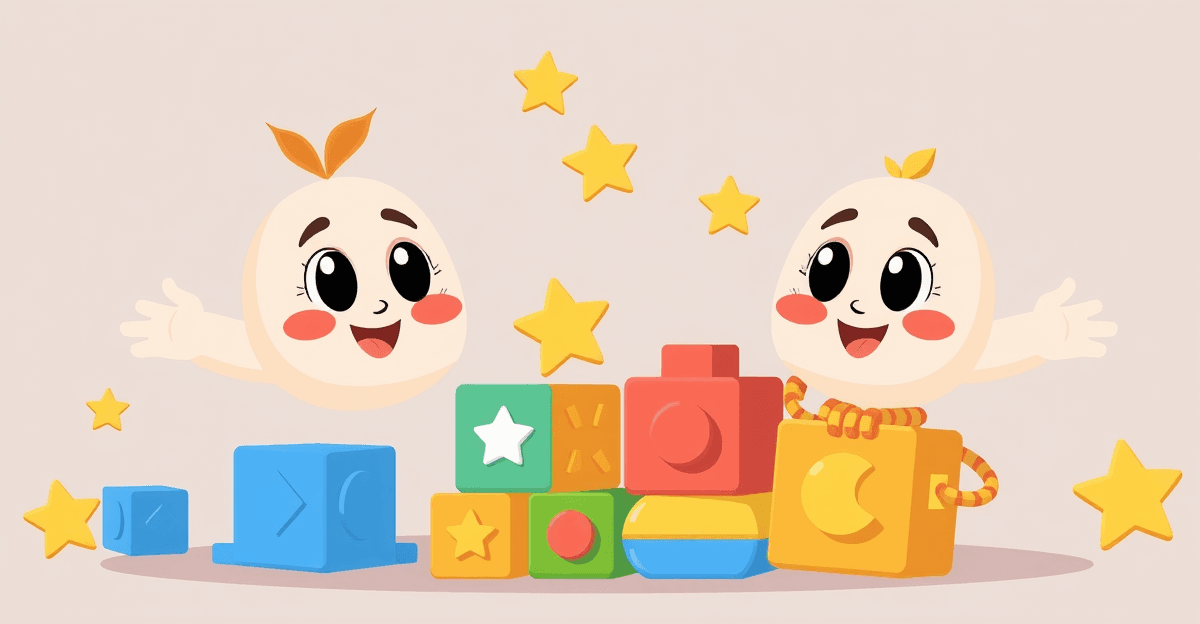
If you're a parent in Singapore looking for an educational app for your K1 or K2 child, you've probably come across Khan Academy Kids. It's free, it's popular worldwide, and it has a great reputation. So when someone mentioned QuizKin to me, my first thought was: why would I pay for something when Khan Academy Kids is free?
Fair question. I asked it too. After using both apps with my daughter for several months, I've come to a pretty clear conclusion — but it's not as simple as "one is better." They're genuinely different products built for different purposes, and which one suits your family depends on what you're trying to achieve.
TL;DR: Khan Academy Kids is a fantastic free app with broad content, but it follows the US curriculum and lacks Chinese support. QuizKin is built specifically for Singapore's MOE curriculum with bilingual English-Chinese content. For structured K1-K2 exam prep and Mother Tongue support, QuizKin wins. For free exploration and creative play, Khan Academy Kids is hard to beat.
Quick Comparison
| Feature | QuizKin | Khan Academy Kids |
|---|---|---|
| Price | Free tier + $9.90-$14.90/mo | Completely free |
| Target age | K1-K2 (ages 4-6) | Ages 2-8 |
| Curriculum | Singapore MOE NEL framework | US Common Core |
| English standard | British English (SG standard) | American English |
| Chinese support | Yes — characters, vocab, quizzes | No |
| Subjects | English, Math, Chinese, Writing | Reading, Math, Social-emotional, Creative |
| Adaptive difficulty | Yes — spaced repetition engine | Limited — linear progression |
| Parent dashboard | Yes — analytics, focus tracking | Basic progress tracking |
| Offline mode | Yes | Partial |
| Login method | Face recognition (on-device) | Parent email |
For the full interactive comparison, see our dedicated QuizKin vs Khan Academy Kids comparison page.
Curriculum Alignment: This Is the Big One
Let's start with the most important difference, because everything else flows from it.
Khan Academy Kids: Built for America
Khan Academy Kids follows the US Common Core State Standards. This is a perfectly good curriculum — but it's not the curriculum your child is following at kindergarten in Singapore.
What does this mean in practice?
- Phonics sequence differs. Khan Academy Kids teaches phonics in the order American schools use. Singapore kindergartens following the MOE NEL framework use a different sequence, typically starting with s, a, t, i, p, n (similar to the Jolly Phonics approach common in Singapore schools). A child using Khan Academy Kids might learn letters in a different order than their classmates.
- Number bonds aren't emphasised. Number bonds (part-whole thinking) are central to Singapore Maths from K1 onwards. Khan Academy Kids covers basic numeracy but doesn't specifically drill number bonds the way Singapore teachers do.
- Spelling and vocabulary are American. "Color" instead of "colour." "Mom" instead of "Mum." "Favorite" instead of "favourite." At K1-K2 age, children are forming their spelling instincts, and American English differs from the British English standard used in Singapore schools.
QuizKin: Built for Singapore
QuizKin is designed around the MOE NEL framework. The phonics sequence matches what your child learns at kindergarten. Number bonds are a core part of the maths content. Spelling follows British English conventions. The content doesn't just cover similar topics — it covers them in the same order and with the same terminology your child's teacher uses.
This matters more than you might think. When what your child practises at home aligns with what they learn at school, both experiences reinforce each other. When they don't align, you get confusion — "But teacher said it's c-o-l-o-u-r!"
Chinese Language Support: QuizKin's Biggest Advantage
This is where the comparison becomes almost unfair. Khan Academy Kids does not support Chinese at all. It offers English and Spanish — useful if you're in the US, not so useful if your child needs to learn Mandarin Chinese characters for Primary 1.
QuizKin includes:
- Chinese character recognition quizzes
- Vocabulary matched to the MOE kindergarten character list
- Chinese quiz categories covering common K1-K2 characters
- Integration with the same adaptive quiz engine used for English and Maths
For Singapore families, Mother Tongue preparation is non-negotiable. Chinese starts from Day 1 of Primary 1 — with ting xie (spelling tests) from the first few weeks. An app that covers English and Maths but ignores Chinese is covering only two-thirds of what your K2 child actually needs.
If Khan Academy Kids is your primary learning app, you'll need a separate Chinese learning tool. That means managing two apps, two schedules, and potentially two subscriptions.
Content Breadth vs Depth
Khan Academy Kids: Wide but Shallow
Khan Academy Kids covers an impressive range of topics: reading, maths, social-emotional learning, creative expression, motor skills. There are stories featuring characters like Kodi, Reya, and Ollo. There are drawing activities, music, and open-ended play.
This breadth is genuinely valuable for younger children (ages 2-4) who benefit from exploration. But for K1-K2 children preparing for Primary 1, breadth without depth can be a problem. The maths content, for example, covers counting and basic addition but doesn't go deep enough into number bonds, patterns, and shapes at the level Singapore K2 children need.
QuizKin: Narrow but Deep
QuizKin is laser-focused on the subjects and skills that matter for Singapore's K1-K2 curriculum. It doesn't try to be everything to every child. Instead, it goes deep on:
- English: Phonics, sight words, CVC words, reading comprehension — matched to the MOE sequence
- Maths: Number bonds, counting, addition, subtraction, patterns, shapes — aligned with Singapore Maths approaches
- Chinese: Character recognition, vocabulary, stroke awareness
- Writing: Letter formation, handwriting practice
The trade-off is that QuizKin doesn't have creative drawing tools or social-emotional stories. It's a focused practice tool, not a digital playground.
Adaptive Learning: A Real Difference
This is something parents often overlook, but it significantly affects how much your child actually learns.
Khan Academy Kids
Khan Academy Kids uses a linear progression system. Your child works through content in a set order. If they breeze through something, they still go through the same steps. If they struggle, they might repeat an activity but there's no sophisticated algorithm tracking which specific skills need reinforcement.
QuizKin
QuizKin uses a spaced repetition engine — the same approach used in proven flashcard systems like Anki. In Smart Quiz mode, the app tracks which questions your child gets right and wrong, then automatically brings back the ones they struggled with at increasing intervals. Questions they've mastered fade away; questions they find difficult appear more often.
This means two children using QuizKin will have completely different quiz experiences after a few sessions, each tailored to their specific gaps. That's a meaningful learning advantage.
Parent Analytics
Khan Academy Kids
Khan Academy Kids provides basic progress tracking — you can see which activities your child has completed and how much time they've spent. It's informative but surface-level.
QuizKin
QuizKin's parent dashboard goes considerably further with:
- Velocity tracking: How quickly your child is progressing through skill areas
- Focus score: A real-time measure of your child's attention and engagement during quizzes
- Deep-dive analytics: Performance breakdown by subject, category, and individual skill
- Email reports: Regular summaries so you don't have to log in constantly
For parents who want to understand their child's specific strengths and weaknesses — not just that they "completed 10 activities today" — QuizKin's analytics are in a different league.
Pricing: Free vs Freemium
Let's address the elephant in the room. Khan Academy Kids is completely free. No ads, no in-app purchases, no subscriptions. It's funded by the Khan Academy organisation and will likely remain free indefinitely. This is genuinely impressive and removes all financial barriers.
QuizKin offers a free tier with daily quizzes, but the full experience requires a subscription:
- Free: 1 quiz per day across 3 categories, 1 child profile
- Premium ($9.90/month, or $99/year): Unlimited quizzes, all categories, adaptive learning, writing practice, weekly parent reports — up to 2 children
- Family ($14.90/month, or $149/year): Everything in Premium for up to 5 children
Is QuizKin worth paying for when Khan Academy Kids is free? Here's how I think about it: the average Singapore enrichment class costs $200-$400 per month. QuizKin Premium costs $9.90 — that's roughly the price of two cups of kopi. If it provides curriculum-aligned practice that reduces or replaces even one enrichment class session per week, it pays for itself many times over.
That said, if budget is genuinely tight, Khan Academy Kids is an excellent free option — just supplement it with Chinese practice from another source.
Who Should Use Which App?
Choose QuizKin if:
- Your child is in K1 or K2 and you want practice aligned with what they learn at school
- Chinese / Mother Tongue preparation is a priority
- You want detailed analytics to track your child's progress
- You're looking for focused, structured daily practice
- Your child is preparing for K2 assessments or Primary 1 readiness
Choose Khan Academy Kids if:
- Your child is younger (ages 2-4) and you want broad exploratory content
- Budget is a primary concern and you need a completely free option
- You want creative and social-emotional content alongside academics
- You're supplementing school learning rather than directly reinforcing it
- Your child doesn't need Chinese language support
Use Both if:
- You want the best of both worlds — QuizKin for structured Singapore curriculum practice, Khan Academy Kids for creative exploration
- Your child enjoys variety and benefits from different learning styles
- You can manage total screen time across both apps (aim for 30 minutes combined)
The Verdict
Khan Academy Kids is a genuinely excellent educational app, and the fact that it's free makes it accessible to every family. If I were recommending a single app for a parent in the United States, it would be my top pick.
But we're not in the United States. We're in Singapore, where children follow the MOE curriculum, learn British English, need Mother Tongue support from kindergarten, and face very specific Primary 1 readiness expectations. In that context, QuizKin's Singapore-specific design gives it a clear edge for K1-K2 families who want practice that directly supports their child's school learning.
The honest answer? Many families will benefit from using both. Let QuizKin handle the structured daily practice — the phonics drills, number bonds, Chinese characters — and let Khan Academy Kids be the fun, exploratory supplement. Your child wins either way.
Ready to try QuizKin? Start a free quiz — it takes less than 2 minutes, no credit card needed. See how Singapore-aligned learning feels different.
Sources
- MOE Nurturing Early Learners (NEL) Framework — Singapore's national kindergarten curriculum guidelines
- Khan Academy Kids — Official Khan Academy Kids information page
- Common Core State Standards — US curriculum framework used by Khan Academy Kids
- American Academy of Pediatrics — Media and Young Minds — Screen time guidelines for young children
- Singapore Examinations and Assessment Board — Primary school assessment standards
Practise what you’ve read with QuizKin
Adaptive quizzes covering phonics, sight words, numbers, and more — aligned with the Singapore MOE curriculum. Start your free Premium trial today.
Frequently Asked Questions
Yes, Khan Academy Kids is available as a free download on iOS and Android in Singapore. It works well and all content is accessible. However, the app follows the American Common Core curriculum rather than Singapore's MOE NEL framework, and uses American English spelling and pronunciation throughout.
No. Khan Academy Kids offers English and Spanish language content only. It does not support Chinese (Mandarin), Malay, or Tamil. If your child needs Mother Tongue support — which virtually all Singapore children do — you will need a separate app for that. QuizKin includes Chinese character recognition and vocabulary quizzes aligned with the MOE kindergarten curriculum.
QuizKin offers a free-forever tier with 1 child profile, 1 quiz per day, and 3 categories. The Premium plan ($9.90/month, or $99/year) unlocks unlimited quizzes, all categories, adaptive learning, writing practice, and weekly parent reports for up to 2 children. The Family plan ($14.90/month, or $149/year) supports up to 5 children. All plans include Singapore MOE curriculum alignment.
For a K1 child in Singapore, QuizKin is the better fit if you want curriculum-aligned content that matches what your child learns at kindergarten — especially for phonics sequence, number bonds, and Chinese. Khan Academy Kids is a good supplement for creative exploration and broader topics like social-emotional learning. Many parents use both.
Absolutely. The two apps complement each other well. Use QuizKin for structured, curriculum-aligned daily practice in English, Math, and Chinese — the skills your child will be assessed on. Use Khan Academy Kids for free-play exploration, creative activities, and social-emotional stories. Just watch total screen time — aim for a combined maximum of 30 minutes per day.
Ready to make learning fun?
QuizKin turns screen time into learning time with adaptive quizzes built for K1-K2 kids in Singapore. Free to start.
Related Articles
QuizKin vs KooBits: Which Learning App Does Your Singapore Child Need? (2026)
Comparing QuizKin and KooBits for Singapore parents. Different age groups, different strengths. Find out which app suits your child's learning stage.
QuizKin vs Maomi Stars: Which Chinese Learning App for Your Singapore Child? (2026)
An honest comparison of QuizKin and Maomi Stars for Singapore K1-K2 families. Chinese writing practice, stroke order, pricing, and which app fits your home language.

Best Educational Apps for 4-Year-Olds in Singapore (2026)
Compare the best educational apps for preschoolers in Singapore. Reviews of QuizKin, Khan Academy Kids, Duolingo ABC and more, with MOE alignment focus.