Self-Regulation Skills for K1-K2: Managing Big Emotions
Help your K1-K2 child build self-regulation skills to manage big emotions. A warm, evidence-based guide for Singapore parents of 4-6 year olds.
QuizKin Team
Published 19 September 2026
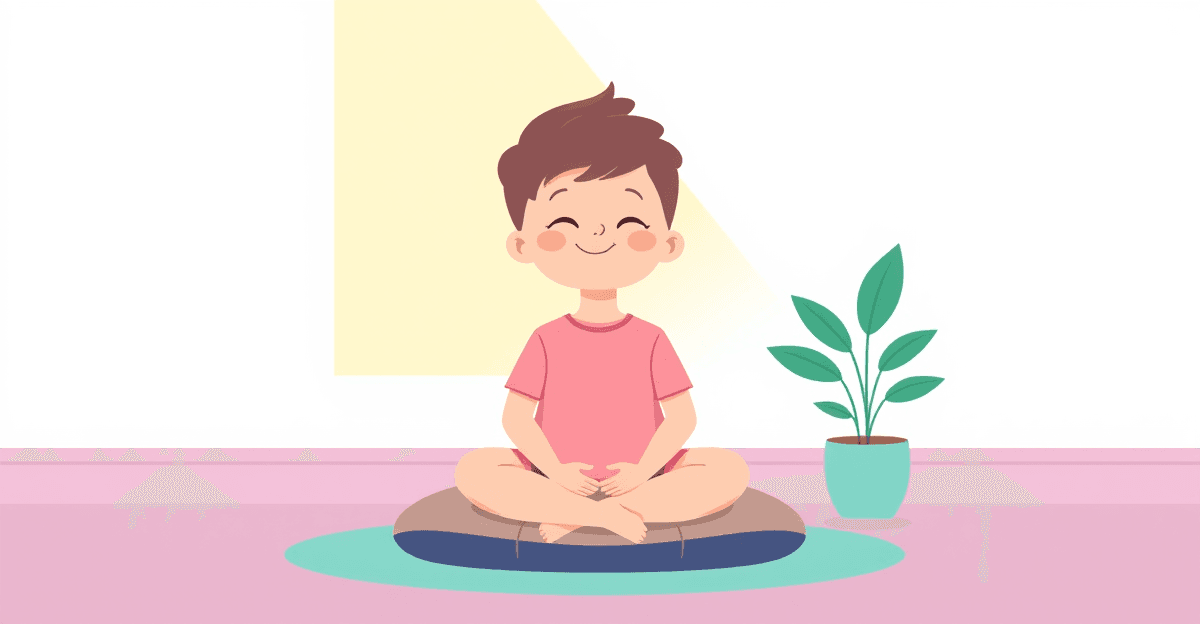
It's 6:45pm, you've just picked your little one up from PCF Sparkletots, and somewhere between the shoe rack and the lift lobby, a full meltdown erupts — because you handed over the water bottle the wrong way. Sound familiar? If you're a Singapore parent of a K1 or K2 child, you already know that building self-regulation skills — the ability to manage big emotions and impulses — is one of the most demanding (and important) parts of raising a 4-6 year old. The good news: these skills are learned, not born, and your everyday interactions are exactly where the learning happens.
TL;DR — Key Takeaways
- Self-regulation is the ability to manage emotions, attention and impulses — and it develops slowly between ages 3 and 7, so K1-K2 kids are still learning.
- Around 4-6 years, the brain's control centre (prefrontal cortex) is only partly developed, which is why tantrums are normal — not a discipline failure.
- MOE's Nurturing Early Learners framework treats Social and Emotional Development as one of six core learning areas in local preschools.
- Simple, consistent tools — naming feelings, calm-down corners, deep breathing, and predictable routines — work better than punishment.
- Strong self-regulation predicts better focus and learning readiness for Primary 1, more than early academic drilling alone.
What Are Self-Regulation Skills in Young Children?
Self-regulation skills are a child's growing ability to manage their emotions, control impulses, and shift attention when needed. In simple terms, it's the difference between feeling frustrated and throwing the crayon. For K1-K2 children aged 4-6, these skills are still very much under construction — and that is exactly what we should expect.
Here's a definitive point worth remembering: self-regulation is a developmental skill that emerges gradually between the ages of 3 and 7, not a behaviour a child can simply "choose" to switch on. The brain region responsible for planning and impulse control — the prefrontal cortex — is one of the last to mature, continuing to develop well into a person's twenties. So when your K1 child dissolves into tears over a broken biscuit, their brain is doing precisely what a 4-year-old brain does.
Researchers often break self-regulation into two related parts:
- Emotional regulation — calming down after feeling angry, disappointed, or overwhelmed.
- Cognitive regulation (executive function) — waiting for a turn, following two-step instructions, and staying focused on a task.
Both matter enormously for your little one's learning journey, and both improve with patient, repeated practice at home and in preschool.
Why Self-Regulation Skills Matter More Than You Think
A child who can manage big emotions is a child who is ready to learn. Decades of research show that early self-regulation predicts later academic success, friendships, and wellbeing — often more strongly than early reading or maths ability.
One of the most cited pieces of evidence is the famous "marshmallow" delayed-gratification research from Stanford: children who could wait for a bigger reward tended to have stronger focus and outcomes years later. While the details have been debated and refined by newer studies, the core message holds firm: the ability to pause, wait, and manage impulses is a foundation skill that supports everything from making friends to sitting through a Primary 1 lesson.
In the Singapore context, this matters for school readiness. When your child transitions to Primary 1, they'll need to sit through longer lessons, wait their turn, cope with not always being first, and bounce back from getting an answer wrong. These are self-regulation skills in action. Interestingly, they also reduce the risk of test-related worry later on — if you're already thinking ahead, our guide on reducing test anxiety in preschoolers pairs naturally with the emotional groundwork you're laying now.
Emotional readiness also links closely with getting along with others. If your child is working on sharing, taking turns, and reading social cues, you'll find our piece on developing social skills in preschoolers a helpful companion — self-regulation and social skills grow hand in hand.
How Self-Regulation Develops at Ages 4-6
By K1-K2, most children can name basic feelings and are beginning to use simple calming strategies — but they still rely heavily on a trusted adult to co-regulate. Expecting full independence at this age sets everyone up for frustration.
Here's a realistic snapshot of what to expect:
Around K1 (ages 4-5), your child can typically:
- Name basic emotions like happy, sad, angry, and scared.
- Follow simple two-step instructions ("put on your shoes, then get your bag").
- Begin to wait short periods for a turn — with reminders.
- Recover from a meltdown faster when comforted by an adult.
By the end of K2 (ages 5-6), many children can:
- Recognise feelings in themselves and others.
- Use a taught strategy — like deep breathing — when prompted.
- Wait a few minutes and tolerate small disappointments.
- Talk about what upset them after they've calmed down.
Remember, this is a range, not a checklist to stress over. Children develop at different paces, and a child who runs ahead in maths may take longer with emotional control — and vice versa. If you'd like a broader view of where your child stands across skills, our Primary 1 readiness skills checklist puts emotional regulation alongside the academic milestones.
How Singapore Preschools Support Self-Regulation Skills
Local preschools are active partners in building your child's self-regulation skills. MOE's Nurturing Early Learners (NEL) framework — used to guide kindergarten curricula across Singapore — names Social and Emotional Development as one of its six core learning areas, alongside literacy and numeracy.
This means that at PCF Sparkletots, My First Skool, MOE Kindergartens, and other PAP Community Foundation and anchor operator centres, teachers are intentionally teaching children to identify and manage feelings. Common classroom tools include:
- Feelings charts with faces, so children can point to how they feel before they have the words.
- Calm-down corners — a quiet space with cushions or soft toys where a child can reset.
- Stories and role-play that put words to emotions and model healthy responses.
- Visual routines so children know what comes next, reducing anxiety-driven outbursts.
The single most powerful thing you can do as a parent is use the same language at home that your child hears at preschool. Ask your child's teacher what emotion words and calming strategies they use in class, then mirror them. Consistency across both settings helps the skill "stick" far faster than either environment could alone.
7 Practical Strategies for Managing Big Emotions at Home
You don't need special equipment or a psychology degree to build self-regulation skills — you need consistency, warmth, and a few reliable strategies. Below are seven approaches that work well for Singapore families with K1-K2 children.
1. Name the feeling to tame the feeling
When your child is upset, put words to it: "You're really angry that screen time is over." Naming an emotion helps the thinking brain re-engage and signals that you understand. This simple act — sometimes called "name it to tame it" — is one of the most evidence-backed first steps in emotional regulation.
2. Stay calm yourself (co-regulation)
Children borrow your calm before they can find their own. When you lower your voice and slow your breathing during your child's meltdown, you're literally lending them your regulated nervous system. Reacting with your own big emotions pours fuel on the fire.
3. Create a calm-down spot at home
Set up a cosy corner with a cushion, a favourite soft toy, and maybe a picture of calming strategies. Frame it as a safe reset space, never a punishment "time-out." Your little one learns that stepping away to calm down is a skill, not a consequence.
4. Teach one simple breathing technique
Try "smell the flower, blow out the candle" — breathe in through the nose, out through the mouth. Practise it when your child is calm, not mid-meltdown, so the skill is ready when big emotions strike.
5. Keep routines predictable
A large share of meltdowns come from feeling out of control. Predictable routines around meals, bedtime, and screen time reduce anxiety. On that note, unclear digital boundaries are a common flashpoint — our screen time rules for preschoolers guide can help you set limits that head off the tears before they start.
6. Praise the effort, not just the outcome
When your child tries to calm down — even imperfectly — notice it out loud: "You took a deep breath even though you were so frustrated. That was hard work!" This tells your child that managing big emotions is something to be proud of.
7. Practise through play and games
Turn-taking games, "red light green light," and Simon Says all build impulse control in a low-stakes, fun way. Play is a young child's natural learning language — and it's why game-based learning is so effective. If you're curious about the science behind this, our article on why game-based learning works for preschoolers explains how fun and focus reinforce each other.
Building Focus and Confidence Alongside Emotional Skills
Self-regulation isn't only about calming down — it's also about sustaining attention, tolerating "getting it wrong," and trying again. These are the same muscles your child flexes during any kind of structured learning, which is why gentle, low-pressure practice can support emotional growth too.
This is where thoughtfully designed learning tools can help. QuizKin offers adaptive quiz practice that makes learning fun and measurable for K1-K2 kids — questions adjust to your child's level, so your little one experiences small, achievable wins rather than frustration. When learning feels manageable, children build the confidence and patience that underpin self-regulation. Used in short, playful bursts (and balanced with plenty of offline play), it's one gentle way to nurture focus and a "keep trying" mindset. For a wider look at digital options, see our roundup of the best educational apps for 4-year-olds in Singapore.
When to Seek Extra Support
Most meltdowns are a normal part of development, but occasionally big emotions signal a need for more support. Trust your instincts — you know your child best.
Consider reaching out to your child's preschool teacher, your polyclinic doctor, or a child development specialist if you notice:
- Meltdowns that are intense, frequent (daily), and long-lasting well beyond age 6.
- Emotional reactions that regularly put your child or others at risk of harm.
- Difficulty that is clearly interfering with friendships or preschool participation.
- A sudden, marked change in your child's emotional behaviour.
In Singapore, KK Women's and Children's Hospital (KKH) and the National University Hospital (NUH) both run child development services, and referrals often come through your polyclinic or preschool. Seeking guidance early is a sign of good parenting, not failure — the earlier support begins, the more effective it tends to be.
If you're preparing for the next step in your child's education and want a partner to talk through readiness or learning support, platforms like TuitionLah let you find a tutor for free with no agency fees — useful if you'd like extra help easing your child into a structured learning routine.
A Final Word for Singapore Parents
Building self-regulation skills is a marathon, not a sprint. Your K1-K2 child will have wonderful days and wobbly ones — and both are part of learning to manage big emotions. Every time you stay calm, name a feeling, and offer a hug instead of a scolding, you're wiring your little one's brain for lifelong emotional strength. Be patient with your child, and just as patient with yourself.
Sources
- MOE Nurturing Early Learners (NEL) Framework — Singapore's official curriculum framework for kindergartens, including Social and Emotional Development.
- MOE Kindergarten Curriculum Overview — Ministry of Education's approach to holistic early childhood development.
- KK Women's and Children's Hospital — Child Development — Singapore's specialist services for child development and behaviour.
- HealthHub Singapore — Child Emotional Development — Government health portal with parenting and child wellbeing resources.
- Early Childhood Development Agency (ECDA) — Singapore's regulator and resource hub for early childhood care and education.
Practise what you’ve read with QuizKin
Adaptive quizzes covering phonics, sight words, numbers, and more — aligned with the Singapore MOE curriculum. Start your free Premium trial today.
Frequently Asked Questions
Self-regulation develops gradually between ages 3 and 7, so K1-K2 children (4-6 years) are right in the thick of learning it. Most 4-6 year olds still need adult support to calm down during big emotions — this is completely normal, not a sign of misbehaviour. By the end of K2, many children can name their feelings and use a simple strategy like deep breathing with a reminder from an adult.
Yes. Occasional meltdowns are developmentally normal for 4-6 year olds because the brain's emotional control centre (the prefrontal cortex) is still maturing. What matters is that tantrums gradually become shorter and less frequent as your child learns to name and manage feelings. If meltdowns are intense, daily, and lasting well beyond age 6, it's worth speaking to your child's preschool teacher or a KK Hospital child development professional.
MOE's Nurturing Early Learners (NEL) framework includes 'Social and Emotional Development' as one of its six core learning areas, so PCF Sparkletots, My First Skool and MOE Kindergartens actively build these skills. Teachers use tools like feelings charts, calm-down corners, and stories about emotions. You can reinforce the same language at home so your child hears consistent messages in both places.
Ready to make learning fun?
QuizKin turns screen time into learning time with adaptive quizzes built for K1-K2 kids in Singapore. Free to start.
Related Articles
Executive Function Skills in Preschoolers: Why They Matter
Executive function skills in preschoolers shape focus, memory & self-control. A Singapore parent's guide to building them in K1-K2 kids before Primary 1.
Fostering Creativity in Young Children Beyond Art Class
Practical ways to foster creativity in young children beyond art class. A Singapore parents' guide to nurturing imagination in K1-K2 kids aged 4-6.
The Bilingual Brain: Benefits for Singapore Children
Discover how the bilingual brain benefits Singapore children aged 4-6 — from stronger focus to PSLE readiness. Evidence-based tips for K1-K2 parents.