Water Play Learning Activities for Singapore Preschoolers: Science at Home
Discover engaging water play learning activities for K1-K2 kids in Singapore. Build science skills at home with simple, mess-friendly experiments.
Mervin Tan · Founder, QuizKin
Published 23 May 2026
This article contains affiliate links — if you buy through them, QuizKin may earn a small commission at no extra cost to you. We only link products relevant to the activity.
It's Saturday morning in your Singapore home. Your K1 child is restless, the weather's too hot for the playground, and screen time is already maxed out. Sound familiar?
TL;DR: Discover engaging water play learning activities for K1-K2 kids in Singapore. Build science skills at home with simple, mess-friendly experiments.
Water play might be your answer—and yes, it's far more than just splashing around. When thoughtfully designed, water activities are powerful learning tools that align beautifully with the MOE Foundation Stage curriculum and build genuine scientific thinking in young minds. Best part? You can set it up with items you already have at home.
In this guide, we'll walk you through water play activities specifically suited to Singapore K1-K2 children (ages 4-6), explain the learning behind each activity, and show you how to turn your home into a discovery zone—without creating a flood.
Why Water Play Matters for K1-K2 Learners
Water is a magical substance for young learners. It's familiar, safe, and infinitely changeable. When your child pours water, watches it flow, and experiments with objects, they're developing crucial early science competencies.
Key Learning Outcomes from Water Play
Observational Skills: Children learn to notice details—how water moves differently through a funnel versus an open cup, how some objects float while others sink.
Scientific Vocabulary: Words like "wet," "dry," "flow," "sink," "float," "full," and "empty" become concrete concepts rather than abstract labels.
Cause and Effect Understanding: This is foundational for mathematical and scientific thinking. When your child learns that tilting a cup changes how fast water pours, they're building causal reasoning.
Fine Motor Development: Pouring, squeezing, and manipulating water containers strengthen hand strength and coordination—critical for writing readiness in Primary 1.
Confidence in Exploration: Water play is low-stakes and forgiving. Children feel safe experimenting, making mistakes, and trying again. This builds the kind of resilient, curious mindset that supports lifelong learning.
For Singapore parents working within the MOE curriculum framework, water play ticks multiple boxes: it addresses Foundation Stage learning outcomes in Discovery of the World, Physical Development, and Cognitive Development simultaneously.
Setting Up Your Water Play Station: A Singapore Home Edition
Before diving into specific activities, let's talk logistics. We know space is precious in most Singapore homes.
Essential Equipment (What You Probably Already Have)
- Water containers: Plastic bowls, tupperware, cups of different sizes
- Pouring vessels: Funnels, empty shampoo bottles, small teapots, measuring cups
- Toys and objects: Small plastic figurines, wooden blocks, foam shapes, sponges (browse water play toys on Shopee)
- Tools: Spoons, ladles, whisks, pipettes (if you have them from the pharmacy)
- Towels: Multiple small towels for quick cleanup
Space Solutions for HDB Flats
The Bathroom Option: If you have a spare afternoon, run a shallow bath (10-15cm) and let your child play directly in the tub. It's contained, easy to drain, and naturally positioned for cleanup.
The Balcony Tray: Place a large plastic storage tray on your balcony with a few centimeters of water. Add toys and let water splash onto the balcony floor without worry.
The Kitchen Station: Use your sink or a large bowl on the kitchen counter. This works beautifully for shorter, supervised sessions while you're nearby.
The Outdoor Option: If you have a Housing Board void deck nearby or access to a community garden, some parents set up water play outdoors during cooler morning hours.
Safety First
Always supervise water play closely. For K1-K2 children, never leave them unattended near water, even briefly. Use room-temperature water (not hot), and ensure the play area is well-lit and slip-free by laying down non-slip mats or towels.
5 Adaptive Water Play Activities for K1-K2
1. Sink or Float Discovery (Best for K1)
This classic activity builds prediction and observation skills while introducing density concepts years before formal science.
What You Need:
- A large bowl or tub filled with water
- 8-10 objects of varying materials: cork, wooden spoon, plastic bottle cap, metal spoon, foam toy, orange, stone, sponge
The Activity:
Introduce each object one at a time. Before placing it in the water, ask your child: "Do you think this will sink or float?" Let them make a prediction, then place the object in the water and observe what happens together.
The Learning:
Your child is making hypotheses and testing them—the core of scientific method. They're also developing vocabulary ("sink," "float," "heavy," "light") and learning that material properties matter.
Singapore Extension:
Make this more interactive by using familiar local objects—a plastic toy from a hawker meal, a wooden chopstick, a small piece of rattan. This contextualizes learning within your child's real world.
Pro Tip: If your child struggles with predictions, start with just 3-4 objects. As confidence grows, expand the collection.
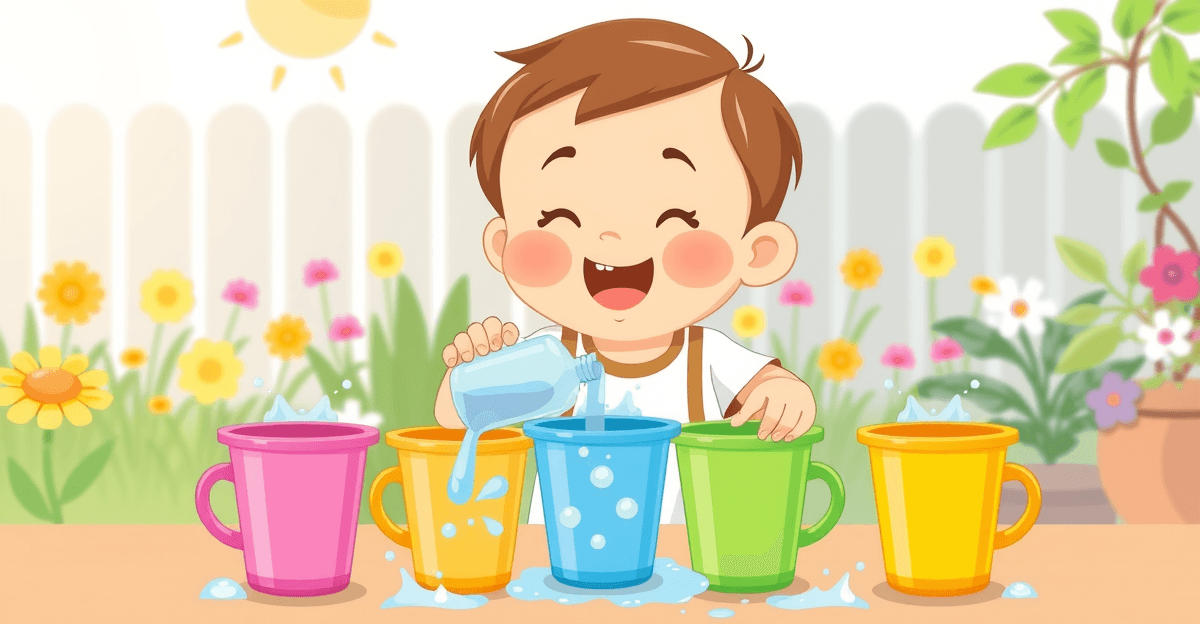
2. Pouring Exploration: Understanding Flow and Volume (Best for K1-K2)
This activity is deceptively simple but builds mathematical thinking around volume and spatial reasoning.
What You Need:
- Several containers of different heights, widths, and shapes (tall narrow cup, wide shallow bowl, measuring cup)
- Funnels of different sizes (if available)
- A tray or towel underneath to catch spills
The Activity:
Let your child pour water freely between containers. Don't direct the play—simply observe and ask questions: "What happens when you pour into the tall, skinny cup?" "Does it reach the top faster than the bowl?" "Why do you think that happens?"
After 5-10 minutes of free play, introduce a simple challenge: "Can you fill this cup using the funnel? How is that different from pouring without it?"
The Learning:
Your child is developing conservation of volume (understanding that the same amount of water looks different in different containers) and learning about the effects of container shape on liquid level. They're also strengthening hand-eye coordination and building fine motor control essential for writing.
Singapore Context:
This mirrors activities used in Singapore's MOE-aligned preschools like PCF and My First Skool, where water table play is a standard Friday activity in many K1 classrooms.
3. Sink and Rescue: Fine Motor Challenge (Best for K2)
As your child approaches K2, introduce more complex tasks that combine multiple skills.
What You Need:
- A bowl of water
- Small sinking objects (pebbles, washers, toy figurines)
- Floating rescue tools (spoon, slotted spoon, small net if you have one, or a strainer)
The Activity:
"The toys have fallen into the water! Can you rescue them using only the spoon? Now try the slotted spoon—is it easier or harder?"
Create a "rescue mission" narrative to maintain engagement. Your child must think about tool selection, hand coordination, and problem-solving simultaneously.
The Learning:
This builds executive function (planning and problem-solving), fine motor precision, and introduces the concept of using tools to extend capabilities. For K2 learners, it's an early introduction to engineering thinking.
Difficulty Progression: Start with a spoon, progress to a slotted spoon, then challenge them to create their own "rescue tool" from available materials.
4. Color Mixing and Transparency (Best for K1-K2)
If you have food coloring at home, this activity combines sensory learning with color and science concepts.
What You Need:
- 3 clear cups with water
- Food coloring (red, blue, yellow)
- A spoon for mixing
- Optional: white paper or a white plate underneath for better visibility
The Activity:
Add one drop of red food coloring to the first cup and ask your child to describe what they see. Repeat with blue and yellow. Then, carefully pour the red water into the blue water and observe: "What color do we make?" Repeat with different color combinations.
The Learning:
Your child learns that colors can mix to create new colors, building understanding of color theory and mixing. They also observe the properties of water (transparency, ability to hold color) and engage in prediction ("What color will we make?").
Singapore Angle:
This ties beautifully into the Creative Development component of MOE's Foundation Stage curriculum, where color exploration is encouraged.
Important Note: Use only food coloring intended for consumption, and ensure your child doesn't drink the water. This is supervised play only.
5. Water Wheels and Flow Investigation (Best for K2)
For more experienced water players, introduce the concept of flowing water doing work.
What You Need:
- An empty plastic bottle or cup with a small hole poked in the bottom
- A waterwheel toy (grab one on Shopee, or create one by cutting and folding a small plastic cup)
- A basin underneath to catch water
- A funnel to direct water
The Activity:
Pour water through the funnel so it flows out the bottom hole. Position a waterwheel to catch the flowing water and watch it spin. Ask: "Why does the wheel turn?" "What makes it spin faster or slower?"
For K2 children, this introduces the concept of energy transfer and how flowing water can create motion—early physics thinking.
Safety Note: This is wet and messy; do it in the bathroom or outdoors.
Measuring and Tracking Progress at Home
Water play is inherently unstructured, which is part of its value. However, as a parent, you might wonder: Is my child actually learning measurable skills?
Watch for these developmental markers:
- K1: Your child can describe what they observe using simple sentences ("The toy sinks." "Water is wet.").
- K1-K2 transition: Your child makes predictions before testing them ("I think the rock will sink because it's heavy.").
- K2: Your child explains cause and effect ("The water goes faster because I tilted the cup more.") and uses scientific vocabulary appropriately.
Beyond observation, you can complement these hands-on activities with adaptive quiz practice that makes learning fun and measurable for K1-K2 kids. Tools like QuizKin help you assess your child's conceptual understanding of what they've explored, reinforcing learning and identifying areas for deeper exploration.
Troubleshooting Common Challenges
"My child just wants to splash and not 'learn.'"
That is learning. Splashing helps children understand water's properties, build confidence, and develop joy in discovery. Don't over-scaffold. As children splash, they're naturally developing observational skills and understanding cause and effect.
"We don't have much space in our HDB."
Use the bathroom, kitchen sink, or a single large tray. Quality matters more than quantity. Even 15 minutes of focused water play weekly builds skills.
"My child gets bored quickly."
Rotate activities weekly. Introduce new objects or tools to refresh interest. Also, avoid over-explanation; let children lead play and ask questions naturally.
"How do I keep water play clean?"
Embrace the mess within bounds. Use towels, do it in contained spaces, and involve your child in cleanup (which is also learning). Set clear boundaries: "Water stays in the tray" or "No pouring over the edge."
Connecting Water Play to the K1-K2 Curriculum
Singapore's MOE Foundation Stage Framework emphasizes learning through play and discovery. Water play directly supports learning outcomes in:
- Physical Development: Fine and gross motor skills
- Cognitive Development: Observation, problem-solving, cause and effect
- Language Development: Learning and using scientific vocabulary
- Creative Development: Open-ended exploration and imaginative play
- Discovery of the World: Properties of materials, basic science concepts
Parents using preschools like PAP Community Foundation schools or My First Skool will recognize these elements—water play extends classroom learning into the home.
Seasonal and Weather Adaptations for Singapore
Singapore's weather is predictable: hot and humid with occasional rain. Here's how to adapt:
Dry Season (Typical Year-Round): Water play is welcome relief. Consider doing it during cooler morning hours (7-9am) to keep your child comfortable.
Rainy Season (Dec-March, June-September): Do water play indoors. The bathroom or kitchen become your laboratory.
Heat Wave Days: Set up water play in the shade. Short 15-minute sessions are better than extended play in heat.
Questions to Ask During Water Play
Rather than directing, empower your child's thinking with open-ended questions:
- "What do you notice?"
- "Why do you think that happened?"
- "What would happen if we...?"
- "Can you show me how that works?"
- "What's different between these two?"
These questions build metacognition—the ability to think about thinking—a skill that will serve your child throughout their education, including preparing for the PSLE years down the road.
Wrapping Up: Making Water Play a Routine
Water play doesn't require special equipment, expensive toys, or extensive planning. It requires curiosity, a safe space, and your presence. Even 20 minutes once or twice weekly builds foundational science thinking and fine motor skills that matter for K1-K2 development.
The most powerful learning happens when your child feels safe to explore, make mistakes, and ask questions. Water play creates exactly that environment.
Start small—perhaps this Saturday morning with a bowl of water and a few household objects. Watch your child's eyes light up as they discover. That's learning happening naturally, joyfully, and at home.
About QuizKin: QuizKin is a Singapore-based adaptive learning platform designed for K1-K2 children. We complement hands-on exploration with interactive, personalized quiz practice that helps parents track their child's understanding and make learning measurable. Explore how QuizKin enhances the learning you're already doing at home.
Sources
Looking for more? Check out find a tutor for free on TuitionLah.
Exploring parenthood in Singapore? Visit ParentLah for practical tips on raising kids in Singapore.
Practise what you’ve read with QuizKin
Adaptive quizzes covering phonics, sight words, numbers, and more — aligned with the Singapore MOE curriculum. Start your free Premium trial today.
Frequently Asked Questions
Water play doesn't have to be chaotic! Use a designated water table, large plastic tray, or even your bathroom with towels on hand. Many Singapore parents set up water stations in the kitchen or balcony during weekends. Keep a small mop nearby and involve your child in cleanup—it's part of the learning. Start with 15-20 minutes to keep it manageable, and you'll find the educational payoff is worth the minimal mess.
Absolutely. The MOE Foundation Stage curriculum emphasises discovery learning and scientific thinking through play. Water play builds observational skills, cause-and-effect understanding, and early STEM concepts that form the foundation for Primary 1 science. You'll notice improvements in your child's ability to describe what they observe—skills that translate directly to classroom learning and assessments.
Great question! Watch for signs like asking questions ('Why does it sink?'), making predictions ('What will happen if...?'), and using new vocabulary. You can also complement hands-on activities with adaptive quiz practice that makes learning fun and measurable for K1-K2 kids, helping you track their growing understanding of concepts they explore during play.
About the author
Mervin Tan
Founder, QuizKin
Mervin Tan is the founder of QuizKin and a software engineer and dad of two young children in Singapore. He builds QuizKin's adaptive quiz engine and writes practical K1-K2 learning guides grounded in MOE's Nurturing Early Learners framework and his own experience preparing his kids for Primary 1. QuizKin is built by Adaptels Pte. Ltd., Singapore.
Ready to make learning fun?
QuizKin turns screen time into learning time with adaptive quizzes built for K1-K2 kids in Singapore. Free to start.
Related Articles
Simple Cooking Activities for Singapore Preschoolers: Learning Through Food
Discover fun cooking activities for K1-K2 kids in Singapore that build maths, science, and language skills. Perfect for busy parents!
15 Easy Kindergarten Science Experiments to Do at Home in Singapore (K1-K2, 2026)
Fun and educational science experiments for K1 and K2 children in Singapore. Simple materials, real learning outcomes. Build curiosity, observation skills, and early STEM foundations at home.
Gross Motor Skills Activities for Singapore Preschoolers: Indoor and Outdoor Ideas
Discover practical gross motor skills activities for K1-K2 kids in Singapore. Indoor and outdoor ideas aligned with MOE curriculum to boost physical development.