Gross Motor Skills Activities for Singapore Preschoolers: Indoor and Outdoor Ideas
Discover practical gross motor skills activities for K1-K2 kids in Singapore. Indoor and outdoor ideas aligned with MOE curriculum to boost physical development.
Mervin Tan · Founder, QuizKin
Published 1 June 2026
This article contains affiliate links — if you buy through them, QuizKin may earn a small commission at no extra cost to you. We only link products relevant to the activity.
It's Saturday morning and my K1 daughter is literally bouncing off the sofa, running laps around the dining table, and doing something that can only be described as interpretive spinning. My first instinct: hand her the iPad. My better instinct: channel this energy into something useful.
If you've got a 4-6 year old with batteries that never seem to run out, you know exactly what I mean. And if you're wondering how to turn that chaos into development — specifically gross motor development — without signing up for three enrichment classes, you're in the right place.
TL;DR: Practical gross motor skills activities for K1-K2 kids in Singapore. Indoor and outdoor ideas aligned with MOE curriculum to boost physical development.
The good news? Gross motor skills — the big movements using legs, arms, and core — don't require expensive equipment, special classes, or perfect weather. They just need intentional play. And in Singapore, where we juggle small living spaces, unpredictable rain, and packed schedules, that means being a bit creative.
Why This Matters More Than You'd Think
I'll admit — I used to think of physical play as "just play." Running around, climbing things, burning energy. Then my daughter's K1 teacher mentioned she was struggling to sit still during circle time and had trouble coordinating scissors. Turns out, gross motor skills are the foundation for all of that.
What gross motor skills actually support:
- School readiness: K1-K2 curriculum expects children to sit, move between activities, and participate in PE. Kids with poor coordination often struggle with classroom confidence.
- Brain development: Physical play stimulates neural pathways for learning, memory, and problem-solving. It's not just body work — it's brain work.
- Emotional regulation: Active play releases endorphins and helps kids process big feelings. Less tantrums, more regulation.
- Lifelong health habits: Children who enjoy movement at 5-6 are more likely to stay active as they grow.
Here's a sobering stat: according to the Health Promotion Board, only 32% of Singapore preschoolers meet daily physical activity guidelines (60 minutes of moderate activity). That gap often widens once Primary school starts. So early habits really matter.
Indoor Activities (Because It Always Rains)
Let's be real — Singapore weather means at least half your weekends involve rain. Here's what works in an HDB living room.
1. Living Room Obstacle Course
This is our go-to rainy day activity. Transform your living room using stuff you already have:
- Cushions as stepping stones
- Books or small boxes as hurdles to jump over (keep them low — 10-15cm for K1)
- A blanket draped over chairs becomes a tunnel
- Painter's tape on the floor makes a "tightrope" to walk along
- Laundry basket as a target for tossing soft toys
Time your child or play together. Change the course weekly so it stays fresh. Takes about 10-15 minutes, which is perfect for preschool attention spans.
2. Dance Party
My daughter never says no to dancing. We blast some music and I call out movements: "Hop like a rabbit! Spin like a top! Stomp like an elephant!" Scarves or ribbons add visual fun. Freeze-dance (music stops, everyone freezes) is always hilarious.
The sneaky part: dancing builds core strength, coordination, and rhythm. It integrates listening, memory, and movement — exactly the multi-sensory learning that supports everything else. About 8-10 minutes is plenty.
3. Kid-Friendly Yoga
Simple poses build flexibility, balance, and body awareness. We do downward dog, cat-cow stretch, tree pose, butterfly stretch, and snake pose. I tell little stories while we move: "We're tall trees in a forest. Now we're cats stretching after a nap."
YouTube channels like "Cosmic Kids Yoga" have free sessions designed for preschoolers — popular with Singapore families for good reason.
4. Indoor Ball Games
Soft balls are your friend. Roll and catch sitting opposite each other. Set up a bin against the wall for target practice. Or our favourite: balloon volleyball — tap a balloon back and forth across a cushion "net." Lightweight, slow-moving, and safe even in a small HDB flat.
Outdoor Activities (For the Dry Days)
Singapore has some genuinely excellent parks and playgrounds. Here's how to make the most of them.
1. Playground Time (With Purpose)
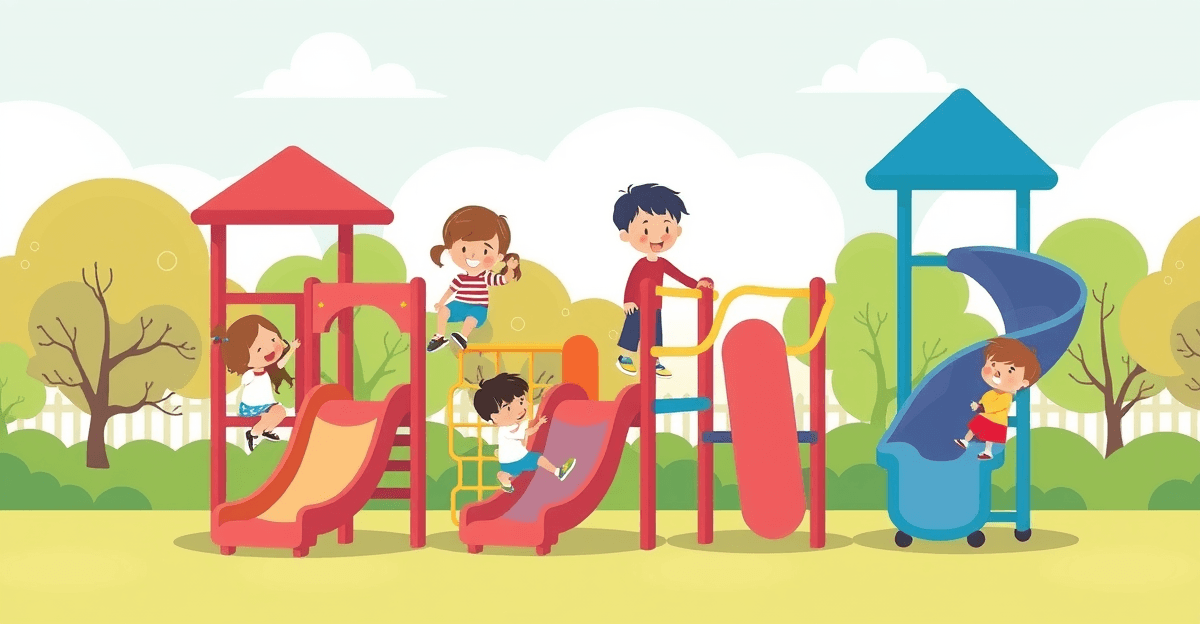
Every neighbourhood has a free playground. Let your child explore naturally, but know what each structure builds:
- Slides: Confidence, spatial awareness, courage
- Climbing frames: Core strength, coordination, problem-solving ("Where's my next foothold?")
- Swings: Balance, timing, vestibular system
- Monkey bars: Upper body strength, grip, perseverance
My biggest tip: resist over-helping. Let them attempt challenges. Falling safely teaches resilience better than any talk can.
2. Running and Chasing Games
Simple and brilliant. Traffic lights (green = run, amber = walk, red = freeze), follow the leader, treasure hunts with stickers hidden around the park. These develop speed, agility, and cardiovascular fitness — and they're completely free.
3. Water Play
Singapore's weather makes water play ideal. Splash pads at community centres (check ActiveSG — many are free). Beach play at East Coast — running on sand builds leg muscles way more than flat ground. Water balloon tossing for hand-eye coordination. Or just puddle jumping on rainy days (after checking it's safe). My daughter's favourite activity, and honestly, it's mine too.
4. Cycling and Scootering
Balance bikes and scooters are brilliant for ages 3-6. They build balance, core strength, and confidence. PCN paths at East Coast Park, Bukit Timah, and Gardens by the Bay are traffic-free and many offer equipment rental if you don't own any yet — or grab a balance bike on Shopee.
5. Nature Walks
Singapore's nature reserves (Bukit Timah, MacRitchie, Kranji Marsh) have flat, accessible trails perfect for K1-K2 kids. Let children set the pace. Stop to look at insects and plants. Play "spot the colour" or "count the trees." Pack snacks. It doesn't need to be a hike — a gentle walk where they lead is perfect.
Do You Need Formal Classes?
Many parents wonder about swimming lessons, gymnastics, or football for preschoolers. Here's the honest answer:
- Unstructured play is just as valuable as classes for developing gross motor skills at ages 4-6
- Classes are great if your child enjoys them — but they should add to free play, not replace it
- MOE doesn't require formal sports classes for K1-K2
- Free parks and home activities work brilliantly
- Cost matters: Singapore's tuition culture can make everything feel necessary when it's actually optional
Consider classes when: your child shows genuine interest, you want coaching for specific skills, or your family enjoys the social aspect.
What to Expect at Each Age
Use these as guides, not strict benchmarks. Every child develops differently.
K1 (age 5-6): Runs smoothly, changes direction, jumps and hops with coordination, climbs stairs and playground equipment, throws overhand (accuracy still developing), balances on one foot briefly, pedals a tricycle or balance bike.
K2 (age 6-7): Refined running and jumping, catches a ball with hands (not just body), skips and gallops, kicks with direction, improved balance and coordination, growing confidence with physical challenges.
If your child falls significantly behind these milestones, have a chat with their preschool teacher or paediatrician. Early intervention is effective.
Practical Singapore Parent Tips
Work around the weather. Check the app before planning outdoor activities. Early mornings (6:30-8am) are cooler. Use rainy days for indoor movement instead of extra screen time.
Stay safe. Grab sunscreen at Watsons 15-30 minutes before outdoor play — UV index is high year-round here. Keep water bottles handy; preschoolers dehydrate fast in tropical heat. Supervise near water, always.
Balance screen time. WHO recommends max 1 hour of quality screen time daily for ages 4-6. Use the saved time for movement. If your child enjoys educational apps, combine them with physical activities — morning walk followed by 20 minutes of quiz practice works well.
Celebrate effort. "You tried so hard to climb that frame!" beats "Why can't you do it yet?" every time. Avoid comparing to siblings or friends. Model being active yourself — kids mirror what they see.
Build a movement menu. Rotate activities weekly:
- Monday: Park visit (climbing, running)
- Tuesday: Rainy day indoor obstacle course
- Wednesday: Dance party or yoga
- Thursday: Cycling or scootering
- Friday: Water play or nature walk
- Weekend: Longer outing — beach, hiking, or a structured class if you have one
Physical Play Supports Everything Else
Strong gross motor skills don't just make your child more physically capable — they support academic readiness too:
- Spatial awareness from climbing transfers to maths concepts
- Rhythm from dancing supports language processing and phonological awareness
- Confidence from physical mastery reduces anxiety about trying new academic tasks
- Body awareness supports the motor control needed for writing and drawing
Many Singapore preschools (PCF, My First Skool) now build movement breaks into academic learning. At home, alternate between physical play and quieter activities like reading, puzzles, or adaptive quiz practice.
The Real Talk
In Singapore's achievement-focused culture, it's tempting to skip play in favour of another worksheet or flashcard session. But here's the truth: a 5-year-old who can't climb, run confidently, or balance is not ready for sitting and learning, no matter how many characters they've memorised.
Gross motor development is foundational. It builds confidence, resilience, body awareness, and joy in movement. The best part? You don't need fancy equipment, expensive classes, or perfect weather. Your neighbourhood park, your living room, and your willingness to get a bit silly — that's enough.
Pick one activity from this guide. Try it this week. Watch what your child enjoys. Rotate regularly. That's the magic of intentional, playful movement.
FAQ
Q: At what age should I start focusing on gross motor skills in Singapore?
A: Most Singapore preschools (PCF, My First Skool, PAP Community Foundation) begin structured gross motor development from age 3-4 in N1. However, informal activities like crawling, climbing, and running naturally develop these skills from infancy. K1-K2 children (ages 5-6) should be able to jump, skip, balance, and coordinate movements — milestones aligned with MOE's pre-primary framework.
Q: How do gross motor skills relate to school readiness in Singapore?
A: Strong gross motor skills form the foundation for learning confidence and classroom participation. In Singapore's education system, children with good coordination and body awareness adapt better to structured learning environments. These skills also support fine motor development needed for writing and drawing — critical for Primary 1 readiness.
Q: Can I practice gross motor skills indoors during Singapore's rainy season?
A: Absolutely! Rainy days are perfect for creative indoor play. Use living room space for obstacle courses, dancing, balance activities, and imaginative games. Many Singapore parents combine indoor motor practice with adaptive quiz activities that keep minds sharp on days when outdoor play isn't possible.
Sources
- NParks — National Parks Board
- HPB — Health Promotion Board
- ECDA — Early Childhood Development Agency
Looking for more? Check out find a tutor for free on TuitionLah.
Exploring parenthood in Singapore? Visit ParentLah for practical tips on raising kids in Singapore.
Practise what you’ve read with QuizKin
Adaptive quizzes covering phonics, sight words, numbers, and more — aligned with the Singapore MOE curriculum. Start your free Premium trial today.
Frequently Asked Questions
Most Singapore preschools (PCF, My First Skool, PAP Community Foundation) begin structured gross motor development from age 3-4 in N1. However, informal activities like crawling, climbing, and running naturally develop these skills from infancy. K1-K2 children (ages 5-6) should be able to jump, skip, balance, and coordinate movements — milestones aligned with MOE's pre-primary framework.
Strong gross motor skills form the foundation for learning confidence and classroom participation. In Singapore's education system, children with good coordination and body awareness adapt better to structured learning environments. These skills also support fine motor development needed for writing and drawing — critical for Primary 1 readiness.
Absolutely! Rainy days are perfect for creative indoor play. Use living room space for obstacle courses, dancing, balance activities, and imaginative games. Many Singapore parents combine indoor motor practice with adaptive quiz activities that keep minds sharp on days when outdoor play isn't possible.
About the author
Mervin Tan
Founder, QuizKin
Mervin Tan is the founder of QuizKin and a software engineer and dad of two young children in Singapore. He builds QuizKin's adaptive quiz engine and writes practical K1-K2 learning guides grounded in MOE's Nurturing Early Learners framework and his own experience preparing his kids for Primary 1. QuizKin is built by Adaptels Pte. Ltd., Singapore.
Ready to make learning fun?
QuizKin turns screen time into learning time with adaptive quizzes built for K1-K2 kids in Singapore. Free to start.
Related Articles
Outdoor Play for Preschoolers in Singapore: Activities, Benefits, and How to Make It a Daily Habit
Why outdoor play matters for K1 and K2 children in Singapore. Research-backed benefits, practical activity ideas for parks and playgrounds, and tips for making outdoor time a daily habit despite the heat.

Simple Cooking Activities for Singapore Preschoolers: Learning Through Food
Discover fun cooking activities for K1-K2 kids in Singapore that build maths, science, and language skills. Perfect for busy parents!

Water Play Learning Activities for Singapore Preschoolers: Science at Home
Discover engaging water play learning activities for K1-K2 kids in Singapore. Build science skills at home with simple, mess-friendly experiments.