What Is Adaptive Learning and Why It Works
Discover what adaptive learning is and why it works for K1-K2 preschoolers in Singapore. Learn how personalised quizzes help your child build confidence before Primary 1.
QuizKin Team
Published 18 June 2026
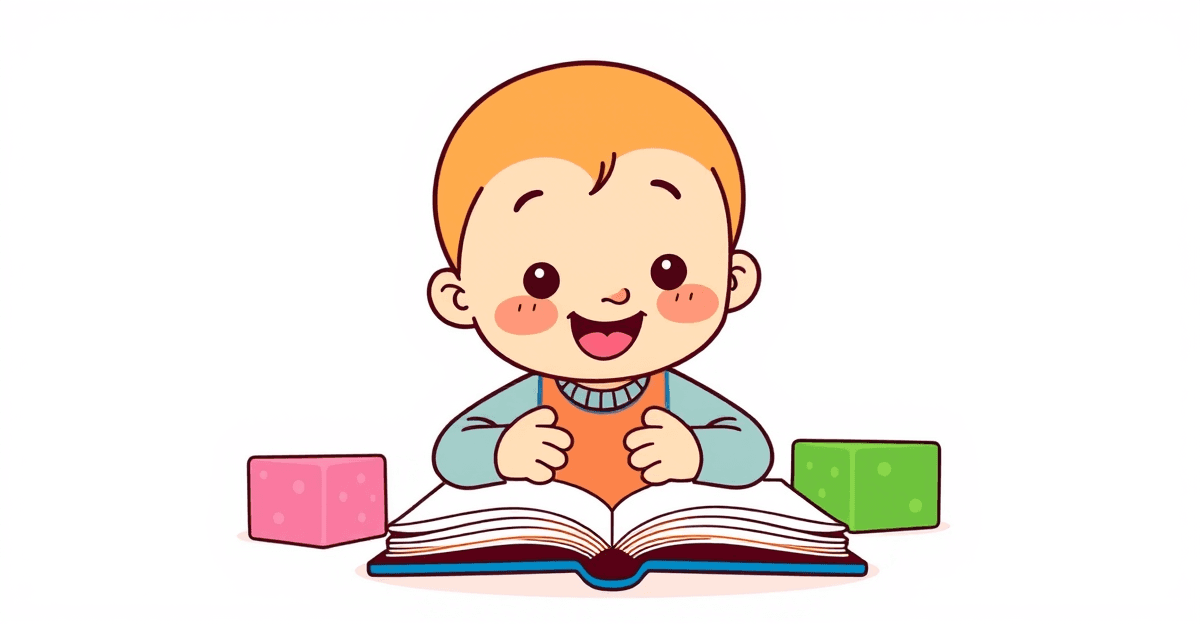
You sit beside your K2 child as she works through a worksheet. The first few questions are too easy — she breezes through them without thinking. Then suddenly, the difficulty jumps and she's stuck, eyes welling up. Sound familiar? This is the core problem with one-size-fits-all learning, and it's exactly what adaptive learning for preschoolers in Singapore is designed to solve. Instead of fixed difficulty levels, adaptive learning meets your child right where they are — adjusting in real time so every question feels just challenging enough to grow, but never so hard it breaks their confidence.
Key Takeaway: Adaptive learning automatically adjusts difficulty based on your child's responses. Research shows this personalised approach can improve learning outcomes by up to 30% compared to traditional methods — and for K1-K2 children, it turns practice into something they actually want to do.
What Is Adaptive Learning and How Does It Work?
Adaptive learning is a method of education where the content, pace, and difficulty of activities change based on how your child performs. Think of it as a smart tutor that watches every answer and decides what to present next.
Here's how it typically works for a preschooler:
- Your child answers a question — say, identifying the number that comes after 7.
- The system evaluates the response — correct, incorrect, how quickly they answered.
- The next question adjusts — if they got it right easily, the next one might ask what comes after 13. If they struggled, it might revisit counting to 10 with a visual aid.
This cycle repeats continuously, creating a personalised learning path unique to your child. No two children get exactly the same experience, because no two children learn the same way.
For parents in Singapore — where K1 and K2 programmes at centres like PCF Sparkletots, My First Skool, and PAP Community Foundation preschools follow the MOE Nurturing Early Learners (NEL) framework — adaptive learning complements what your child already does in the classroom by filling in individual gaps that group-based teaching can't always address.
Why Adaptive Learning Works for K1-K2 Children
The science behind adaptive learning for preschoolers rests on a well-established concept in developmental psychology: Vygotsky's Zone of Proximal Development (ZPD). In simple terms, children learn best when a task is slightly above what they can do independently, but not so far beyond them that they give up.
A 2019 study published in the Journal of Educational Psychology found that students using adaptive learning tools showed a 30% improvement in test performance compared to those using non-adaptive methods. While much of the research focuses on older students, the underlying principle applies even more strongly to preschoolers, whose confidence is especially fragile.
It prevents frustration and boredom
A K1 child who already recognises all 26 letters doesn't need to drill the alphabet for three more weeks just because the class hasn't moved on. Equally, a child who hasn't yet grasped letter sounds shouldn't be pushed into blending words. Adaptive learning avoids both extremes.
It builds confidence through small wins
Every correct answer — at the right level — gives your little one a small boost. Over weeks and months, these add up. Children who experience regular, appropriately-challenging success develop what psychologists call self-efficacy: the belief that they can learn new things. This matters enormously when they walk into a Primary 1 classroom with 30 other children.
It gives parents real data
Instead of a vague "your child is doing well" from a progress report, adaptive platforms track exactly which skills your child has mastered and which need more work. You can see whether your child struggles with number bonds to 5, or whether they've already moved past sight words expected at the K2 level. This kind of visibility helps you have more productive conversations with your child's teachers too.
How Adaptive Learning Differs from Traditional Preschool Worksheets
| Traditional Worksheets | Adaptive Learning | |
|---|---|---|
| Difficulty | Fixed for all children | Adjusts per child |
| Pacing | Set by teacher or curriculum | Set by child's responses |
| Feedback | Delayed (marked later) | Immediate |
| Engagement | Can bore or frustrate | Stays in the "sweet spot" |
| Progress tracking | Manual, periodic | Automatic, continuous |
Traditional worksheets absolutely have their place — they build fine motor skills and teach children to work independently on paper. But when it comes to practice and reinforcement, adaptive learning is significantly more efficient because no time is wasted on material your child has already mastered or isn't ready for.
What Does Adaptive Learning for Preschoolers Look Like in Practice?
For a 5-year-old in Singapore, adaptive learning might look like this:
Monday: Your child practises counting. The app notices she counts confidently to 20 but hesitates above 15 when counting backwards. It serves more backward-counting questions from 15 down.
Wednesday: She's now counting backward from 18 with ease. The system introduces simple subtraction within 10 — a natural next step.
Friday: She gets 3 out of 5 subtraction questions right. Instead of moving forward, the platform gives her 2 more at the same level with visual aids (picture-based subtraction), then tries again without the visuals.
This is the kind of adaptive quiz practice that makes learning fun and measurable for K1-K2 kids — and it happens automatically, without you needing to select the right worksheet or guess what your child should work on next.
Does Adaptive Learning Really Help with Primary 1 Readiness?
Yes — and here's why it matters in the Singapore context specifically.
Singapore's Primary 1 curriculum expects children to arrive with certain foundational skills. MOE's own guidelines note that children should have basic literacy (recognising letters, understanding simple texts) and numeracy (counting, comparing quantities) before they start formal schooling. The gap between children who are prepared and those who aren't can widen quickly because the Primary 1 pace is brisk.
Adaptive learning helps close this gap before it forms. By continuously identifying what your child knows and what they don't, it ensures they aren't just "covering" the syllabus — they're actually mastering it.
A 2022 report by the National Institute of Education (NIE) in Singapore highlighted that early numeracy confidence is one of the strongest predictors of later academic success in mathematics. Children who entered Primary 1 feeling confident about numbers — not just knowing them — performed better through Primary 3 and beyond.
If you're thinking about additional support, finding the right tutor can also help reinforce what your child learns at home. But whether you use a tutor, an adaptive app, or both, the principle is the same: meet your child where they are.
How to Choose an Adaptive Learning Tool for Your Preschooler
Not all products labelled "adaptive" truly are. Here's what to look for:
1. Real-time adjustment, not just levelled content
Some apps simply offer "easy, medium, hard" levels and call it adaptive. True adaptive learning adjusts within a session based on each response — not just between sessions.
2. Age-appropriate design
For 4 to 6-year-olds, the interface should be visual, intuitive, and require minimal reading. Bright colours, simple taps, and audio instructions matter. Be mindful of healthy screen time limits — short, focused sessions of 10-15 minutes are more effective than long stretches.
3. Alignment with Singapore's curriculum
Look for content that maps to what your child is learning in K1 or K2 — number sense, letter recognition, phonics, basic reading milestones. International apps may teach content that doesn't match the local sequence.
4. Progress visibility for parents
You should be able to see what your child practised, how they performed, and what areas need attention. Without this, you're flying blind.
5. Engagement without over-gamification
A good adaptive learning app keeps your child engaged through the joy of appropriate challenge — not through excessive rewards, animations, or game mechanics that distract from actual learning.
Common Concerns Singapore Parents Have About Adaptive Learning
"Will my child become too dependent on screens?"
Adaptive learning is a tool, not a replacement for hands-on play, outdoor time, or classroom interaction. Used in moderation — 10 to 15 minutes a day — it supplements your child's learning without adding excessive screen time.
"Is it just another assessment tool that stresses my child out?"
No. The beauty of well-designed adaptive learning is that your child doesn't even realise they're being assessed. To them, it feels like a game. There are no grades, no red marks, no "you failed" messages — just a continuous, encouraging experience.
"My child is only in K1 — isn't it too early?"
K1 is actually an ideal time to start. At age 4-5, children's brains are forming connections rapidly. Adaptive learning takes advantage of this neuroplasticity by providing exactly the right level of stimulation. Early exposure also helps your child build learning habits and resilience that serve them well into primary school.
Making Adaptive Learning Part of Your Child's Routine
The most effective approach is consistency over intensity. Here's a simple framework:
- When: After dinner or before bedtime story — pick a consistent time.
- How long: 10-15 minutes per session, 3-5 times a week.
- Your role: Sit with your child for the first few sessions. Celebrate effort, not just correct answers. Then gradually let them do it independently.
- Review: Check the progress dashboard weekly. If you notice a skill area lagging, reinforce it with real-world activities — count steps at the playground, spot letters on signs at the hawker centre.
QuizKin's adaptive quiz practice is designed around exactly this kind of routine — short, focused sessions that make learning fun and measurable for K1-K2 kids, with a parent dashboard that shows you what's working and what needs attention.
If you're also looking for enrichment deals or discounts on learning resources, WhyNotDeals regularly features promotions on educational apps and children's activities in Singapore.
The Bottom Line
Adaptive learning for preschoolers in Singapore isn't a trend — it's a research-backed approach that respects how young children actually learn. By adjusting to your child's individual level in real time, it keeps them engaged, builds genuine confidence, and lays a stronger foundation for Primary 1 and beyond.
Your little one doesn't need to be the fastest learner in the class. They just need to learn at their pace, with the right support. That's what adaptive learning delivers.
Sources
- MOE Nurturing Early Learners Framework — Singapore's guiding framework for preschool education and early childhood development.
- MOE Primary 1 Registration — Official guidelines and timelines for Primary 1 entry in Singapore.
- National Institute of Education, Singapore — Research on early childhood education and numeracy development in the Singapore context.
- Vygotsky's Zone of Proximal Development — Simply Psychology — Accessible overview of the developmental theory underpinning adaptive learning.
- American Psychological Association — Adaptive Learning Technologies — Research summary on the effectiveness of adaptive learning in education.
Practise what you’ve read with QuizKin
Adaptive quizzes covering phonics, sight words, numbers, and more — aligned with the Singapore MOE curriculum. Start your free Premium trial today.
Frequently Asked Questions
Adaptive learning is a personalised approach where activities automatically adjust in difficulty based on your child's responses. For K1-K2 children in Singapore, this means quizzes and exercises become easier when your child struggles and more challenging when they're ready — keeping them engaged without frustration.
Yes, adaptive learning is well-suited for children aged 4 to 6. Research shows that preschoolers learn best when tasks sit just above their current ability level. Adaptive platforms keep your little one in this 'sweet spot', which builds confidence and helps them progress at their own pace — important preparation for Primary 1 in Singapore.
Adaptive learning helps your child master foundational skills in literacy and numeracy at a pace that suits them. Instead of following a fixed syllabus, it identifies gaps early and reinforces areas where your child needs more practice. This personalised approach means your child enters Primary 1 with stronger fundamentals and greater confidence.
Ready to make learning fun?
QuizKin turns screen time into learning time with adaptive quizzes built for K1-K2 kids in Singapore. Free to start.
Related Articles
Gamification: Why Game-Based Learning Works for Preschoolers
Discover why game-based learning works for K1-K2 kids in Singapore. Science-backed tips to make learning fun, measurable, and stress-free for your child.
Spaced Repetition for Young Learners in Singapore
A warm, evidence-based guide to spaced repetition for young learners in Singapore — how K1-K2 parents can help kids ages 4-6 remember more, the gentle way.
Worksheets vs Interactive Learning: What Works Best?
Worksheets vs interactive learning for K1-K2 kids in Singapore: discover which method builds stronger skills, retention, and confidence — backed by research.