Preschool vs Kindergarten in Singapore: Fees & Fit
MOE Kindergarten from $160/mo vs anchor childcare ~$310 after subsidy vs private $800+. Fees, hours and curriculum compared for Singapore parents.
Mervin Tan · Founder, QuizKin
Published 7 June 2026
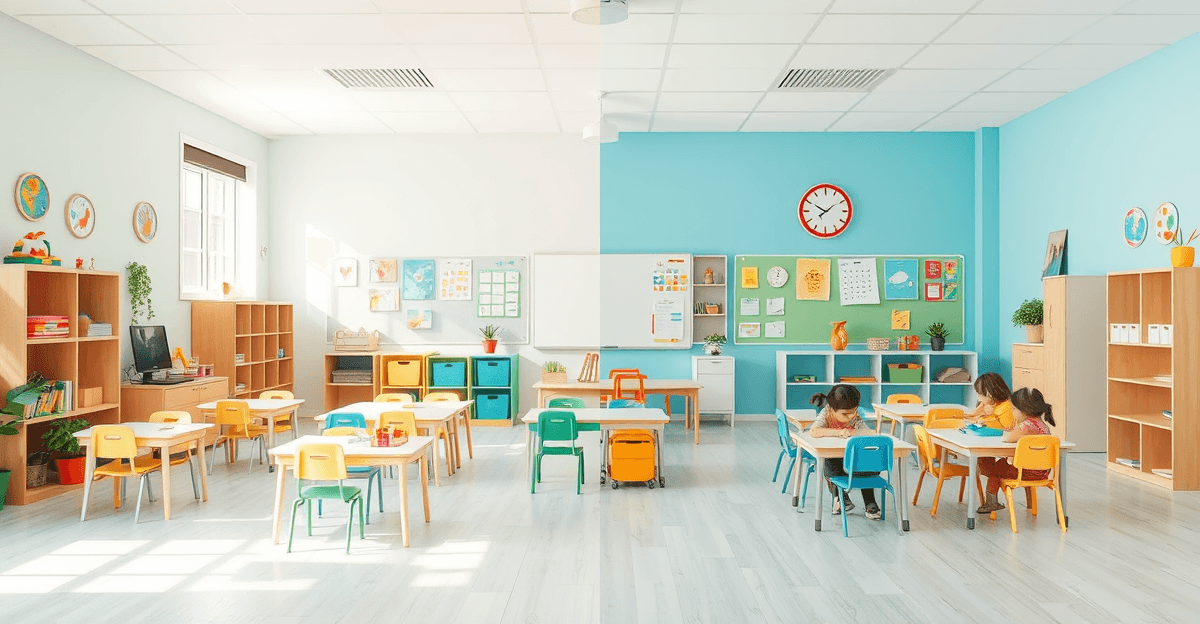
When my daughter turned 3, I thought I had it all figured out — she was happy at her childcare centre, things were running smoothly. Then other parents started asking: "Are you moving her to a kindergarten for K1?" and I thought... wait, is that something I should be doing?
If you're confused about the difference between preschool and kindergarten in Singapore, trust me, you're not alone. The terms get thrown around interchangeably, but they actually mean quite different things. And depending on your family situation, the choice between them can affect everything from your monthly budget to your child's daily routine.
Key Takeaway: In Singapore, "preschool" is the umbrella term. Kindergartens offer half-day programmes (3-4 hours) for children aged 4-6, while childcare centres provide full-day care (up to 12 hours) for children from as young as 2 months. Both follow the same national curriculum framework, so the real decision comes down to your family's schedule, budget, and your child's needs.
So What's the Actual Difference?
In Singapore, "preschool" covers everything pre-primary. There are two main types: kindergartens and childcare centres. Both are regulated by ECDA, and both follow the Nurturing Early Learners (NEL) framework.
Kindergartens
Kindergartens take children aged 4 to 6 (K1 and K2) and run half-day programmes — usually about 8am to noon. They pack structured learning into a shorter day: early literacy, numeracy, social skills, creative expression.
You'll see names like MOE Kindergarten, PCF Sparkletots, My First Skool, plus various private and church-based kindergartens.
Childcare Centres
Childcare centres accept children from as young as 2 months through age 6. They run full-day, usually 7am to 7pm, with meals, nap time, and extended care built in alongside the educational programme. For K1 and K2 children, the kindergarten curriculum is essentially the same — just delivered within a longer day.
The difference isn't what your child learns. It's how long the programme runs and what age range is covered.
Let's Talk Money
For many families, this is the deciding factor. Here's a general picture of what fees look like:
MOE Kindergarten: About $160/month for citizens — honestly hard to beat. PRs pay around $320.
Anchor operators (PCF Sparkletots, My First Skool, E-Bridge Pre-School, M.Y World Preschool, Skool4Kidz): Full-day childcare for citizens runs around $310/month after the basic government subsidy (the 2026 fee cap for anchor operators is $610/month, with a basic subsidy of around $300 for working families with SC children). If your household earns under $12,000/month, additional subsidies can bring fees as low as $3/month. Yes, really.
Private centres: This is where the range explodes — $800 to $2,000+/month depending on curriculum (Montessori, Reggio Emilia, bilingual immersion) and location.
Government subsidies (Basic Subsidy and Additional Subsidy) apply to ECDA-licensed childcare centres. Half-day kindergarten programmes generally have lower base fees but may not qualify for the same subsidy tiers. If you're looking for deals on enrichment or learning resources to supplement your child's programme, WhyNotDeals regularly features education and family promotions.
MOE Kindergarten: Worth the Hype?
MOE Kindergarten launched in 2014 and has expanded to over 50 centres across Singapore, usually located within primary schools. I know several parents who swear by it, and here's why:
- Affordable — $160/month for citizens, with financial assistance available
- Aligned with MOE's Primary 1 curriculum — smoother transition to formal schooling
- Located within a primary school, which gives your child some familiarity (though it doesn't guarantee P1 admission there — I've had to explain this to several hopeful parents)
- Bilingual curriculum — English and Mother Tongue through the Hi-Light and Starlight programmes
The main catch: MK runs half-day only (about 4 hours). If both parents work full-time, you'll need afternoon care through MK's partner operator — KCare — which costs extra.
Half-Day vs Full-Day: The Real Question
Forget curriculum comparisons for a moment. This decision is really about your family's daily reality.
Go for a half-day kindergarten if:
- A parent, grandparent, or helper is available in the afternoon
- You want your child to have more unstructured play time at home
- Your child is introverted or gets tired easily in group settings
- Budget is a priority
Go for full-day childcare if:
- Both parents work and need morning-to-evening care
- Your child thrives on routine and loves social interaction
- You want meals, nap time, and enrichment bundled into one programme
- Your child has been at the same centre since nursery and changing would be disruptive
I know some parents worry that full-day care is "too much" for young kids. Research from ECDA and international studies consistently shows that programme quality matters far more than length. A nurturing, well-structured full-day centre can be just as good as — sometimes better than — a half-day kindergarten.
What About the Curriculum?
Here's the thing many parents don't realise: both kindergartens and childcare centres follow the same Nurturing Early Learners (NEL) framework, covering six learning areas:
- Aesthetics and Creative Expression
- Discovery of the World
- Language and Literacy
- Motor Skills Development
- Numeracy
- Social and Emotional Development
The core curriculum is identical. Where centres differ is in delivery — some lean towards play-based learning, others use thematic approaches, and a few still rely on worksheets (which I'd personally avoid at this age, but that's another conversation). The main exception is international preschools, which often follow IB PYP or Montessori frameworks instead of NEL — our international preschool comparison explains what that difference means for P1 readiness.
For language and literacy, your child will start learning sight words and phonics during K1, progressing to simple readers by K2. If you want to track progress at home, QuizKin's adaptive quizzes make it easy — fun for the kids, clear data for you, no pressure of formal tests.
Fine motor development is built into the daily programme too. For ideas to reinforce at home, check our guide to fine motor skills activities for K1 kids.
A Practical Checklist for Deciding
Rather than asking "preschool or kindergarten?", ask yourself:
1. What are your care hours?
If you need full-day care, a childcare centre is the practical choice. If afternoon care is sorted, kindergarten opens up more options including MK.
2. What's your real budget?
MOE Kindergarten at $160/month is unbeatable. But anchor operator childcare with subsidies can also be very affordable. Calculate net fees after subsidies — don't compare sticker prices.
3. How does your child learn best?
Some kids thrive in a focused, shorter burst. Others do better with the rhythm of a full day that includes meals, nap, and outdoor play. You know your child's temperament better than any guide can tell you.
4. Are you thinking about Primary 1 transition?
If Primary 1 readiness is on your mind, MOE Kindergartens are specifically designed to bridge the gap to P1. But any quality programme following the NEL framework will prepare your child well. For additional academic support closer to P1, TuitionLah can help you find a tutor with no agency fees.
5. What's the centre's SPARK rating?
ECDA's SPARK accreditation certifies centres that meet quality benchmarks. Whether you're looking at a kindergarten or childcare centre, check if it's SPARK-certified — it's one of the more reliable quality indicators.
Can You Switch Between the Two?
Yes, and it's more common than you'd think. Many families keep their child in full-day childcare during Nursery, then switch to a half-day kindergarten for K1 or K2 — especially if a family member becomes available for afternoon care, or if they snag a spot at MOE Kindergarten.
The transition is usually smooth since both follow the NEL curriculum. Give your child a few weeks to adjust and keep communication open with the new teachers about strengths and areas to work on.
Social Development in Both Settings
Both offer plenty of opportunity for social skills development. In kindergartens, children interact in smaller groups during focused sessions. In childcare centres, the longer day means more time for free play, group projects, and navigating social dynamics — sharing toys, resolving conflicts, all the good stuff.
What matters most is teacher-child ratio and quality of interactions. ECDA mandates a maximum ratio of 1:15 for both K1 and K2. Look for centres where teachers are warm, engaged, and genuinely invested in the children. You can tell within five minutes of visiting.
Bottom Line
There's no universally "better" option. The best choice depends on your family's schedule, budget, your child's personality, and the quality of the specific centre. Both follow the same national curriculum. Both are regulated by ECDA. Both can prepare your child well for Primary 1.
Visit shortlisted centres. Observe a session if they let you. Talk to other parents. Trust your gut — you know your child best.
And as your little one progresses through K1 and K2, consistent, low-pressure practice at home makes a real difference. QuizKin's adaptive quizzes are designed to complement any preschool or kindergarten programme, building confidence in literacy and numeracy one question at a time.
Sources
Practise what you’ve read with QuizKin
Adaptive quizzes covering phonics, sight words, numbers, and more — aligned with the Singapore MOE curriculum. Start your free Premium trial today.
Frequently Asked Questions
In Singapore, preschool is a broad term covering childcare centres and kindergartens for children aged 2 months to 6 years. Kindergartens specifically serve children aged 4–6 (K1 and K2) and typically operate 3–4 hours per day. Childcare centres, another type of preschool, offer full-day programmes of up to 12 hours and accept younger children.
MOE Kindergarten fees are among the most affordable at around $160 per month for Singapore citizens. Anchor operator kindergartens and childcare centres (like PCF Sparkletots and My First Skool) charge subsidised rates starting from around $170–$370 per month after government subsidies. Private kindergartens can range from $800 to over $2,000 per month.
Children in Singapore typically enter Kindergarten 1 (K1) at age 5 — meaning they turn 5 in that calendar year. K2 begins at age 6. If your child is currently in a childcare centre, transitioning to a kindergarten programme for K1–K2 is optional, as childcare centres also offer kindergarten-level curricula aligned to the national Nurturing Early Learners framework.
About the author
Mervin Tan
Founder, QuizKin
Mervin Tan is the founder of QuizKin and a software engineer and dad of two young children in Singapore. He builds QuizKin's adaptive quiz engine and writes practical K1-K2 learning guides grounded in MOE's Nurturing Early Learners framework and his own experience preparing his kids for Primary 1. QuizKin is built by Adaptels Pte. Ltd., Singapore.
Ready to make learning fun?
QuizKin turns screen time into learning time with adaptive quizzes built for K1-K2 kids in Singapore. Free to start.
Related Articles
What Do K1 Children Learn in Singapore?
Wondering what K1 children learn in Singapore? A parent's guide to the MOE-aligned kindergarten curriculum, key skills, and how to support your 4-6 year old.
Is My Child Ready for Preschool? Singapore K1 Readiness Checklist (2026)
Use this practical K1 readiness checklist to confidently prepare your 4-6 year old for Singapore preschool — with tips on social, cognitive, and learning skills.
School Bus Safety for Singapore Preschoolers
A practical school bus safety guide for Singapore parents of K1-K2 kids. Learn seatbelt rules, drop-off routines, and skills to keep your preschooler safe.