Is My Child Ready for Preschool? Singapore K1 Readiness Checklist (2026)
Use this practical K1 readiness checklist to confidently prepare your 4-6 year old for Singapore preschool — with tips on social, cognitive, and learning skills.
Mervin Tan · Founder, QuizKin
Published 18 May 2026
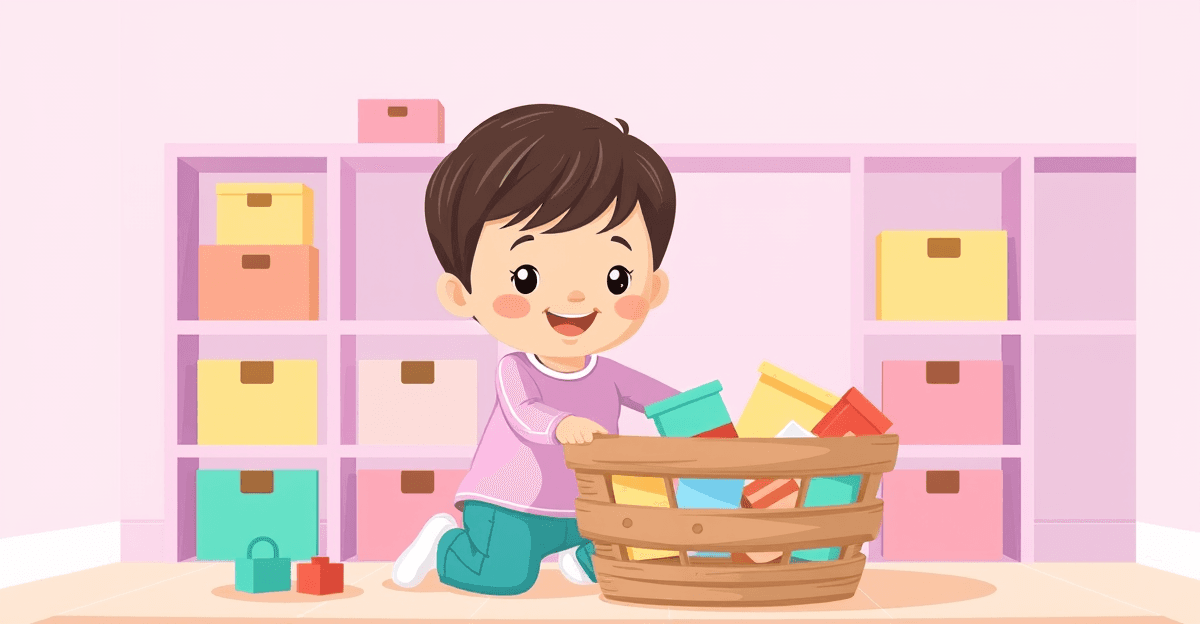
The WhatsApp parent group was my first reality check. Someone posted a photo of their four-year-old writing full sentences in English and Mandarin, and I looked at my own 4-year-old — happily drawing what she insisted was a dinosaur but looked more like a potato — and thought: are we behind? Maybe your child still cries when you leave the room. Maybe he can already write his own name and recite the alphabet in two languages. Most likely, your child sits somewhere in the middle — curious, funny, occasionally feral — and you genuinely aren't sure what "ready" even looks like for a Singapore K1 classroom.
TL;DR: Use this practical K1 readiness checklist to confidently prepare your 4-6 year old for Singapore preschool — with tips on social, cognitive, and learning skills.
This checklist is here to give you a clear, honest picture. Not to add to your 11pm anxiety spiral, but to help you see what your child already has going for them — and where a little targeted support before school starts could make the transition smoother for both of you.
What Does K1 Actually Look Like in Singapore?
Before running through a checklist, it helps to understand what your child is actually walking into. Singapore's kindergarten years — K1 (age 4 turning 5) and K2 (age 5 turning 6) — are governed by the MOE Kindergarten Curriculum Framework, which prioritises six learning areas: Language and Literacy, Numeracy, Discovery of the World, Motor Skills Development, Aesthetics and Creative Expression, and Social and Emotional Development.
Major providers include:
- PCF Sparkletots (operated by PAP Community Foundation) — over 400 centres islandwide, making it one of the largest anchor operators
- My First Skool (NTUC First Campus) — known for bilingual programmes and strong community presence
- MOE Kindergartens (MK) — government-run, attached to primary schools, heavily subsidised and increasingly popular since expanding in recent years
- Private and international preschools — ranging from Montessori-style settings to more structured academic programmes (weighing this route? See our international preschool comparison guide)
The curriculum across anchor operators is play-based and thematic. Your child is not expected to arrive at K1 reading chapter books or solving arithmetic. What teachers do need is a child who can function in a group, communicate basic needs, and stay engaged with an activity for a reasonable stretch of time. That's actually a much more achievable bar than the parent WhatsApp groups might suggest.
The K1 Readiness Checklist
Use this as a conversation tool, not a pass/fail test. Read each item and ask yourself honestly: does my child do this consistently, sometimes, or not yet?
Self-Care and Independence
- ☐Can manage toileting independently (or with minimal reminders)
- ☐Can open and close their own water bottle and lunchbox
- ☐Can change shoes and put on their school bag without help
- ☐Understands and follows basic two-step instructions (e.g., "Put your bag down and sit at the table")
- ☐Can wash hands with soap and dry them without prompting
These practical skills matter enormously in a classroom of 20-plus children. Teachers at PCF Sparkletots and My First Skool simply do not have the bandwidth to assist every child with every self-care task every day — they're managing a small village. A child who can handle these basics arrives at K1 with one less source of daily stress. And honestly? One less source of stress for you too, during those rushed school mornings.
If your child isn't there yet: Build these into your morning and evening routines now, even if it's slower and messier. I know it's tempting to just zip up the bag yourself because you're running late — resist it. Let them fumble. It pays off.
Social and Emotional Readiness
- ☐Can separate from parents without prolonged distress (some initial tears are normal and expected)
- ☐Can play alongside other children, and occasionally cooperatively
- ☐Uses words — not just crying or hitting — to express frustration or disappointment
- ☐Can wait for a short turn (a few minutes)
- ☐Shows basic empathy: notices when another person is upset
Singapore classrooms are diverse and often multilingual. Your child will encounter peers from different family backgrounds, different temperaments, and different home languages. Here's what I'd say to any parent worried about this: social-emotional readiness isn't about being the most outgoing child in the room. It's about having the basic tools to navigate that environment without completely falling apart.
If your child struggles here: Regular playdates with one or two children the same age, library storytime sessions, or a term at a childcare centre before K1 can genuinely help. Social skills are learned through practice — not lectures, not flashcards. Just messy, sometimes conflict-ridden play.
Language and Communication
- ☐Speaks in sentences of at least four or five words
- ☐Can make themselves understood by adults outside the family
- ☐Follows a short story read aloud and can answer simple "what happened?" questions
- ☐Knows their own full name, and ideally their parents' names and contact number
- ☐Recognises some letters or sounds (full literacy is not required at K1 entry)
Singapore's bilingual policy means K1 children will be learning in both English and their Mother Tongue — Mandarin, Malay, or Tamil. A child doesn't need to be bilingual before starting K1, but a positive relationship with language in general — enjoying books, asking relentless questions, trying new words — gives them a strong foundation to build on.
A practical tip: Read to your child daily in whichever language you're most comfortable in. Seriously, it doesn't have to be sophisticated. Comprehension, vocabulary, and the habit of following a narrative are the foundations that structured phonics instruction will build on later.
Early Numeracy Awareness
- ☐Can count objects to at least 10, understanding that the last number said equals the total
- ☐Recognises basic shapes: circle, square, triangle, rectangle
- ☐Understands simple size comparisons: bigger/smaller, more/less
- ☐Can sort objects by colour or shape
- ☐Understands concepts of first, last, and middle in a sequence
These are the building blocks the K1 curriculum assumes. Your child does not need to be adding or subtracting at this stage — what matters is that numbers and patterns feel familiar and non-threatening. If your child can count their chicken nuggets and tell you who got more, you're probably fine.
Building this at home: Counting steps on the way to the bus stop, sorting laundry by colour, arranging fruit by size — real-world numeracy practice sticks far better than worksheets at this age. For something more structured and genuinely engaging, adaptive quiz practice through tools like QuizKin — which adjusts to each child's level and makes the learning feel like a game — can help K1 and K2 children build early numeracy and literacy confidence in short, focused sessions.
Attention and Learning Stamina
- ☐Can sit and focus on a chosen activity (puzzle, drawing, building) for 10–15 minutes
- ☐Can participate in a group activity with a structured start and end
- ☐Shows curiosity — asks "why" and "how" questions
- ☐Can follow along with a read-aloud or a song for several minutes
A K1 classroom runs on structured blocks of activity, typically 20–30 minutes, interspersed with movement and free play. A child who has never been asked to sustain attention in a group setting may find the first term genuinely exhausting — and that's completely normal. But it helps to start building that stamina before school begins, rather than leaving it entirely to the teachers.
What K1 Readiness Is NOT
It's worth being direct about what this checklist isn't measuring, because Singapore's education culture has a way of distorting expectations — especially in those parent group chats.
K1 readiness is not:
- Being able to read independently
- Writing the alphabet perfectly
- Knowing addition and subtraction
- Speaking flawless Mandarin or English
- Having attended a "premium" infant care or childcare programme
MOE's own Kindergarten Curriculum Framework explicitly states that kindergarten education should be joyful, meaningful, and developmentally appropriate. The framework is designed to meet children where they are and grow from there. A child who arrives at K1 unable to write their name but who is curious, communicative, and willing to try is, by any honest measure, ready.
The Parent Readiness Check
Here's something that doesn't appear on most readiness checklists: your readiness matters too.
Separation anxiety runs both ways — and I say that from experience, standing in the school corridor pretending to read my phone while watching through the glass. Research on early childhood transitions consistently shows that children take their emotional cues from their caregivers. A parent who genuinely communicates confidence about school — not performatively, but actually — helps their child form a positive first association with the experience.
Practical steps for parents:
- Visit the school before the first day if orientation is offered; familiarity reduces fear
- Establish a consistent, brief goodbye ritual and stick to it (long goodbyes extend distress — I learned this the hard way)
- Ask teachers for honest feedback in the first few weeks, not just reassurance
- Resist comparing your child's milestones with other children in the class or in parent chats
How to Use the Next Few Months
If K1 starts in January 2027 (as is standard in Singapore), families with children born in 2022 have the rest of 2026 to prepare. Here's a practical framework:
Now through August: Focus on self-care independence and social exposure. Playdates, public library visits, and consistent routines at home make a significant difference. Nothing fancy — just predictability and practice.
September through November: Introduce more structured activities — short colouring sessions, simple puzzles, following instructions in sequence. If your child isn't yet comfortable with basic phonics or number recognition, short daily sessions (10–15 minutes) of playful, low-pressure practice work well at this age. QuizKin's adaptive quizzes for K1-K2 learners are built around exactly this philosophy: making practice measurable and genuinely fun, so children build confidence without dreading "study time."
December: Ease off on structured prep. Let the final weeks before school be playful and restful. Children consolidate learning through sleep and unstructured play — the month before K1 is genuinely not the time to cram.
A Note on Children Who Need Extra Support
Some children arrive at the K1 readiness stage with speech delays, sensory sensitivities, developmental differences, or other needs that may warrant early intervention. Singapore has well-resourced pathways for this:
- KK Women's and Children's Hospital and NUH both offer developmental paediatric assessments
- EIPIC (Early Intervention Programme for Infants and Children) provides funded early intervention for eligible children
- MOE's Support for Preschoolers scheme helps children with additional learning needs transition into mainstream kindergarten with appropriate support
If you have concerns, raise them early — with your child's current teachers, your family doctor, or a developmental paediatrician. Early identification and support consistently produces better outcomes than a wait-and-see approach. I've spoken to enough parents who wished they'd asked sooner rather than later.
The Bottom Line
Most four-year-olds in Singapore are ready enough for K1 — provided the programme is age-appropriate and play-based, which MOE-registered kindergartens are designed to be. The gaps that matter aren't academic. They're practical (can my child manage their own basic needs?), social (can my child exist in a group without falling apart?), and attitudinal (does my child approach new experiences with some measure of curiosity rather than pure dread?).
Use this checklist to identify where you can give your child a genuine boost before January. But also give yourself permission to trust the process. Generations of Singaporean children have walked into K1 classrooms uncertain and emerged from K2 ready for Primary 1. The system is designed to grow your child — not to test whether they arrived already grown.
If you're still deciding which kindergarten to enrol in, our complete guide to choosing a kindergarten in Singapore compares MOE, PCF Sparkletots, My First Skool, and private options with fee breakdowns.
K2 Readiness Checklist (By End of K2, Age 6)
K2 builds on K1 skills and adds more complexity. By the end of K2, your child should be ready for Primary 1.
Language and Literacy
Phonics Mastery
- ☐Knows all 26 letter sounds confidently
- ☐Recognises common digraphs: sh, ch, th, ck
- ☐Can blend three sounds together to read CVC words (cat, dog, sun, bed)
- ☐Can segment words into individual sounds ("What sounds are in 'pig'?" — p-i-g)
- ☐Beginning to read simple consonant blends (bl, cr, st, tr)
Reading
- ☐Recognises 50-100 sight words
- ☐Reads simple sentences independently ("The cat sat on the mat")
- ☐Uses picture clues and phonics together to figure out unfamiliar words
- ☐Can answer comprehension questions about a short passage
- ☐Shows interest in reading and chooses to look at books independently
Writing
- ☐Writes all 26 lowercase letters legibly
- ☐Writes all 26 uppercase letters legibly
- ☐Can write simple words by sounding them out (inventive spelling is fine)
- ☐Writes their full name
- ☐Attempts to write simple sentences with spaces between words
Numeracy
- ☐Counts from 1 to 20 (and ideally to 50)
- ☐Recognises written numerals 1 to 20
- ☐Counts backwards from 10
- ☐Adds within 10 using objects or fingers
- ☐Subtracts within 10 using objects or fingers
- ☐Recognises and names 2D shapes: circle, square, rectangle, triangle, oval, diamond
- ☐Creates and extends patterns (ABC patterns, growing patterns)
- ☐Understands basic time concepts: days of the week, morning/afternoon/night
Social and Emotional Development
- ☐Cooperates in group activities and takes on roles
- ☐Resolves simple conflicts with words (with adult guidance)
- ☐Shows respect for others' belongings and personal space
- ☐Demonstrates resilience — tries again after failure
- ☐Shows awareness of others' feelings and perspectives
Common Gaps and How to Address Them
Gap: Letter Sounds
Many K1 children know letter names but not letter sounds. This is the most common gap, and it's critical to address early because letter sounds are the actual foundation of reading — not the names.
What to do: Practise 5 letter sounds per day using the phonics approach. Say the sound (not the name), show a picture of a word starting with that sound, and have your child repeat. Apps like QuizKin make this practice engaging and adaptive — the app adjusts difficulty based on which sounds your child has already mastered.
Gap: Number Sense
Some children can count by rote (rattle off 1-2-3-4-5 perfectly) but cannot actually count objects accurately. This trips up a lot of parents because it looks like competence from the outside. Rote counting and one-to-one correspondence are genuinely different skills.
What to do: Count real objects together every day. Count grapes at snack time, stairs as you climb them, toys as you tidy up. Have your child touch each object as they count it — that physical connection is what builds the real understanding.
Gap: Fine Motor for Writing
If your child's handwriting is significantly behind, it's usually a fine motor issue, not a cognitive one. Worth knowing before you start drilling letter formation.
What to do: Focus on strengthening activities: playdough, threading beads, using tongs to pick up small objects, cutting with scissors, building with small blocks. These build the same muscles used for writing without the pressure of letter formation practice.
Gap: Social Skills
Some children are academically ahead but genuinely struggle with social interactions. It happens more than people talk about openly.
What to do: Arrange regular playdates with one or two children. Role-play common social scenarios at home. Read books about friendship and discuss them. Social skills are practised, not taught — there's no shortcut here.
When to Seek Additional Support
Most gaps close naturally with consistent home practice and good kindergarten instruction. That said, consider speaking with your child's teacher or a specialist if:
- Your child is significantly behind in multiple areas (not just one)
- Despite consistent practice, your child shows no progress over 2-3 months
- Your child is avoiding or resisting learning activities that peers enjoy
- There are concerns about speech clarity — if adults outside the family regularly struggle to understand them
- Your child has difficulty following simple instructions or maintaining attention for age-appropriate activities
Early intervention is always more effective than waiting. Singapore has excellent early intervention programmes through ECDA (Early Childhood Development Agency) and KKH (KK Women's and Children's Hospital). For a detailed guide on what to watch for and where to seek help, see our article on signs of learning difficulties in preschoolers.
This checklist is part of our choosing a kindergarten in Singapore pillar guide. When your child reaches K2, use our Primary 1 readiness checklist to assess whether they are ready for the next step.
QuizKin is a Singapore-based learning app designed for K1-K2 children, offering adaptive quiz practice that makes early literacy and numeracy measurable and fun. Explore free activities at quizkin.com.
Sources
- National Library Board Singapore
- MOE — Preschool Education
- ECDA — Early Childhood Development Agency
Looking for more? Check out find a tutor for free on TuitionLah.
Exploring parenthood in Singapore? Visit ParentLah for practical tips on raising kids in Singapore.
Practise what you’ve read with QuizKin
Adaptive quizzes covering phonics, sight words, numbers, and more — aligned with the Singapore MOE curriculum. Start your free Premium trial today.
Frequently Asked Questions
In Singapore, children typically enter K1 at age 4 and K2 at age 5, before proceeding to Primary 1 at age 7. MOE-registered kindergartens and anchor operators like PCF Sparkletots and My First Skool follow this structure. Registration for the following year usually opens in the second half of the current year, so families with children born in 2022 should be planning for K1 in 2027.
Developmental timelines vary widely among children aged 4–6, and a few months can make a noticeable difference at this stage. Rather than delaying enrolment outright, speak with your child's current childcare teachers for their professional read on her readiness. If social or emotional gaps are the concern, structured group play and gradual exposure to classroom routines can help bridge them before K1 starts.
While PSLE is still six or seven years away for a K1 child, the learning habits and early literacy foundations built in kindergarten do compound over time. Singapore's MOE Kindergarten Curriculum Framework emphasises holistic development — not academic drilling — but children who enter Primary 1 comfortable with listening, following instructions, and basic phonics tend to transition more smoothly. Building positive associations with learning early is the real long-term advantage.
Not necessarily. Children develop at different rates, and the checklist represents end-of-year goals — not entry requirements. If your child is behind in multiple areas or significantly behind in one area, speak with their kindergarten teacher. Often, targeted practice at home or through tools like QuizKin can close gaps quickly. Avoid comparing your child to others — focus on their individual progress.
No. Singapore does not have a standardised readiness test for kindergarten entry or progression. Kindergartens assess children informally through observation and teacher assessments. The MOE NEL framework provides learning goals but does not prescribe specific tests.
Start with the basics: ensure your child knows all 26 letter sounds (not letter names). Practise 5-10 minutes daily with a phonics-focused tool like QuizKin, which adapts to your child's level. Read together daily and point out letter sounds in books. Avoid drilling or pressuring your child — short, playful sessions produce better results than long, stressful ones.
K2 readiness means your child has the skills expected at the start of K2. Primary 1 readiness means they have the skills expected at the end of K2 — including reading simple sentences, writing legibly, counting to 20, and basic addition and subtraction. For a detailed P1 readiness checklist, see our guide on preparing your child for Primary 1.
About the author
Mervin Tan
Founder, QuizKin
Mervin Tan is the founder of QuizKin and a software engineer and dad of two young children in Singapore. He builds QuizKin's adaptive quiz engine and writes practical K1-K2 learning guides grounded in MOE's Nurturing Early Learners framework and his own experience preparing his kids for Primary 1. QuizKin is built by Adaptels Pte. Ltd., Singapore.
Ready to make learning fun?
QuizKin turns screen time into learning time with adaptive quizzes built for K1-K2 kids in Singapore. Free to start.
Related Articles
Preschool vs Kindergarten in Singapore: Fees & Fit
MOE Kindergarten from $160/mo vs anchor childcare ~$310 after subsidy vs private $800+. Fees, hours and curriculum compared for Singapore parents.
School Bus Safety for Singapore Preschoolers
A practical school bus safety guide for Singapore parents of K1-K2 kids. Learn seatbelt rules, drop-off routines, and skills to keep your preschooler safe.
P1 English Readiness Checklist: Literacy Skills Needed
P1 English readiness checklist for Singapore parents: the literacy skills your K1-K2 child needs before Primary 1, plus simple ways to build them at home.