Teaching Preschoolers to Count Money: Singapore Dollar Activities
Teaching preschoolers to count money the Singapore way — fun, hands-on Singapore dollar activities for K1-K2 kids to build real number sense and confidence.
QuizKin Team
Published 9 October 2026
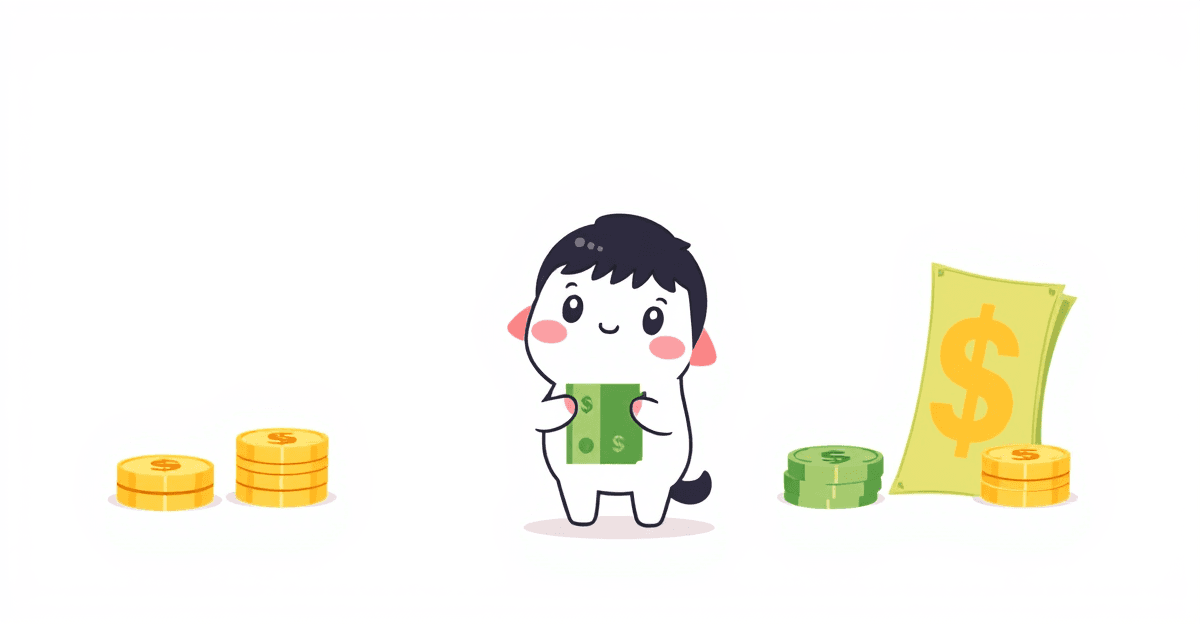
Your little one hands the uncle at the kopitiam a fistful of coins and looks up expectantly — but has no idea whether it's enough for the kaya toast. If that scene feels familiar, you're in exactly the right place. Teaching preschoolers to count money is one of the most practical, confidence-building maths skills you can nurture at home, and in Singapore we're lucky to have everyday moments — hawker centres, provision shops, MRT top-ups — that turn money into a living, hands-on lesson. The best part? You don't need worksheets or flashcards to begin. You just need real Singapore coins, a few minutes, and a sense of play.
In this guide, we'll walk through why money skills matter for K1-K2 children, which coins and notes to start with, and a set of simple Singapore dollar activities you can do today. Everything here is designed for ages 4 to 6, aligned with how Singapore preschools and the MOE curriculum build early numeracy.
TL;DR — Key Takeaways
- Most children are ready to start recognising coins around age 4-5 (K1); counting small amounts comes by K2 (5-6).
- Start with real coins (10c, 20c, 50c, $1) and the $2 note — not toy money — for better recognition.
- Money is formally taught in the MOE Primary 1 maths syllabus, so K1-K2 play gives your child a genuine head start.
- Use everyday Singapore moments — hawker centres, provision shops, play shops — rather than drills.
- Keep sessions short (5-10 minutes) and playful; skills build through repetition, not pressure.
Why Teaching Preschoolers to Count Money Matters
Teaching preschoolers to count money does far more than prepare them for Primary 1 maths — it strengthens counting, one-to-one correspondence, and real-world problem solving all at once. Research in early childhood numeracy consistently shows that children who connect numbers to concrete, meaningful objects (like coins) develop stronger number sense than those who only recite numbers. In short, money is one of the most powerful "maths manipulatives" already sitting in your wallet.
For Singapore children, money also builds early financial awareness — understanding that things have value and that we exchange coins and notes to get them. This lays groundwork for lifelong habits around saving and spending. When your child physically counts out 50 cents to "buy" a snack, they're practising addition, sequencing, and decision-making in a way that feels like play, not lessons.
Definitive point: Money is formally introduced in the MOE Primary 1 mathematics syllabus, where children learn to recognise Singapore coins and notes and count amounts in dollars and cents. Giving your K1-K2 child gentle exposure now means they'll walk into Primary 1 already comfortable with the concepts — which supports a smoother, less anxious transition. If you're thinking about the bigger picture, our Primary 1 Readiness checklist covers money alongside 29 other skills that help children start school confidently.
When Is Your Child Ready to Count Money?
Most children in Singapore are ready to begin coin recognition between ages 4 and 5, once they can reliably count to 10 and understand that a group of objects has a fixed count. Counting actual amounts of money typically develops over K2, around ages 5 to 6. Readiness is about skills, not just age — so watch for the signs rather than the calendar.
Your child is likely ready to start if they can:
- Count to 10 confidently and point to objects one at a time (one-to-one correspondence)
- Sort objects by colour, size or shape — a precursor to sorting coins
- Recognise some numerals (the "2" on a $2 note, for example)
- Show interest when you pay for things or handle change
If your little one isn't there yet, that's completely normal. Strong counting and sorting come first. The fine motor control needed to pick up and stack small coins also matters — you can support this through everyday play, and our guide to fine motor skills activities for K1 kids has plenty of ideas that double as money-handling practice.
Which Singapore Coins and Notes Should You Start With?
A common starting point is the $1 coin and the $2 note as "landmark" whole-dollar values, before introducing the 10-cent, 20-cent and 50-cent coins your child sees most often. Here's one approach:
- $1 coin and $2 note — the anchors
- 10-cent coin — easy to count in tens
- 50-cent coin — "two of these make a dollar"
- 20-cent coin — once tens are secure
- $5 and $10 notes — for older K2 children
A quick note for Singapore parents: the understanding that 100 cents make $1 is abstract and usually clicks closer to Primary 1, so don't push it too early. Focus first on naming coins, comparing their values, and counting in simple groups.
Hands-On Singapore Dollar Activities for K1-K2
The most effective money activities for preschoolers in Singapore use real coins and everyday situations rather than worksheets. Hands-on, play-based learning matches how 4-to-6-year-olds learn best — through touch, movement and repetition. Below are seven activities you can rotate through, each taking just 5-10 minutes.
1. Coin Sorting Tray
Give your child a mix of real coins and a muffin tin or egg carton. Ask them to sort coins into cups by type — all the 10-cent coins together, all the 50-cent coins together. This builds coin recognition and the sorting skills that underpin counting. Talk as you go: "This one's bigger — it's 50 cents."
2. Play Hawker Centre or Provision Shop
Set up a mini "shop" with toys, snacks or empty food packaging, and price each item with simple whole-dollar amounts. Take turns being the shopkeeper and customer. Your child counts out the right coins to "pay." This is a Singapore classic — most kids have watched you order chicken rice or buy a drink, so the role-play feels real and motivating. It's also a lovely way to practise social skills like turn-taking and polite requests.
3. Coin Rubbings and Matching
Place a coin under paper and rub a crayon over it to reveal the design. Your child can match the rubbing to the correct coin and name its value. This sneaks in fine motor practice and close observation of the coins' features — a useful skill since Singapore coins differ in size and edge.
4. "How Much Is in My Hand?"
Start with two or three coins of the same type — say, three 10-cent coins — and ask your child to count the total. Counting same-value coins first (10, 20, 30) teaches skip-counting gently before you mix denominations. Celebrate every attempt; the goal is confidence, not speed.
5. The Piggy Bank Routine
Give your child a coin to drop into a clear piggy bank or jar each day, counting the total together as it grows. A clear container is better than a solid one because your child can see the amount building — making the abstract idea of "saving" visible and concrete.
6. Price Hunt at the Supermarket
On your next NTUC FairPrice or Cold Storage trip, point out prices and ask your child to find items that cost "less than $2" or to count the coins for a small item at the self-checkout. Real-world maths like this cements the connection between numbers and value. (If you're hunting for budget-friendly kids' activities and family deals around Singapore, WhyNotDeals rounds up current education and family promotions.)
7. Make a Dollar
Once your child is comfortable, challenge them to make $1 in different ways — two 50-cent coins, or five 20-cent coins. This is a powerful introduction to the idea that the same value can look different, a concept they'll revisit throughout primary school maths.
Making Money Practice Stick: Repetition Without Pressure
Children master money skills through frequent, short, low-pressure exposure — not long sessions. Aim for 5 to 10 minutes of money play a few times a week, woven into daily life rather than scheduled like a lesson. Little and often beats one long drill, because young attention spans are short and emotional comfort is key to learning.
Keep it joyful. If your child is tired or frustrated, stop and try again another day — pushing too hard can create anxiety around maths, which is the opposite of what we want. For more on keeping early learning pressure-free, see our guide to reducing test anxiety in preschoolers.
This is also where thoughtful digital practice can help. QuizKin offers adaptive quiz practice that makes learning fun and measurable for K1-K2 kids — including early numeracy and money-recognition skills. Because it adapts to your child's level, it keeps them in that sweet spot of "challenging but not frustrating," and gives you a clear picture of what they've mastered and what needs more practice. Many Singapore parents find that pairing hands-on coin play with a few minutes of adaptive practice keeps skills fresh between hawker-centre trips. Game-based tools work especially well at this age — here's why gamified learning works for preschoolers.
How Does This Connect to Primary 1 and Beyond?
In the MOE Primary 1 syllabus, children learn to recognise coins and notes, count money in dollars (and later cents), and solve simple word problems involving money. The K1-K2 activities above build every one of these foundations. By the time your child sits a formal K2 maths assessment or starts Primary 1, counting coins will feel familiar rather than new.
If your child would benefit from extra structured support as Primary 1 approaches, you can find a tutor at no cost through TuitionLah, which connects Singapore families with tutors without agency fees. For most preschoolers, though, consistent playful practice at home is more than enough.
A Simple 4-Week Starting Plan
Not sure where to begin? Here's a gentle progression:
- Week 1: Coin recognition — sorting tray and coin rubbings. Just name and sort.
- Week 2: Count same-value coins — "How much is in my hand?" with 10-cent coins.
- Week 3: Play shop with simple whole-dollar prices.
- Week 4: Mix it up — supermarket price hunt and "make a dollar" challenge.
Move at your child's pace. Some children sail through in a month; others linger happily on sorting for weeks. Both are perfectly fine. The aim is a child who feels capable and curious about money — a skill that will serve them from the kopitiam counter all the way to adulthood.
Remember: you're not raising a cashier, you're raising a confident little learner. Every coin counted together is a small moment of connection and growth. Enjoy it.
Sources & References
- MOE Nurturing Early Learners (NEL) Framework — Singapore's curriculum framework for kindergarten (K1-K2) learning, including early numeracy.
- MOE Primary School Subjects & Syllabuses — official primary curriculum, where money is formally introduced in Primary 1 mathematics.
- Monetary Authority of Singapore — Currency — official information on Singapore coins and notes in circulation.
- MoneySense Singapore — the national financial education programme, with guidance on building money awareness from a young age.
- HealthHub — Child Development — government health resource on developmental milestones for young children, including cognitive and fine motor skills.
Practise what you’ve read with QuizKin
Adaptive quizzes covering phonics, sight words, numbers, and more — aligned with the Singapore MOE curriculum. Start your free Premium trial today.
Frequently Asked Questions
Most children in Singapore are ready to start recognising coins and notes between ages 4 and 5 (K1), once they can count confidently to 10 and understand that objects have a 'count'. Start with coin recognition and simple sorting before moving to adding small amounts. By K2 (age 5-6), many children can count a handful of coins up to $1 and make simple 'purchases' in play. There's no rush — follow your child's interest and keep it playful.
Start with the coins your child sees most often: the 10-cent, 20-cent, 50-cent and $1 coins, plus the $2 and $5 notes. Begin with the $1 coin and $2 note because they are the easiest 'landmark' values for young children. Introduce cents gradually, as understanding that 100 cents make a dollar is an abstract idea that usually clicks closer to Primary 1. Real coins (cleaned) work better than toy money for recognition.
Money is formally introduced in the MOE Primary 1 mathematics syllabus, where children learn to recognise coins and notes and count amounts in dollars. In K1-K2, preschools following MOE's Nurturing Early Learners (NEL) framework build the foundation through counting, number sense and real-world numeracy rather than formal money sums. Practising money play before Primary 1 gives your child a confident head start without any pressure.
Ready to make learning fun?
QuizKin turns screen time into learning time with adaptive quizzes built for K1-K2 kids in Singapore. Free to start.
Related Articles
Sight Words Activities for Singapore Preschoolers: Fun Ways to Build Vocabulary
Discover fun sight words activities for your Singapore preschooler. Practical ideas for K1-K2 kids aged 4-6 to build vocabulary and reading confidence at home.
Teaching Kids About Money at K1-K2: Simple, Effective Ways for Singapore Parents
Age-appropriate ways to introduce money concepts to Singapore children aged 4-6. From coin recognition to simple saving habits — a practical guide for K1 and K2 parents.
Fun Preschool Maths Activities at Home for Singapore Kids (K1-K2)
Discover 10 fun preschool maths activities for Singapore K1-K2 kids (ages 4-6). MOE-aligned ideas you can do at home to build strong numeracy foundations.