Fun Maths Activities for K1-K2 Kids in Singapore: Beyond Worksheets
Discover engaging maths activities for K1-K2 kids in Singapore. Move beyond worksheets with hands-on games that build numeracy skills aligned to MOE curriculum.
Mervin Tan · Founder, QuizKin
Published 30 May 2026
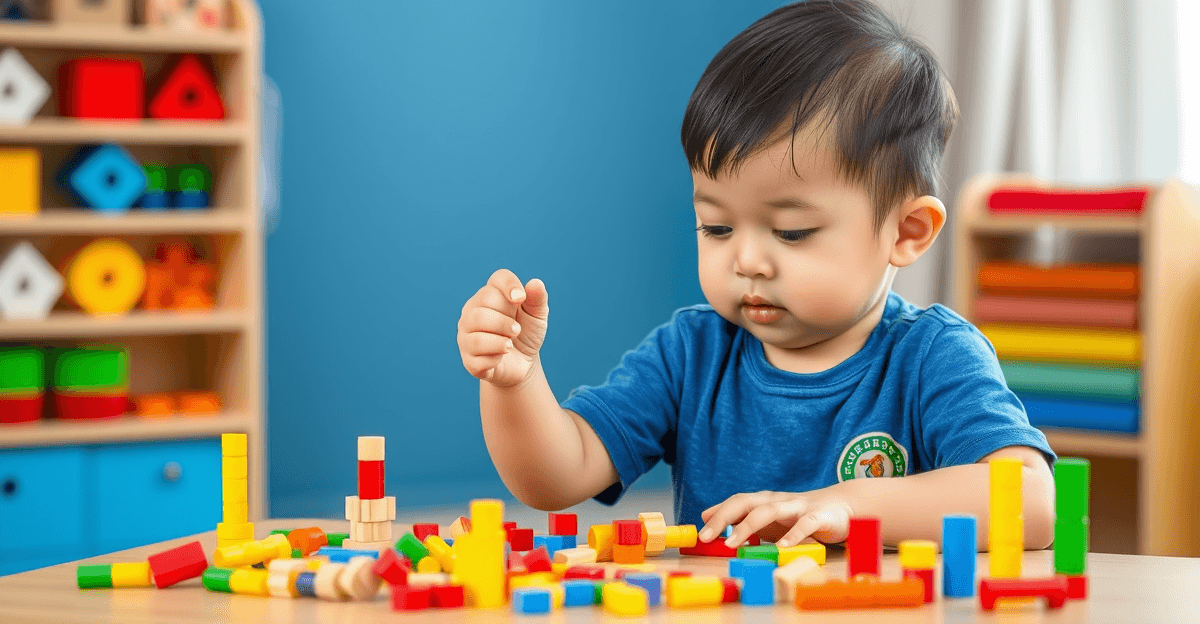
It's 6 PM on a Tuesday, and your K1 child is resisting the maths worksheet you've laid out. Sound familiar? Many Singapore parents face this struggle—balancing the desire to build strong numeracy skills with keeping their young learner happy and engaged. The good news? Some of the most powerful maths learning happens outside the worksheet, through play, exploration, and activities embedded in everyday life.
TL;DR: Discover engaging maths activities for K1-K2 kids in Singapore. Move beyond worksheets with hands-on games that build numeracy skills aligned to MOE curriculum.
In Singapore's competitive education landscape, it's easy to feel pressure to start formal academics early. But child development experts and our MOE curriculum framework agree: K1-K2 children (ages 4-6) learn maths best when it's fun, hands-on, and linked to their interests. This post shares practical, proven activities that build real numeracy skills—while keeping the joy in learning.
Why Play-Based Maths Matters for K1-K2
Before we dive into activities, let's address the "why." Singapore's MOE framework for preschool education emphasises playful, exploratory learning as the foundation for academic skills. This isn't soft pedagogy—it's backed by developmental research showing that young children develop stronger number sense, problem-solving ability, and maths confidence through play than through rote learning alone.
By K2, children in Singapore preschools (whether PCF, My First Skool, PAP Community Foundation, or private centres) are expected to:
- Count and compare numbers up to 20
- Solve simple addition and subtraction problems within 10
- Recognise and name 2D and 3D shapes
- Understand basic measurement concepts (longer, shorter, heavier, lighter)
The key? These skills stick best when learned through exploration and play, not drilling. Play-based practice also builds confidence—a critical factor in later academic success and an important predictor of PSLE readiness years down the line.
1. Number Sense Games: Making Counting Stick
Dice and Dot Games
Dice games are a parent's secret weapon for building number sense. Roll a standard die, and have your child count out that many objects—buttons, building blocks, or cereal pieces. Start simple: "You rolled a 4. Can you find 4 toy cars?" Progress by comparing rolls: "I rolled a 3, you rolled a 5. Who has more?"
Why this works: Children move from rote counting to truly understanding what numbers mean.
Number Hunt Around the House
Write numbers 1-10 on sticky notes and hide them around your home. Ask your child to find each number in order. Once found, they hunt for that many objects—3 spoons, 5 cushions, 7 books. This combines movement, number recognition, and quantifying skills in one activity.
Finger Games and Chants
Use your fingers as a maths manipulative. Teach chants like "Two little ducks went swimming one day / Over the hills and far away" while holding up fingers. This makes abstract numbers concrete and builds muscle memory for number representation—skills that persist even when worksheets aren't involved.
2. Shape and Spatial Awareness: Building Geometric Thinking
Shape Hunt in Daily Life
Walk around your neighbourhood or home and spot shapes: circles in car wheels, rectangles in windows, triangles in roofs. In Singapore's HDB estates, there are endless geometric shapes to discover. Talk about what you find: "That traffic sign is a triangle. How many corners does it have?"
Build and Describe
Gather building blocks (LEGO, Duplo, or cardboard boxes) and create structures together. Ask your child to describe what they've made: "How many blocks tall is your tower? Can you make it taller?" This builds spatial reasoning and introduces measurement language naturally.
Pattern and Symmetry Exploration
Use objects—pasta shapes, buttons, beads—to create patterns. Start simple: red, blue, red, blue. Ask your child to continue the pattern or create their own. This builds logical thinking and sets the foundation for algebraic reasoning later.
3. Real-World Maths: Numbers in Daily Routines
Cooking and Baking Together
This is one of Singapore's best-kept parenting secrets. Cooking involves counting ingredients, measuring, sequencing steps, and comparing quantities—all wrapped in a delicious, practical context.
Try these simple recipes with your K1-K2 child:
- No-bake energy balls: Count out 10 dates, mix with peanut butter, roll into balls. "How many can we make? Can you count them?"
- Sandwich stacking: Layer ingredients and count the layers. "This sandwich has 4 layers. Can you make one with 5?"
- Measuring water play: Fill cups, bottles, and containers with water during bath time. Which holds more? Less? This introduces measurement in a low-pressure, playful way.
Shopping and Money Play
Visit a wet market or supermarket and talk about quantities and prices (in a child-friendly way). "These apples cost $2 each. Can you help me count how many we need?" At home, create a toy shop with price tags and play money. This builds number sense and introduces the practical value of maths.
Time and Routines
K2 children start learning to tell time. Use visual schedules: a picture of breakfast, then school, then play, then dinner. Point to a clock (even a toy one) and talk about what comes next. "After lunch, the little hand points here. That's when we play outside."
4. Problem-Solving Games: Building Mathematical Thinking
Story Problems Through Play
Create simple story problems from your child's daily life: "You have 3 toy cars. I give you 2 more. How many do you have now?" Use real objects first, not abstract numbers. Progress to acting out problems: "Can you show me with your fingers?"
Board Games and Dice Activities
Simple games like Snakes and Ladders or Ludo are surprisingly powerful for developing number sense. Each roll requires counting, and the competitive element keeps young children engaged.
Puzzle and Sorting Activities
Jigsaws, sorting by color or size, and matching games all build problem-solving thinking. These are less obviously "maths" but are foundational skills for later mathematical reasoning.
5. Digital Practice: Adaptive Learning That Works
While screen time should be limited for K1-K2 children, short, focused digital activities can complement hands-on play. Adaptive quiz practice that makes learning fun and measurable for K1-K2 kids can be incredibly valuable when used strategically. Platforms that adapt to your child's level—like QuizKin—mean they're always challenged but not frustrated, and you get real insight into what they've mastered.
The advantage of adaptive digital tools: they provide consistent, bite-sized practice in a format young children find engaging. A 5-10 minute session on QuizKin can reinforce concepts learned through play without the friction of worksheets.
Tips for Success: Making Maths Stick
Keep It Playful and Pressure-Free
Never force maths activities. If your child resists, pause and return later. The goal is to build a positive relationship with numbers, not create anxiety.
Celebrate Effort, Not Just Answers
"You counted all the way to 10!" matters more than "You got it right." This builds a growth mindset and resilience—traits that matter more for long-term academic success than early perfection.
Follow Your Child's Interests
If your child loves cars, build maths around cars. If they love dinosaurs, count dinosaurs. Motivation is the secret sauce that makes learning stick.
Be Consistent, But Not Rigid
Incorporate maths into daily routines rather than scheduling formal "maths time." A few minutes of playful counting while cooking breakfast is more valuable—and more sustainable—than a daily worksheet battle.
Track Progress Informally
Notice what your child can do now that they couldn't do last month. Can they count higher? Compare quantities more accurately? Recognize more shapes? These observations are more meaningful than test scores at this age.
Aligning with Singapore's MOE Curriculum
Singapore's preschool framework emphasises holistic development: cognitive, physical, social, and emotional skills develop together through play-based learning. The activities in this post align with MOE's guidance while respecting your child's developmental stage.
By the time your child reaches K2, they should be comfortable with numbers to 20, able to solve simple addition and subtraction problems, and confident in exploring mathematical ideas. These activities—many of which cost nothing and use materials you already have at home—are proven ways to get there.
Final Thoughts: Quality Over Quantity
You don't need expensive maths apps, fancy worksheets, or elaborate tutoring to build strong numeracy skills in K1-K2. What works is consistency, playfulness, and genuine engagement with your child. A dice game takes 10 minutes. Counting during a market visit takes no extra time. Building with blocks is something they'd do anyway—you're just adding a mathematical angle to it.
The children who arrive at primary school with strong maths foundations aren't necessarily those who've done the most worksheets. They're the ones who've had adults talking about numbers, quantities, shapes, and patterns as a natural part of daily life. They've seen maths as something fun to explore, not something to fear.
Start with one activity from this list this week. Notice what captures your child's interest. Build from there. In a few months, you'll be amazed at how much your child has learned—and how naturally it came.
What's your K1-K2 child's favourite learning activity? Share in the comments below—we'd love to hear what works for your family!
Sources
- MOE — Preschool Education
- ECDA — Early Childhood Development Agency
- MOE — Nurturing Early Learners Framework
Looking for more? Check out find a tutor for free on TuitionLah.
Exploring parenthood in Singapore? Visit ParentLah for practical tips on raising kids in Singapore.
Practise what you’ve read with QuizKin
Adaptive quizzes covering phonics, sight words, numbers, and more — aligned with the Singapore MOE curriculum. Start your free Premium trial today.
Frequently Asked Questions
Watch for key milestones: counting to 20 in K1, understanding simple addition within 10 by K2, and recognising basic shapes. In Singapore, many preschools use the MOE framework, which guides expectations around number recognition and basic problem-solving. If your child shows confidence with these areas and enjoys maths play, they're on track. QuizKin's adaptive approach helps parents track progress with fun, bite-sized activities.
While worksheets have their place, research shows young children learn maths best through play and real-world exploration. Singapore's MOE guidance emphasises playful, hands-on learning for K1-K2. Worksheets work best as occasional reinforcement, not the main learning method. Mixing in games, cooking, building, and adaptive digital quizzes keeps children engaged while building the same foundational skills.
MOE's framework emphasises: number sense (counting, comparing quantities), basic addition and subtraction within 10, shape recognition, and measurement concepts. K1 focuses on numbers 1-10; K2 introduces to 20 and simple word problems. Interactive, playful practice—whether through games or adaptive quizzes—helps children internalise these concepts without pressure.
About the author
Mervin Tan
Founder, QuizKin
Mervin Tan is the founder of QuizKin and a software engineer and dad of two young children in Singapore. He builds QuizKin's adaptive quiz engine and writes practical K1-K2 learning guides grounded in MOE's Nurturing Early Learners framework and his own experience preparing his kids for Primary 1. QuizKin is built by Adaptels Pte. Ltd., Singapore.
Ready to make learning fun?
QuizKin turns screen time into learning time with adaptive quizzes built for K1-K2 kids in Singapore. Free to start.
Related Articles
Teaching Shapes and Patterns to K1-K2 Kids: Hands-On Activities for Singapore Parents
Master shapes and patterns teaching for K1-K2 kids with hands-on activities aligned to Singapore MOE curriculum. Expert tips for preschool parents.
Fun Preschool Maths Activities at Home for Singapore Kids (K1-K2)
Discover 10 fun preschool maths activities for Singapore K1-K2 kids (ages 4-6). MOE-aligned ideas you can do at home to build strong numeracy foundations.
Spaced Repetition for Young Learners in Singapore
A warm, evidence-based guide to spaced repetition for young learners in Singapore — how K1-K2 parents can help kids ages 4-6 remember more, the gentle way.