Teaching Shapes and Patterns to K1-K2 Kids: Hands-On Activities for Singapore Parents
Master shapes and patterns teaching for K1-K2 kids with hands-on activities aligned to Singapore MOE curriculum. Expert tips for preschool parents.
Mervin Tan · Founder, QuizKin
Published 27 May 2026
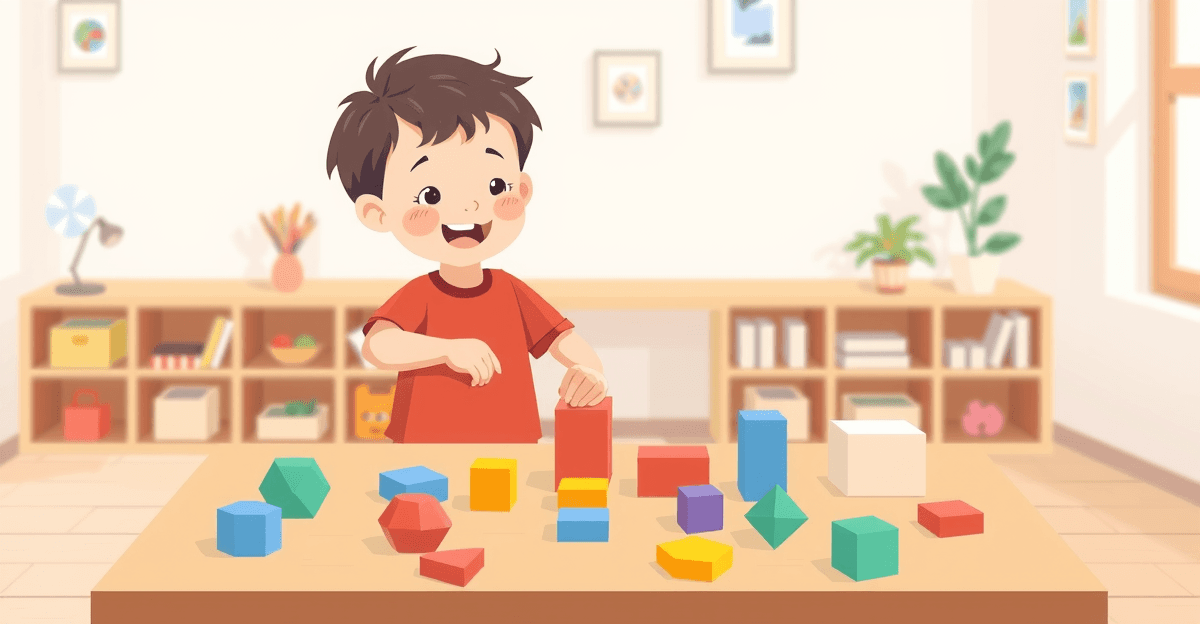
You're at the playground, and your K1 child points to a slide: "Circle! Circle!" Not quite—it's a rectangle. You smile anyway, relieved they're noticing shapes at all. But inside, you wonder: Are they learning this fast enough? What should they actually know by K2?
TL;DR: Master shapes and patterns teaching for K1-K2 kids with hands-on activities aligned to Singapore MOE curriculum. Expert tips for preschool parents.
If this sounds familiar, you're not alone. Singapore parents often feel the pressure to ensure their children master foundational maths concepts early, especially with the PSLE looming years ahead. But here's the good news: teaching shapes and patterns doesn't require expensive tuition or endless worksheets. It's simpler, more joyful, and far more effective when it's woven into everyday life.
This guide shares practical, play-based activities aligned to Singapore's MOE preschool curriculum, designed specifically for busy parents like you.
Why Shapes and Patterns Matter for K1-K2 Kids
Before we dive into activities, let's understand what your child is actually learning when they explore shapes and patterns.
Cognitive Development Through Shape Recognition
When a K1 child identifies a triangle, they're doing more than naming a shape. They're:
- Developing visual discrimination – spotting differences and similarities
- Building spatial reasoning – understanding how objects relate to each other
- Creating mental categories – organizing information logically
- Preparing for algebraic thinking – recognizing that abstract symbols represent real objects
This cognitive work is crucial. In Singapore's competitive academic environment, children who develop strong spatial skills early tend to excel in geometry, maths problem-solving, and even science later on.
Pattern Recognition as Pre-Numeracy
Patterns are everywhere: the rhythm of songs, the sequence of colours, the regularity of daily routines. When your child predicts the next shape in a sequence, they're:
- Learning to observe and analyze
- Developing predictive thinking
- Building foundations for counting and number patterns
- Strengthening memory and attention
Singapore MOE curriculum emphasizes pattern recognition in K1-K2 not as rote learning, but as genuine mathematical thinking.
Understanding the Singapore K1-K2 Curriculum for Shapes and Patterns
If your child attends a PCF kindergarten, My First Skool, or PAP Community Foundation preschool, their teachers are likely already introducing shapes and patterns through play. Here's what the MOE framework typically expects:
K1 (Age 5-6) Learning Goals
- Recognize and name basic 2D shapes: circle, square, triangle, rectangle
- Sort objects by shape
- Complete simple shape patterns (e.g., red-blue-red-blue)
- Understand positional language (on top, inside, under)
K2 (Age 6) Learning Goals
- Identify 3D shapes: sphere, cube, cylinder
- Create their own simple patterns
- Recognize patterns in the environment
- Understand more complex sequences (e.g., circle-square-circle-square-triangle)
The key philosophy: learning happens through play and exploration, not worksheets. Teachers use games, songs, and real objects to help children internalize these concepts naturally.
8 Hands-On Activities for Teaching Shapes at Home
1. Shape Hunt Around Your Home
What you'll need: Your home (that's it!)
How to play:
- Walk through your house together, calling out shapes you spot: round dining table, rectangular fridge, square cushions
- Make it a game: "Can you find something round before I count to 10?"
- Vary the shapes each day
Why it works: This grounds abstract shapes in your child's real world. They stop thinking of shapes as "maths" and start seeing them as features of their environment.
Singapore context: On weekends, extend this to your neighbourhood—notice patterns in HDB windows, shapes of leaves in the park, geometric patterns on building facades.
2. Playdough Shape Creation
What you'll need: Playdough (homemade is fine), a flat surface
How to play:
- Mould shapes together: roll long snakes for rectangles, squeeze balls into circles
- Press shape cutters into playdough
- Let your child create freely, then ask "What shape is that?"
- Build 3D shapes: stack playdough balls into a tower (cylinder), flatten a ball to make a disc
Why it works: Hands-on manipulation helps cement shape understanding. There's no "right way"—your child can experiment and learn through trial and error.
Pro tip: No playdough at hand? Combine 2 cups flour, 1 cup salt, 1 cup water, and a splash of food colouring. Microwave in 2-minute bursts, stirring between. Your K1 child will be fascinated watching it transform.
3. Shape Sorting with Household Items
What you'll need: Boxes/containers, household items (buttons, boxes, toys, pasta shapes)
How to play:
- Sort items by shape into different containers
- Start simple (round vs. not round), then progress to finer categories
- Play "Mystery Shape": describe a shape without naming it, and have your child guess and find an example
Why it works: Sorting develops categorical thinking and reinforces shape features. It's quick, requires no prep, and children love having agency in organizing.
Real example: Your child might sort: round pasta, square crackers, triangular chips. You're building vocabulary and spatial awareness simultaneously.
4. Mirror Pattern Games
What you'll need: Small toys, blocks, or cards in 2-3 colours
How to play:
- Create a simple pattern in front of your child: red-blue-red-blue
- Ask them to copy it or predict the next item
- Gradually increase complexity: red-blue-red-red-blue or circle-square-circle
- Let them create patterns for you to copy
Why it works: This game develops pattern recognition and sequencing skills in a playful, low-pressure way.
Progression: Week 1: AB patterns (red-blue). Week 2: AAB patterns. Week 3: ABC patterns.
5. Shape Collage with Magazine Cutouts
What you'll need: Old magazines, scissors (child-safe), glue, paper
How to play:
- Help your child find and cut out shapes from magazines
- Sort them (circles here, squares there)
- Create a collage or glue them onto a paper with shape outlines to match
Why it works: This combines fine motor skill development with shape learning. It's creative, tactile, and leads to a finished product your child will be proud of.
Bonus: Reinforce vocabulary as you sort: "This is a circle because it's round with no corners."
6. Outdoor Pattern Walk
What you'll need: The outdoors (park, neighbourhood, even your block)
How to play:
- Point out patterns in nature: regularly spaced trees, alternating colours on a fence, rows of plants
- Notice patterns in architecture: repeating tiles, geometric designs on buildings
- Take photos and discuss them at home
Why it works: Singapore's tropical environment is rich with visual patterns. This connects maths learning to real-world observation and fosters curiosity.
Local idea: Visit East Coast Park and observe the pattern of lampposts, or examine the geometric tiles in HDB corridors together.
7. Shape-Based Cooking or Snacking
What you'll need: Food (crackers, fruit, sandwiches) and a cutting board
How to play:
- Cut sandwiches into triangles and rectangles
- Arrange berries or cookies into patterns on a plate
- Ask "Which shape is your snack today?"
- Create patterns: apple slice, raisin, apple slice
Why it works: Learning is more engaging when it involves senses and reward (eating!). This also normalizes shapes as a regular part of daily life.
Example: Make a sandwich and ask your child which shape they prefer, then cut accordingly.
8. Shape Songs and Movement
What you'll need: Your voice and space to move
How to play:
- Sing shape songs (search "shape songs for preschoolers" for tunes)
- Act out shapes with your body: stand with arms up for a triangle, lie flat for a rectangle
- Dance to a song while holding a shape, freeze when music stops, and name the shape
Why it works: Multi-sensory learning (singing, moving, hearing) helps information stick. Musical children especially benefit from this approach.
Simple example: Sing to "Twinkle, Twinkle, Little Star":
"Circle, circle, round and round / Circle shape is what I found / Rectangle, square, and triangle too / Shapes are everywhere, it's true!"
Teaching Pattern Recognition: Progressive Strategies
Patterns are a stepping stone to algebra and logical thinking. Here's how to scaffold pattern learning from K1 to K2.
Phase 1: Awareness (Early K1)
- Point out patterns in daily life without formal teaching
- Let children notice and comment naturally
- Use language: "I see red, blue, red, blue… what comes next?"
Phase 2: Copying (Mid-K1)
- Create simple AB patterns and ask your child to continue them
- Use concrete objects: blocks, toys, coloured beads
- Celebrate attempts, not perfection
Phase 3: Predicting (Late K1-K2)
- Hide the next item and ask: "What comes next?"
- Introduce AAB patterns (two of the same, then a different one)
- Extend patterns: show 1-2 repeats and ask them to extend by 2-3 more
Phase 4: Creating (K2)
- Let your child design their own patterns
- Introduce new pattern types: colour, shape, size, sound
- Challenge them to explain the "rule" of their pattern
Combining Play with Structured Practice
While play-based learning is essential, K1-K2 children also benefit from short, focused practice sessions. This is where adaptive quiz practice that makes learning fun and measurable becomes valuable—brief, game-like activities that reinforce what they've learned through play, without the pressure of worksheets.
A 5-10 minute quiz session on shapes or patterns, tailored to your child's level, can:
- Reinforce vocabulary and concepts
- Provide feedback so you know what they've mastered
- Build confidence through achievable challenges
- Complement hands-on activities with some structure
The key is balance: 80% playful exploration, 20% structured reinforcement.
Troubleshooting Common Challenges
"My child keeps confusing rectangles and squares"
This is completely normal. Technically, a square is a rectangle, but your K1 child doesn't need to know that yet. Focus on distinguishing long rectangles from squares: "Squares have 4 equal sides; rectangles are longer."
Use examples from home: a dinner plate (circle), a book (rectangle), a cushion (square).
"They're not interested in patterns yet"
Not every child learns at the same pace. Some K1 kids focus on shapes first; pattern recognition clicks later. Continue exposing them to patterns naturally (sing songs, point out sequences) but don't force it. Readiness varies, and that's okay.
"They do well at home but forget at school"
This is common—new environments are overwhelming. Chat with their teacher about what they're learning, then reinforce at home. Consistency across settings helps, but be patient. Consolidation takes time.
"I'm worried they're behind"
Pause that worry. Early childhood development is incredibly variable. Children born in different months (Jan vs. Nov) have different readiness levels. As long as your K1 child can recognize 2-3 shapes and enjoys exploring, they're on track. MOE curriculum is designed with this variation in mind.
Resources and Further Learning
Recommended Materials
- Shape blocks and sorting toys – Widely available at Daiso, Popular bookstores, and online
- Tangram sets – Excellent for spatial reasoning (available at most toy shops in Singapore)
- Pattern cards or flashcards – Can be DIY or purchased; homemade versions are often more engaging
Online Support
- Check your child's preschool's curriculum document for specific learning objectives
- Singapore MOE has published preschool curriculum guidelines (available online)
- Seek advice from your child's teachers at PCF, My First Skool, or similar centers
Summary: Making Shapes and Patterns Joyful Learning
Teaching shapes and patterns to K1-K2 children in Singapore doesn't require formal lessons or expensive tutoring. It requires:
✅ Noticing opportunities in daily life (playground, home, neighbourhood)
✅ Playing together through games, crafts, and exploration
✅ Using everyday language to name and discuss shapes
✅ Building confidence by celebrating attempts and curiosity
✅ Adding light structure through occasional quizzes or focused practice, keeping it fun
Your K1 child's job isn't to ace a test on shapes—it's to develop spatial reasoning, pattern recognition, and mathematical confidence. These skills will serve them well through primary school and beyond.
The slide at the playground might not be a circle, but the effort your child is making to understand their world? That's what matters. Keep playing, keep noticing, and trust the process. They'll get there.
Have a favourite shapes or patterns activity for your K1-K2 child? Share it in the comments below—we'd love to hear what works for Singapore families.
Sources
Looking for more? Check out find a tutor for free on TuitionLah.
Exploring parenthood in Singapore? Visit ParentLah for practical tips on raising kids in Singapore.
Practise what you’ve read with QuizKin
Adaptive quizzes covering phonics, sight words, numbers, and more — aligned with the Singapore MOE curriculum. Start your free Premium trial today.
Frequently Asked Questions
Most K1 children (age 5-6) are developmentally ready to recognize basic 2D shapes like circles, squares, and triangles. Pattern recognition typically begins with simple colour or shape sequences. However, every child develops at their own pace—focus on playful exploration rather than formal memorization. Singapore MOE curriculum introduces these concepts naturally through hands-on activities in preschool.
Shape recognition and pattern skills form the foundation for spatial reasoning and algebraic thinking, both crucial for PSLE maths success. Children who can identify patterns early develop stronger problem-solving skills and logical thinking. These foundational concepts appear throughout lower primary maths, making early exposure invaluable for your child's confidence.
Real-world play is most effective—use toys, food, household items, and outdoor exploration. Singapore's tropical environment offers natural learning opportunities: notice patterns in flora, shapes in architecture, and sequences in everyday routines. Combine hands-on play with short, adaptive quiz practice that makes learning fun and measurable, so you can track progress without formal drilling.
About the author
Mervin Tan
Founder, QuizKin
Mervin Tan is the founder of QuizKin and a software engineer and dad of two young children in Singapore. He builds QuizKin's adaptive quiz engine and writes practical K1-K2 learning guides grounded in MOE's Nurturing Early Learners framework and his own experience preparing his kids for Primary 1. QuizKin is built by Adaptels Pte. Ltd., Singapore.
Ready to make learning fun?
QuizKin turns screen time into learning time with adaptive quizzes built for K1-K2 kids in Singapore. Free to start.
Related Articles
Fun Maths Activities for K1-K2 Kids in Singapore: Beyond Worksheets
Discover engaging maths activities for K1-K2 kids in Singapore. Move beyond worksheets with hands-on games that build numeracy skills aligned to MOE curriculum.
Nature Play and Learning for Singapore Kids: Outdoor Exploration Ideas
Discover outdoor nature play activities for Singapore K1-K2 kids (4-6 years). Boost early learning through exploration, observation & hands-on discovery.
Fine Motor Skills Activities for K1 Kids in Singapore: Strengthen Little Hands
Discover practical fine motor skills activities for K1 kids in Singapore. Build hand strength, coordination & pencil grip with expert tips from local educators.