20 Fun Indoor Learning Activities for Singapore Kids on Rainy Days
Rainy day at home with your K1 or K2 child? Discover 20 fun indoor learning activities Singapore parents love for keeping little ones engaged and learning.
Mervin Tan · Founder, QuizKin
Published 15 May 2026
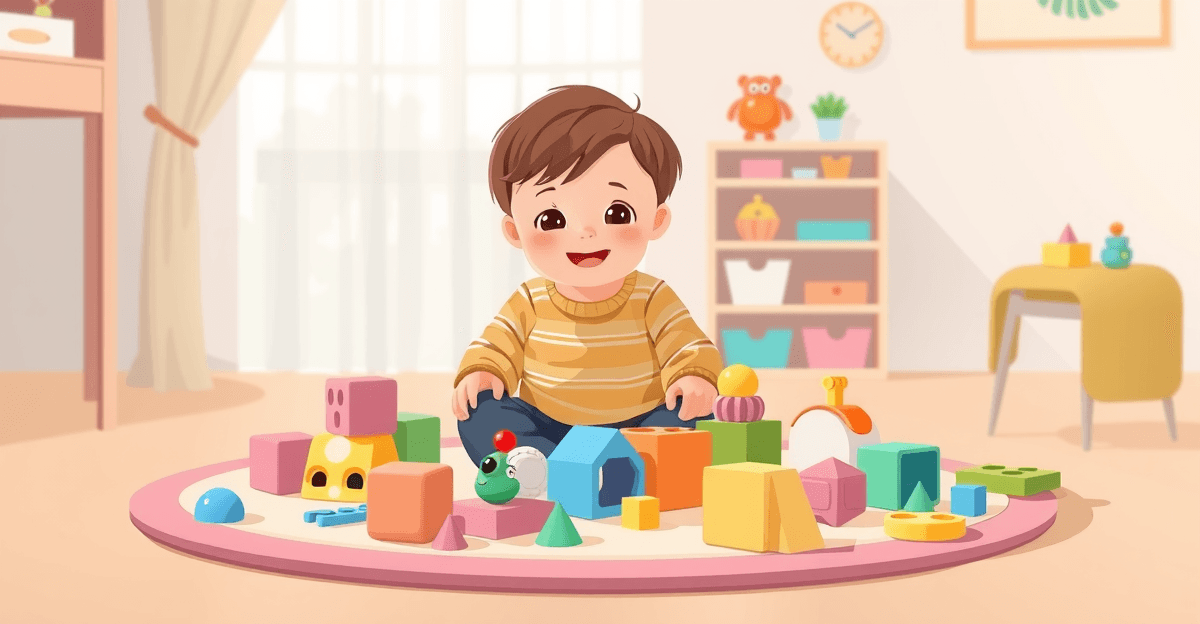
The sky goes dark grey, thunder rolls in, and within minutes it's a full-on Singapore downpour. My K1 girl — batteries fully charged, nowhere to burn it off — is already reaching for the TV remote. Every parent here knows this scene.
TL;DR: Rainy day at home with your K1 or K2 child? Discover 20 fun indoor learning activities Singapore parents love for keeping little ones engaged and learning.
Here's the thing though: rainy days are actually a hidden gift. With the right mix of activities, you can turn an afternoon stuck indoors into one of the most enriching experiences of your child's week. No expensive materials required. No elaborate preparation. Just a few ideas, a willing child, and the understanding that learning at this age is best when it feels like play.
We have put together 20 practical, age-appropriate activities for children aged 4 to 6 that support the MOE Kindergarten Curriculum's holistic development goals — covering literacy, numeracy, creativity, science, and life skills — all achievable in a Singapore HDB flat or condo on a rainy afternoon.
Why Rainy Days Are a Learning Opportunity in Disguise
Singapore's MOE Kindergarten Curriculum Framework is not just about drilling ABCs and 123s. It emphasises learning through discovery, building curiosity, developing social-emotional resilience, and nurturing a genuine love of learning. Rainy days — when the playground is off-limits and the outside world shrinks to your four walls — are perfect for exactly this kind of slow, focused engagement.
The key is variety. Rotate across different types of activities — some physical, some quiet, some creative, some hands-on — so your child stays engaged without hitting a wall. Pick three to five activities from the list below rather than attempting all twenty in one afternoon.
Language and Literacy Activities
1. Bilingual Storytelling Corner
Set up a cosy reading nook with pillows and pick three or four books — mix English and Mandarin (or Malay or Tamil) titles if your household uses a second language. Instead of simply reading aloud, pause at key moments and ask open-ended questions: "What do you think will happen next?" or "How do you think the rabbit feels right now?"
This technique, recommended by many PCF Sparkletots and My First Skool teachers, builds comprehension skills beyond word recognition — exactly what K2 children need as they prepare for the jump to Primary 1.
2. Letter Hunt Around the House
Write five letters on sticky notes and challenge your child to find objects starting with each one. A rubber duck for D, a spoon for S, a towel for T. This builds phonics awareness in a physical, tactile way that is far more memorable than worksheets. For K2 children ready for more challenge, use digraphs like "ch" or "sh" to extend the activity.
3. Make Your Own Mini Storybook
Fold A4 paper into a simple eight-page booklet. Your child draws the pictures while you write their dictated story. By K2, many children can write some words independently — encourage them to try. PAP Community Foundation's parent development guides consistently highlight child-authored books as a powerful confidence and early literacy tool.
4. Word Sorting with Picture Cards
Write or print simple word cards and sort them together by category — animals, food, colours, action words. This builds vocabulary and early reading skills simultaneously. For K1 children, keep pictures alongside the words so the activity stays accessible and enjoyable rather than frustrating.
Numeracy and Math Activities
5. Kitchen Maths
The kitchen is a numeracy goldmine hiding in plain sight. Count eggs into a bowl together. Measure water using measuring cups. Sort spoons by size. Compare which container holds more water. These real-world maths activities align directly with what Singapore preschools teach under numeracy — quantities, comparison, measurement, one-to-one correspondence — and they stick because the context is meaningful to the child.
6. Pattern Making with Household Objects
Gather buttons, pasta shapes, building blocks, or coins and create repeating patterns together: circle, square, circle, square. Ask your child to continue the pattern, then challenge them to create one for you to continue. Pattern recognition is a foundational pre-maths skill that MOE's K1 and K2 curriculum specifically targets, and it transfers directly into early algebra thinking in primary school.
7. Number Treasure Hunt
Hide numbered paper cards around the living room — numbers 1 to 10 for K1 children, 1 to 20 for K2. Your child finds them all and arranges them in order on the floor. Time the hunt and let them try to beat their own score. The self-competition element adds motivation without pressure.
8. Shape Sorting and Building Challenges
Use LEGO, wooden blocks, or cut cardboard shapes. Ask your child to sort pieces by shape first, then build something with a specific brief — a house, a robot, a Singapore MRT train. Narrate the maths as you play: "How many rectangle blocks did you use? Which side is longer — this one or that one?"
Science and Discovery
9. Kitchen Science Experiments
Baking soda plus white vinegar produces instant, dramatic results that captivate every 4 to 6 year old. Add food colouring for extra visual impact. This classic experiment introduces the concept of chemical reactions at an entirely age-appropriate level — your child does not need to know the chemistry, but they will be completely absorbed. Follow up with "Why do you think that happened?" to begin building the habit of scientific questioning.
10. Growing Taugeh at Home
This is quintessentially Singapore and requires almost no materials. Soak mung beans overnight, then rinse and drain them twice daily in a jar lined with a damp cloth. In three to four days, bean sprouts appear. Children learn about plant life cycles, develop a sense of responsibility for daily care, and build patience — and you can cook the taugeh together afterwards for a satisfying full-circle experience.
11. Shadow Play and Light Exploration
Pull the curtains to darken a room and use a torchlight to create hand shadows on the wall. Challenge your child to make a rabbit, a dog, or a bird. Older K2 children enjoy guessing what objects create which shapes on the wall — a gentle, playful introduction to the concept of light and shadow that precedes primary school science.
Creative Arts and Crafts
12. Recycled Materials Craft
Cardboard tubes, egg cartons, old magazines, bottle caps, used wrapping paper — Singapore households accumulate these quickly. Lay them all out on the floor and let your child build freely with glue, tape, and string. No instruction, no template, no "correct" outcome. Open-ended making like this builds spatial reasoning, fine motor control, and the creative confidence to try things without knowing how they will turn out.
13. Batik-Inspired Crayon Resist Painting
Draw patterns on paper using wax crayons — geometric shapes, flowers, wavy lines — then wash over the entire page with watered-down paint. The wax resists the paint and the pattern emerges. The result is beautiful and the process connects your child to Singapore's multicultural textile heritage in a hands-on way. This doubles as a lovely keepsake to hang on the fridge.
14. Homemade Playdough and Sensory Play
Homemade playdough (flour, salt, water, cream of tartar, and food colouring) keeps K1 children meaningfully engaged for a surprisingly long time. Roll it, cut it with cookie cutters, press objects into it to create patterns. Sensory play directly supports the fine motor development critical for writing readiness — something My First Skool and many Singapore childcare centres emphasise during K1 particularly.
Cognitive and Problem-Solving Activities
15. Age-Appropriate Jigsaw Puzzles
For K1 children, 24 to 48 piece puzzles are ideal. K2 children can comfortably handle 60 to 100 pieces. Jigsaws build spatial reasoning, task persistence, and the ability to hold a long-term goal in mind while working through smaller steps — all skills that transfer directly into the Primary 1 classroom environment.
16. Memory Card Matching
Make a simple matching game by drawing pairs of animals, shapes, or household objects on small cards. Shuffle them and place them face down in a grid. Take turns flipping two cards at a time, trying to find matching pairs. This directly trains working memory — a cognitive skill closely linked to reading comprehension and maths performance, and one that Singapore research consistently shows benefits from early practice.
17. Engineering Challenges with LEGO or Blocks
Set a specific building challenge with a constraint: "Build the tallest tower that does not fall over" or "Build a bridge that holds three books." The constraint is what makes it powerful — it forces your child to experiment, adjust, and try again. Resilience in the face of failure is one of the most valuable things a preschool-aged child can practice.
Life Skills and Practical Learning
18. Simple Cooking Together
Let your K2 child help prepare a simple snack — spreading peanut butter on crackers, cracking an egg (with supervision), or stirring a bowl of ingredients. Cooking builds sequencing skills (first, then, finally), practical maths through measuring, and independence. Most Singapore parents are genuinely surprised by how capable their 5 and 6 year olds are in the kitchen when given the chance and appropriate supervision.
19. Sorting and Organising Tasks
Ask your child to sort the laundry by colour, organise their toys by category, or arrange books on a shelf by height. Simple categorisation and organisation tasks build executive function skills — the ability to plan, sequence, and manage tasks — which directly support the transition to structured Primary 1 learning.
Digital Learning Done Right
20. Adaptive Quiz Practice
Not all screen time is equivalent. For K1 and K2 children, interactive quiz practice that adjusts to your child's level — so they're always appropriately challenged rather than bored or overwhelmed — helps you see where your child is building confidence and where a bit more practice would help. QuizKin works this way: short, game-like sessions that show you real progress without the pressure of formal testing.
Use digital learning as one component of the afternoon, not the whole afternoon, and pair it with the offline activities above for genuine balance.
Tips for Making Rainy Day Learning Stick
Keep sessions short. K1 children have attention spans of roughly 10 to 15 minutes per activity; K2 children can stretch to 20 to 25 minutes. Rotate every 20 to 30 minutes rather than insisting on finishing something at the cost of engagement.
Follow their lead when you can. If your child is deeply absorbed in building something, resist the urge to interrupt for the "next scheduled activity". Flow states in young children are precious and relatively rare — honour them when they appear.
Narrate the learning out loud. "You sorted all the buttons by colour — that is called categorising." Giving your child vocabulary for what they are doing reinforces the skill and helps them understand that they are capable learners.
Involve older siblings. If you have a Primary 1 or 2 child at home too, pair them with your K1 or K2 child for storytelling, puzzles, or teaching a concept. Explaining something to a younger sibling is one of the most effective ways for an older child to consolidate their own understanding.
Do not overschedule. Twenty activities in one list is meant as a bank to draw from — not a curriculum to complete. Pick three to five that match your child's mood and energy level on any given afternoon, and let the rest wait for next time.
Rainy afternoons in Singapore come around often enough that having a solid bank of indoor activities genuinely changes your household's rhythm. The best part is that most of these activities need nothing more than what you already have at home — and while your child is building towers, sorting buttons, and growing bean sprouts, they are quietly building the literacy, numeracy, and thinking skills that will carry them confidently into the Singapore primary school years.
Sources
Looking for more? Check out find a tutor for free on TuitionLah.
Exploring parenthood in Singapore? Visit ParentLah for practical tips on raising kids in Singapore.
Practise what you’ve read with QuizKin
Adaptive quizzes covering phonics, sight words, numbers, and more — aligned with the Singapore MOE curriculum. Start your free Premium trial today.
Frequently Asked Questions
For K1 and K2 children aged 4–6, aim for short focused sessions of 15–20 minutes with breaks in between, totalling around 1–1.5 hours of intentional learning spread across the day. Singapore's MOE Kindergarten Curriculum emphasises holistic development through play, so mix structured activities with free creative time. Don't stress if your child resists — variety and low pressure go a long way at this age.
Many Singapore preschool providers like PCF Sparkletots, My First Skool, and MindChamps share parent resources and activity guides through parent portals or WhatsApp class groups. PAP Community Foundation (PCF) also publishes developmental milestone guides aligned with the MOE Kindergarten Curriculum Framework. If your child's preschool doesn't proactively share these, ask the class teacher directly — most are happy to suggest home extension activities.
Screen time with purpose is fine when balanced with physical and creative play. For K1 and K2 children, look for apps that are adaptive — meaning they adjust difficulty based on your child's responses — so your child is always challenged at the right level rather than bored or overwhelmed. Limit passive viewing and favour apps where your child is actively responding, building, or problem-solving, and keep individual screen sessions under 20 minutes.
About the author
Mervin Tan
Founder, QuizKin
Mervin Tan is the founder of QuizKin and a software engineer and dad of two young children in Singapore. He builds QuizKin's adaptive quiz engine and writes practical K1-K2 learning guides grounded in MOE's Nurturing Early Learners framework and his own experience preparing his kids for Primary 1. QuizKin is built by Adaptels Pte. Ltd., Singapore.
Ready to make learning fun?
QuizKin turns screen time into learning time with adaptive quizzes built for K1-K2 kids in Singapore. Free to start.
Related Articles
Simple Cooking Activities for Singapore Preschoolers: Learning Through Food
Discover fun cooking activities for K1-K2 kids in Singapore that build maths, science, and language skills. Perfect for busy parents!
Gross Motor Skills Activities for Singapore Preschoolers: Indoor and Outdoor Ideas
Discover practical gross motor skills activities for K1-K2 kids in Singapore. Indoor and outdoor ideas aligned with MOE curriculum to boost physical development.
Water Play Learning Activities for Singapore Preschoolers: Science at Home
Discover engaging water play learning activities for K1-K2 kids in Singapore. Build science skills at home with simple, mess-friendly experiments.