Managing Tantrums and Big Emotions in Preschoolers: A Singapore Parents' Guide
Help your K1-K2 child manage big emotions and tantrums. Practical Singapore parenting strategies for preschoolers, backed by child development experts.
Mervin Tan · Founder, QuizKin
Published 28 May 2026
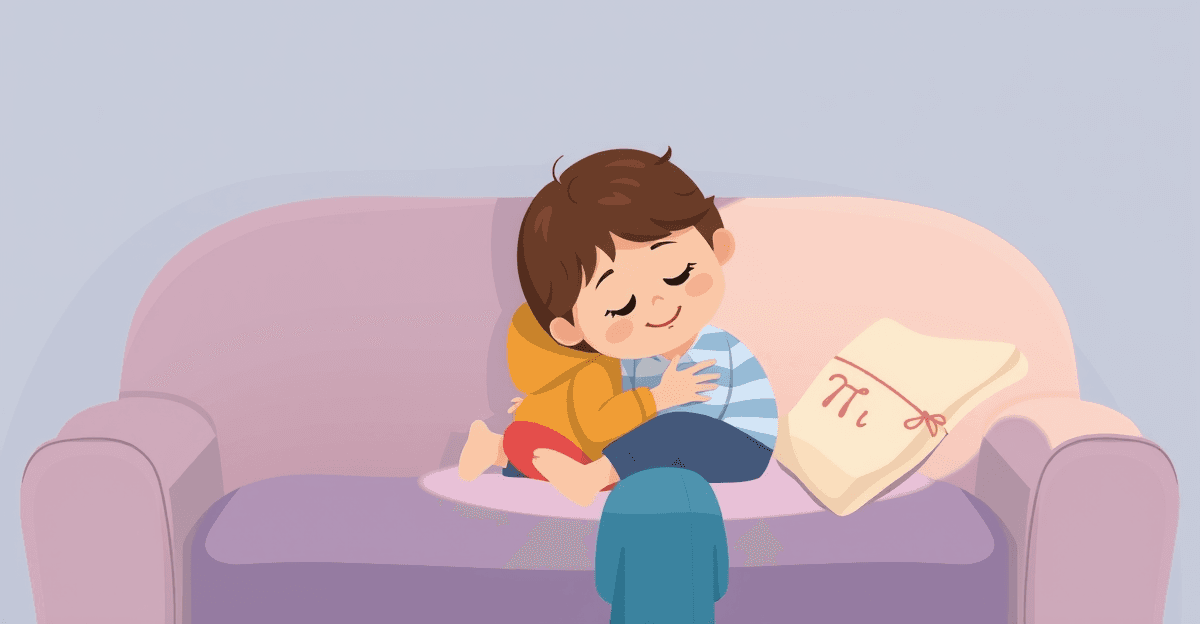
You're at the supermarket with your four-year-old when they spot a toy they want. You say no. Within seconds, they're on the floor, screaming, tears streaming down their face—and thirty other shoppers are watching. If this scenario feels painfully familiar, you're not alone. Nearly every Singapore parent of a K1-K2 child has experienced this moment.
TL;DR: Help your K1-K2 child manage big emotions and tantrums. Practical Singapore parenting strategies for preschoolers, backed by child development experts.
The good news? What feels like a catastrophe is actually a sign that your child's brain is developing normally. And you can help them navigate these big emotions with practical, evidence-based strategies that fit seamlessly into your Singaporean lifestyle.
Understanding Why Tantrums Happen: The Preschool Brain
Before we talk about managing tantrums, let's understand what's actually happening in your child's brain.
Between ages 4 and 6, your child's brain is undergoing dramatic changes. The emotional centre (amygdala) is fully active, but the prefrontal cortex—responsible for logical thinking, impulse control, and emotional regulation—is still years away from maturity. This means your K1-K2 child feels intensely, but doesn't yet have the neurological tools to manage those feelings.
Add Singapore's structured environment into the mix: preschools like PCF, My First Skool, and PAP Community Foundation operate on fixed routines. Transitions between activities, changes to plans, and expectations to sit still and focus can be overwhelming for little ones whose emotional brains are still developing.
The research is clear: this isn't misbehaviour. It's neurodevelopment in action.
Why Singapore's Environment Amplifies Emotions
Singapore's warm, humid climate, crowded public spaces, and structured daily schedules create unique stressors for young children:
- Heat and discomfort: A tired, overheated child is more prone to emotional outbursts
- Sensory overload: Busy hawker centres, crowded MRT trains, and classroom noise can overwhelm sensitive nervous systems
- Parental pressure: Many Singapore families balance multiple demands, and children sense this stress
- High expectations: Even in K1-K2, there's often pressure to excel academically, adding subtle stress to what should be play-based learning
Understanding these contextual factors helps you approach tantrums with compassion rather than frustration.
The Four Types of Tantrums You'll Encounter
Not all tantrums are created equal. Identifying which type your child is experiencing helps you respond appropriately.
1. Frustration Tantrums
These occur when your child cannot do something they want to do—a puzzle piece won't fit, they can't open a door, or they're struggling with a new skill.
Singapore context: As children progress through K1 and K2, they encounter more complex tasks in school. When they can't master something immediately (writing their name, solving a problem on an adaptive learning app), frustration builds quickly.
How to respond: Validate the feeling ("I see you're frustrated—that's a tricky puzzle!"), then offer practical help or break the task into smaller steps. This is where tools like adaptive quiz practice become valuable—when children experience success at their own pace, they build confidence and frustration decreases.
2. Tiredness and Hunger Tantrums
A hungry or tired K1-K2 child has dramatically reduced emotional regulation capacity. These are often the loudest, most distressing tantrums.
Singapore context: After a full day of preschool (often 8am-12:30pm or longer), combined with enrichment classes or long commutes, your child's glucose and energy are depleted. By 5-6pm, even minor inconveniences trigger meltdowns.
How to respond: Prevention is key. Pack adequate snacks (crackers, fruit, yogurt) and plan important errands for mid-morning or early afternoon, not late afternoon. If a meltdown occurs, offer water and a light snack first, then comfort.
3. Transitions and Boundary-Testing Tantrums
These happen when you set a limit or ask your child to transition between activities. Your child knows the boundary (you've said it before), but they're testing whether it still applies.
Singapore context: PCF and other preschools use visual schedules and consistent transitions, so children understand expectations. When parents enforce different boundaries at home, inconsistency can trigger testing behaviour and tantrums.
How to respond: Stay calm and consistent. Use clear, simple language: "It's time to leave the playground now. We can come back tomorrow." Acknowledge the disappointment, but don't negotiate. Your child needs to know you mean what you say.
4. Overstimulation Tantrums
After sustained sensory input—a birthday party, a busy shopping mall, or a packed day of activities—your child's nervous system becomes overwhelmed. The tantrum is a release valve.
Singapore context: Weekend family outings are popular in Singapore, and many families pack multiple activities into one day. For sensitive children, this can be overwhelming. Additionally, some children find busy preschool environments (especially larger centres) overstimulating.
How to respond: Build in quiet time between activities. Create a "calm corner" at home with soft toys, books, and dim lighting where your child can decompress. This is often more effective than trying to soothe during the tantrum itself.
Five Practical Strategies for Managing Tantrums in Singapore
Strategy 1: Name the Emotion (Emotional Literacy)
Before your child can manage an emotion, they need to recognize and name it.
Start labelling emotions throughout the day, even when there's no tantrum:
- "You look happy when you're playing with your friend"
- "I'm feeling frustrated because this traffic is making us late"
- "You seem sad about leaving grandma's house"
By K2, introduce an emotion chart or feelings wheel. Many Singapore preschools use these, so ask your child's teacher which one they use at school and reinforce it at home.
Why this works: Children who can identify their emotions have better emotional regulation. They're also less likely to have prolonged tantrums because they feel understood.
Strategy 2: Validate Before You Problem-Solve
The biggest mistake parents make is immediately trying to "fix" the problem or distract the child.
When your child is in the middle of a tantrum, they don't need logic. They need to feel heard.
Instead of:
- "Don't cry, it's not that bad"
- "Let's go get an ice cream instead" (distraction)
Try:
- "You're really upset because you wanted the blue cup, not the red one. That's disappointing"
- "I can see this is really important to you. Your feelings matter"
Wait until the emotional intensity has decreased (usually 5-15 minutes), then problem-solve together. "What could we do differently next time?"
Singapore parents: This approach honours your child's emotions while maintaining boundaries—you're saying "your feelings are valid, and the boundary still stands."
Strategy 3: Create Predictability Through Routines
Children feel safer when they know what to expect. Unexpected changes or lack of routine amplify emotional dysregulation.
Establish consistent routines:
- Morning routine: Wake time, breakfast, getting ready (use a visual checklist)
- After preschool: Snack time, quiet time, then activity time
- Evening routine: Dinner, bath, stories, bedtime (same order every night)
- Transition warnings: "We're leaving in 10 minutes. Then we have 5 minutes. Now it's time to go."
Singapore hack: Use your phone's timer with a visual countdown—many children respond better to a timer than to verbal warnings. Apps with countdown timers work especially well for K1-K2 kids.
Strategy 4: Teach Calming Strategies (Age-Appropriate)
Your child needs concrete tools to use when big emotions arrive. Teach these during calm moments, not during tantrums.
Breathing techniques:
- Bubble breaths: Pretend to blow bubbles slowly (4-5 second exhales)
- Smell the flower, blow the candle: Inhale through nose, exhale through mouth slowly
Movement:
- Jump 10 times
- Do 5 stretches
- Walk barefoot on cool tiles (especially helpful in Singapore's heat)
Sensory tools:
- Squeeze a stress ball
- Listen to calm music
- Hold a soft toy
Why this matters: When your child learns to use these tools, they're literally changing their nervous system response. What started as a full tantrum can become a brief upset.
Strategy 5: Stay Calm Yourself (Model Emotional Regulation)
This is perhaps the most important strategy, and the hardest for busy Singapore parents.
Your child mirrors your emotional state. If you're tense, raising your voice, or visibly frustrated, your child's nervous system remains activated. They can't calm down because you haven't calmed down.
How to stay calm:
- Take three slow breaths before responding
- Step away for 30 seconds if you feel your own frustration rising
- Remind yourself: "This is not personal. My child's brain is not fully developed yet"
- Talk to your partner or a friend later about your frustration—don't process it with your child in the moment
A gentle truth for Singapore parents: Many of us were raised with a "discipline first, emotions later" approach. Changing this pattern takes conscious effort, but your child benefits immensely from a calmer, more emotionally attuned parent.
Building Emotional Skills Through Play and Learning
One often-overlooked way to build emotional regulation is through structured, engaging play and learning that matches your child's level.
When children experience success and feel challenged (but not frustrated), their confidence grows and emotional resilience strengthens. This is why adaptive learning tools matter—when a K1 or K2 child practices skills at their own pace, they experience more "wins" and fewer frustration moments.
For example, adaptive quiz practice that adjusts to your child's level means they're not encountering problems that are impossibly hard. Fewer frustration tantrums about schoolwork, better emotional outcomes overall.
Red Flags: When Tantrums Need Professional Support
While tantrums are normal, certain patterns warrant a conversation with your child's preschool teacher or paediatrician:
- Tantrums lasting more than 25 minutes regularly
- Physical aggression (hitting, biting) that's increasing in frequency
- Tantrums occurring 10+ times daily
- Your child seems unable to recover emotionally
- Self-harm during tantrums (head-banging, self-hitting)
- Regression in skills they previously mastered
Singapore has excellent resources: child psychologists, occupational therapists, and developmental paediatricians can assess whether your child needs additional support. Many are listed through polyclinics or your child's preschool.
Quick Reference: Tantrum Response Checklist
When a tantrum happens:
- ✅ Stay calm. Breathe.
- ✅ Ensure safety (move away from hazards if needed)
- ✅ Use simple, calm language: "I see you're upset"
- ✅ Don't reason or lecture during the tantrum
- ✅ Offer comfort only if your child wants it
- ✅ Once calm, validate the emotion and problem-solve together
- ✅ Praise recovery: "You were upset, and now you've calmed down. That's a big skill"
The Bigger Picture: Emotional Development Builds School Readiness
As you navigate tantrums in K1 and K2, remember that you're building foundational skills for your child's entire life.
Emotional regulation, resilience, and the ability to express feelings appropriately matter far more than academic achievement at this age. Schools know this. When Primary 1 teachers receive your K2 graduate, they're looking for children who can manage disappointment, ask for help, and bounce back from mistakes—not children who read fluently at age 4.
By helping your child manage big emotions now, you're setting them up for success in the classroom, on the playground, and in all their future relationships.
Final Thoughts for Singapore Parents
Parenting a preschooler in Singapore comes with unique pressures and rewards. The heat, the pace, the expectations—they can amplify stress for both parent and child. But they also create opportunities to build a stronger, more emotionally attuned family.
When your child has a tantrum, it's not a failure on your part. It's your child's developing brain asking for help learning a crucial life skill.
Take a breath. Validate their feelings. Stay consistent with boundaries. And remember: the goal isn't a child who never has tantrums. The goal is a child who learns, over time, to navigate their big emotions with your patient support.
Your K1-K2 child won't remember most of these tantrums. But they will remember how you helped them through them.
Have you found strategies that work for your Singapore family? Share them in the comments below—other parents would love to learn from your experience.
Sources
- KKH — KK Women's and Children's Hospital
- HealthHub Singapore
- ECDA — Early Childhood Development Agency
Looking for more? Check out find a tutor for free on TuitionLah.
Exploring parenthood in Singapore? Visit ParentLah for practical tips on raising kids in Singapore.
Practise what you’ve read with QuizKin
Adaptive quizzes covering phonics, sight words, numbers, and more — aligned with the Singapore MOE curriculum. Start your free Premium trial today.
Frequently Asked Questions
Children aged 4-6 are developing emotional regulation skills but lack the vocabulary and brain development to express complex feelings. Their prefrontal cortex (responsible for impulse control) is still maturing. In Singapore's fast-paced environment, the pressure of school routines and expectations can amplify these emotional responses. This is completely normal development—not misbehaviour.
Genuine emotion is sudden, intense, and difficult for the child to control—they may cry, flail, or become inconsolable. Attention-seeking tantrums often stop quickly when the child gets a reaction, or pause when they think you're not looking. In Singapore preschools, both occur; the key is responding calmly without giving excessive attention to either, while validating their feelings.
Occasional tantrums in K1-K2 don't impact school readiness, but learning emotional regulation skills does. Schools value children who can express feelings, accept boundaries, and recover from disappointment. Supporting your child's emotional development now builds confidence for the academic and social demands ahead, including PSLE pressure in later years.
About the author
Mervin Tan
Founder, QuizKin
Mervin Tan is the founder of QuizKin and a software engineer and dad of two young children in Singapore. He builds QuizKin's adaptive quiz engine and writes practical K1-K2 learning guides grounded in MOE's Nurturing Early Learners framework and his own experience preparing his kids for Primary 1. QuizKin is built by Adaptels Pte. Ltd., Singapore.
Ready to make learning fun?
QuizKin turns screen time into learning time with adaptive quizzes built for K1-K2 kids in Singapore. Free to start.
Related Articles
Dealing With Picky Eating in Preschoolers: Nutrition Tips for Singapore Parents
Help your K1-K2 child overcome picky eating with practical nutrition strategies tailored for Singapore families. Expert tips to build healthy eating habits early.
Building Resilience in Preschoolers: Practical Tips for Singapore Parents (K1-K2)
Help your K1-K2 child build resilience with practical, Singapore-specific tips on growth mindset, emotional skills, and confident learning at home.
Separation Anxiety in Kindergarten: A Singapore Parent's Guide to Smoother Drop-Offs
Practical strategies for managing kindergarten separation anxiety in Singapore. Age-specific tips for K1 and K2, when to worry, and how to make drop-offs easier for you and your child.